Tuesday, February 26, 2019

How to Become an SEO Expert, According to HubSpot’s SEO Team

Braden Becker’s journey to becoming an SEO specialist at HubSpot is a slightly unconventional one. In college, he studied Writing & Rhetoric, which helped him land his first job as a copy editor at a B2B trade publication. As he progressed through his career, Braden pivoted to content marketing, where he worked as an editor at a SaaS company and then as a content manager at the world’s largest environmental services firm.

You might think someone like Braden would continue to climb the creative career ladder in content marketing. But today he actually spends more time in SEMrush than he does in Google Docs. As the Historical Optimization Lead on HubSpot's Blog Team, Braden’s main responsibility is to identify blog posts that are falling in organic traffic and optimize them for search engines to rank higher on Google. He’s even sharpened his SEO chops enough to co-create the SEO strategy for all of HubSpot’s blogs.

As a writer and editor for most of his career, SEO had always been in the periphery of Braden’s work -- as it was a subject he had a solid grasp on but not necessarily a lot of expertise in. Today, though, SEO is his central focus. And he’s developed a reputation of being HubSpot’s own version of Rand Fishkin.

“Getting a job in SEO ideally requires two things: content creation skill and analytical skill. Most SEO professionals today have one of those and develop the other,” Becker says. “My background in writing and editing helped me get my foot in the door, but a willingness to focus on the structure, mechanics, and intent behind my writing is what I think secured my role as an SEO specialist for HubSpot.”

Braden’s story of pivoting from a creative career in content marketing to an analytical one isn’t as rare as you might think. Before Aja Frost became a Senior SEO Strategist at HubSpot, she was the Editor of HubSpot’s Sales Blog. And, similar to Braden, she credits her time spent in a more creative role as a crucial factor in transitioning to an analytical marketing role.

“I taught myself how to do keyword research and competitive analysis as an editor for HubSpot's Sales Blog. The Sales Blog's traffic had been flat for a year and a half -- I noticed that the only posts that consistently generated views for us were getting all of those views from search. So I began looking for sales-related keywords we could rank for that would help boost organic traffic,” she says. “This led me to experiment with SEMrush, AnswerThePublic, Google Analytics, Google Search Console, and of course, HubSpot's own SEO tools. I read a ton of blog posts and eventually got my Google Analytics certification.”

Braden and Aja have spent their entire careers in content marketing, so it makes sense that they could seamlessly transition from a role in content creation to SEO, especially since the two disciplines go hand-in-hand. But if you don’t have any experience working in the two departments or even in marketing, don’t fret. To build his fundamental knowledge of SEO, Victor Pan, the Head of Technical SEO at HubSpot, cites reading as one of the best habits he got into.

“I used to be a voracious reader on all publicly available information on SEO. I had an RSS feed of search-related blogs and news websites I would go through for a whole hour every day,” he says. “Mere exposure to ideas makes unknown problems in SEO easier to tackle when you have other people's experiences or frameworks to build off from.”

For Victor, reading was one of the best ways to develop his SEO fundamentals. But even as an established SEO, the activity can still refine your expertise. According to Aja Frost, it’s how she hones her technical SEO skills.

“To refine my SEO expertise, I constantly read. I'm really interested in technical SEO so I look for blog posts, white papers, and research about site architecture and navigation, website speed and everything that goes into that, like structured data,” she says. “SEO by the Sea, Sistrix, and Blind Five Year Old are all great technical SEO resources, along with (unsurprisingly) the Google Webmaster Blog. I'm a member of a few SEO subreddits (/seo and /bigseo are the most active). And I follow a ton of SEOs on Twitter -- they drop random factoids or insights all the time.”

To stay ahead of the curve in any industry, reading the latest news and research is hugely beneficial. But as an SEO, when everything is constantly changing, reading isn’t enough. To gain the practical experience that’ll truly take your SEO skills to the next level, you need to put theory into practice and constantly test industry assumptions and your new ideas.

“I test a lot of things to refine my SEO expertise. Should your brand be in your title tags? Are internal anchor text worthwhile to still do in 2019 to move rankings? What happens when you purchase fake social "signals" -- do you see an increase in organic traffic?” says Victor Pan. “Failed experiments taught me just as much as successful ones, and it made me a much more confident SEO whenever I would make any improvements to content. What's an improvement here could be worse off there -- and that's why we have to test and grasp causation over just correlation.”

Based on Braden’s, Aja’s, and Victor’s stories, becoming an SEO expert doesn’t mean you have to start and finish your career as an SEO. Pivoting from one role to an SEO role and developing your expertise from then on is entirely possible -- you just need to be willing to learn and adapt.

How to Become an SEO Expert

To start developing your SEO expertise today, here’s a recap of the tips from HubSpot’s SEO team.

1. Read. SEO is always changing, so it’s crucial to keep updating your knowledge on the topic. Some of the best SEO resources recommended by Senior SEO Specialist, Aja Frost, are SEO by the Sea, Sistrix, Blind Five Year Old, Google's Webmaster Blog, and the subreddits /seo and /bigseo.

2. Hone your creative and analytical skillsets. SEO is not only an analytical profession where you do ton of keyword research, competitive analysis, and run experiments, but it’s also a creative profession where you need to optimize your content for people just as much as Google’s search algorithm.

3. Test. Putting theory into practice arms you with the practical knowledge and experience needed to level up as an SEO. In this way, SEO is kind of like playing a sport. You can read all about hitting a baseball or throwing a football, but if you never practice, you’ll never reach your potential.

http://bit.ly/2XpIYyg

What Is a Blog, & Why Should You Create One

Even if you're not sure what a blog is, you've no doubt come across one at some point in time. Perhaps you've stumbled across a blog when you've searched "healthy dinner recipes".

Alternatively, maybe you used a blog to get more information on SEO strategies.

In fact, if you're reading this, guess what? You're on a blog. (Very meta, I know.)

If your business doesn't have a blog, you might want to reconsider -- B2B marketers who use blogs receive 67% more leads than those who do not, and blogs have been rated the 5th most trusted source for accurate online information.

At its most basic, blogs can help you develop an online presence, prove yourself an expert in an industry, and attract more quality leads to all pages of your site.

If you're contemplating creating a blog for your business, or simply want to know what one is, keep reading.

Click here to download our free ebook on how to start a successful blog for your business or project.

What is a blog?

First, let's go over a brief history -- in 1994, Swarthmore College student Justin Hall is credited with the creation of the first blog, Links.net. At the time, however, it wasn't considered a blog … just a personal homepage.

In 1997, Jorn Barger, blogger for Robot Wisdom, coined the term "weblog", which was meant to describe his process for "logging the web" as he surfed the internet. The term "weblog" was shortened to "blog" in 1999, by programmer Peter Merholz.

In the early stages, a blog was a personal web log or journal in which someone could share information or their opinion on a variety of topics. The information was posted reverse chronologically, so the most recent post would appear first.

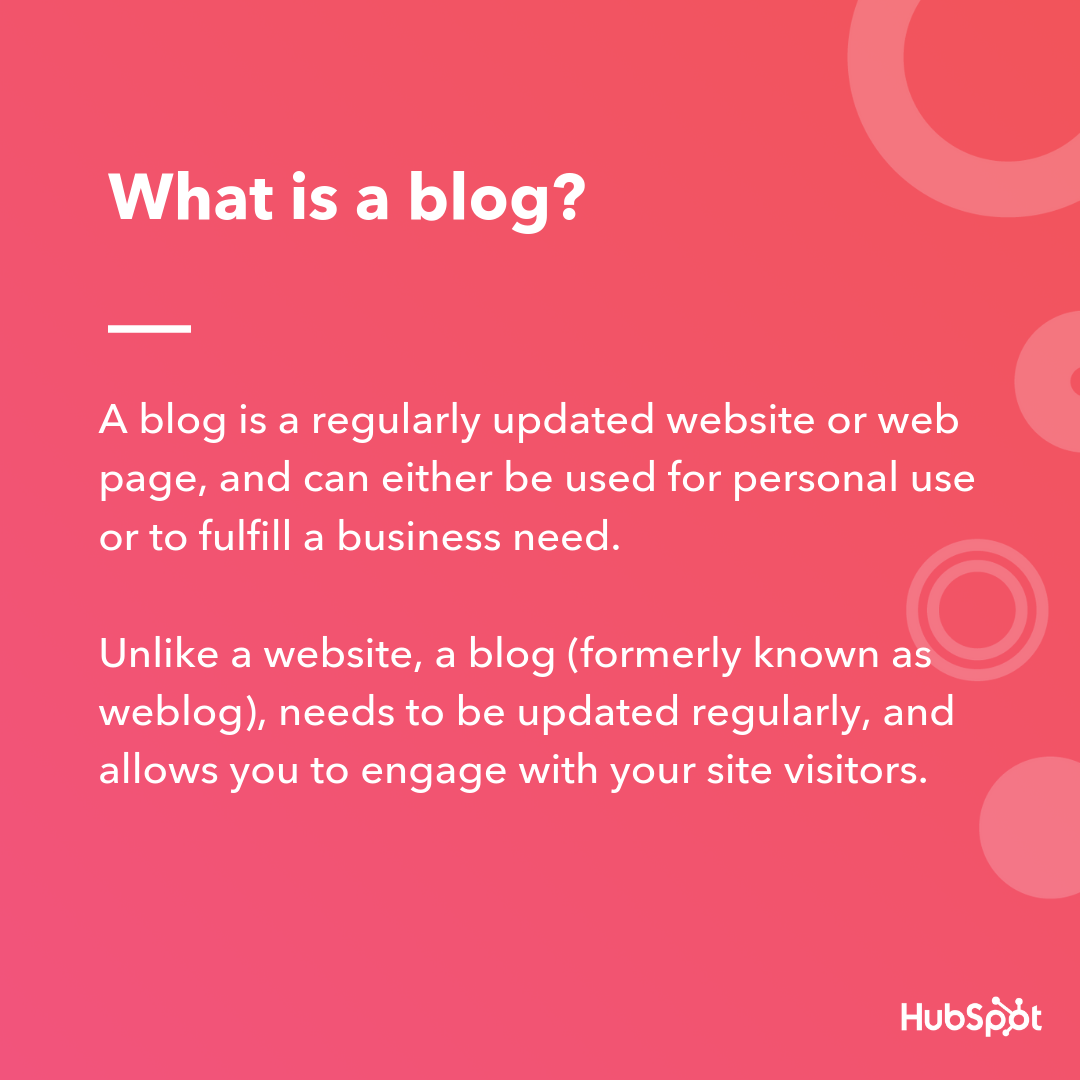
Nowadays, a blog is a regularly updated website or web page, and can either be used for personal use or to fulfill a business need.

For instance, HubSpot blogs about various topics concerning marketing, sales, and service because HubSpot sells products related to those three subjects -- so, more than likely, the type of readers HubSpot's blog attracts are going to be similar to HubSpot's core buyer persona.

Alternatively, a woman named Kiki started a personal travel blog, called The Blonde Abroad, to document her travel experiences and provide readers with helpful tips and travel recommendations. Her blog doesn't serve a larger company, but it does help her create a personal brand.

If a personal blog is successful enough, the writer can also make money off of it via sponsorships or advertisements. Take a look at 5 Strategies to Monetize a Blog to learn more.

There are plenty of benefits to blogging -- it helps drive traffic to your website, it enables you to better convert that traffic into leads, it allows your business to establish authority in an industry, and it continues to help your business grow and attract new customers months and even years after publication.

To learn more about the benefits of blogging, check out Why Blog? The Benefits of Blogging for Business and Marketing.

What is a blog post?

A blog post is an individual web page on your website that dives into a particular sub-topic of your blog.

For instance, let's say you start a fashion blog on your retail website. One blog post might be titled, "The Best Fall Shoes for 2019". The post ties back to your overall blog topic as a whole (fashion), but it also addresses a very particular sub-topic (fall shoes).

Blog posts allow you to rank on search engines for a variety of keywords. In the above example, your blog post could enable your business to rank on Google for "fall shoes". When someone searches for fall shoes and comes across your blog post, they have access to the rest of your company's website. They might click "Products" after they read your post, and take a look at the clothing items your company sells.

A blog post links back to your overall blog site. For instance, right now, you're on hubspot.com/marketing/what-is-a-blog. The "what-is-a-blog" section of the URL is tied back to /marketing/, which is the blog as a whole.

1. To help your company rank on search engines.

Typically, a business will use a blog to help the business's website rank on search engines. You can absolutely employ SEO tactics, or use paid ads, to help your company homepage rank on page one of Google -- but a more effective, long-term solution is blogging.

To consider how your company can rank on search engines via a blog, we'll start with an example -- let's say you work for a web design start-up with very little online presence.

You decide to spend the first year writing and posting regular blog content that strongly relates to web design. Over time, your traffic increases and other companies link to your site for information regarding web design. When this happens, Google recognizes your company as a legitimate source for web design information. Eventually (with a lot of trial and error), your blog posts begin ranking on page one of Google for terms like "web design", "website builder", and "e-commerce website".

Then, one day, you search "web design companies in X city" and find your company is now on page one. This is likely due, in large part, to your consistent blogging efforts.

Take a look at How HubSpot Uses Blogging to Rank #1 on Google to learn more about specific strategies you can implement to rank on search engines.

2. To share information about a given topic and become an expert in an industry.

In 2006, Boston-native Matt Kepnes quit his job and began traveling the world. He documented his travels in his now infamous blog, NomadicMatt.com.

After about a year, thanks to tireless blogging efforts and SEO strategies that enabled him to rank on Google, he began pulling in $60,000. Matt also created e-books, and used sponsorships and affiliate marketing to make money. Additionally, he wrote a New York Times best-seller, "How to Travel the World on $50 a Day."

Now, Matt's blog attracts 1.5 million visitors a month and grosses about $750,000 a year -- and he's become a well-known expert in the travel space.

If you want to become known as an expert in a topic that interests you, from fashion to blogging to fitness, you can -- and, oftentimes, it starts with a blog.

3. To attract visitors to your site, and turn those visitors into leads.

There's only so much traffic you can get from the homepage or About Us page of your company's website. Of course, those pages are critical for leads who are already interested in your products -- but they often won't attract traffic from top-of-the-funnel. That's where your blog comes into play.

Your blog can be a general resource to help your website visitors even before those visitors are ready to purchase from you. For instance, let's say you sell products for e-commerce stores. You might attract some e-commerce owners who are already searching online for your products, but in most cases, the e-commerce owner isn't going to be ready to buy right out of the gate.

Alternatively, if you begin blogging about tips to help the retail owner who is just starting out -- like "How to start a retail website", or "Benefits of e-commerce vs. physical store" -- you'll slowly attract an audience who enjoys your content and finds it useful. Then, when those site visitors' e-commerce stores begin growing (thanks, in part, to your blog), they'll already know about your brand and already trust it as a helpful source. That's when they'll check out your product pages.

4. To cultivate an online community and engage with an audience.

At the very least, you might create a blog to engage with an online community of readers with similar interests. Maybe you start a food blog and ask readers to share their own recipes with you.

Alternatively, perhaps you start a blog that focuses on DIY projects. You post the fun, DIY projects you've completed in your own home, and you ask your readers to share their own DIY tips in exchange.

With a blog, the sky's the limit -- and so are the benefits for your business. If you're officially ready to get started with your own blog, take a look at How to Create a Successful Blog Strategy: A Step-by-Step Guide.

Alternatively, if you're starting at the beginning and anxious about your first post, read How to Write a Blog Post: A Step-by-Step Guide [+ Free Blog Post Templates].

what-is-a-blog

New Call-to-action http://bit.ly/2SscDD9

How to Write Instagram Captions That Improve Engagement

Do you want to improve your Instagram post engagement? Wondering how to write strong Instagram captions that move people to action? In this article, you’ll discover how to create appealing Instagram captions that clearly communicate your marketing messages and encourage people to act. Why Instagram Captions Matter for Marketers On occasion, you’ll see celebrities or […]

The post How to Write Instagram Captions That Improve Engagement appeared first on Social Media Marketing | Social Media Examiner.

February 26, 2019 at 12:00PM http://bit.ly/2EbD3Ei
read more...
from Social Media Marketing | Social Media Examiner http://bit.ly/2T1JxzT
via IFTTT

Monday, February 25, 2019

How to Block Websites on Chrome Desktop and Mobile

Let's say you want to block certain websites, like Facebook or Pinterest, on your work computer to ensure those distractions aren't inhibiting your or your team's productivity at work.

Or, maybe you just want to guarantee all Google searches aren't available to your six-year-old. Whatever the case, blocking a website on Chrome desktop or mobile is an easy and simple process. Best of all, it's just as effortless to unblock those sites -- so you can scroll through Pinterest, post-workday.

Access all of HubSpot's free tools and training to grow your business, and your career.

How to Block a Website on Chrome Desktop

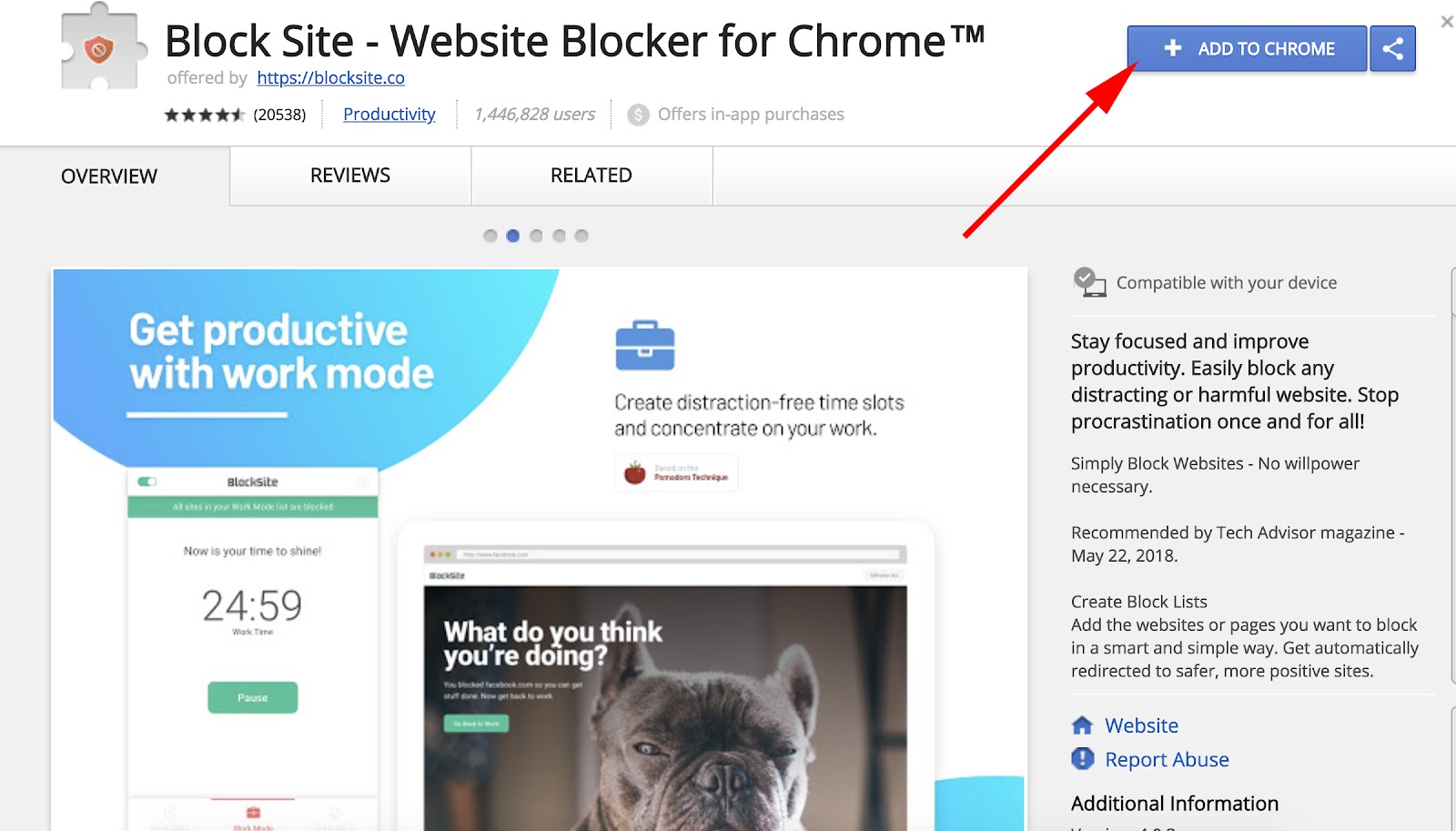
1. Search for the "Block Site" Chrome extension, and add it to your browser.

Block Site Chrome extension

The easiest way to block websites users can visit through Google Chrome is to download a browser extension. We recommend "Block Site," available through the Chrome web store.

Search for the Block Site extension, or a similar tool you trust, and select "Add to Chrome" in the top-righthand corner of your screen, as shown above.

2. Click "Add extension" in the pop-up box.

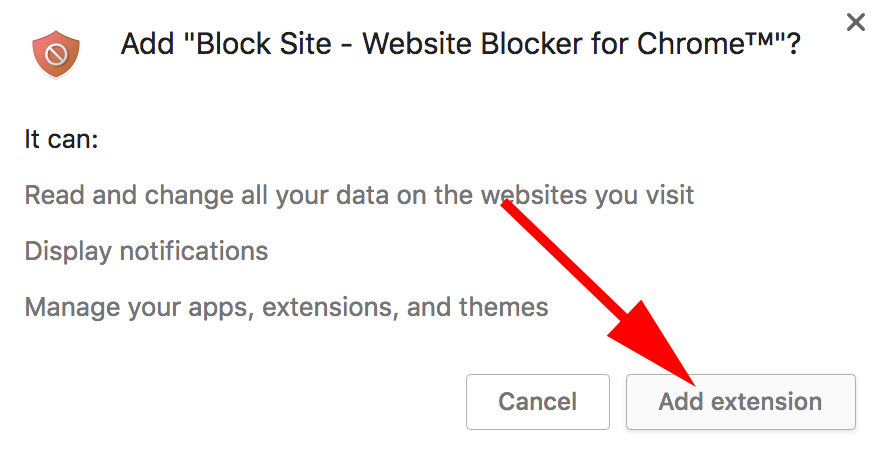
"Add extension" button for Block Site extension in Chrome

Once you click "Add to Chrome," you'll see a window appear that summarizes the extension's main features. If you're satisfied with your choice, click "Add extension" in this window to officially install the extension on your browser.

3. Check for the extension's icon on the top-righthand corner of your Chrome screen.

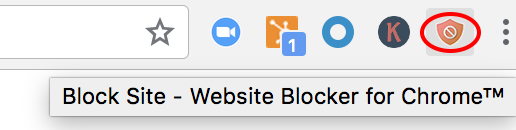
Block Site extension icon in Chrome browser

With your extension downloaded, you'll see a new icon appear across the top of your Chrome browser -- an orange shield with a circle and a diagonal line through the middle. Make sure this icon appears to confirm the extension has been installed.

4. Visit a website you want to block from then on.

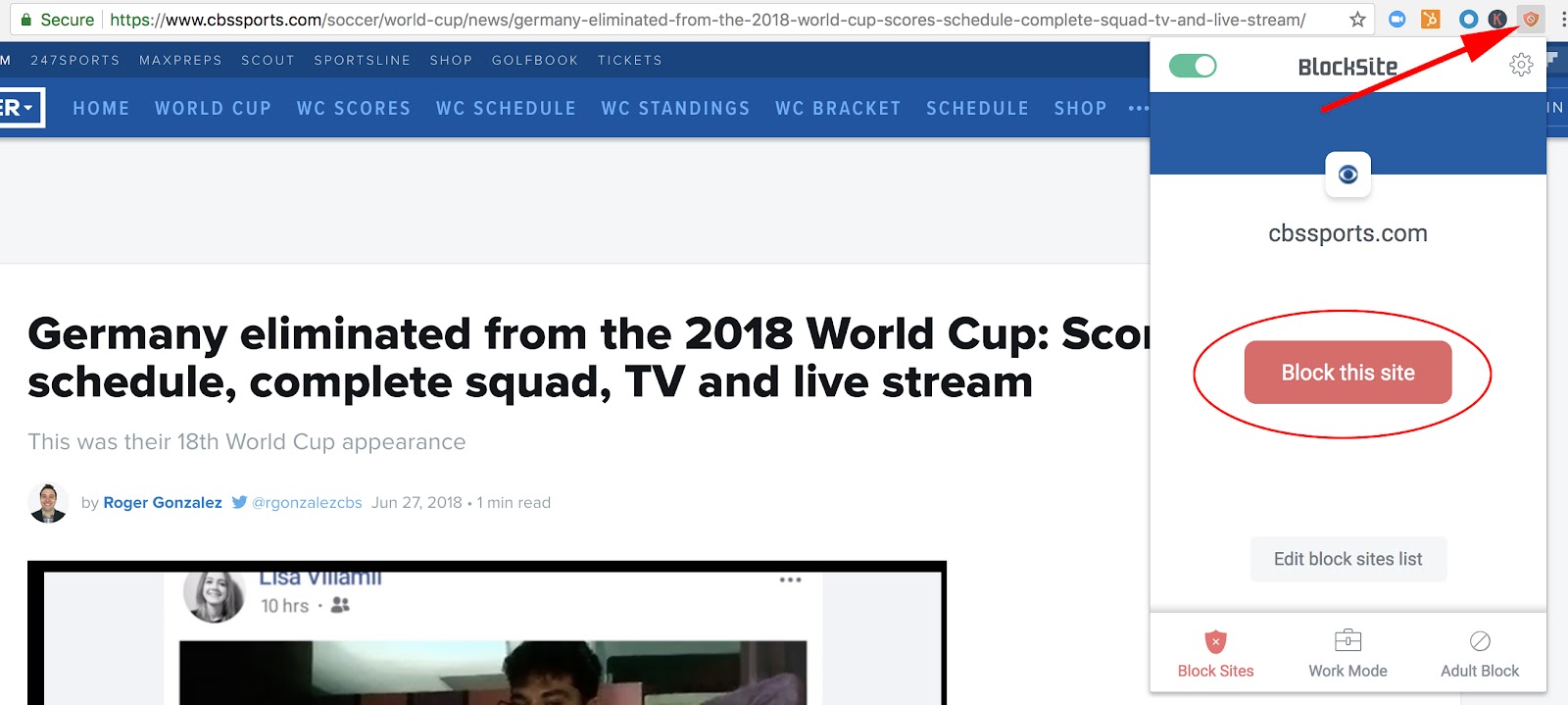
Let's say you're feeling a little bitter from a recent World Cup loss, and want to block sports' sites for a while. Simply go to a website, click that orange shield icon in the top right, and click "Block this site."

Red button to "Block this site" in Chrome

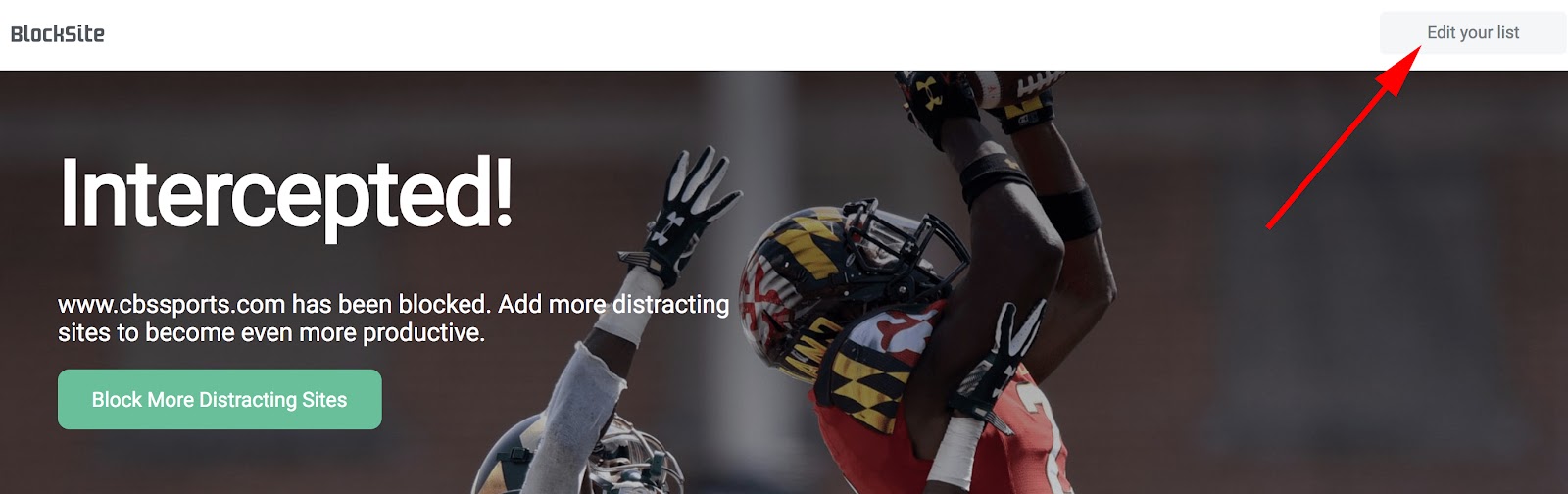
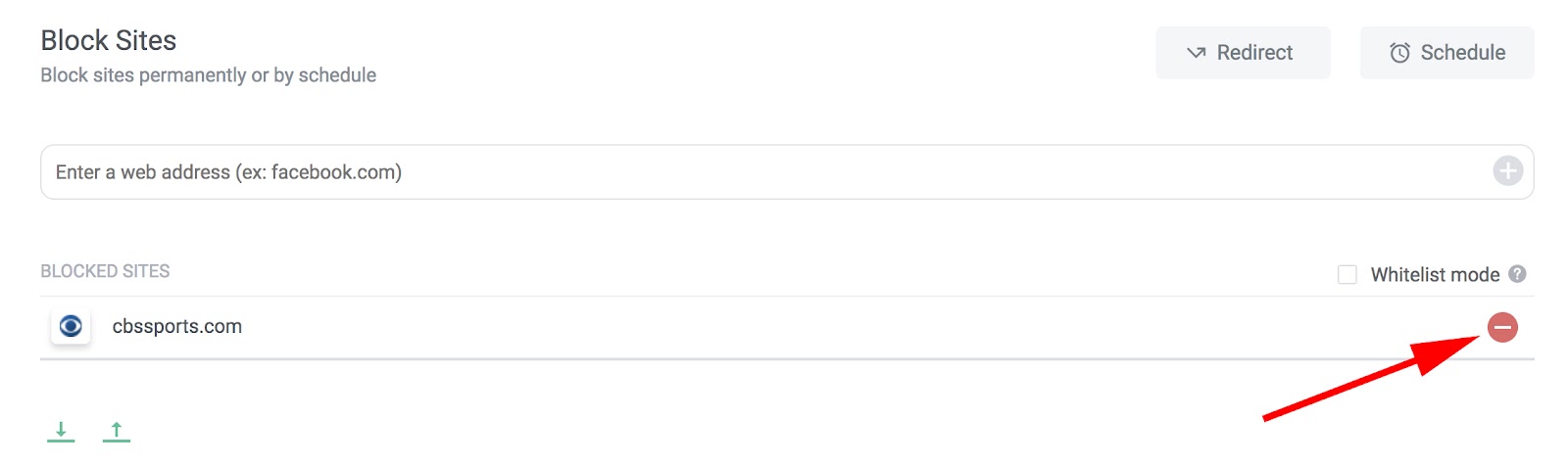
Now, you won't be able to reach cbssports.com (or any other website you chose). You've successfully blocked it. To unblock the site, click "Edit your list" in the top right (or click the icon, and then click "Edit block sites list").

Each of your blocked websites will have a "minus" icon to the right -- click that minus button, and your site will be unblocked.

How to Block Websites on Chrome Android (Mobile)

If you often surf the web via Chrome on your Android device, you might need to block certain websites to ensure increased productivity at all times of day.

Remember the "Block Site" browser extension from the desktop instructions earlier in this article? For mobile devices, this extension is also an app you can download. Here's how to use it via mobile to block certain websites on your smartphone:

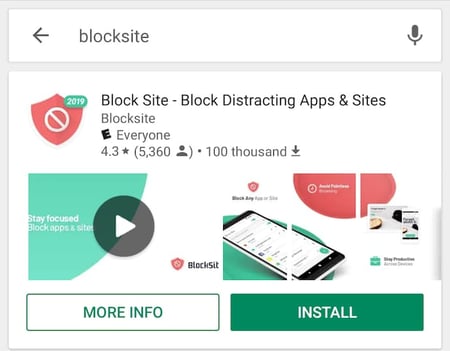
1. Open the Google Play Store and install the "BlockSite" app.

Your Android Device comes with a native app called Google Play -- also known as the Play Store. This is a marketplace where you can download apps, both free and paid, onto your phone. Open Google Play and search for the BlockSite app (all one word), as shown below. You can view it here, too.

blocksite-android-app

2. Open the downloaded BlockSite app.

Once you have this app downloaded, open it when the icon appears on your phone.

3. "Enable" the app in your phone's settings to allow the app to block websites.

Open the BlockSite app on your mobile device and tap "Go to settings" when prompted. The app will take you to your phone's app settings. You'll need to enable the app for it to assume control of your browser and block the websites you don't want to see.

Find this app in your settings list and tap on it. You'll either be prompted to "Enable" the app or "Use service." Tapping either one will activate the app for you.

4. Tap the green "+" icon to block your first website or app.

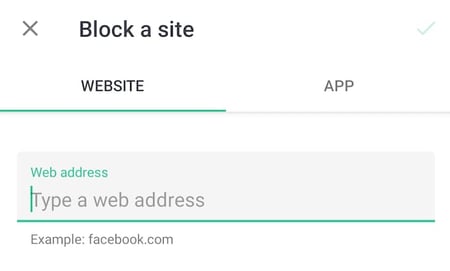
With the BlockSite app enabled, return to the app and tap the green "+" icon on the bottom-righthand corner of your mobile screen. This will open a page where you can block either a website or a mobile app by entering the name of each into the search bar. See the screenshot below; tap "Website" or "App" to set which type of content you want to block.

block-a-site-search-bar

5. Tap the checkmark on the top-righthand corner to confirm the site has been blocked.

Enter the full URL of the website you want blocked and you'll see a green checkmark on the top-righthand corner of your screen become available. Tap it, and you will have successfully blocked this website.

In the next screen that appears, you'll be able to edit or remove websites and apps from your blocked list at any time.

How to Block Websites on iOS Devices (Mobile)

There are a few apps in the app store that allow you to block websites on your iOS device. Here are two options with similar functions:

  1. Zero Willpower: This app is $1.99, and lets you create an easy list of all websites you want to block from Safari on your iPhone. Even better, there's a timer, so you can block a website for a limited period of time.
  2. Site Blocker: Similar to Zero Willpower, Site Blocker lets you block distracting or unwanted websites on Safari on an iOS device, and includes a timer and suggestions as well. This app is free.

Now you're all set to block distracting websites from your Chrome browser on desktop or Android. If you find you're still struggling with productivity, take a look at our Ultimate Guide to the Best Productivity Apps.

Blocking Websites by Rooting or Jailbreaking Your Device

At one point or another, you'll hear about the possibility of "rooting" or "jailbreaking" your mobile device. Doing so has been known to give users administrator rights over the phone -- letting them download apps and games they wouldn't otherwise be able to, as well as change the phone's settings in ways the typical end user can't.

Another byproduct of rooting or jailbreaking your phone is blocking websites.

  • Rooting: This is the action users take on Android mobile devices to access the "root" code of their phone, allowing them to control the device's operating system and, as a result, choose which websites the phone can or can't visit.
  • Jailbreaking: This is the action users take on iOS devices such as the iPhone, allowing them to run and download software that Apple would normally prohibit.

This is the part where I explain how to use rooting and jailbreaking to block websites on your mobile device ... Instead, I'm going to strongly advise against it. Rooting your phone might theoretically give you access to code in your smartphone that can bar certain websites from your browser, but according to Kaspersky, there are also a number of legal and security risks you can open yourself up to.

While different countries have their own laws against manipulating the operating system of a smartphone, the process itself can make your mobile device more vulnerable to viruses and malicious software. For that reason, many apps you might have or plan to download can become incompatible with your phone, and refuse to work on a "rooted" or "jailbroken" device.

When in doubt on how to block a website on your desktop computer, Android device, or iPhone, choose one of the Chrome apps above.

HubSpot Academy - Grow your business, and your career.

http://bit.ly/2zsVe9j

How to Blend Web Analytics and Digital Marketing Analytics to Grow Better

Measuring the effectiveness of digital marketing is one of the greatest challenges facing organizations today.

According to HubSpot's 2018 State of Inbound report, 42% of marketers cited "proving the ROI of our marketing activities" as one of the biggest challenges they face within their company. Brands also say they plan to increase spending on marketing analytics by between 75 and 100 percent, says a study by VentureBeat.

The trouble is, when most marketers hear 'digital analytics,' they tend to think of the metrics you'd typically associate with a simple web analytics tool like Google Analytics — traffic, bounce rate, unique visitors, etc.

However, web analytics is only part of what encompasses digital analytics.

While web analytics can provide you with a wealth of insight and data into the performance of your website, marketers need richer data to understand the impact of their marketing campaigns on conversion rates and a buyer's journey. Looking at top-level web analytics metrics like traffic is only the first piece of the puzzle.

Enter: digital marketing analytics, which offers a much more comprehensive view of what's working when it comes to your marketing strategy — and what isn't.

Regardless of how you fit into your company’s marketing puzzle, learning how to understand and leverage digital marketing analytics is incredibly important. Analytics data not only tells you if your marketing is working (or not), but it also tells you precisely how and where you can improve. This type of insight can benefit everyone.

That’s why we built this guide. We want you to master marketing analytics so your business can grow better. Below, we’ll talk about what marketing metrics to monitor, how to read and apply them to your marketing decisions, and how to leverage them to grow your business and bottom line.

Bookmark this guide for future reference and use the chapter links below to navigate through the content.

Get free advice on how to improve your digital strategy from a HubSpot marketing specialist >>> Book a session here

Digital marketing analytics also give the creative, fluid side of marketing a data-driven foundation on which businesses can build a profitable, scalable marketing strategy. Analytics draw the line between opinion and fact.

Before we dive into how to use digital analytics for your business, let’s talk about what marketing metrics you’ll be measuring and analyzing.

Digital Marketing Metrics to Know

Digital marketing metrics are statistical measures that marketers use to determine the success of various marketing efforts as they relate to their overall campaign goals and industry standards.

You’ve heard of vanity metrics, yes? Vanity metrics are the surface level numbers that often tease you into thinking your efforts are working. Unfortunately, to get a clear picture of your campaign’s impact, you need to look at a wider variety of actionable metrics. We’ll be covering both in this section.

Here’s a comprehensive list of all the marketing metrics you need to know — and what they can tell you.

Digital Metrics for Websites

The following are digital marketing metrics associated with websites and web activity — a.k.a. web analytics.

Visitor

A Visitor (or User) is someone who visits your site. Visitors are tracked by a cookie placed in their browser by a tracking code installed on your site.

Page View

A Page View is when a page on your site is loaded by a browser. A page view is measured every time your tracking code is loaded.

Session

A Session is a series of activities taken by a visitor on your website, including page views, CTAs, and events. Sessions expire after 30 minutes of visitor inactivity.

Traffic

Traffic (or Visits) is the total number of site or page visits in a given time period

Traffic by Channel

Traffic by Channel is the total number of site or page visits per referral channel, e.g. social media, email, landing pages, etc.

Traffic by Device

Traffic by Device is the total number of site or page visits per device type, e.g. smartphone, tablet, desktop, etc.

Ratio of New Traffic to Returning Traffic

The Ratio of New Traffic to Returning Traffic is the percentage of net new site or page visitors you receive as compared to the total amount of returning traffic

Time on Page

The Time on Page is the average time each visitor spends on your site or page

Interactions per Visit

Interactions per Visit are what actions your visitors took did when on your site or page

Bounce Rate

The Bounce Rate is the percentage of people who visited your site or page but didn’t take any action or look at any other pages as compared to the total number of page or site visitors

Digital Metrics for Lead Magnets

The following are digital marketing metrics associated with lead magnets and content offers.

Call-to-Action (CTA) Click-Through Rate

The CTA Click-Through Rate is the percentage of total clicks on a CTA as compared to the total number of page or site visits

Submissions

Submissions is the percentage of total people who filled out and submitted your web form

Conversion Rate

The Conversion Rate is the total number of actions taken (e.g. a download, sign-up, etc.) on your lead magnet as compared to the total number of visits

Free Trial Conversion Rate

The Free Trial Conversion Rate is the percentage of free trial users who converted to customers

Pop-Up Conversions

Pop-Up Conversions is the percentage of total pop-up form completions who converted to customers

Ratio of Generated Leads to Marketing-Qualified Leads (MQL)

The Ratio of Generated Leads to MQL is the total number of “good fit” leads collected from your lead magnet as compared to the total number of leads generated

Leads to Close Ratio

The Leads to Close Ratio is percentage of leads converted to customers as compared to the total number of leads

Digital Metrics for Email Marketing

The following are digital marketing metrics associated with email marketing.

Open Rate

The Open Rate is percentage of opened emails as a proportion of the total number of emails sent

Opens by Device

Opens by Device is the total number of email opens per device type, e.g. smartphone, tablet, desktop, etc.

Click-Through Rate

The Click-Through Rate is the percentage of total clicks on an email link, or CTA, as a proportion of the total number of email opens

Bounce Rate

The Bounce Rate is the percentage of undeliverable emails as a proportion of the total number of emails sent

Unsubscribe Rate

The Unsubscribe Rate is the percentage of people who unsubscribe from your email list over a given period of time

Digital Metrics for Content and Social Media

The following are digital marketing metrics associated with content and social media.

Engagement Rate

The Engagement Rate is the total number of engagements (e.g. comments, clicks, likes, etc.) as a proportion of the total number page or post views

Follows and Subscribes

Follows and Subscribes is the total number of people who’ve shown interest in your content and want to receive updates when new posts or pages are published

Shares

Shares is the total number of times a post or page has been shared on social media, a website, or a blog

Digital Metrics for Product and E-Commerce

The following are digital marketing metrics associated with e-commerce.

Shopping Cart Abandonment Rate

The Shopping Cart Abandonment Rate is the total number of online shoppers who put items in their shopping cart but don’t complete a purchase as a proportion of the number of people who complete a purchase

This section serves as a high-level review of the most important marketing metrics per channel. Depending on what software you use or marketing channels you pursue, you may see different metrics.

So, why exactly do digital marketing analytics matter? Let's take a look at what makes digital analytics so important today, and how they compare to (and improve on) the insights offered by more basic web analytics.

Digital Marketing Analytics vs. Web Analytics

Quite simply, web analytics (like many of the metrics we defined above) just isn't enough. The data that web analytics provides alone doesn't cut it for marketers who need to understand how their work makes an impact throughout the entire marketing and sales flywheel.

Let's face it: Today's marketing extends well beyond the bounds of your website. It also includes how your marketing channels interact, the insight you gain from those outcomes, and the progress you track through your reporting.

This perspective provides the foundational data you need to structure your flywheel — delighting your existing customers enough to attract and engage new ones.

Web analytics measure things a webmaster or technical SEO specialist cares about, like page load speed, page views per visit, and time on site. Digital marketing analytics, on the other hand, measure business metrics like traffic, leads, and sales, and allows you to observe which online events determine whether leads will become customers.

Digital marketing analytics include data not only from your website, but also from sources like email, social media, and organic search.

How Digital Marketing Analytics Connects Every Business Activity

With digital marketing analytics, marketers can understand the effectiveness of their entire marketing strategy, not just the effectiveness of their website. Using digital marketing analytics allows marketers to identify how each of their marketing initiatives (e.g., social media vs. blogging vs. email marketing, etc.) stack up against one another, determine the true ROI of their activities, and understand how well they're achieving their business goals.

The central question is: How can you structure an appropriate business goal to visualize your marketing team's efforts in the most accurate way possible?

As a result of the information they can gather from full-stack digital marketing analytics, marketers can also diagnose deficiencies in specific channels in their marketing mix, and make adjustments to strategies and tactics to improve their overall marketing activity.

You can spend hours and hours slicing and dicing data in web analytics tools, comparing new vs. repeat visitors month over month. But when it comes down to it, you'll come up short of a truly comprehensive view of your marketing performance.

There's no doubt that marketers are aware there's a deficiency in how they're able to measure the effectiveness of what they do; here's how full-stack digital marketing analytics makes up for that deficiency.

The 'Full Picture' of Digital Marketing Analytics

Digital analytics can be used to structure a business goal into outcomes based on three broad categories:

  1. The relationship between different marketing channels
  2. People-centric data on the buyer's journey
  3. Revenue attributed to specific marketing efforts

Download our free ebook on inbound marketing analytics — the key metrics your executives really want to see.

Let's highlight these main differentiators.

1. The Relationship Between Marketing Channels

Digital marketing analytics provides a good, solid look into the direct relationships between your marketing channels. It's great to be able to see how each of your individual channels (e.g., social media, blogging, email marketing, SEO, etc.) are performing, but the true power of analytics comes into play when you can easily tie the effect of multiple channels' performances together.

For instance, let's say you sent an email to a segment of your database. Digital marketing analytics not only tells you how many people clicked through from your email to your website but also how many of those people actually converted into leads for your business when they got there.

Furthermore, you can compare the impact of that individual email send with other marketing initiatives. Did that email generate more leads than the blog post you published yesterday? Or was the content you shared via Twitter more effective?

2. People-Centric Data on the Buyer's Journey

As we mentioned earlier, a key differentiator between web analytics and digital marketing analytics is that the latter uses the person — not the page view — as the focal point.

Digital marketing analytics enables you to track how your individual prospects and leads are interacting with your various marketing initiatives and channels over time. How did an individual lead first come to find your website? From Google? Facebook? Direct traffic? Is that lead an active part of your email subscriber base, clicking and converting on marketing offers presented via email? Do they read your blog, and have they downloaded any content offers that could indicate an interest in your products/services?

Full-stack digital marketing analytics can tell you all of this and more, providing you with extremely valuable lead intelligence that can help inform the direction of your future campaigns.

Looking at all of this information in aggregate can help you understand trends among your prospects and leads and which marketing activities are valuable at different stages in the buyer's journey.

Perhaps you find that many customers' last point of conversion was on a certain ebook or white paper. Having this data makes it possible to implement an effective lead management process, enabling you to score and prioritize your leads and identify which activities contribute to a marketing-qualified lead (MQL) for your business.

3. Revenue Attributed to Specific Marketing Efforts

One of the most useful functions of marketing analytics is its ability to attribute specific marketing activities to sales revenue. Sure, your blog may be effective in generating leads, but are those leads actually turning into customers and making your business money? Closed-loop marketing analytics can tell you.

Download our free ebook on closed-loop marketing and take your digital marketing analytics to the next level.

The only requirement here is that your digital marketing analytics system is hooked up to your customer relationship management (CRM) platform.

Having this closed-loop data can help you determine whether your individual marketing initiatives are actually contributing to your business' bottom line. Through it, you can determine which channels are most critical for driving sales.

Perhaps you find that your blog is your most effective channel for generating customers, or conversely, you find that social media is really only powerful as an engagement mechanism, not a source of sales.

By measuring the relationship between marketing channels, tracking people-centric data, and analyzing what revenue is linked to which efforts, you’ll be equipped to set goals that support your bottom line. Now, let’s talk about how to use these marketing analytics effectively.

How to Use Digital Marketing Analytics Effectively

Most marketers know they need to be looking at more than just traffic and website performance to get the insights we've talked about so far. But why do so many of us still struggle to measure the impact and prove the ROI of our online marketing activities?

Probably because:

  • We don't have solid goals in place for our campaigns, or
  • We don't have the means to measure our success.

Quite often, you'll find it's a combination of the two.

Master SMART Marketing with our free, goal-setting Excel template.

S.M.A.R.T. Goals

One way to mitigate this is to have an actionable business goal combining your marketing team’s priorities. Typically, this can be achieved using the S.M.A.R.T. format. In this strategy, each goal you create must be:

  • Smart
  • Measurable
  • Attainable
  • Relevant
  • Timely

A good business goal will inherently organize your team’s tasks towards producing specific outcomes or metrics to measure their progress. For marketing teams, this can be broadly summarized into three major categories:

  • Web traffic and diversity of sources
  • Conversions generated from traffic to produce leads and (eventually) customers
  • Identifying net new revenue as a direct result of certain marketing efforts, laying a roadmap for further growth and cost-effective marketing investments

The fact is, in order to gain the insights needed to understand their marketing performance and make sound decisions, most marketers balance a number of different digital analytics platforms. (Remember how many categories of marketing metrics we reviewed above?)

For example, they gather data about their email marketing through the analytics provided by their email service provider, information about their social media performance through their social media monitoring tool, blog analytics from their blogging platform … and the list goes on.

But this fragmented approach to reporting makes it really difficult to connect the dots and make informed decisions about the future of your digital strategy.

The ideal solution is to implement an all-in-one marketing and reporting platform that offers end-to-end visibility on your marketing activities, allowing you to measure everything in one place.

Campaign-Based Reporting

Rather than just looking at canned reports for each traffic source you can use custom reporting capabilities to construct data charts that depict an entire marketing campaign's progress, not just how certain content is doing through certain channels.

Here's how you can configure your digital analytics to capture this holistic view, showing you where a potential buyer came and where they are going. We'll use HubSpot's Marketing Hub as an example. Here are some of the types of analytics you can see in a quality marketing tool:.

Web Traffic by Original Source

This is an easy report that you can configure by date range and/or original source to show what marketing channels you can capitalize on to turn more of that traffic into leads and customers. You can use HubSpot's Traffic Analytics tool to get access to this.

First Conversion by Original Source/Persona

This report quantifies your impact by the number of new contacts you’re able to create based on the first content offer or form submitted, and tie that back to the original source of that lead.

Another way to look at this is to segment your contacts by a particular persona to show which ones are giving the most return for which your team is creating content.

Contacts Funnel Report

This calculates the conversion rates down the marketing and sales funnel, showing new leads that become marketing qualified leads, sales qualified leads, and, ultimately, new customers.

Marketing Contribution to Revenue

This custom report depends on your use of the marketing qualified lead lifecycle stages, visualizing those that converted into customers and their relative value in terms of revenue generated.

Customer Acquisition Cost

This can be seen in HubSpot by using calculated fields or custom properties to depict the amount of money spent by your marketing team to attract, engage, and delight your buyer persona.

These closed-loop reports are just some of the capabilities available to depict your progress towards your business’s bottom line.

All of the insights, information, and data you can gather from your digital marketing analytics tool(s) is really only useful if you do something with it. The true value of analytics isn't just to prove the value of marketing to your boss; it's also to help you improve and optimize your marketing performance — on both an individual channel-by-channel basis as well as an overall, cross-channel machine.

With digital marketing analytics, you should also be able to implement closed-loop reporting, making it easier to prove how your marketing efforts are positively impacting your sales team, who are being fed much higher quality leads.

Grow Better with Digital Marketing Analytics

The most important takeaway from this article is: If you're relying solely on top-level web analytics, you're missing out on a lot of powerful data that can help inform your marketing strategy and better connect with your audience and customers. So, when evaluating digital analytics tools for your business, be sure you're looking for evidence of digital marketing analytics, not just web analytics.

While web analytics provide a rosy picture of your top-line activity, digital marketing analytics can help you turn your business objectives into measurable outcomes that support your bottom line. Prioritize the data that reflects people — not page views — and you’ll be growing better in no time.
Free Download Beginner’s Guide to Digital Marketing

http://bit.ly/2z2Qt2F

15 Quotes About Social Media to Inspire Your Marketing Strategy

With all the algorithm updates, changing content preferences, and memes sprouting up on social media, it can be more challenging to adapt your marketing strategy to the channel than it was acclimating to the awkwardness of puberty.

Despite its perpetual evolution, though, social media will always have one constant -- people. For the most part, human behavior has stayed the same for thousands of years, which means the principles of psychology are unwavering. So if you want to succeed on social media, you need to focus more on the people using it than the trends changing it.

To help you develop an audience-centric social media strategy, we’ve compiled 15 insightful quotes about social media from executives, marketers, and even celebrities. Read on to get inspired.

1. “People want to go on the Internet and check out their friends so why not build a website that offers that? Friends, pictures, profiles, whatever you can visit, browse around, maybe it's someone you just met at a party. I'm not talking about a dating site. I'm talking about taking the entire social experience of college and putting it online.” - Jesse Eisenberg as Mark Zuckerberg in The Social Network

2. “It's a dialogue, not a monologue, and some people don't understand that. Social media is more like a telephone than a television.” - Amy Jo Martin, author of Renegades Write The Rules

3. “We get to live in a time that we get to use social media as a tool. It's not just a face on a piece of paper, and that's what makes you someone's favorite model. We can have a very similar sense of humor as someone, and that's why we're their favorite model, or our personal style, off the runway, is why we're their favorite.” - Gigi Hadid, fashion model

Social Media Quote - Gigi Hadid

4. “I'm very active on social media and see the huge impact it has on engaging with fans and being able to have a voice.” - Stephen Curry, professional basketball player for the Golden State Warriors

5. “A lot of people who are 'social media' stars aren't considered to be 'real' stars, and people underestimate the amount of work it takes to edit and upload a video every single day and document your life like that.” - Shawn Mendes, singer

Social Media Marketing Quotes

6. "When I hear people debate the ROI of social media? It makes me remember why so many businesses fail. Most businesses are not playing the marathon. They're playing the sprint. They're not worried about lifetime value and retention. They're worried about short-term goals.” - Gary Vaynerchuk, CEO of VaynerMedia

7. "A large social-media presence is important because it's one of the last ways to conduct cost-effective marketing. Everything else involves buying eyeballs and ears. Social media enables a small business to earn eyeballs and ears.” - Guy Kawasaki, Chief Evangelist, Canva

8. "Facebook is a discovery model platform. Its primary goal is to make the audience happy. So you’ll only get ROI if you create quality content for your audience.” - Kelly Hendrickson, Facebook Lead at HubSpot Social Media Marketing Quote - HubSpot

9. 'Instead of getting discouraged when a promising tweet doesn’t rack up the likes and retweets, pay attention to the clicks and check how long people stay on the page after coming from social. If your post is generating strong engagement, don’t worry so much about the superficial stats.” - Tallie Gabriel, Producer at Unthinkable Media

10. "When pitching to press outlets, you need to help drive traffic through social to make it worth the effort of PR professionals. In addition to traditional outlets, publications are now generating traffic from native content within social platforms. So if you want to engage with members of the press and PR professionals today, you need to analyze their social media pages to learn what kind of content they’re sharing -- before pitching.” - Ryan Bonnici, CMO at G2Crowd

Funny Social Media Quotes

Quick Note:

We found these quotes on Pinterest. The authors are unknown, but they’ll still give you a good laugh.

11. "What happens on social media stays on Google forever.”

12. "Being famous on Instagram is basically the same thing as being rich on Monopoly.”

13. "Tumblr is currently the only social media network that your parents haven’t ruined.”

Funny social media quote

14. "I log off because I’m bored. I log back on in five minutes because I’m bored.”

15. "For every action, there is an equal and opposite reaction, plus a social media overreaction.”

http://bit.ly/2Vhs6rx

The Top 7 Pinterest Categories & How to Decide Which to Pin to

More than likely, your company's social media strategy revolves primarily around Facebook, Instagram, and Twitter. Perhaps, if you're trying to attract a younger demographic, you use Snapchat, too.

But sticking to those platforms alone could mean a major missed opportunity -- Pinterest.

Pinterest now attracts 150 million people per month. Additionally, its growth supersedes traditional social network success stories -- millennial use of Pinterest in particular has increased more than any other social network, even Snapchat.

There are a few categories that people often turn to Pinterest for before looking anywhere else -- hairstyles, for instance, or healthy dinner recipes. Additionally, if you search "Motivational quotes" and then click "Images" on Google, you'll find yourself bombarded with a myriad of intricately designed quotes from Pinterest's website.

In short, there are certain topics that do exceptionally well on Pinterest, and it's critical you know which categories those are, so you can enact a brand strategy that enables your business to find success on the platform.

Keep reading to learn the seven most popular Pinterest Categories of 2019, and which ones your business should pin to.

Access 195+ Marketing Design Templates

Pinterest Categories

1. Travel

Whether you're looking for a tourist-free island to visit or need fall weekend getaway ideas, it makes sense you'd start with Pinterest. And, in fact, most people do -- two times more travelers use Pinterest vs. top online travel agency sites.

On Pinterest, Travel + Leisure has 7.3 million monthly viewers, and the Travel Channel has 2.9 million monthly viewers. Whether you're a travel agent or blogger, you can likely attract a good deal of brand awareness by posting envy-inducing images of faraway destinations on the site.

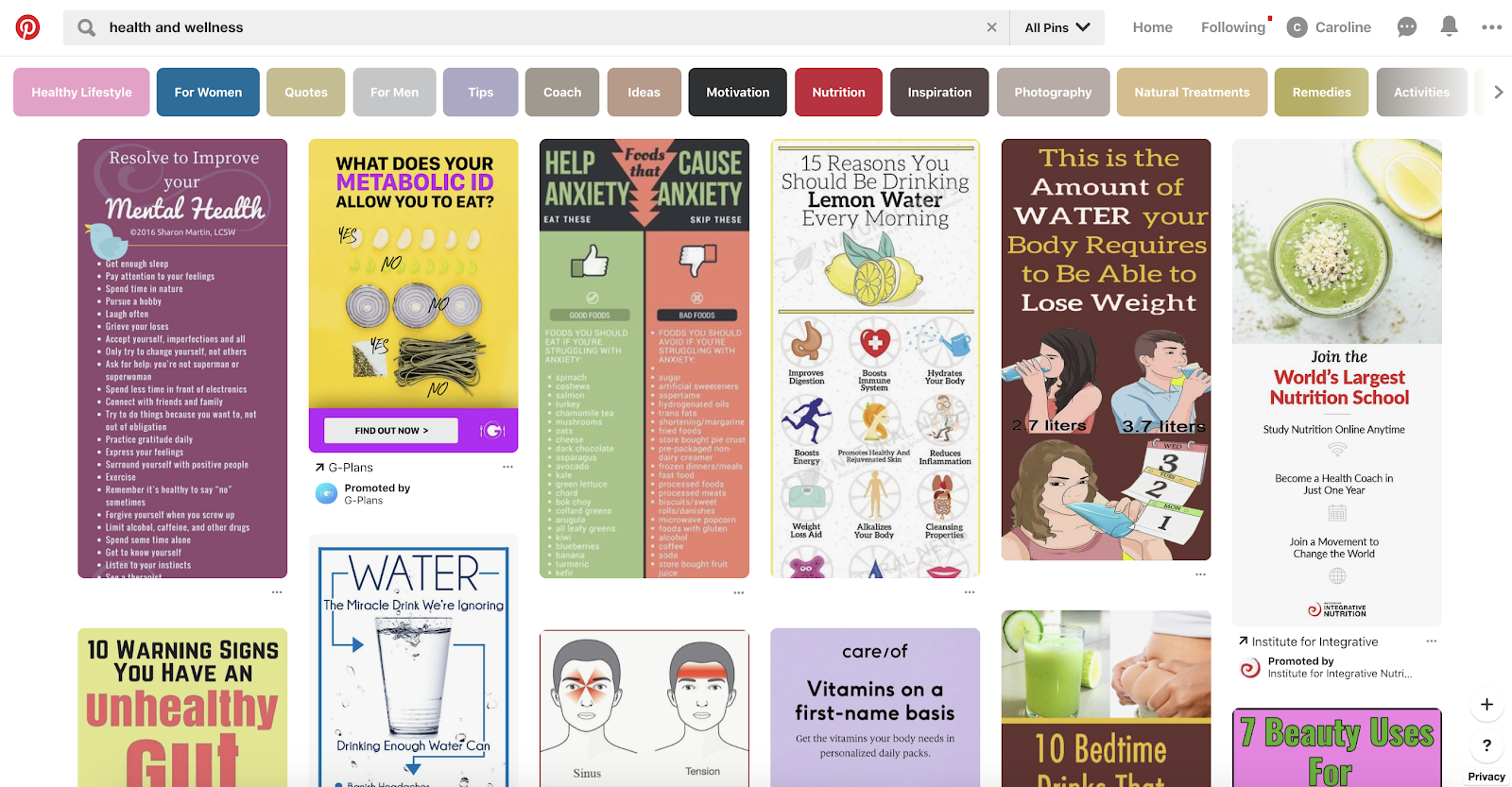
2. Health and wellness

One of Pinterest's most popular categories in 2019 can likely be attributed, at least in part, to the new buzz around self care, the success of boutique fitness studios like SoulCycle, and the rising popularity on Instagram of hashtags like #healthyliving. Whether a user is searching for organic smoothie recipes, yoga clothing, or weight-lifting exercises, Pinterest is a viable opportunity to showcase your products or services related to health and wellness. In fact, the search for "healthy habits" increased on Pinterest within the last year by almost 500%.

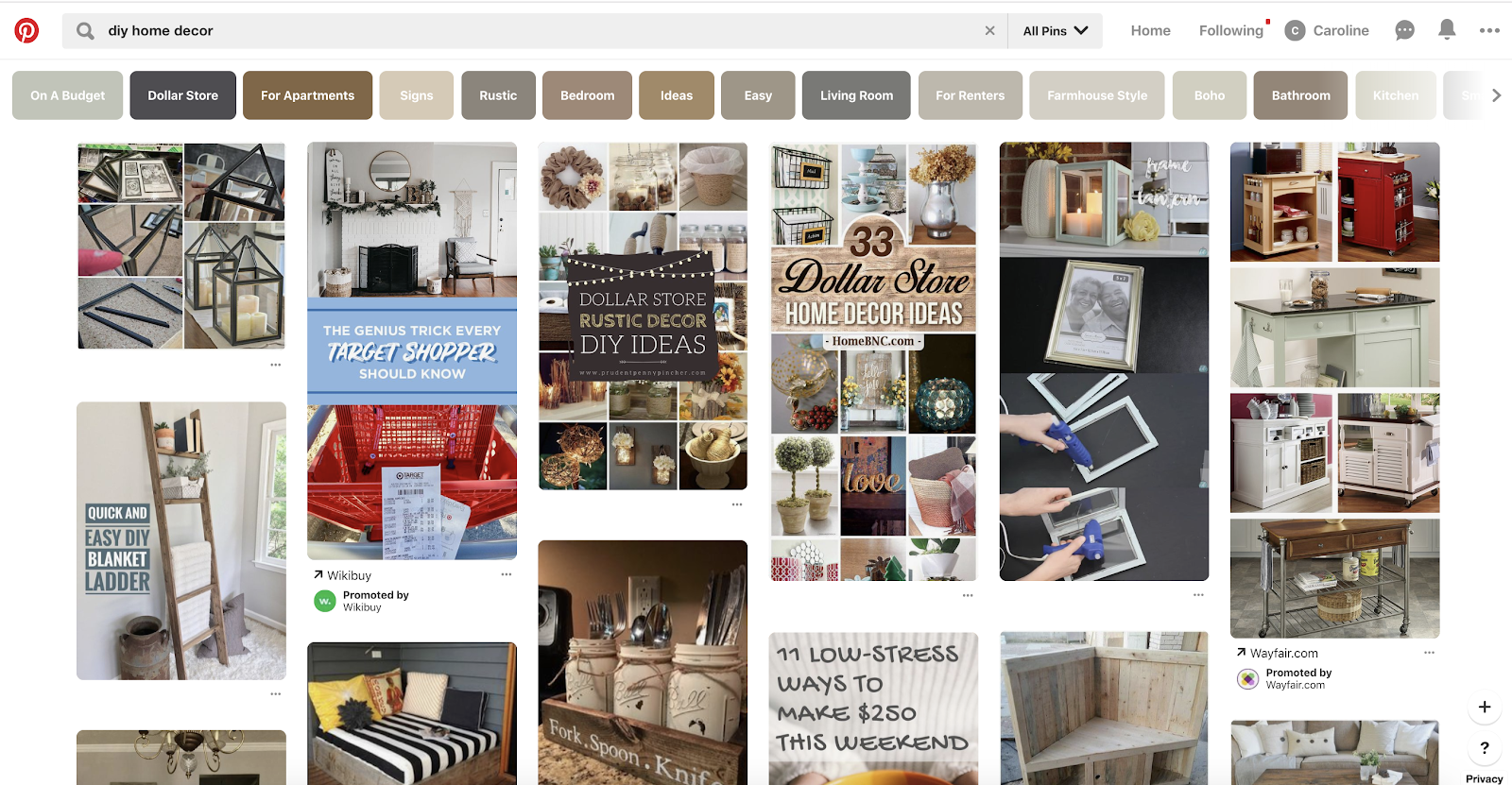
3. DIY home renovation projects

In 2018, 83% of home-related searches on Pinterest were "day-to-day DIY projects". Nowadays -- perhaps in part due to the rising popularity of HGTV shows, which prove how minor adjustments on a home can have major impact -- people are more inclined to make home improvements themselves, and turn to Pinterest for home décor inspiration. If you're in the business of interior design or home renovations, you might consider posting design tips, color themes, or simple DIY projects on Pinterest.

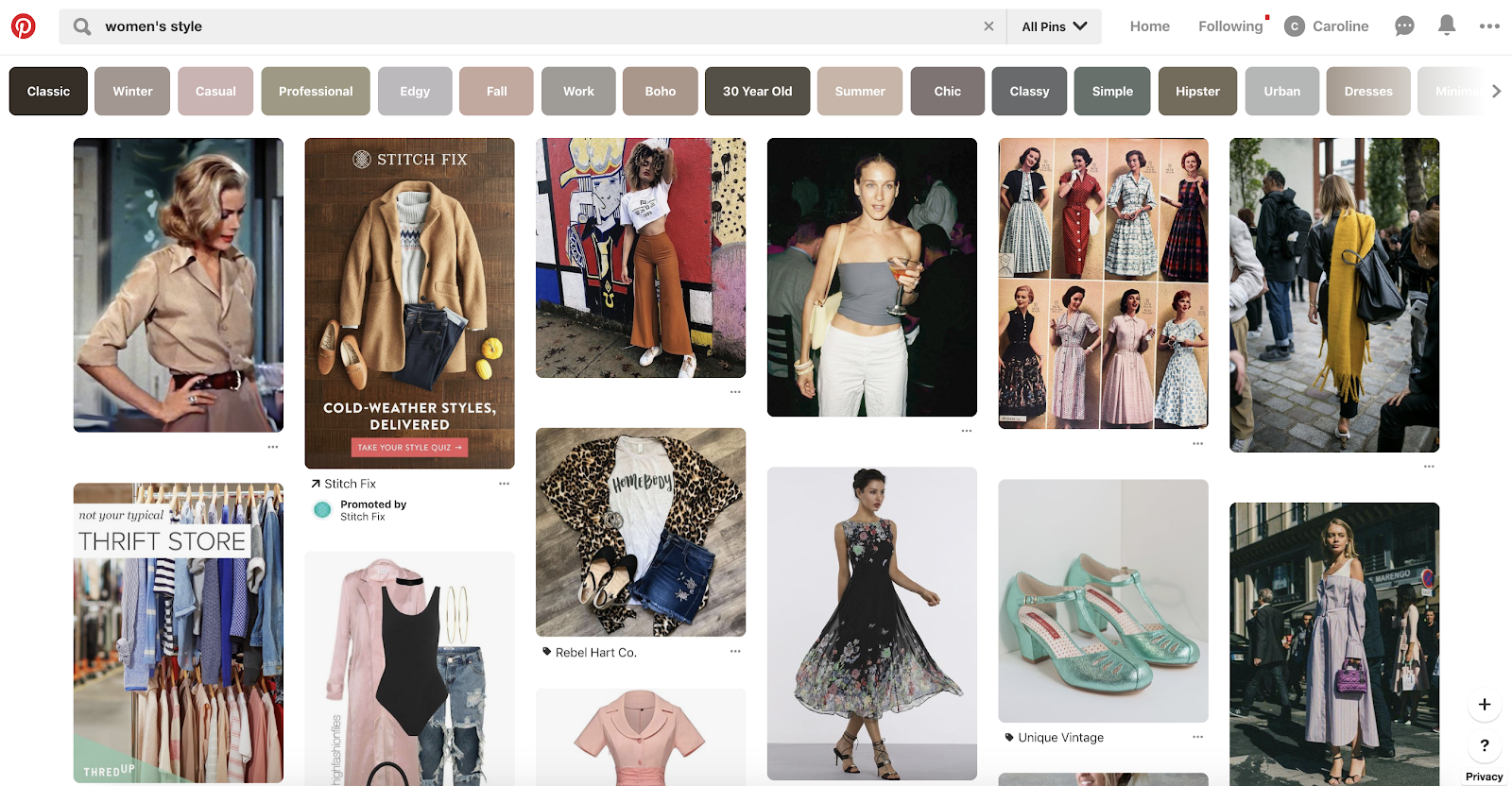
4. Women's style

If you own a retail boutique or design your own clothes, it's critical you take advantage of Pinterest's audience -- which, while there are increasing sign-ups from men, is still primarily women. For instance, Jo-Lynne Shane, a lifestyle and fashion blogger, took advantage of Pinterest to promote her brand by creating a "30 Days of Fall Fashion" special series of posts. She found her traffic quickly doubled, and she now has 5.9 million monthly viewers on Pinterest. From tortoise earrings (+679% in search volume in 2019) to biker shorts (+1323%), it's undeniable women's fashion is still as relevant on Pinterest as ever.

5. Beauty

I, like many of my friends, research all my new hairstyles on Pinterest before entering a hair salon. If you're a hairstylist, makeup artist, or manicurist, then, it's a major missed opportunity not to post photos of your clients' before-and-after shots on Pinterest. Additionally, the Pinterest community is 2.4x more likely to experiment with different makeup vs. women on other platforms, and searches like "standout lip color" and "powder dip nails" increased by over 400% in the past year. Along with posting your own images, you might consider using Pinterest to keep up-to-date with trends in your industry, and see what type of looks clients could want in the future.

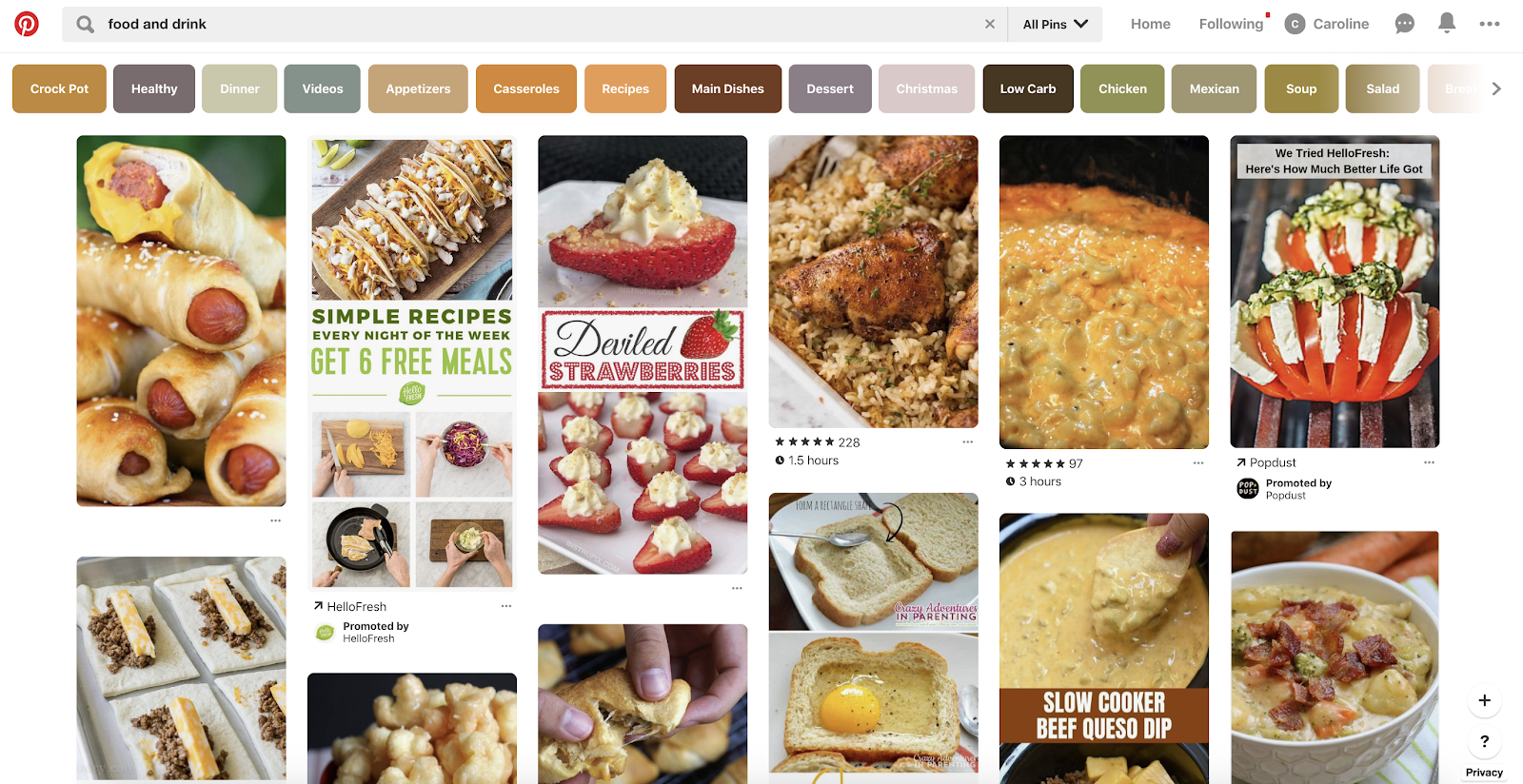
6. Food and drink

Sometimes, the easiest way to decide what you want to cook for dinner is to peruse images of recipes online -- which is why Pinterest is an incredibly popular avenue for food and drink-related content, with over 23 billion recipes and dining ideas posted. You'll find everything from food blogger's recipes to a restaurant's signature dish. If you work in the food industry, it's critical you use Pinterest as an opportunity to connect and engage with other foodies, and to share recipes (or find inspiration for yourself).

7. Motivational quotes

Type "Motivational quotes" into Google, and then click "Images". My guess is, plenty of your results come from Pinterest. And, while I'm willing to bet "motivational quotes" isn't your business in-and-of-itself, this is still an interesting opportunity for increased brand awareness.

For instance, let's say you've written a blog post about successful women in leadership positions. You might consider taking some of those women leadership quotes, and designing them on a template before posting them to Pinterest. Now, they're likely more easy-to-uncover in Google's Image Search, and could lead users back to your site. Additionally, offering fun, inspiring quotes is a good way to make your brand seem more helpful.

Featured image courtesy of Refinery29.com

download 195+ free design templates

http://bit.ly/2Ex5jCz