Wednesday, March 4, 2020

Local Email Marketing: A Crash Course

You've read the stats: email marketing is an undeniably powerful marketing strategy. In fact, on average, email generates $38 for every dollar spent, which is a 3,800% return on investment.

And did I mention that there are almost four billion email users worldwide?

Crazy, right?

Email marketing works for companies with customers all over the globe, like BuzzFeed and Uber, two huge companies that have invested in an impressive email strategy.

But what do you do when you're working for a local company? One that runs on a much smaller scale? Customers are right in your area, and to make sales, you have to focus on locality.

Enter your solution: local email marketing.

Local Email Marketing

How is local email marketing different from email marketing? All in all, there's not that much of a difference. This approach takes all of the elements of email marketing and puts a local business spin on it.

To illustrate how email marketing can work on a local scale, let's look at an example.

Let's say you run a coffee shop and want visitors to sign-up for your email list. A way you can do that is by making the release of your new drink or roast exclusive to those who sign up for your email newsletter.

That way, you'll have an interested audience, an incentive for them, and more sign-ups for you. And it's not a bad idea for a new tradition, either.

Getting more people to opt-in to newsletters will probably take a little more than just asking — you might have to offer an incentive. However, the incentive can be something you can easily fit into your model, such as a new drink or roast for a local coffee shop.

You might think you're limited if you work for a smaller business with a limited budget, but the advantage of that is that you can do things, particularly in your community, that large businesses can't in their strategy. Your ability to pay extreme attention to detail and create local connections will help you create a strong brand image in your area.

Next, let's talk about some ideas for local email marketing that you can try implementing today.

Local email marketing ideas

1. Host an event and tie it to email.

Events incentivize new prospects to visit your brick-and-mortar shop, and give existing customers an excuse to visit. Hosting an event and using it as a way to gain more email subscribers earns you great exposure you might not have had before.

Plus, it helps you get more eyes on your emails.

To illustrate, let's say a local marketing company has a goal of boosting email sign-ups, and is hosting a networking event in a month. A great way to spark interest in the event and the company's newsletter is to offer a special perk for the event as an incentive for signing up for emails — like a small percentage cut from the admission fee, or a raffle ticket.

By offering a unique incentive, existing customers will be interested in one of their favorite companies giving a little perk, while new prospects will appreciate the free aspect.

2. Make your subject line a local one.

In the fight for maintaining relevance in a flooded email marketing inbox, you have to stand out from the subject line and beyond.

While bigger companies' campaigns have to be general with mass email copy, a local company's marketing team has the edge of inserting local language to communicate with customers on a deeper level. They have the advantage of sounding more relatable.

Starting with a local subject line will entice email recipients who live in close proximity because it's more appealing. For example, if I were to receive an email from my favorite coffee chain that read, "Hey Boston: Coffee and a show?" instead of "Sign Up for Global Happy Hour on Friday", I'd open the first option, but delete the other from my inbox.

3. Make it easy to subscribe.

Make sure the steps leads need to take in order to subscribe are easily comprehensible. If people have to search for a way to opt-in to your emails, they may give up and not subscribe at all.

In order to engage people and make them more interested in signing up for your newsletter, they should be able to do it in a way that's easy to comprehend. Additionally, emails should only have a couple of key elements — shareability, a call-to-action, and a simple form — to be effective.

The option to subscribe should be clearly labeled on a webpage and the form should have more fields than just name and email address. You can find a more in-depth tutorial about email design in this post.

4. Include a promotion in your email.

Local promotion is an advantage of people who own local businesses. Similar to hosting events, promotions are another way to grow your email list by offering something in return.

Special discounts, a complimentary perk with sign-up, or exclusive coupons are all ways you can include promotion in your email. Promotions are a great idea because they can be a low-cost option for showing existing customers and leads that you care about their business.

Think about it — if your favorite local grocery store was offering a 10% discount on your bill by signing up for email newsletters with more coupons, would you sign up? I sure would.

5. Segment your audience.

To further personalize emails and heighten the customer experience, you can separate email lists into smaller subgroups defined by certain characteristics, such as age or hobbies.

What this process does is help you make more informed decisions about which customers receive certain emails.

The information you gather about your audience will help you create special content tailored to the interests of your customers. For instance, if a hobby that's consistent with some of your audience is wellness, you should consider hosting a wellness event where attendees are required to sign up for wellness-themed emails.

Generally, segments are comprised of demographic information that can be collected as part of the sign-up process. To get more information about audience segmentation, check out our post about it.

6. Check your data.

Automated email software is imperative to use to check the performance of your emails. You want to see all the hard work you put into emails pay-off, right? That's what this software can help you do.

Email software tracks metrics that can help you improve your emails and see higher ROI on your email marketing strategy. With email software, you'll have access to data like subscribe/unsubscribe rates, open rates, click-through rates, and conversion rates.

In some cases, email software can even assist with the creation of the emails themselves. Depending on the software, you might find email templates to help you accomplish your goals. For example, HubSpot's email marketing software offers templates for opt-in emails, responsive emails, calls-to-action, and simple forms.

You won't have to spend extra time collecting the data yourself, because all of your content will be in one place. You will be able to send automated email messages that look professional, are GDPR compliant, and have all the components you're looking for. If you don't already have automated email software, it could be the missing piece you need.

The next time you receive an email in your inbox, think about how you can spin it to take a local angle. Or, the next time you receive an email from a local business, look at the local flair that the company used to stand out. Is it in the subject line or within the content, and how can you use their emails as inspiration?

http://bit.ly/32Rj5e0

Media Planning: The Ultimate Guide

For any business to be successful today — no matter the type, size, or industry — it must create and share media content (images, videos, infographics, social media posts, podcasts, etc.) with its target audience members.

This is a large part of how you boost brand awareness, engagements, conversions, and revenue (among other things) for your business. Not to mention, media content helps you stand out from competitors and other businesses.

Here's the issue: The sheer amount of media content most businesses produce and share on a regular basis to stay relevant among audience members can become confusing to keep track of, plan, organize, distribute, and analyze for them.

The best way to combat these issues is through media planning.

Based on this definition, it’s clear media planning has many moving parts — this is why the process can be difficult to get right.

By working through the media planning steps (which we’ll cover below) as well as implementing templates (we’ll discuss those shortly, too), you’ll keep any media planning challenges at bay.

But first, in case you need further convincing media planning is a worthwhile investment, let’s cover some of the specific benefits of the process.

Benefits of Media Planning

Media planning helps you with different parts of content creation and distribution including (but not limited to):

  • Getting to know your target audience on a deeper level so you can effectively reach them through your media content
  • Deciding which media channels and platforms you’ll share your content on
  • Determining the timing and frequency of the media and content you publish and share
  • Keeping up with the latest media trends and technology
  • Sticking to your budget as you work to create, publish, and share high-quality and engaging media content
  • Conducting analyses to measure the success of your media planning process

In addition to the benefits of media planning, it’s important to note how this process differs from that of media buying — although the processes are related, they have different purposes and are often confused with one another.

Media Planning and Buying

Media planning and media buying are closely related and work in tandem with one another. Depending on the size of your business and your budget, your team members who plan your media may also handle the media buying process.

So, what makes these processes unique?

Well, we already covered the definition of media planning — it’s a process focused on the strategy behind the media content that’s created, published, and shared among your customers and target audience. The media referred to here is all-encompassing, meaning it doesn’t have to include paid ads and paid content.

This is where media planning and media buying differ.

What is media buying?

Media buying is related to paid media — whether that means your business is buying campaign or ad space on various channels, paying to share targeted campaigns and ads, or negotiating with media vendors.

In a world where your business can create and share media on different platforms and successfully reach your audience for free, it’s clear media planning can happen without media buying. However, media buying requires media planning.

This is because media planning sets the tone and direction for the buying that needs to occur. Once ad space is purchased or content distribution plans have been negotiated, there needs to be a strategy (or media plan) for getting that media to your audience and customers.

Now let’s review the steps in the media planning process so you can begin developing your business’s strategy.

Media Planning Process

As you work through the following process, keep in mind that the way your business chooses to apply the results and conclusions derived from each step will be unique based on your needs.

1. Conduct market research.

The first thing you’ll want to do when developing your media planning process is conduct market research. Market research will allow you to tailor the content you create and the media plan you implement to your target audience and customers.

This entails creating (if you haven’t already) and studying your buyer personas as well as developing an understanding of who your target audience and current customers are.

This way, you can determine what media will be most successful in reaching, resonating with, and converting the greatest number of audience members possible. Additionally, it’ll help you decide which platforms and channels you’ll share your media on and through.

2. State your media planning objective.

As with anything in marketing, it’s crucial to maintain an objective — so, when developing your media plan, keep a goal (or a few) in mind to help you effectively navigate the process.

Here are some examples of media planning objectives you might have:

  • Strengthen cross-team collaboration (e.g. content, graphic design, animation, video, blog, social media) while creating and sharing your media
  • Enhance and streamline the publication and distribution processes for all media 
  • Improve your media distribution timeline to ensure your content is shared efficiently and in a timely manner so it’s relevant to your target audience
  • Amplify the success of all of your media content by allowing for ample time to analyze its impact and reach on your audience 

For instance, say you're looking to create a media plan for your Facebook and Instagram social content. Your objective may be to streamline the content creation process in a timely fashion and then schedule posts on both platforms in advance. This way, you ensure your posts are relevant to your audience — who you learned about in the above step — so you can boost engagement and stay top of mind. 

3. Determine which media planning templates you’ll use.

There are a number of easy-to-use templates available to help you with your media planning strategy, such as editorial calendar templates and social media strategy templates — we’ll cover these options, and several others, in detail below.

Media planning templates exist to support you by ensuring you stay as efficient and effective as possible while working on all aspects of your media content. They allow you to keep your media content organized all while streamlining the processes of publishing and sharing that media content among your audience members.

Keep in mind that, due to the variety of templates that are available for different types and parts of the media planning process, the templates you incorporate will be unique to your business — so don’t be afraid to experiment with or combine different templates.

For example, if your business is looking to create that media plan for your Facebook and Instagram social media, you might choose to implement a social media calendar template.

This type of template will help you coordinate your content across both channels, boost engagement, and improve productivity among your team members — and therefore, achieve the objective you set in step two.

4. Implement your media plan.

Now it’s time to implement your media plan. Ensure all parties who need to be aware of the plan have the necessary details to help you execute it accordingly.

Additionally, it may be beneficial to share the contact details of the media-planning point person at your company in case anyone has questions or comments.

To get a better understanding of what I mean, let's refer back to our example in the above step about your social media plan for Facebook and Instagram.

If you implement a social media calendar template as part of your media plan, ensure everyone who will be working on as well as creating the content and publication schedule for both platforms has access to it.

And above all, make sure those involved have a clear understanding of who makes up your target audience (as identified in step one) as well as what your main objective is for your media plan (as you did in step two). This way, everyone is aligned and focused. 

5. Evaluate your success.

Whether your media plan revolves around individual posts on Instagram or a month-long, company-wide campaign, be sure to measure the success of your plan.

Ask yourself and your team questions like, “Did this media plan help us achieve our specific goals?” and “Did the media planning templates and tools we used add value to our media creation and publication processes?”

The way you evaluate your media plan’s success should be directly tied to your business’s specific goals regarding your media and content, the teams who create the media, and the value you hope to derive from the media (e.g. boost conversions, engagements, revenue, etc.).

Let’s look back at our example from above one last time. Think about whether or not your social media content plan and the calendar template you implemented have helped you reach your target audience and achieve the objective you set.

Ask yourself whether or not your media plan helped you boost engagement on the social platforms you focused on as well as collaborate and coordinate more effectively to increase team-wide productivity. 

Next, let’s review some resources available to make your media planning process simpler.

Media Planning Templates

There are a plethora of media planning templates available online that you can purchase or download for free. The great part about using media planning templates is that you can customize and tailor them to your business’s specific needs and goals.

Depending on the media software your business uses, such as HubSpot’s (free) CRM, Marketing Hub, or SproutSocial, there may be customizable planning templates included (similar to this menu of options HubSpot offers).

You may also elect to create templates on your own with the help of Google Sheets or a similar program.

Either way, how you choose to implement and use media planning templates will be unique to your business and needs — so don’t be afraid to modify your templates over time as your goals evolve or business and audience grow.

Types of Media Planning Templates

To help get you started, here’s a list of common types of media creation and planning templates. (Click the links to be directed to an associated template resource.)

You might use one or several media templates based on your needs. Remember, there’s no right or wrong answer to which template you should use — it’s about preference and what works best for your business.

  • Use a social media strategy template to align your media content with your audience in a way that provides value for your business.
  • Use a social media calendar template to customize a timeline for when you’ll share your social media posts in a simple, organized, manageable, and effective format.
  • Use an editorial calendar template to plan and optimize all of the marketing content you’ll publish and share including blogs, social media, and campaigns.
  • Use a blog post template to simply fill-in-the-blanks and begin writing engaging, relevant, and well-optimized blog content for your audience (all while avoiding writer’s block!).
  • Use an ebook design template to take the guesswork out of how to make your ebook professional, eye-catching, and beautiful all while saving yourself valuable time.
  • Use an infographic template in Powerpoint or Illustrator to quickly customize the way you present data, share insights, and promote offers in a way that looks and feels professional.
  • Use an analytics and reporting template for Excel, PowerPoint, and Google Drive to make the processes of pulling, organizing, and sharing data simple no matter which metrics you track.
  • Use a budget template to manage and review your spending and budget with Excel or Google Sheets.
  • Use an advertising template to help you plan and manage advertising campaigns in a way that’s sure to convert audience members into leads and customers.

Begin Your Media Planning Process

Media planning is an integral part of your business’s ability to successfully create, publish, and share media content. It’s how you streamline cross-team communication and collaboration around your media as well as ensure it’s shared with your audience in a timely fashion.

So, work through the media planning process steps above and choose which templates you’ll use to begin reaching and converting more audience members.

http://bit.ly/2uXAhC0

How to Give a Killer Presentation, According to a Former Diplomat

Let's say you're gearing up to make your pitch at a potential client's office, a trade show, or even on Shark Tank.

Just a moment ago, you were fine.

Now, your legs are shaking, you can't quite get enough air, and your heart is pounding in your ears. Your ability to manage this case of jitters can make or break your performance.

What's happening is your body preparing itself to respond to danger. According to The American Institute of Stress, physical signs of your fight-or-flight mechanism kicking in include increased heart-rate and breathing, pale or flushed skin, and trembling.

Most people feel some level of physical reaction related to speaking in front of a group. These responses are our primal instincts responding as if the audience were lions and tigers that might attack us.

For some, the jolt is just enough adrenaline to sharpen the senses and create extra energy — which helps them perform better. For others, anxiety around giving marketing and sales pitches can be debilitating.

If your jitters (or fear of jitters) causes you to turn down pitching opportunities, you may be losing out on potential clients, inhibiting your career growth, or hurting your bottom line. Plus, if do you take those stress-inducing pitch opportunities, it will feel considerably better when you can manage your physical responses. That requires preparation, confidence building, and breathing.

As someone with plenty of experience public speaking as a former diplomat and a public speaking coach, I've curated a few tips you can use to excel at your next presentation without letting fear hold you back.

1. Prepare, practice, and bring notes.

I have found nothing so far that eases public speaking stress more than solid preparation and practice. Once you know what you want to say, you have to practice. Stand up and say it out loud. Say it into a mirror, make a video on your phone, and even practice in front of friends and family.

Additionally, it's important you create notes to use in your pitch. Even if you don't feel you will need them, just having notes on-hand makes you feel like you have a safety net. Tighten your notes to as few words as possible — if at all possible, I'd suggest bullet points. Use a big font, number the pages, and staple them together so they can't get out of order. The better prepared you are ahead of an event, the better you will feel when the time comes.

2. Build your confidence through posture and visualization.

Next, it's time to build your fortitude. What makes you feel like you have the strength to overcome a challenge? The fight song from your alma mater? Motivational quotes? I like to envision a parade where everyone is cheering for me as I walk into my event.

Another way to build confidence is power posing. Taking an expansive stance ahead of an event allows our body to send messages of strength and confidence to our brains. Power posing for just two minutes before a pitch can give you a psychological boost that will help reduce your nervous responses.

Finally, visualize success! Envisioning the positive — rather than imagining all the things that might go wrong — can have a transformational impact on the outcome.

3. Take deep breaths.

If your pulse is racing, you have lost your train of thought, and your symptoms are having their way with your smooth exterior, you have to increase oxygen flow to your brain. The quick, shallow breathing that goes with public speaking nerves is working against you. Ahead of your event, it's critical you try a few breathing exercises (like 4-7-8 breathing).

During your pitch, slowing down enough to take a deep breath from your abdomen, rather than your shoulders, can make a difference. Taking this long breath can look to your target customers like a thoughtful moment and can give you the resources you need to get back in the flow.

It's Go Time

The best thing you can do to help yourself overcome public speaking nerves that threaten to hold you back is to have a plan. Most marketers have some kind of physical reaction to speaking in public. Keep in mind that your audience wants you to succeed — even if for no other reason than because it is uncomfortable to watch someone who is outwardly nervous.

Preparation, confidence building, and breathing can empower you to fight those self-conjured lions and tigers. Next time the chance comes to tell your boss you will step up for the big pitch or secure a thought leadership public speaking opportunity to build your brand, take it. You've got the tools. Put them to work for yourself and your bottom line — trust me, it's worth it.

http://bit.ly/2TmOKR7

How to Use Instagram Stories for Market Research: 5 Ideas for Marketers

Looking for new ways to conduct market research? Wondering how to get feedback from your highly engaged Instagram followers? In this article, you’ll learn how to use five Instagram Stories features to gather valuable feedback. Why Gather Consumer Feedback via Instagram Stories? Businesses know that making customers happy is a proven way to increase revenue. […]

The post How to Use Instagram Stories for Market Research: 5 Ideas for Marketers appeared first on Social Media Marketing | Social Media Examiner.

March 04, 2020 at 12:00PM http://bit.ly/3avzx6d
read more...
from Social Media Marketing | Social Media Examiner http://bit.ly/2uWl7Nk
via IFTTT

Tuesday, March 3, 2020

Everything You Need to Know to Dominate Local Search

The internet lets you reach billions of people around the globe, but if you're like many small or local businesses, world domination isn't really on your radar (not yet, anyway). What makes your business tick is your local community, whether on the town, city, county, or state level.

So with all the choices consumers have nowadays for where to get their products and services, how do you ensure they find your local business first?

You do everything in your power to get your website in the top search engine ranking positions! And luckily, there’s a lot you can do to tip the scales in your website’s favor. From on-page optimization to inbound link building to social media involvement, here is the ultimate guide for how to optimize your website for local search so you can dominate the search engine results pages (SERPs).

What is local search marketing?

Local search marketing is the process and tactics you use to reach your local audience online. This is the type of marketing that brick-and-mortar businesses use to reach potential customers on the web.

Any type of business with a storefront or service area is a local business, including small, medium, and enterprise level brands.

Local search marketing is all about raising brand awareness in a certain area. This can be done through organic SEO or paid methods.

Why optimize for local search? It's in the numbers.

  • Approximately 3 billion search queries contain local terms every month. (Source: comScore)
  • 70% of online searchers will use local search to find offline businesses. (Source: Kelsey Group)
  • 30% of Google searches are for local information. (Source: HubSpot via Google)

How to Optimize for Local Search on Your Website

1. Invest in content, content, content.

Every new blog post is a new indexed page for your site, a new page on which to target a geographic search phrase, and a new opportunity to get found in the search engine results pages (SERPs). If you're having trouble coming up with geo-targeted content, consider highlighting customer success stories and case studies.

2. Write about complementary local services.

If you sell screwdrivers, talk about someone in your area who sells screws. It lets you write helpful content about your geographic area in a relevant way so you're not faced with awkward keyword stuffing that Google's algorithm punishes. Plus, it builds good will with local businesses that can introduce you to new customers, and possibly result in an inbound link in the future.

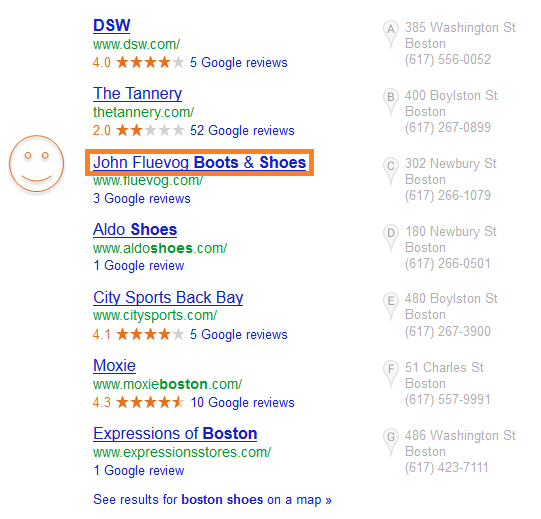
3. Optimize the 5 crucial on-page SEO elements.

That means your page title (see image below), URLs, page headers, internal links, and page content should be optimized with keywords. Here's an example of a page that is well optimized for local search.

Local search page.

4. Target long-tail keyword variations.

If you're selling unicorn costumes, you might want to cover unicorn costumes in Detroit, unicorn costumes in metro Detroit, and unicorn costumes in southeastern Michigan.

Cover all the ways people might refer to your city in your keyword research so you can capitalize on all the different ways people find you on the web.

You can perform long-tail keyword research in Google's Keyword Tool, or if you use HubSpot software, use HubSpot’s Keyword & SEO tool to help find variations you might not have thought of before.

5. Have location pages.

If you are a franchise, for example, it's crucial to tell users you have multiple locations. One way of doing that is to have a unique page for each location.

6. Tell people where you are.

Add your business name, address, and phone number on contact-specific pages like an "About Us" or "Contact Us" page.

7. Write about local and industry news.

Stay up to date on what's happening in your community and in your industry for blog fodder. This will win you big points in the SERPs, as Google freshness update rewards timely content. Even if nothing has happened that directly relates to your industry or location, look for local spins on industry trends, and comment on how local events could affect your industry.

8. Mobile-optimize your site.

Local search and mobile search go hand in hand. Some of the most common ways people will use your site in a mobile environment is looking up reviews, finding directions to your location, and searching for contact information. Make it easy for them by making your site mobile friendly.

How to Optimize for Local Search Off Your Website

1. Register your business with Google My Business.

Google My Business provides a huge opportunity for local businesses to appear in the local search results for a given search term. Here's everything you need to know to do it.

2. Add yourself to other listings.

The more local directories to which you submit your site, the more opportunities to get found and receive additional business citations. Make sure your business name, address, phone number, and website are consistent across all of them. For specific listings/directory types to which you should add your local business, use GetListed.org.

3. Get links online.

The more of a fixture you are in your community (both online and offline), the more people will talk about you. Be a guest blogger, talk to and about (positively, of course!) other people in your industry, and act as a resource provider for the community. If you're an active participant in community conversations, the buzz around you grows in the form of inbound links, social media growth, and media coverage.

4. Get links locally.

Start with your own personal network, which may include the Chamber of Commerce, business improvement districts, licensing bureaus, trade associations, resellers, vendors, and/or manufacturers and other affiliates.

5. Publish your content on social media outlets, especially Google owned business pages.

Google considers content shared on social media more important now than ever before. And now that Google owns YouTube, it's a good idea to show up on that platform. Most importantly for local businesses, Google My Business business posts are starting to show up in local search results.

6. Guest post.

The more places your business gets cited organically the better it is for your SEO. This means bylines or author profiles tied to articles you publish on various relevant blogs can help in addition to just having others write about you.

7. Get reviews.

77% of online shoppers use reviews to make a purchasing decision. If your customers are looking for opinions on you, make it easier for them to find out how awesome you are by embracing your presence on online review sites.

Claim your listings. Ask customers to post about their great experiences with you. Yes, some negative reviews may slip in there, but wouldn't you rather be an active participant in achieving a positive online reputation than take a passive role in maintaining a lackluster one?

8. Check your listings.

Using GetListed.org as an accuracy report provides huge opportunity to see where you could add additional listings, claim listings, and update or add missing content like your website URL. Folks, there’s no point in having a listing if there is no URL.

Local businesses do have the power to have a top presence in the SERPs, but like any effort to gain and maintain organic visibility, it's hard work.

If you can start checking a few of these tactics off your marketing to-do list every month, though, your website will see great improvements in online visibility.

If you'd like to learn more about how to improve local SEO for your business, check out this free, on-demand webinar with David Mihm and me.

Editor's Note: This post was originally published in December 2011 and has been updated for comprehensiveness.

http://bit.ly/2PLfg4t

How 6 Social Media Networks Have Changed in the Last Decade

At the beginning of 2020, millions of social media users took part in a #TenYearChallenge which encouraged them to post one photo of themselves from ten years ago up against a photo of themselves today.

But while the #TenYearChallenge showed us how much our friends have changed, have you ever wondered how much your favorite brands have changed?

As a social media user, looking back to see how the platforms you've used every day have changed can feel fun and nostalgic. As a marketer, looking at the evolution of these platforms can also give you insight into how the overall social media industry and internet trends have matured and how they might continue to pivot in the future.

In this blog post, we're going to mark the beginning of a new decade by venturing back in time to 2010 and showing you ten-year comparisons of six of the oldest and most popular social media platforms.

While this post might be a blast from the past, it will also show you just how much the way we connect and share online has changed, and give you hints about where it might go next.

6 Social Media Platforms in 2010 vs. 2020

Facebook

2010

At the dawn of the 2010s, Facebook positioned itself as the next big social media platform following the MySpace era. The network, which originally targeted college students, had already reached millions of users in young adult age groups and had just gone through a few major redesigns since it first launched in 2004.

In 2010, Facebook grew from 400 million to just over 600 million active users. During this year, the social network also gained huge attention with the October premiere of the award-winning film, The Social Network, which chronicled how co-founders Mark Zuckerberg and Eduardo Saverin launched Facebook and fought for ownership rights in an intellectual property lawsuit.

The News Feed

The Facebook News Feed was first launched in 2006. Prior to this launch, you'd simply see their profile when logging into the social network. With the addition of this page, you could suddenly see what your friends were up to all in one place.

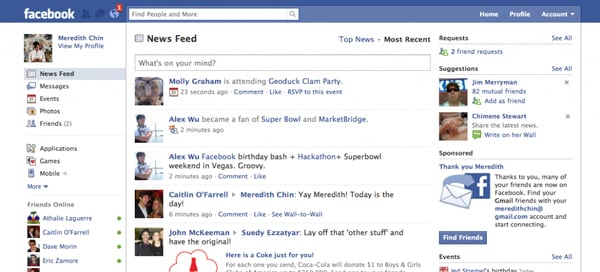
By 2010, Facebook's News Feed emphasized making connections on the platform as the left sidebar highlights friend requests and friend suggestions while the upper navigation bar included notifications, friends, and message buttons.

Here's a screenshot I dug up of the 2010 News Feed:

Original Facebook News Feed in 2010

Source: CheeseWeaselDay.com

Statuses and Updates

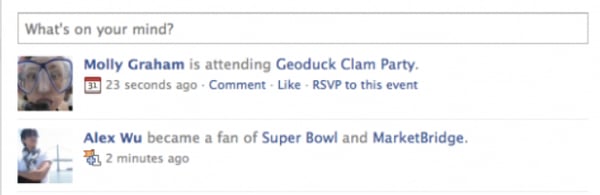
While the 2010 Feed was similar to what Facebook has today, it was still pretty basic and less intuitive when it came to updating you on your friends' activities. For example, any time someone did something on the platform -- such as playing a game or RSVPing to an event -- their activity would pop up on the News Feed along with status updates.

Status updates on Facebook in 2010

When it came to status updates, you were limited to what you could post. The status bar merely allowed you to type in and share a quick text-only update. Once it was published, the status would show up directly next to your name. This led people to post statuses that began with the word "is." For example, in 2010, I might have written, "Pam Bump is eating burgers," or "Pam Bump is doing homework."

Likes

In 2010, the same year that The Social Network came out, Facebook also made news when it unveiled its game-changing "Like" button. Before this, you could only interact with a post by commenting on it or sharing it. The "Like" enabled you to quickly communicate with your connections even if you didn't have time to write a full comment.

While you could "Like" updates and statuses from your friends, you could also "Like" a business or fan page which would essentially enable you to follow its updates. Websites also began adding the "Like" icon to their pages, which encouraged users to click it in order to like their content or pages on Facebook.

Advertising

By 2010, Facebook Ads was still ramping up after being announced in 2007. While brands had started to make pages for marketing purposes, Facebook and Zuckerberg were hesitant about creating too many branded opportunities because they didn't want a bombardment of ads to negatively impact the user experience.

A 2007 press release described the Facebook Ads as a platform with three parts: "a way for businesses to build pages on Facebook to connect with their audiences; an ad system that facilitates the spread of brand messages virally through Facebook Social Ads™; and an interface to gather insights into people’s activity on Facebook that marketers care about."

2020

Despite all the new social media platforms that have emerged in the last decade, Facebook is still (by far) the biggest and most successful with 2.38 billion monthly active users.

Aside from the number of users Facebook's gained, it's also expanded its demographic. While the platform was originally created for college students and millennial teenagers, it's now popular among a variety of age groups.

For example, when I started using Facebook in high school, my biggest goal was to hide my profile from my parents -- who were still heavily suspicious of the internet and social media. Now, my mother texts me daily asking me why I didn't "Like" her most recent post.

I'm not the only one in my generation who's witnessed this pivot. Facebook is becoming the go-to network where parents and grandparents are connecting with family and friends. In fact, 45% of people over the age of 65 say they regularly use Facebook today -- compared to only 20% of the 65+ age group who reported using it in 2012.

So, how has Facebook's design and platform changed with its success? Here's a look at it today.

The News Feed

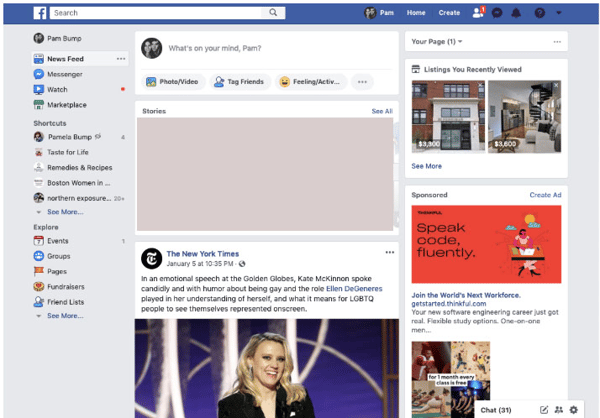
While the shape of the layout hasn't changed that much, the organization and type of content within it has changed drastically. Some of the more basic additions to the Feed include news ticker that highlights trending hashtags, a sleeker design, and more priority on photo and video posts.

Facebook News Feed in 2020

Here are a few other tweaks you might not notice about the current layout.

The Notification and Friends icons have moved to the upper navigation bar. Additionally, events have been moved to the side navigation. This simplifies the pages of the site allowing users to focus on the Feed, interesting posts, and other important centrally-located items.

Behind the scenes, Facebook has also continued to tweak News Feed algorithms with the aim of showing users content that they're actually interested in. For example, you now see more statuses, content, and other types of content due to the interests you've shown on the platform. Whereas, in Facebook's early years, you might have just seen an endless stream of your friends' high scores on the online game Candy Crush.

Additionally, although Facebook now offers a wider variety of marketing and advertising options for brands, its Feed now algorithmically prioritizes content from individual users before posting content from brands.

Statuses and Updates

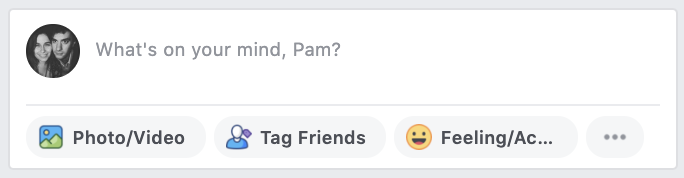
Instead of the old status bar that would prompt users with text a simple text box, there's now a text box at the top of the feed that more broadly asks "What's on your mind." At the bottom of the text box, you can now also see icons for "Photo/Video," "Tag Friends," and "Feelings/Activities."

So, if you're on vacation with family and friends, you can post a status that includes images of where you are, captions, a "happy" feelings icon, a geo-tag to show where you want, and tags of all the friends who were with you so their networks can see and react to the photos.

This shift makes the News Feed feel much more interesting, visual, and personal for users -- which might allow them to surf through its content for a longer amount of time.

Likes and Reactions

After the success of the "Like," Facebook launched additional "Reactions" such as a heart, a laughing emoji, a sad face, an angry face in 2016. These tiny tweaks have allowed users to interact with content in a more emotional and personalized way, even if they don't have time to draft a full comment.
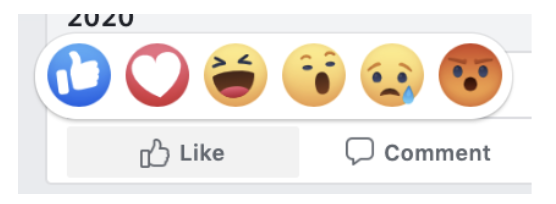
Facebook reactions in 2020

New Features and Platform Extensions

Aside from making the News Feed feel more personalized, Facebook, which is now a major social media corporation has also taken steps to expand its original platform and its ownership of other key social networks.

To start, Facebook re-launched its direct messaging system as the standalone Facebook Messenger app in 2011. On the desktop site, Facebook also made its Messenger tool accessible on every page of the site.

Later, in 2014, Facebook also acquired another popular messenger called WhatsApp. Although WhatsApp wasn't generating much revenue at the time, Facebook and founder Mark Zuckerberg acquired the international messaging app because they saw it as an opportunity to reach global audiences that weren't on Facebook yet, but still wanted to communicate and make connections online.

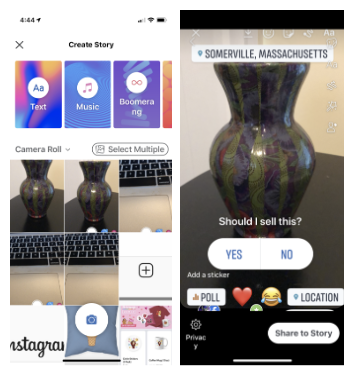
Most recently, in 2017, Facebook launched a Stories bar to its News Feed, following suit of Instagram Stories. This came shortly before Facebook purchased Instagram, in order to mature the Facebook Stories feature while tapping into Instagram's millennial and Gen Z audiences.

Facebook Stories format
Advertising

Facebook Ads is now a robust and incredibly popular advertising platform, in fact, marketers now spend most of their marketing budgets on Facebook Ads, along with Google and Amazon ads.

While the early Facebook Ads allowed basic audience targeting and page analytics, the platform now offers more intuitive versions of these features. It also allows you to launch ads around a handful of objectives, including website traffic or ecommerce purchases.

For companies that just wish to use a Business Page, Facebook has also improved features related to this, such as Facebook Insights which shows you how your page is performing against potential competitors.

In addition to ads on its platform, Facebook has also improved advertising options on platforms like Instagram and WhatsApp. To learn more about changes related to Instagram, keep reading.

Instagram

2010

Instagram was launched in 2010 as a social media app for photo-sharing. By 2012, the simple social media app was already seeing over 100,000 app downloads per day.

Layout

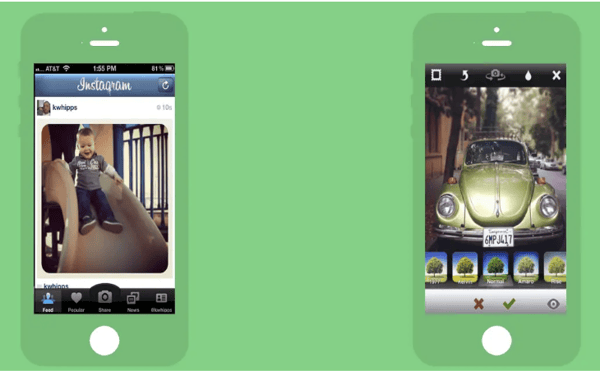
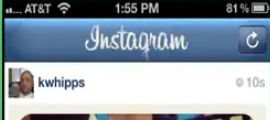
In the app's infancy, it had a simple layout with a basic photo feed. Similarly to Instagram's current feed, it showed a user's name, then a photo, then the photo's likes, and a description.

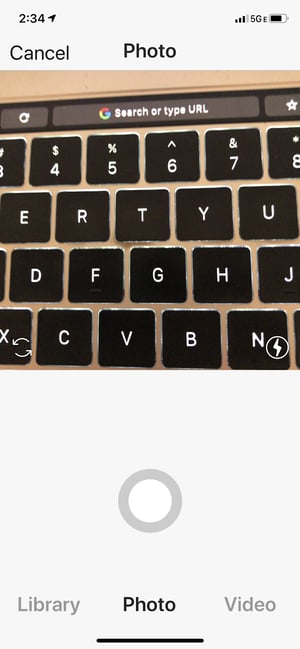
The below photo shows what Instagram's main feed and camera looked like in 2010.

Instagram layout in 2020

Source: Business Insider

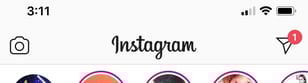
However, while there were some similarities between the original and current layout, there were a number of crucial differences. For example, the app's logo was a completely different font and took up the entire top of the feed's page. Here's a quick comparison of the logo then and today:

Original Logo Banner:

Instagram logo in 2010

Current Logo Banner:

Instagram's new logo in 2020

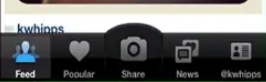
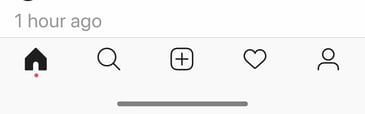
Additionally, the lower navigation options were also much larger and organized in a slightly different way than they are today.

Old Navigation

Current Navigation

2020 lower Instagram navigation
Features

Aside from the design, Instagram had very basic features. It was primarily meant for posting square photos or short videos on a feed that your followers could see. To learn about other Instagram accounts, you could either search a person or hashtag, tap the Popular feed to see posts from influencers, or you could surf through a Newsfeed that showed posts from major companies and publications.

2020

Layout

Similarly to Facebook, the Instagram Feed's core design is similar, but much sleeker, more intuitive, powered by better algorithms, and additionally has an Instagram Stories bar. It's camera also still looks similar but has a cleaner, white design.

Instagram Camera

Within the last decade, Instagram has made its design look less busy by opting for a white background. It has also replaced the giant upper logo banner with a smaller logo and a navigation bar which includes a camera icon for Instagram Story recording, a TV icon which will bring you to IGTV, and a paper airplane icon for your direct message inbox.

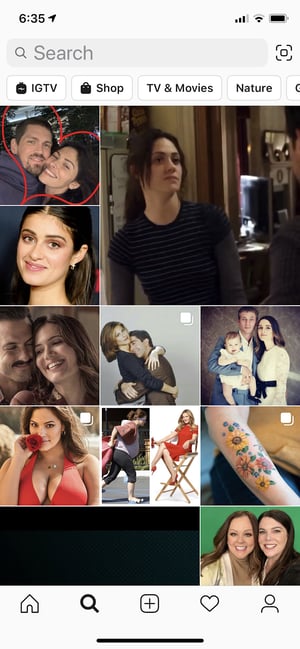
Instagram has also adjusted its lower navigation, swapping out a Popular post feed with a more robust Search Tab which consolidated the Search bar and popular trending posts. With this adjustment, a user hoping to discover new accounts or content only has to go to one tab of the app.

Instagram search feature

Once consolidating the News tab into the Search tab, Instagram added a heart icon in the News Tab's place. This tab now houses a user's notifications.

When it comes to the camera, Instagram now allows video and photo recording, while still enabling the user to upload content from their library.

Features

Instagram Stories

Aside from the standard Instagram camera, there's also a special camera for recording Instagram Stories, a game-changing feature launched by the platform in 2016.

By now, you've probably created or seen an Instagram Story. But, in case you haven't, this feature allows you to film or upload images or video that tells a story about your life or your brand. If you have a verified business account or more than 10,000 followers, you can also link Instagram Stories to your website's content.

When creating an Instagram Story, the app's camera allows you to take vertical, smartphone-shaped shots or videos. Then, you can use its featured icons to zest up your content with text, sounds, GIF stickers, or color-overlay filters. You can also use a variety of video filters and AR features to zest up your content.

IGTV

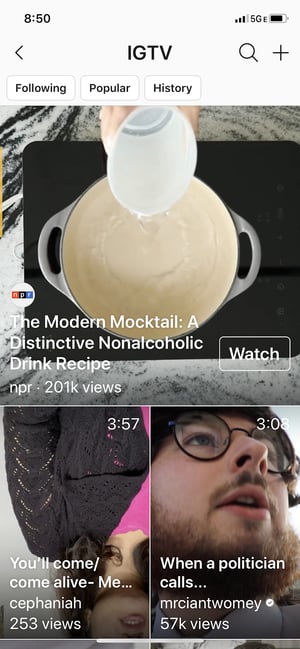
Instagram's current app also includes IGTV, launched in 2018. Currently, you can see IGTV content related to your interests by going to the Search tab and tapping the IGTV button.

IGTV page

With this feature, brands and influencers can upload or stream longer-form live content in vertical format. This content can then be highlighted on their accounts under an IGTV tab.

Shoppable Posts

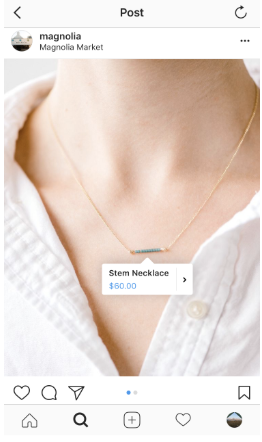
After Instagram was purchased by Facebook, the app added a new feature that could be utilized by brands with a Facebook Marketplace catalog. The feature, called Shoppable Posts, allows brands to tag posts with product shots with a link to the product listing in their Facebook Marketplace.

Unlike Instagram Story swipe-up links, the Shoppable feature can be accessed by any Instagram Business account linked to a Facebook Marketplace catalog -- regardless of the business accounts following.

Here's an example of what a Shoppable post looks like on the platform:

Instagram Shoppable post

Pinterest

2010

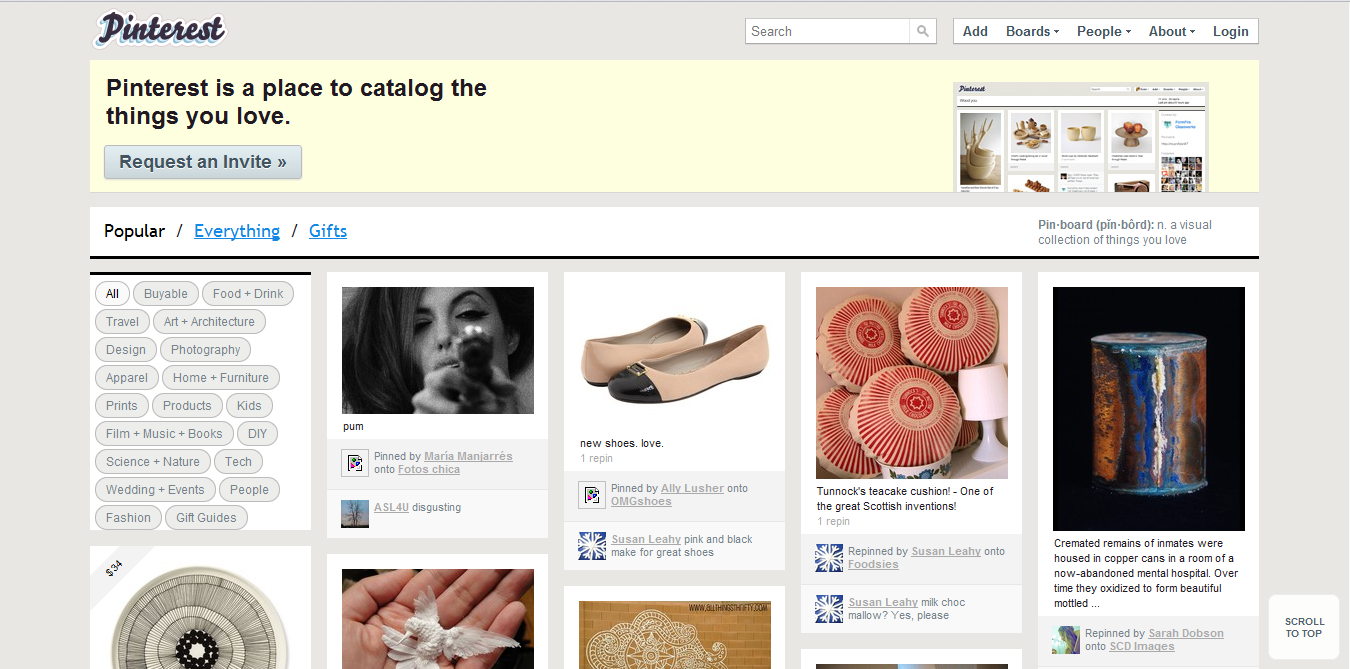
When Pinterest launched in 2010, the platform's purpose was simple. It allowed you to save and store links to websites that you thought were interesting.

It was a place where you could save and present a "collection" of web content that you wanted to share with people similar to you. To keep your link collections organized, you could categorize them by creating a Pinterest board around an overarching topic.

Layout

Since it had a much more basic purpose, the original Pinterest website looked more like a very basic, photo-based blog. You could still add photos, tag posts with specific topics, and create inspiration-styled boards around specific categories, but the design was much busier and not mobile-optimized.

2010 Pinterest layout

Source: Beebom

When the platform first launched, you also had to "Request an invite" to join since it was still in its beta phase. In fact, the platform was still invite-only through 2012, when Mashable described it as the year's "hottest" social media platform and noted that it generated more referral traffic than YouTube, Google+, or LinkedIn.

2020

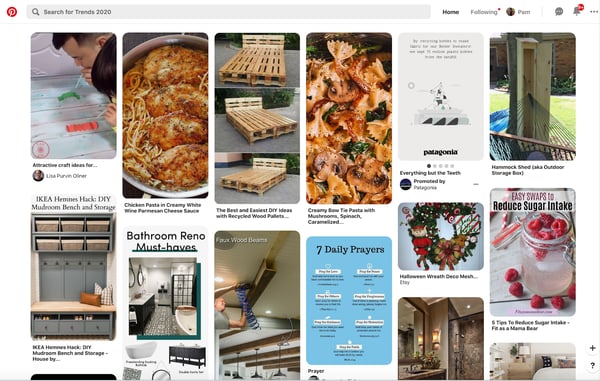
The current Pinterest design, and its mobile app, now emphasizes visuals even more than its first design. Because of its visual inspiration board aesthetic, Pinterest has also continued to position itself as a site people visit to find inspiration related to products, home designs, or even life experiences such as travel.

Layout

The platform is also more compact and mobile-optimized as the social media network's logo has been minimized and the search bar has become a more natural fit into the upper navigation. Unlike the old design, you can also see notifications when someone shares or engages with one of your posts -- also called pins.

Pinterest in 2020
Visual Search Features

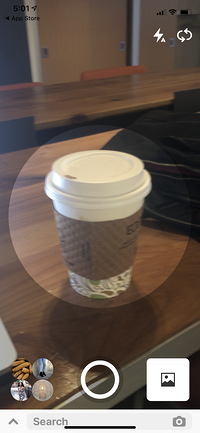
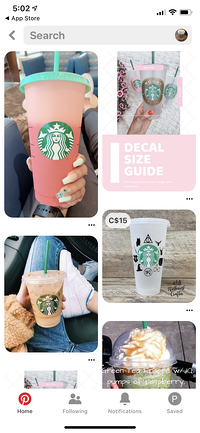
Aside from the text-based search, which you could take advantage of in the original design, you can now also search for pins with a reverse photo search feature. For example, if you see a product you like in real life, you can take a photo of it and search for similar items.

Taking a photo of a coffee cup with Pinterest's Lens Search option
Pinterest Lens search results showing photos of coffee cups

The visual search feature seems like a low-hanging fruit for Pinterest which is a highly visual platform. Aside from allowing people to find products or images they're interested in, it also might attract visitors who are interested in discovering information related products or images, rather than spending time creating inspiration-themed boards.

Advertising and Brand Awareness Features

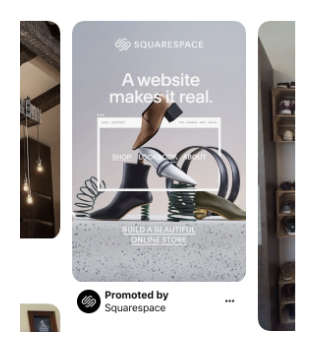
With brands like Target already using Pinterest boards to highlight product lines, the platform has become a natural fit for advertisements. Currently, the Pinterest Ads Manager, launched in 2014, allows you to create PPC ads with its own audience retargeting and A/B testing tools.

Squarespace Ad on Pinterest

To accompany the Pinterest Ads Manager, the platform also recently launched an Audience Insights tool in 2018. This feature gives businesses more data and analytical information about their audiences and how their content is performing.

At an event covered by Digiday, Pinterest's Head of Agency Partners, Yolanda Lam, explained, “Agencies and clients know we have unique insights, but they don’t have easy access to it. … They need to call a salesperson to understand what is available. Now, you can go in there to pull those data sets.”

To learn more about how to create and test effective Pinterest ads, check out this blog post with tips from a PPC expert.

Twitter

Twitter was founded in 2006 with a similar positioning as today. It was a social network where you could fire off short thoughts about trends, topics, or events that were important to you. These thoughts came in the form of text-based tweets under 160 characters.

After being presented at SXSW in 2007, Twitter saw its first surge in traffic as it moved from 20,000 to 60,000 users during the event. Also that year, Dell became the first major corporation to join the social media platform, while Twitter was incorporated as a company.

After rolling out a number of simple features including follows, replies, and hashtags in 2007 and 2008, Twitter launched its first major redesign in 2010.

2010

Layout

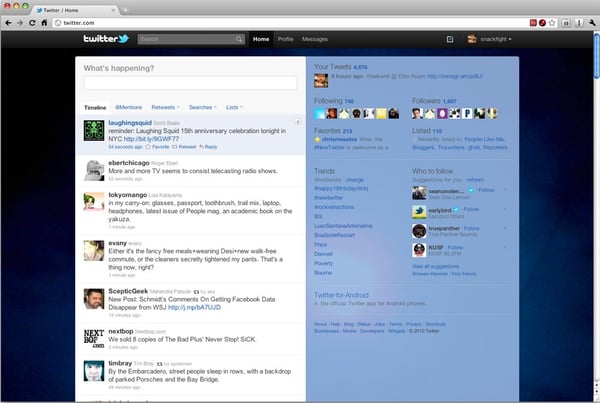
Although the brand and platform's mission hasn't changed at its core, the layout has certainly come a very long way. Despite being considered one of the hippest social media platforms of its time and pioneering the trending hashtag, its initial 2010 design was actually quite clunky and visually busy.

The Twitter layout split the main homepage in half. On one side, you could find a Timeline that was similar to today's Twitter feed. On the other, you could see details about how many tweets you'd sent, follower suggestions, your follower counts, and a long list of trending hashtags.

Twitter feed 2010

Source; Wired

Aside from seeing a Twitter feed on one side of the page and your own tweets on the left, you could also click on tabs like @Mentions to see when you'd been tagged in tweets from others, retweets to see when others retweeted you, or searches to see your past searches.

Like today's Twitter platform, you could also add accounts you followed to specific "Lists" and then see their tweets by clicking on the "Lists" tab.

2020

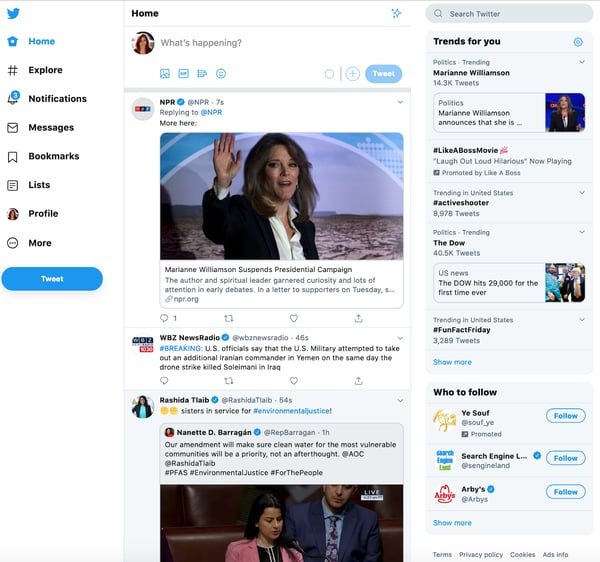
In 2020, Twitter's main page is a lot easier to navigate. While the feed is placed directly in the center, you can still access its key features, like Lists, and your profile by clicking on clearly marked buttons in the left navigation bar. The website still also prioritizes trends by dedicating the right sidebar to viral topics and hashtags and a "Who to Follow" box.

Twitter feed in 2020

Similarly to the other social platforms on this list, the Twitter feed now emphasizes photos and videos more than it did in 2010.

Aside from the visual changes to the main homepage feed, Twitter has also become more personalized to each user. When you discover, follow, and engage with content or accounts through Twitter's feed, Explore feature, and Twitter Topics, Twitter's algorithms take that data into account when prioritizing content that you might enjoy on your feed.

A recent blog post about Twitter Topics highlighted Twitter's mission to make feeds and content more personalized to users:

"Previously, all of the work was on you to figure out the best way to keep up with what’s happening by following certain accounts, searching for it, or looking in the Explore tab for the latest. Now, you have the option of seeing the most relevant and interesting Tweets about what you care about with a single tap, and the conversation will come to you."

Reddit

Reddit was launched as a discussion-oriented social media network in 2005. However, it didn't become a viral success overnight. In fact, to make the platform look like it was more popular, thousands of early posts were published by fake accounts created by the Reddit team.

“The first thing it did was it set the tone,” Co-Founder Steve Huffman revealed in a VentureBeat post. “We were submitting content that we would have been interested in seeing. That meant the content on Reddit … was good. And when you show up, you know exactly what the site is about.”

Despite Reddit's early, and controversial, fake account strategy, the platform eventually did become popular. In its first two years, discussion communities -- called subreddits -- began to gain popularity. By 2007, some of the most popular subreddits were "NSFW" -- which stands for "Not Suited for Work" "Programming," and "Science."

2010

Just before 2010, Reddit moved its website to Amazon Web Services servers which tripled its traffic. By 2010, the platform's founders claimed that they were seeing roughly 8 million visitors per month.

Layout

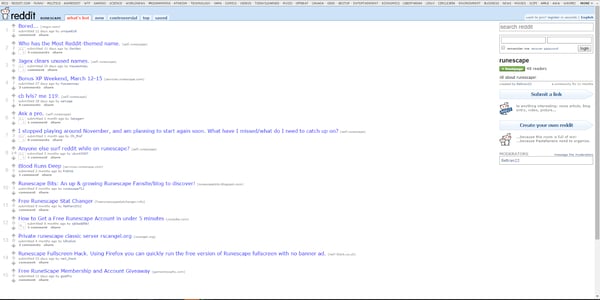
Despite its unique discussion-oriented platform and growing popularity, Reddit's 2010 platform was pretty basic. The layout was primarily text-based as it encouraged users to discuss topics in subreddits, which were similar to public chat rooms.

Reddit feed in 2010

Source: Reddit

Aside from the main feed that you'd see when logging on to Reddit, you could look at the very top of the page to see trending subreddits. When you were on a subreddit, you could toggle between tabs including, "what's hot," "new," "controversial," "top," or "saved" to see different types of posts within the subreddit.

On the right of any Reddit screen, you could also see a box that would allow you to post your own links or text to a subreddit.

Similarly to today's Reddit format, you could also "Upvote" posts you enjoyed to help them show up higher on Reddit feeds or "downvote" posts to lower them. If you wanted to participate in a conversation, you could simply reply to a post.

2020

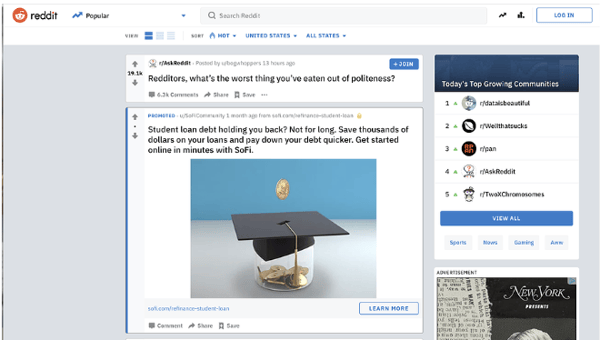
Although Reddit's formatting has changed a lot, it's audiences are still interested in similar things. Although the most popular subreddits have evolved to more specific topics, such as "emerging technology," many of them still loosely relate to the platform's earliest most-popular topics of "science" and "programming."

Layout

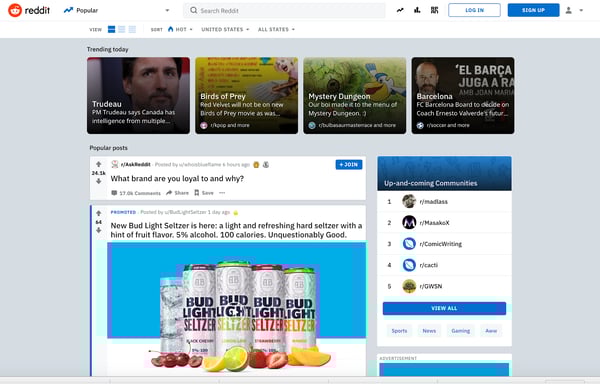
Reddit's current platform now emphasizes a lot more visuals as it includes a Trending stories tab at the top with photos related to each topic, and more capabilities allowing users to upload high-quality photos and videos.

Reddit feed in 2020

Reddit, which now has 430 million monthly active users, also recently launched a streaming feature that allows users to interact with others while on live video.

Aside from its streaming feature, Reddit has also added more advertising options, including native ad blocks in its right sidebar and promotional posts which are located higher in related subreddit feeds. This is part of a play to make Reddit more appealing to brands and marketers.

Reddit feed in 2020

LinkedIn

LinkedIn launched in 2003 as a members-only networking platform that you had to subscribe to with a membership fee. By 2011, the network was free and had become the first and most popular professional social media network. That year, the company drastically increased its funding and brand awareness with an IPO.

But, at this point, the website's platform looked suspiciously nascent.

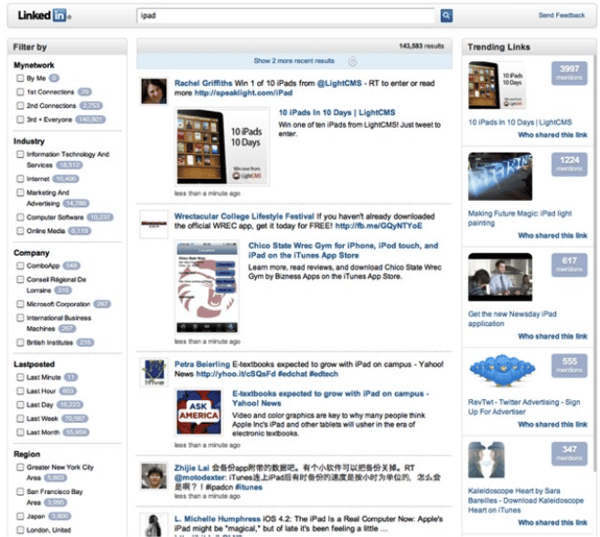
Shortly after its IPO, I had my first experience with LinkedIn as a college sophomore. I suddenly started receiving plain-looking emails saying that my email contacts invited me to a networking site called LinkedIn. After ignoring these emails thinking they were spam, I started hearing more about this site and decided to visit it. When I did, the site looked as basic as the emails I received.

Here's what it looked like:

LinkedIn in 2010

Source: TechCrunch

The original design centered around a search bar and search results feed which you could use to learn about topics in your industry. To help you sift through your search results, the homepage also had a sidebar that offered an expansive list. Aside from the feed and filters, there was also a right sidebar showing off "Trending Content' related to your searches..

2020

Ten years later, LinkedIn's become an online networking necessity with a much more intuitive layout. Not only have I found amazing jobs on this social network, but I now use it almost daily. In fact, my optimized LinkedIn profile even led my HubSpot manager to find and reach out to me for an interview.

I'm not the only one who's found career success with this social networking tool. A recent study found that over 122 million people have received an interview through the social network. It's also become a vital tool for companies as it hosts over 20 million job listings.

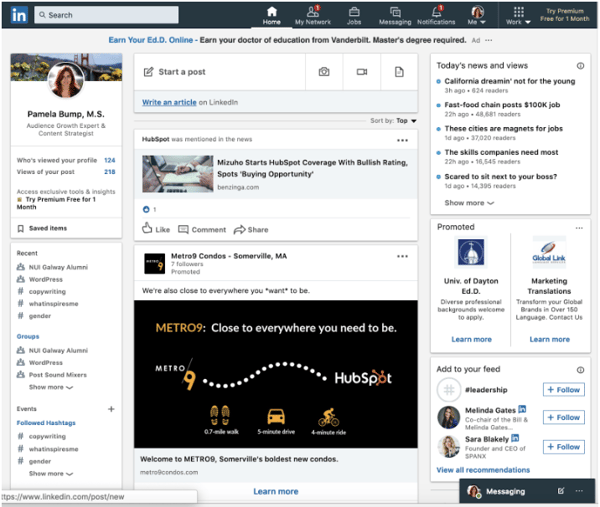
With over 660 million users, LinkedIn has followed the similar theme of other platforms on this list by emphasizing more photos and video-based content. It also has continued to embrace trending topics in its right navigation bar, similarly to Twitter and Facebook.

LinkedIn has also adjusted its design to be more social-media friendly by adding a navigation bar with a Friends and Notifications tab.

Additionally, today's layout includes a messaging feature which is crucial for both social and professional networking. This feature is easily accessible in the upper navigation bar and in a lower box at the bottom of the page.

LinkedIn feed in 2020

What Marketers Can Learn from Social Media's Evolution

As you've seen, all of these platforms have evolved to become more visual and personalized to users. This represents how social media audiences are interested in interacting with friends, viewing fast-paced feeds with valuable information, and consuming highly visual video or photo-based content.

If your marketing strategy hasn't evolved to fit these strategies yet, you should be working towards tactics that allow you to better connect and communicate with your audience on these platforms. You should also begin to put an emphasis on the creation of shareable multimedia content such as informative blog posts with photos, marketing graphics, or high-quality video content.

To learn more about how you can leverage major social media platforms, check out this detailed guide on the five types of social media and the pros and cons of each.

http://bit.ly/3ctSl7J

How to Analyze Your LinkedIn Ad Performance

Are you running LinkedIn ads? Wondering how your ads are performing against industry standards? In this article, you’ll discover how to assess your LinkedIn ad campaigns. 4 Important LinkedIn Ad Metrics Explained One of the biggest challenges with running LinkedIn ads is knowing whether your performance measures up. Competent marketers ask me all the time, […]

The post How to Analyze Your LinkedIn Ad Performance appeared first on Social Media Marketing | Social Media Examiner.

March 03, 2020 at 12:00PM http://bit.ly/2uPOu3R
read more...
from Social Media Marketing | Social Media Examiner http://bit.ly/39hZ2Yk
via IFTTT