Tuesday, March 3, 2020

How to Analyze Your LinkedIn Ad Performance

Are you running LinkedIn ads? Wondering how your ads are performing against industry standards? In this article, you’ll discover how to assess your LinkedIn ad campaigns. 4 Important LinkedIn Ad Metrics Explained One of the biggest challenges with running LinkedIn ads is knowing whether your performance measures up. Competent marketers ask me all the time, […]

The post How to Analyze Your LinkedIn Ad Performance appeared first on Social Media Marketing | Social Media Examiner.

March 03, 2020 at 12:00PM http://bit.ly/2uPOu3R
read more...
from Social Media Marketing | Social Media Examiner http://bit.ly/39hZ2Yk
via IFTTT

How to Market Your Local Business' Grand Opening

During the last month or so, my husband and I have driven by this grand opening sign on our way to his parent's house about a dozen times.

After a couple of weeks, we decided to look up what it was for.

We found out a new restaurant was opening, and we were pretty excited to have a new place to try (sometimes it gets boring going to the same places!).

Since we were looking forward to it, we told our families, and decided to give it a try for one of our weekly dinners.

This is exactly the result you're looking for when you're marketing your grand opening.

For local businesses, it can be hard to get customers through the door. As a marketer, the first step is to let them know you're there.

Ultimately, your grand opening marketing should help your business build relationships and create buzz with your audience.

Below, let's review where to and when you should market your grand opening.

Where to Market Your Grand Opening

Developing your marketing strategy for your grand opening can be daunting as a new business and marketing team.

After you've set your budget and planned the event, you need to discuss where you're going to market it.

Below, let's review some of the top areas to market your grand opening.

1. City Bulletins or Forums.

Most cities have bulletins or forums where community events are advertised.

For example, consider taking out an ad in the local parks and recreation activity guide. Or you can ask city officials to promote your event in their newsletters or official communications with the citizens.

Additionally, it's a good idea to develop relationships with city officials. If you can get a few city officials to show up, you can use that as a marketing tactic.

2. Your Network.

The most obvious place to market your grand opening is to your own network.

Invite your family and friends and encourage your employees to do the same. You can even offer a friends and family discount as an incentive.

You can reach out to your networks on social media, or via email.

Once you create a Facebook event (more on that below), you can invite all your friends and connections. This should help you spread the word about your grand opening.

3. Local Press.

One of the most important components of your grand opening marketing strategy is the local press.

Make sure that you invite the local press to your event. You can even reach out to a local radio DJ or news anchor to cover the event. The more coverage, the better. Plus, if they come to your event, they'll probably promote it on their own channels and to their own networks. You can use their local celebrity to appeal to your audience.

For news media that can't attend, you can send a press release before and after the event to make it easier to cover it.

Additionally, forging a relationship with the press is a good long-term play. If the local media covers your business at all, more people will become aware of your business and can visit after the grand opening.

4. Traditional Advertising.

For local businesses, traditional advertising is still vital to a great marketing campaign.

You should hang up flyers wherever you can and use a good, old fashioned "Grand Opening" sign. After all, that's how my husband and I found out about the new restaurant in our town.

Additionally, local radio and billboard ads are a great way to get in front of your audience. Since the local citizens don't know you exist yet, it's imperative they become aware of your brand.

Another traditional method is direct mailings. Direct postcards to a certain zip code is a great way to reach a local audience.

5. Social Media.

Most likely, not every citizen is going to drive by your billboard ad, see your flyer, or hear your radio ad. To fix this, you should also reach out to local audiences online.

Use social media to start. Create a Facebook event and invite everyone you know. Then, after you create your social media accounts, you can also run social media ads and target a local area.

If people don't see your brand's sign, they should become aware of you online. Plus, the more people who see your promotion, the more who will show up.

Additionally, you can create a branded hashtag for citizens to use during your event. This will help create buzz and more brand awareness among your audience.

6. Local companies.

Another creative marketing tactic is to advertise with other local companies.

For example, usually, coffee shops have a bulletin board dedicated to community events. You can use this space to post a flyer for your grand opening.

Additionally, many local companies, such as hotels, have brochures at the reception or front desk. You can reach out and see if they'll let you place a flyer there and tell their guests about your event.

Other local places that might have advertising opportunities are schools. Yearbooks and sports fields usually showcase plenty of local ads.

It's important to use your grand opening as a way to build a relationship with other local businesses.

How Soon Should You Market a Grand Opening

Before we dive into how soon you should market your grand opening, let's rewind a little.

Prior to your grand opening, your company should have a soft launch, or soft opening, to work out any of the kinks.

Since there are bound to be some issues, a soft launch lets you figure those out without a huge audience.

This means that you might be open for one to two weeks before your official grand opening event.

On the other hand, your soft launch may not be open to the public. You could just invite a group of guests for a test run. In this case, you'd actually open your doors to the public for the first time at your grand opening event.

Either way, before you host a grand opening event, you should begin advertising two to three weeks beforehand.

This means you'll probably make the creative elements and get those in place two to three months before the grand opening.

Before you advertise, you'll need to have your ads written, graphics created, and local press contacted and lined up.

Hosting a grand opening event isn't just important for brand awareness. It's also a great way to start growing your audience and customers. During your event, you can gather emails, so when the day is over, you can send your audience marketing updates, discounts, and links to your social media.

http://bit.ly/2uMVbDC

The 7 Best Social Media Analytics Tools for Marketers in 2020

Social media is an undeniably powerful marketing tool in 2020.

We've seen the stats that back up using social media as a legitimate business practice. And we've seen examples of companies that saw phenomenal ROI after a social media campaign.

But how are marketers managing multiple social accounts, encouraging proper engagement, and analyzing and proving their social platforms ROI?

With social media analytics tools.

In a nutshell, social media analytics tools are generally part of a larger social media management software platform. They collect data from connected accounts, such as engagement, reposts, and replies, and compile them into reports that break down the numbers, providing you with insights about the performance of your brand online.

Social media analytics tools are at the heart of knowing how to communicate with your audience online, where to target them, and how to prove the value of social media to decision-makers.

To cut the expansive search of social media analytics tools down, (there are a lot) we've made a list of seven top options that we recommend, depending on your business type. These choices have expansive features and tools, offer a trial period, and in some cases, are even able to integrate with your HubSpot account.

1. HubSpot

Price: Marketing Hub Professional: $800/mo.

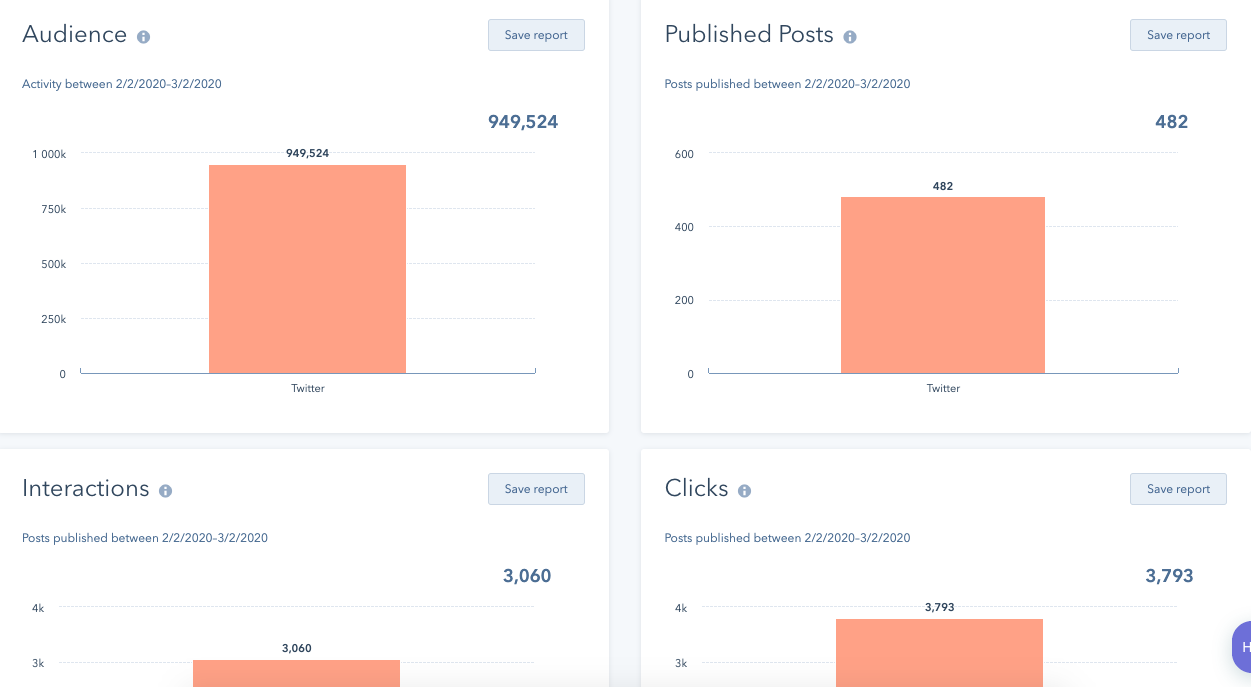
HubSpot's analytics tools offer social reports that compare the performance of multiple social channels to measure campaign performance. To aid with monitoring engagement, HubSpot's software allows users to publish on the go directly through the CRM.

Below is a screenshot of an analytics report HubSpot provides. It offers expansive graphs and visuals that break down the numbers by specific platform features, like audience, session lengths, and impressions.

Example of HubSpot reporting

When monitoring performance using HubSpot, you'll have insights on your customers through their entire journey, as well as which marketing messages perform the best among your audiences.

HubSpot is an excellent choice for businesses of any size, whose marketing teams want to keep all campaign functions in one place. Its integrations make that process more streamlined, and the detailed social performance reports break down and analyze the hard numbers for you.

2. Mailchimp

Price: Free, then $9-$299/mo.

Mailchimp is a full-service marketing platform that offers analytics for social media. I love Mailchimp because it's easy to use for small marketing teams and requires little time to pour over the accompanying analytics.

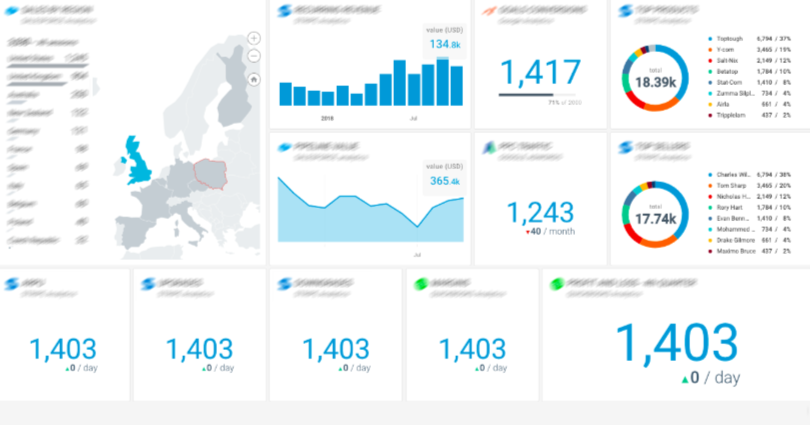
Here's a screenshot of how campaign data looks on Mailchimp. This is a sample report that gives a high-level overview of audience insights, demographics that are crucial when planning a social media campaign.

Example of Mailchimp reporting

Source

With Mailchimp, you'll also have an audience dashboard, which is a page dedicated to understanding audience behavior. Additionally, the software offers tools to look into smart targeting and mobile integrations. These tools can diversify a social strategy and deliver higher engagement numbers by helping you create content specific audiences will respond well to.

This platform is a great idea for teams that need social media analytics tools that guide you towards creating a more holistic, impactful strategy.

3. Databox

Price: $49-248/mo.

Databox is an expansive analytics platform that puts all business data in one place. The platform lets you set campaign goals with your account and track them for their duration.

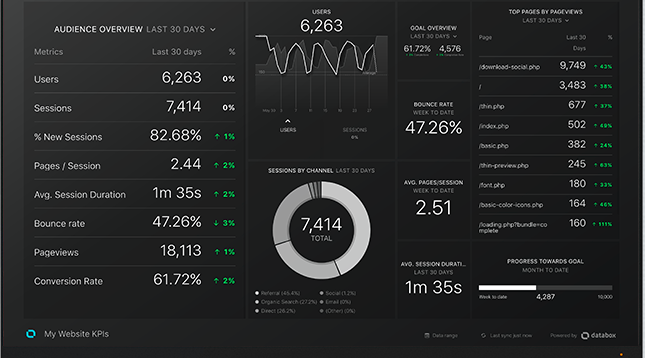
This screenshot gives an audience overview from a social profile, including graphs and session data.

Example of Databox reporting

Source

The key performance indicators (KPIs) of success on social media channels will be shown on the same dashboard.

You can customize metrics that matter most to your campaign or social channels for your reports. For instance, if you wanted to track just Twitter replies, you can customize that. These tools let you remain focused on the metrics you need to have.

Any integration you have, such as HubSpot, will also be visible from the dashboard, as well.

Databox is a good choice for businesses that have many contacts and social accounts to keep track of, many specific campaign goals by channel, or manage social accounts for several clients.

4. Grow.com

Price: Contact for pricing

Users of Grow.com software are able to access full visibility of engagement for social accounts. The tool connects to HubSpot, Salesforce, Google Ads, Facebook, Marketo, and Microsoft Office, so you can combine the software with any other tools you use for social monitoring or listening.

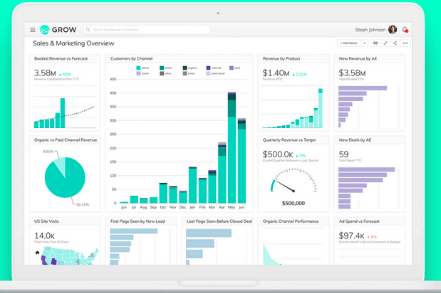
Below is an example of a Grow overview for sales and marketing. Notice how the expansive options are similar to Google Analytics, offering audience location, behavior, and trends.

Source

Grow.com breaks down complex data into graphs and visuals. Another perk of using Grow.com is that social reports are sharable, and you can integrate your account with HubSpot's ecosystem tools. This is helpful for multiple teams working on the same project at once, since it can provide consistent, accurate data to various team members at once.

If your team wants a full-service platform for marketing and sales data, Grow.com is a good option. Grow.com's analytics reports are built with metrics chosen by the user, so it's a great tool for customizing, too.

5. ActiveCampaign

Price: $9/mo

ActiveCampaign is email marketing software that provides a ton of social features, including reporting. You can connect Facebook, Twitter, Digg, and other social media platforms to gather insights of performance across those social media sites.

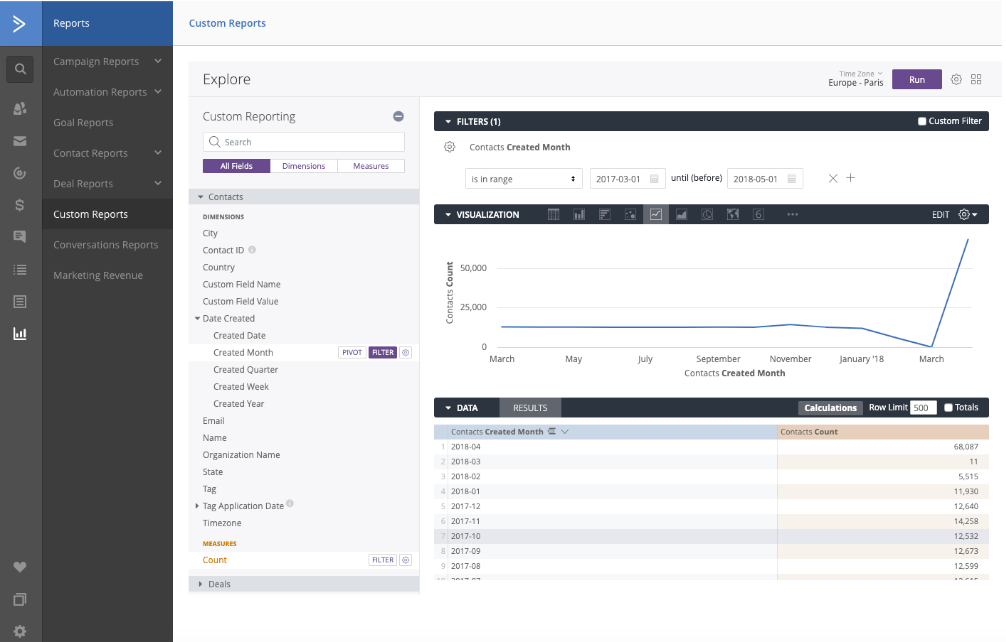
Here is a sample ActiveCampaign custom reports page. This is a blank slate, but you can see you have options to configure campaigns and templates onto your dashboard.

ActiveCampaign example

Source

Using this software, you can see how emails are performing, as well as campaign performance in general. Since you'll have both social media and email metrics in one place, this is a good option for businesses with a heavy email marketing focus.

Additionally, another cool feature about ActiveCampaign is that its reports track what contacts do after they click through to your site. Further, if you're a HubSpot customer, the software integrates with your HubSpot account.

6. CoSchedule

Price: $12.50/mo

Reports are CoSchedule's specialty — in fact, CoSchedule gathers social network, campaign, and engagement reports for your social profiles automatically, and its software compiles real-time data and tracks engagement statistics.

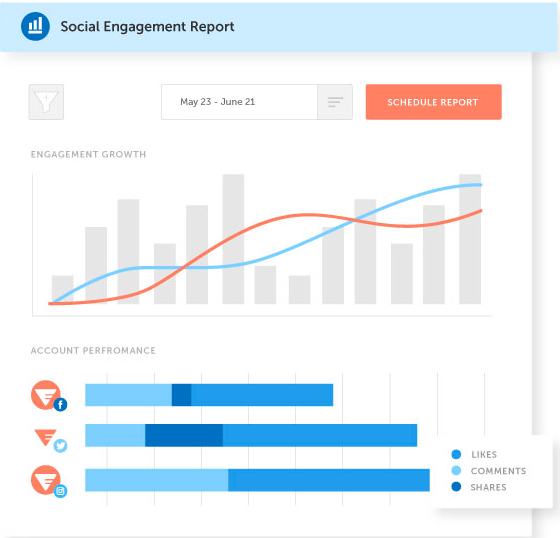
These engagement statistics, like the example pictured below, are formulated and collected to diminish guesswork needed on how to connect with followers. You'll be able to see the top fans of your social accounts, making it easier to create targeted content for them.

CoSchedule engagement report example

Source

On a CoSchedule dashboard, you can see a birds' eye view of unique data from campaigns, old and new. That way, you can compare multiple campaigns to determine the evolving ecosystem of audiences. If that's not for you, that's no problem — you can opt-out of having it on your dashboard.

CoSchedule is a good choice for companies that depend on reports for ROI. Plus, it's always a nice choice if you want to see the difference in audience behavior over time, to get a clearer picture of an ideal buyer's journey.

7. Sprout Social

Price: $99-$249/mo.

Sprout Social is a social media planning service that, as do many other platforms, offers expansive analytic reports of the performance of social media accounts.

Additionally, if you're a HubSpot customer, you can integrate HubSpot with Sprout Social to collect accurate social reports all in one place.

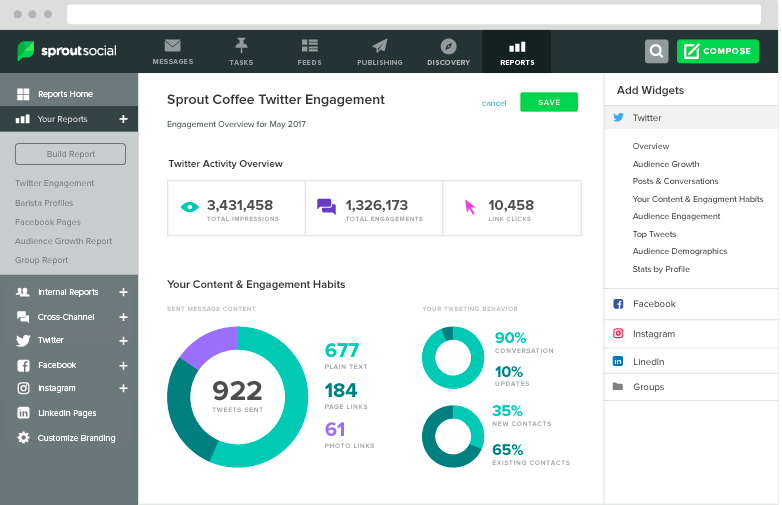
Here is an example of a Twitter Engagement report from Sprout Social. Notice how you can customize the report, add widgets, and switch between other social engagement reports.

Sprout Social engagement report

Source

You can configure the metrics your reports provide, and choose options that scale with your business. For instance, you might not need to analyze ROI from an Instagram campaign now, but if needed in the future, you can have that option.

Sprout Social is beneficial if you are looking for a system that's configurable and able to be integrated. It's a flexible platform that offers reports curated to your specific social media goals with colorful graphs and expansive data.

Ultimately, choosing the right social media analytics tools for your business shouldn't be a stressful process. The tools should align with your business goals and deliver the metrics you need to be successful.

Tools should also be able to work with the budget and time you have available, so if one of these choices seems to tick all of those boxes for you, check them out. Your social strategy will only be helped by having the correct tools on-hand.

http://bit.ly/2womvIO

Monday, March 2, 2020

How Long Should Blog Posts Be in 2020? [New Data]

If you're a blogger, you've probably asked your editor "how long should this blog post be" more times than you'd care to admit.

And most of the time, you'll hear an answer that sounds something like this: "However long it needs to be."

There's certainly a nugget of truth in there — you shouldn't beholden yourself to a character count that's either too low or too high. However, any experienced blogger will tell you that there is an ideal length or range for how long your blog posts should be, especially when you take certain criteria into account like your audience, the topic, the structure of the post, and what your main promotional channel is.

We've published thousands of blog posts here at HubSpot, and we analyzed our top-performing ones to see how blog post length impacts success in all of these areas.

Read on to see how long your blog posts should be in 2020.

Ideal Blog Post Length for SEO 2020

For SEO, the ideal blog post length should be 2,100-2,400 words, according to HubSpot data. We averaged the length of our 50 most-read blog posts in 2019, which yielded an average word count of 2,330. Individual blog post lengths ranged from 333 to 5,581 words, with a median length of 2,164 words.

But before you go writing your 2,300 word blog post, keep in mind that not all blog posts need to be super long — in fact, 16 of our top 50 read posts (or about one-third) were under 1,500 words, so there's still plenty of opportunity to get your posts ranking even with a lower word count.

This can be accomplished by following SEO best practices, including:

  • Proper backlinking.
  • Attempting to capture Google's featured snippet.
  • Adding alt-text.
  • Going after the right keywords.
  • Achieving domain and topic authority.
  • Incorporating media-rich content in your post body (videos, social media embeds, etc.).

For an overview of everything that goes into getting a blog post to rank on Google outside of word length, check out this blog post.

Ideal Blog Post Length for Lead Generation

Unfortunately, there's often a disconnect between the posts that generate traffic and those that generate leads or new contacts for your business.

Typically, posts that get more traffic do so because they're searched for by a wider audience, which sometimes means the topic you've written about is more generic and doesn't align closely with your business.

To speak to this gap, we looked at the 50 posts that brought in the most net new leads for HubSpot in 2019 to see if there was a difference in average length, and to see if writers should adjust post length for posts written to generate leads.

Spoiler alert: there was, and they should.

Based on HubSpot's data, the ideal length of a blog post intended to generate leads is 2,500 words. The 50 posts that generated the most leads in 2019 were an average of 2,569 words long and had a median length of 2,529 words, which is approximately 250 and 400 words longer than the average and median lengths of the most-read blog posts. The longest post in this cohort was 8,197 words, or approximately 2,500 words longer than the longest most-read post.

So, for a blog post intended to build your contact database, writing longer content definitely works in your favor. Longer content reinforces your knowledge and authority on a subject — particularly if it's a keyword or a topic for a very specific audience. When your coverage is more in-depth for these ideas, you increase your chances of ranking better — and while your audience might be smaller, your chances of converting readers into leads are far greater.

Ideal Blog Post Lengths for Different Blog Post Types

We didn't stop there: there are different types and formats of blog posts, so we wanted to see how blog post length impacted the performance of these different post structures.

How long should pillar pages be?

Pillar pages should be around 4,000 words, since they are supposed to cover significantly more content than an average blog post.

A pillar page is your attempt at being the all-encompassing guide to any given subject available on the Internet as a blog post. These posts serve as the "pillar" to a cluster of blog posts, all of which relate to the topic explained in the pillar. You can learn more about pillar pages by watching the video below.

To arrive at the suggested 4,000 word blog post length, we averaged the lengths of our most-read pillar pages in 2019 and found an average of 4,048 words and a median length of 3,639 words. Word lengths for these pillar pages ranged from 2,137 to 10,939 words.

That amount of words might seem scary, but keep in mind how extensive the work that goes into pillar pages — and the content that they cover — should be. Pillar pages should take several days to write, cite multiple sources, and link out to all of your related blog posts on the subject. The work will pay off, however, and you'll likely see more traffic to the pillar post and the supporting cluster content.

Need help getting started with writing pillar pages? Try using our free blog post templates for organizing and writing your pillar pages.

How long should listicles be?

Listicles, or list blog posts, should be 2,300-2,600 words.

List blog posts are probably the most approachable blog post format for new bloggers. Anyone can make a blog post just by listing off and explaining a few examples, tools, resources, or ideas for a given topic. When it comes to the length of these blog posts, it seems that the rule of thumb is: the more examples, the better.

HubSpot's most-read listicles in 2019 were an average of 2,574 words and had a median length of 2,332 words. They ranged between 1,040 and 5,581 words in length. All of these numbers are either around the same or higher than the lengths for the average blog post, suggesting that list blog posts perform better when they are longer.

And if you think about it, this makes total sense. When you search for a list of ideas or examples, would you rather see a list of five or a list of fifty? This post format demands plenty of list entries -- preferably with images, explanations, and links to their original sources -- so put in the effort to build an authoritative and complete list for your readers.

You can use these free listicle blog post templates to get started writing your list posts today.

How long should "how-to" blog posts be?

How-to blog posts should be between 1,700 and 2,100 words.

Because how-to posts describe, well, how to do something, the ideal length of the blog post depends on how difficult it is to do what you're explaining how to do. For example, this blog post on how to type the shrug emoji is just over 300 words, while this blog post on how to start a business contains more than 8,000.

For our top-read how-to blog posts, we saw an average length of 2,151 words and a median of 1,669 words. While this a rather large range, it shouldn't be too surprising, since readers don't need too much -- or worse -- too little information on how to accomplish their desired task.

Writing a how-to blog post for the first time? Remember that they should be concise and clear, contain section headers, and leave little or nothing to the imagination. Readers are coming to you for instruction, not inspiration, so ensure the post succinctly covers your chosen topic. You can also use this how-to blog post template if you need help organizing and writing the post.

How long should "what is" blog posts be?

"What is" posts, or blog posts that answer a question (such as the one you're reading right now), should be between 1,300 and 1,700 words (which this one is!).

This type of post is definitely the poster child for making blog posts "as long as they need to be." When readers search for what, who, or when something is, they typically want a quick answer or explanation. Based on our data, bogging readers down with too much unnecessary information doesn't always equate to more views -- 30% of the HubSpot's most-read "what is" posts are less than 1,000 words.

If you need help structuring these posts and keeping them short, try using these blog post templates.

Minimum Blog Post Length

Technically, there is no official minimum for blog post length, though Yoast recommends at least 300 words. That said, HubSpot data suggests writing longer posts should be the rule rather than the exception for your blog. This practice will help your website build authority in the eyes of search engines, which can help shorter blog posts rank better.

"Generally, it's easier for longer content to rank," says Aja Frost, HubSpot's Head of Content SEO. "But unless you're publishing hundreds of [blog] pages with less than 100 words, you won't get dinged for thin content."

While longer blog posts tend to perform the best, that's not to say that every single blog post you publish must be more than 2,000 words. If you feel you've covered your topic well enough in 300, 800, or 1,000 words, then so be it.

Getting Started With Your Blog Posts

Now that you know how long your blog posts should be, it's time to start writing! We've compiled a list of resources you can start utilizing today to make your blog more successful.

http://bit.ly/2hxfbSe

How the Workplace Could Change for Marketers in 2020 [and Beyond]

Remember the TV show Mad Men?

For many in my generation, it opened our eyes to what working in advertising was like in the 1960s. When the show began, ad executive Don Draper's creative team was made up of only men, there were nearly no HR policies to protect employees in the workplace, women with creative aspirations were stuck behind secretary desks, and everyone smoked in the office.

Clearly -- and luckily -- workplaces have drastically changed. Today, I work with a diverse team to develop creative content for the HubSpot Blog. While I mostly work in-office, I occasionally write blogs from home. And, I'm not the only one. Roughly half our team is actually remote full time.

Although I love the flexibility of my job, the company culture is the reason I stay. I work with a corporation that values creative thinking while empowering all of its employees to "grow better."

To me, HubSpot symbolizes what researchers call the "workplace of the future."But HubSpot isn't the only workplace changing to support a more modern idea of work. In fact, with the growth of technology and progressive attitudes around work culture, many other companies are following suit.

If you're a people manager or entrepreneur, it's necessary to look at where future workplaces are headed. This strategy can help you build your recruiting strategies, office policies, and overall company culture around forward-thinking approaches that will pull in competitive and talented job candidates.

Meanwhile, if you're a marketer or advertiser, considering the future work landscape can help you make decisions about which work styles could be best for your career in the long run.

To help you visualize how the office landscape is changing, and give you an idea of which workplaces will enable talented professionals to thrive, here's a list of how the job landscape will likely evolve in the next year and beyond.

8 Ways the Workplace is Changing for Marketers

1. The remote workforce will continue to grow.

If you think remote work is still a "new trend," think again. In 2018, over 70% of professionals reported that they at least occasionally work remotely.

Remote work has benefited both employees and companies with more work flexibility. For example, companies can now hire more diverse talent from around the world now that they're no longer limited to local recruiting for in-house positions.

Now that remote work has become a more of a traditional work style, companies are seeing positive results, In fact, research shows that remote employees can be more productive, happier, and will even work more hours as needed since they don't have to spend time commuting to work.

As we see the growth of remote workforces, we also have seen the struggles remote employees face as well, such as loneliness and fears about not gaining valuable visibility. With these concerns in mind, we might also see more emphasis on company cultures as managers could be working more vigorously to keep their cross-continental teams connected and in the know of what's going on.

2. Workplaces will offer more flexible perks.

Even if you or your team can't work remotely, there will still be a growing expectation of flexibility-related perks at workplaces in the near future. These perks could include more or unlimited PTO and the ability to schedule your own work hours. Each year, more and more companies are embracing flexibility. In fact, 67% of small businesses now report that they offer some sort of flexible work arrangement. Meanwhile, 72% of recruiters and HR reps say this benefit will shape future workplaces.

The impact of flexibility on a company is apparent when looking at the data and stats related to it. Recent research shows that 73% of employees say their company's level of flexibility directly impacts their level of satisfaction at work.

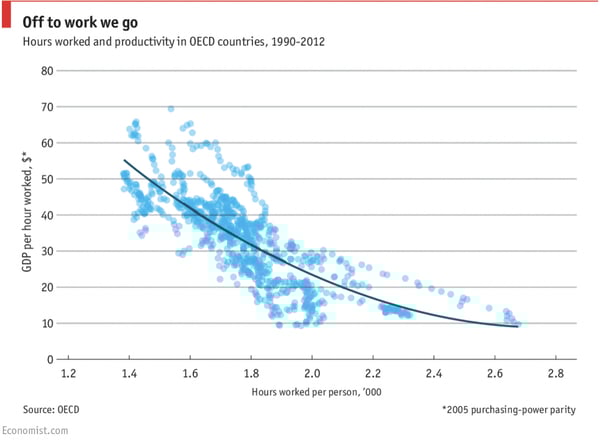
Additionally, flexible perks such as shorter workweeks have been seen to boost productivity. Here's a chart from The Economist that shows the correlations between work hours and employee effectiveness:

Flexible work survey

Source: The Economist

Flexibility might greatly benefit both employees and employers, but it can still be challenging for more traditional companies to adapt to flexible scheduling at first. For example, it may be harder to coordinate meetings or you may have trouble with team building. To find tips on how to navigate the pros and cons of flexible perks, check out this blog post.

3. Soft Skills will be even more crucial to your career.

In a highly-connected world, soft skills will be the hardest for technology to replace. While a bot can do many mundane tasks for you, it can't (yet) present a convincing business pitch, write a great video script, or create campaigns that play off of an audience's emotions. Soft skills, however, are what enable marketers to do all of those things.

But what exactly are soft skills? While technical skills relate to completing a more structured task, such as math, coding, or physically assembling products, soft skills often rely on context, the mind's ability to adapt to certain situations, and occasionally strategic planning. Examples of soft skills include emotional intelligence, adaptability, public speaking, writing, or other skills related to team management.

Soft skills are especially important for recent graduates or professionals just entering their field. According to a Cengage survey, over 70% of employers are primarily looking for soft skills when vetting entry-level employees. The study also reports that some of the most valued soft skills are related to good listening and solid communication.

Even when you're a seasoned marketer, soft skills will still continue to be important in your highly-creative and analytical career. Think about it? Even at an executive-level position, you could still be expected to pitch new or innovative ideas, manage a team, and use emotional intelligence to create a campaign that your audiences can relate to.

If you feel like your lacking in the soft skill department, here's a quick guide to key skills that you'll want to brush up on -- especially in the world of marketing.

4. Creativity will be particularly valuable to employers.

Out of all the soft skills, one of the most highly valued -- especially for marketers -- is creativity. According to LinkedIn behavioral data, creativity is the most in-demand soft skill in "short supply." LinkedIn's recent report also notes that the demand for creative talent will rise sharply by 2030 as artificial intelligence becomes more prominent in the workplace.

While artificial intelligence can't develop creative skills or projects on its own, a creative mindset enables marketers to think innovatively, experiment, and try new projects that will keep audiences engaged and intrigued.

Don't believe me? Check out these highly creative and thought-provoking campaigns that both awed audiences and generated significant conversions. These wouldn't have been at all possible had it not been for creative or innovative thinking.

5. Artificial intelligence will take over marketing tasks, but not jobs.

In the past, when we thought about technology, we feared that robots would steal our jobs. But, as marketers, it's now apparent that we don't generally have to worry too much about job security any time soon. This is because artificial intelligence or any other technology isn't yet capable of the valuable soft-skills noted above -- especially creativity.

However, while a bot can't pitch an award-winning campaign, it certainly can help you streamline mundane tasks to allow more time to brainstorm your next high-conversion ad.

At this point, AI can help content creators identify highly-searched SEO keywords, generate analytics reports, manage basic social media posts, send automated emails, and adjust online ad spend to prevent you from losing money. These are all things that would have taken up hours of your time years ago.

Business executives are also recognizing the power of AI and how it can help streamline processes. According to a multi-year survey of corporations in the U.S., AI implementation climbed from 48% to 72% between 2018 and 2019. Additionally, 67% of the companies that implemented AI in or before 2018 say they're expanding the areas of their business that use the technology.

While AI is still inaccessibly expensive for some smaller businesses, it is continuing to get more affordable and easier to manage as technology evolves. In the future, we'll likely see more investment in technologies that help employees work smarter rather than technologies that will render your job obsolete.

6. Recruiters will embrace more pre-screening tactics before job interviews.

While employers previously might have screened candidates for technical skills using quizzes or skill-related challenges prior to an interview, professional organizations like LinkedIn now encourage businesses to pre-screen individuals for soft and hard skills through tactics like phone and video interviews.

This strategy allows recruiters and employers to leverage technology to verify that a candidate is a solid job prospect before scheduling a full, time-consuming interview with them. But, while it's great for employers, this type of process might make job candidates a bit nervous or frustrated with the job interview process. If you're intimidated by pre-screenings, check out this blog post about how to navigate video interviews and various pre-screening questions.

7. Effective anti-harassment policies will be even more critical in the workplace.

For years, many workplaces didn't have effective policies related to harassment. In fact, the Supreme Court didn't begin to pass laws related to harassment in the workplace until the 1980s. Even when businesses were required by law to implement these policies, some in-office rules were ineffective as they made it hard for people to come forward with a complaint against someone of a higher power, such as a boss.

The abundance of in-office harassment issues came to light in the midst of the #MeToo movement, which encouraged people of all genders to share stories of sexual harassment in the workplace. Aside from sexual harassment, other forms of harassment, such as discrimination and bullying also became more apparent during this movement.

In a LinkedIn survey, 71% of recruiters and HR reps report that anti-harassment policies will continue to change and evolve to fit the modern-day workplace as these rules could impact a talent's interest in a position. This follows another report from Harvard Business Review that highlights how harassment claims are taken more seriously in offices when company leaders properly acknowledge and enforce them.

As the workplace grows more progressive, expect to see companies aiming to develop effective anti-harassment strategies to make prospective job seekers and current employees feel physically and psychologically safe in the workplace.

8. Wages could become more transparent.

LinkedIn reports that 53% of HR reps and recruiters say pay transparency will transform workplaces of the future.

The statistic above makes sense. To many, it's considered "rude" to discuss salary with friends, family, or colleagues. However, with the growth of political activism and news related to gender-based pay gaps, researchers now believe that pay transparency inside and outside of the workplace can help employees negotiate better and fairer wages.

Additionally, while some employers frown upon discussing pay with your colleagues, employees legally have the right to discuss work-related issues such as wages with coworkers.

Although pay transparency can cause employees to negotiate higher salaries, researchers suggest that it still benefits companies because it attracts talent and keeps employees at a business for a longer amount of time.

According to a recent study from The Creative Group, pay transparency is already becoming a major trend with over 70% of companies claiming to be partially to fully transparent about job role wages.

Preparing for the Future of Work

As you've seen above, some of the biggest themes related to future workplaces will relate to flexibility, embracing technology, and building a psychologically safe office culture filled with diverse talent. Here are a few tips that can help you embrace these themes.

  • Don't be afraid of flexible work. If you're an employer, consider how flexible work schedules or remote options could benefit you and intrigue talented job candidates. If you're an employee, consider how flexible work options could positively impact your career.
  • Identify where technology can help you. If you're a manager, consider investing in technology that can help your team have more time to be creative. If you're a marketer, it can also be great to look into technologies that you could recommend to your boss.
  • Zone in on soft skills. With the growth of technology, success in the marketing field will depend on your level of irreplaceable soft skills, including emotional intelligence or creativity.
  • Listen to your colleagues. If you're a manager, come up with strategies to stay connected to your team members and meet with them regularly, even if they're remote. If you're a marketer, look for opportunities to reach out to team members to gain insight from them. Strong communication will help your team be more productive while also helping everyone identify when an aspect of your processes or office culture isn't working.

To learn more about specific aspects of the future of work, check out this post on jobs artificial intelligence will and won't replace, this guide to successful remote work, or this post on cultivating psychological safety at work.

http://bit.ly/3cqSokm
How to Actually Generate Leads on TikTok [Infographic]

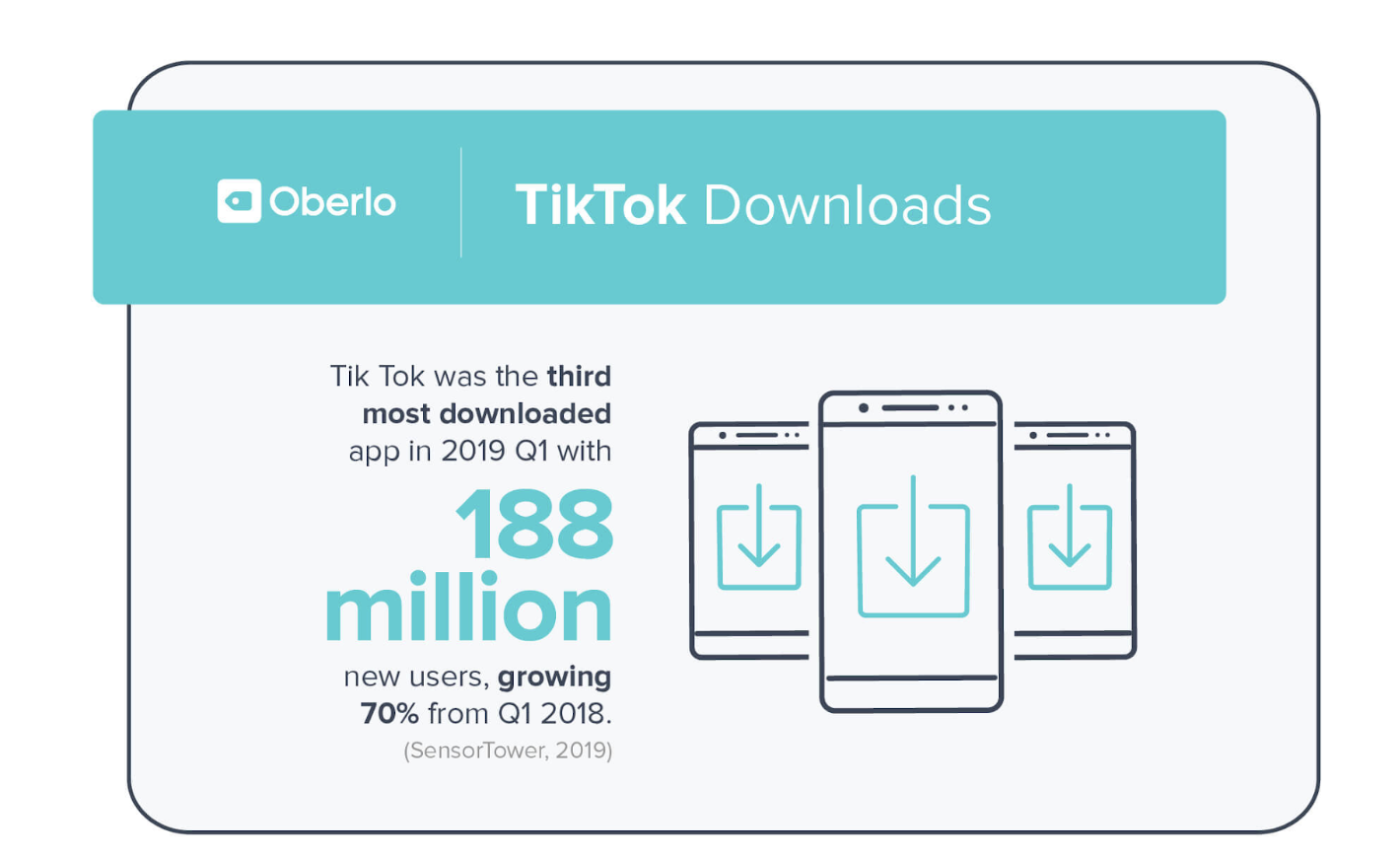
As a marketer, you've likely heard the buzz around popular social platform TikTok, which now has 500 million monthly active users and is the third-most downloaded app globally.

The video-based social app has incredible potential for marketers, particularly since it's so popular with the Gen-Z and millennial demographic. But, despite its potential, many marketers are unsure how to approach marketing on the app.

Some brands are already making headway on TikTok, of course — for instance, Chipotle has over 55K fans on TikTok, while the NBA has an impressive 5.1 million.

But, despite a few early adopters, most marketers still haven't figured out how to monetize TikTok … or whether it's even worth it to do so.

If you're considering investing in TikTok in 2020, we've got you covered. Here, Visme put together an infographic featuring 10 steps to generating leads on TikTok. Take a look to decide for yourself whether you're interested in testing out these steps with your own social team./p>

But first — why use TikTok for lead generation at all?

Why use TikTok for lead generation?

There are a few good reasons TikTok can be a great platform to generate new leads: 

1. It allows for mobile-first campaigns. 

The 2010s has been the decade of mobile, and it doesn't show signs of slowing. The number of mobile users in the world continues to grow, as even those from developing countries start to get their hands on smartphones at increasing rates. 

But what makes TikTok particularly enticing, aside from its increasing growth, has been its use of micro-videos that are easy to watch on mobile. 

The majority of mobile users allot their time to watching short videos. The way TikTok is built, users can create 15-second videos at most. It isn’t surprising, then, to see the platform grow the way it has over the years as its format is perfect with what mobile users prefer to consume.

Additionally, from an operations standpoint, the mobile format is relevant. You can run a business right from your phone, so investing in a mobile-based application like TikTok can fit right into your mobile-first campaigns.

2. It's great for brands targeting a younger market.

From its inception, TikTok made it a point to target younger viewers. They understood the youth uses social media applications differently, and that directed most of their features and campaigns. Very quickly, they became the application younger audiences were addicted to.

To this day, the number of TikTok users online grows at a rapid rate, with a large chunk of those users in their late teens and early 20's.

Screen Shot 2020-02-24 at 11.23.10 AMImage Source

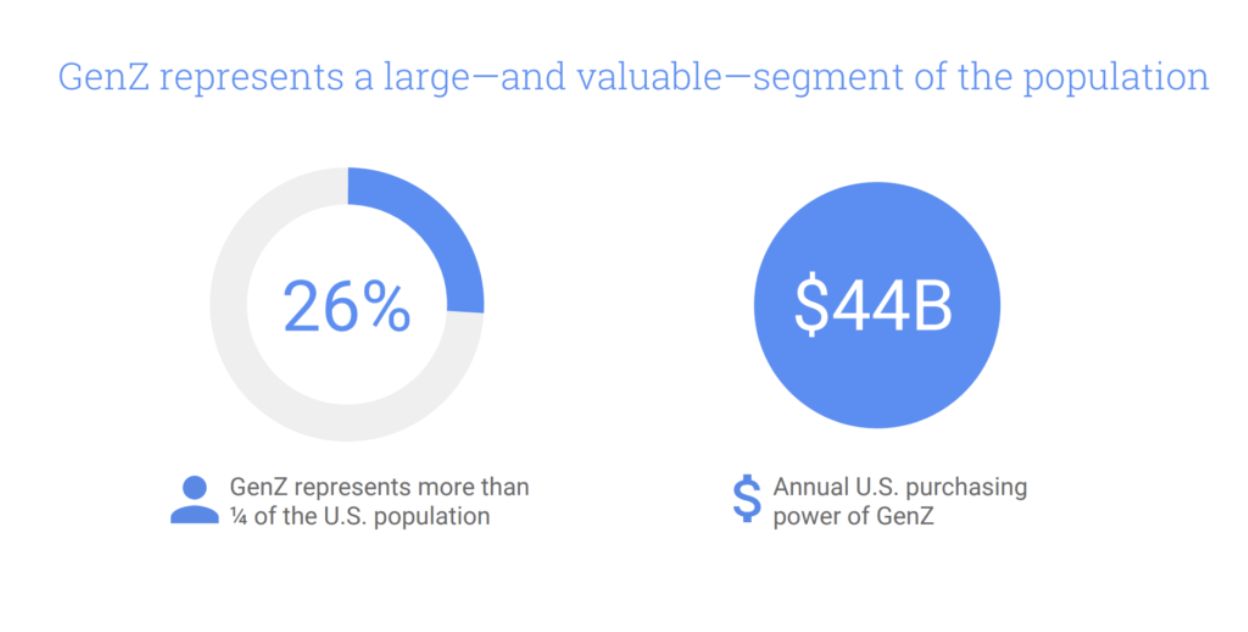
This information is especially important for businesses who are trying to reach a younger audience. After all, the younger demographic is going to be the market with the most purchasing power in the future — in fact, it's already projected at about 40% in 2020

Screen Shot 2020-02-24 at 11.23.18 AMImage Source

3. It enables your brand to produce authentic content.

Authenticity matters, especially to millennials and Gen Z. Keeping things real and genuine is key in getting buyers to believe your business does more than just get consumers to buy products.

Doing this can be difficult, but a great place to start is by focusing on storytelling. Focusing on narrative shows your business goes beyond money and emphasizes the human element to things.

In a nutshell? Authentic brands attract quality leads. And with TikTok paving the way for authentic brand building — especially with content creators who have huge influencing power — this platform is the place to be.

Next, let's explore the 10 steps to generate leads on TikTok: 

10-Steps-to-Generate-Leads-on-TikTok_(1)
http://bit.ly/32F40fm

How to Easily Analyze Facebook Ad Results With 3 Custom Reports

Want to save time analyzing your Facebook ads results? Looking for an easy way to create custom reporting in Ads Manager? In this article, you’ll discover three custom reports in Ads Manager to help you quickly analyze your Facebook ad performance. Why Create Custom Reports in Facebook Ads Manager If you’re anything like me, you’re […]

The post How to Easily Analyze Facebook Ad Results With 3 Custom Reports appeared first on Social Media Marketing | Social Media Examiner.

March 02, 2020 at 12:00PM http://bit.ly/32ETdlm
read more...
from Social Media Marketing | Social Media Examiner http://bit.ly/2whXzTk
via IFTTT