Wednesday, February 5, 2020

An Inside Look At HubSpot's Enterprise Marketing Playbook

We debate a lot at HubSpot about how much of our marketing playbook to share with the world. That’s the tricky thing about marketing to marketers (and sales and service teams for that matter) — your instinct is to share everything, but if you do, you run the risk of losing your competitive edge.

So, you keep your biggest wins, worst failures, and deepest insights under lock and key, safe from the prying eyes of your competitors. But in doing so, you also keep them hidden from your customers and the wider community.

Start-ups tend to lead the way when it comes to sharing. They shine a light on their strategies, successes, and shortcomings, and in doing so, they encourage others to do the same. And the whole industry grows better. The same cannot be said of large enterprises. As they grow, they have more to lose, they become increasingly risk-averse, and they forget that sense of openness.

Not only does this make the enterprise marketing world feel like an isolating place, it leaves enterprise marketers starved of inspiration, and it zaps innovation across the industry.

In the early years of HubSpot, we were an open book. We shared everything. And it helped us go from a no-name startup in the mid-2000s to a global, publicly-traded enterprise just 15 years later. We haven’t done everything right, but we’ve scaled substantially over the years, generating more than 68 thousand customers globally and $513 million in revenue in 2018 with the highest customer satisfaction of any CRM.

Like any rapidly scaling company, our strategy has evolved over the years to better match our stage of growth and buyers' expectations, but we never want to lose the sense of openness that helped get us here.

So, we've decided to share our enterprise marketing playbook. Everything from how we drive awareness and convert leads to how we think about our talent and our tech stack is outlined below. We hope that by opting for openness over secrecy, more large enterprises will do likewise and we’ll regain some of the sense of community and collaboration we loved so much when we were startups. Ok, here goes.

Our Enterprise Playbook for Driving Brand Awareness

Let’s start with where most good marketing playbooks begin — brand awareness.

Our awareness playbook consists of two strategies: a content strategy and an ad strategy.

And, within our content strategy, we have two sub-strategies — one that is all about getting found through search (our "SEO strategy"), and another that aims to change minds through opinionated content that spreads through word-of-mouth and social engagement (our "POV strategy").

To execute our two content strategies, we’ve split our team into two separate purposes. One team is focused on optimizing informational content to spread through search, and the other is tasked with creating influential content to spread through word of mouth. Both teams are playing to algorithms and what we know about our audiences, but each has a vastly different marketing approach.

Let’s take a closer look.

Content Strategy Part 1: SEO

With our SEO strategy, we're not just playing for top placement in SERPs, we're targeting the entire first page — ads, featured snippets, top organic results, directory listings, you name it.

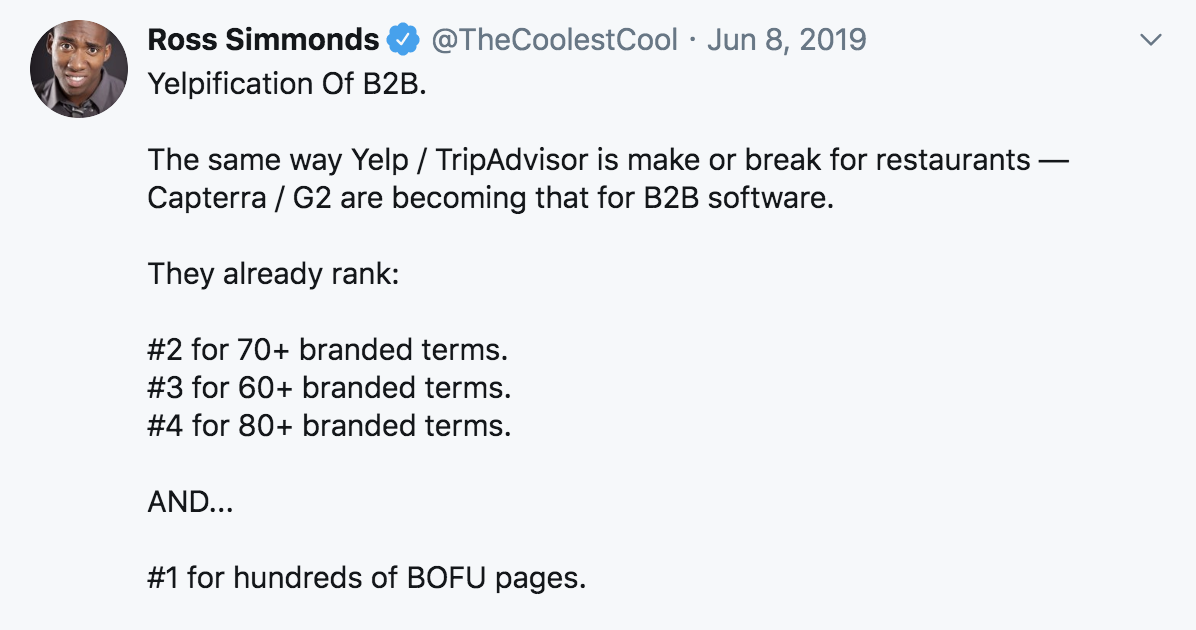
I also have to mention review sites, which have become increasingly important for SEO in recent years. To paraphrase Digital Marketing Strategist, Ross Simmonds; review sites like G2 are becoming an undeniable influence for B2B software — they already rank #2 for 70+ branded terms and #1 for hundreds of bottom of the funnel pages.
To perform well across all of these areas, we have adopted a diversified search-geared content strategy that comprises long-form educational content, shorter content optimized for snippets, pillar pages, YouTube optimization, and audio courses.

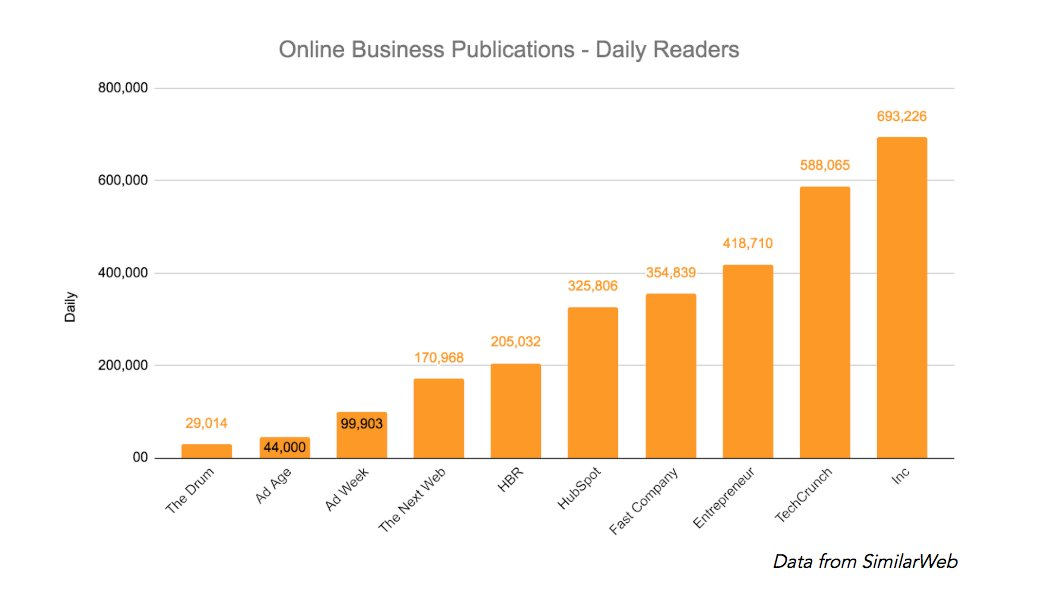
The culmination of these approaches has led to robust growth in our organic traffic, and a blog readership that is in the realm of major publications like HBR, Adweek and Fast Company.
Content Strategy Part 2: POV

In a world where options are seemingly endless and products are increasingly becoming copied or commoditized, what you stand for is just as important as what you sell. Having a strong point of view isn't about taking a contrarian stance and throwing up a bunch of hype content.

We've all had more than our fill of articles sounding the death knell for certain marketing tactics, heralding the birth of others, and passing off truism as new insights. Breaking through with a strong point of view starts with having a clear brand identity, sharpening that identity through thoughtful product positioning, and then bringing it to life with strong messaging and complementary creative execution.

Our POV mix includes thought leadership articles, brand videos, social content, speeches, and editorial podcasts. The opinions we advance outside of HubSpot are infused internally through our open culture and foundational documents like our customer code, which has garnered 1.3 million views and helps guide our own customer-affecting decisions daily.

Ad Strategy

When a message strikes a chord with an audience organically and earns above-average social engagement, we catch it early and amplify it through ad spend.

But, as with any marketing expense, we have specific goals and purposes behind each ad, each of which falls into one of the following three buckets:

  • Transactional ads — these ads generate HubSpot software users
  • Informational ads — these ads grow our content leads
  • Awareness ads — these ads drive content views and website visits

For established products that already have some search demand, we spend most of our digital ad budget on transactional ads, but we have thresholds for both direct and assisted returns on ad spend. Once we've maxed out our return on our transactional ads budget, we move the budget into the informational ads bucket, and then into the brand awareness bucket.

For new launches and lesser-known products, we flip that playbook. New products have lower brand recognition in the market, so the cost of transactional ads is far higher. So, we first invest in brand awareness, and as our direct and assisted returns on these ads begin to reach our thresholds, we put that budget behind transactional ads.

Awareness Strategy Summary:

  • Grow organic traffic globally through on-site content, including pillar pages and our blogs
  • Manage SERP presence through partnerships and snippet strategy
  • Empower customer advocates to talk about our business on review sites and through word-of-mouth
  • Executed a linked ad strategy across transactional, informational and brand categories
  • Build influence by publishing strong points of view designed to spread organically, through social media sharing for example

Our Enterprise Playbook for Converting Traffic

Many enterprise companies assume that the buyer is willing to follow a rigid, extended sales process, and they build their engagement strategies accordingly. They seek to collect enough information to qualify a lead, communicate through long email chains, book multiple meetings, and perhaps most painfully, hide pricing so a buyer has to talk to a rep.

We followed a similar playbook for a number of years — everything except hiding pricing. As we started to see customer expectations shift, however, we realized how essential it is to create options for different purchase preferences.

Today our conversion playbook is built to reduce friction. We've made a number of changes over the years, including reducing our form fields with progressive profiling and data enrichment (which increased our form conversion rate by 5%), but the real difference has come by diversifying our conversion options.

Today on our pricing page visitors are given multiple ways to connect — they can book meetings, email, call, or chat. Old-school advice about conversions tells you that choice breeds hesitation and that you should reduce the number of CTAs on a page, but we experienced something quite different. By providing interested visitors with the freedom to choose their preferred way of connecting with us, we actually increased our conversion rate by 170%.
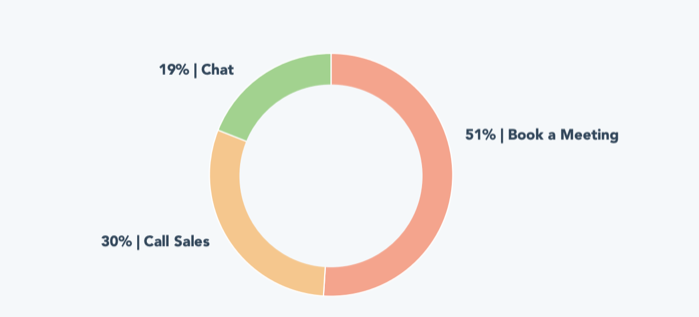
Conversions on HubSpot.com

In addition to offering multiple ways for people to connect, we allow buyers to choose between getting a demo or getting started with our free software and upgrading through the product at a time that suits them. By doing so, we have increased the number of self-purchases by 10X while still growing our inside sales model.

The product qualified lead (PQL) has proven to be a stronger indicator of the buyer's intent than the marketing qualified lead. As Kieran Flanagan, HubSpot's VP of Acquisition has argued, the PQL is what an MQL promised to be but never lived up to. The PQL fulfills that promise as it's based on someone getting real value from a product, and showing intent to use it much more deeply than the traditional MQL. PQLs also open the door to new marketing levers including in-app targeted chat and automation based on user behavior.

Conversion Strategy Summary:

  • Optimize conversion paths by providing a range of options to site visitors
  • Drive engagement with conversational marketing and targeted chat
  • Grow touchless sales through our freemium model

Our Enterprise Playbook for Building a Flywheel of Momentum

Ten years ago, companies could win on the strength of their product alone. Today, in a world fueled by word-of-mouth, the most disruptive companies are winning, not just on the strength of their products, but on the overall quality of their customer experience.

It sounds straightforward, and no one is going to argue against solving for the customer, but maintaining a cohesive customer experience gets much harder as you get bigger.

As you grow, you add more technology, more divisions, and more processes to your mix and, despite best intentions, your customer experience can suffer. This is especially damaging for sales teams at enterprise companies, where existing customer bases have the greatest revenue potential.

So, over the last few years, we've gone all-in on customer experience. We've united marketing, sales, and service under a single chief customer officer, run UX sessions to find friction in our product and sign-up process, and released the customer code.

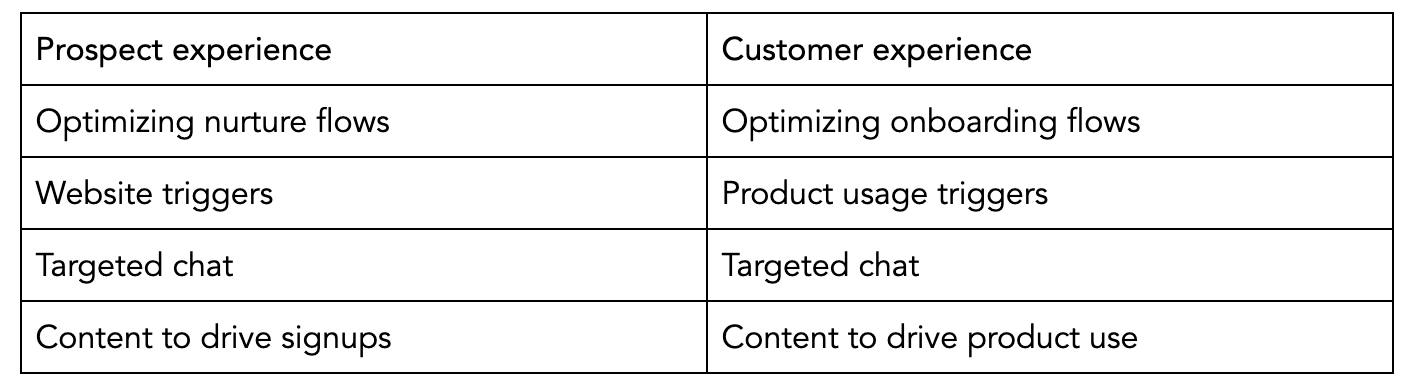
Our marketing strategy has evolved, too. We've invested in customer marketing at an outsized pace to other teams, and we've developed robust strategies to eliminate friction for customers, recognizing the critical role they play in our growth. A big piece of this is simply applying the same strategic lens to our customers as we do to our prospects:
Screen Shot 2020-02-04 at 12.15.34 PM

Companies tend to reach automation maturity in three phases. They start with automating and optimizing marketing communications, then follow with sales communications, then finally get to customer communications. And it is in phase three that a lot of unique growth at enterprise companies can be unlocked.

In addition to growing our focus on enabling customers to succeed so they retain, upgrade and cross-buy, we are intentional about finding and empowering our most successful customers to advocate on our behalf through reference programs, review sites, and event participation.

We dedicate teams to finding interesting customer stories, setting up customer referral programs, holding events where customers can learn from one another, incorporating customers into our product launches, and driving people to review sites and our own forums to give feedback. These advocates are just as much a part of our success as any team member, and recognizing their value to our company and empowering them to support our growth has played a key role in accelerating our momentum as a business.

Customer Marketing Strategy Summary:

  • Optimize customer experience with automation
  • Drive engagement through a customer-focused content strategy
  • Grow referrals through our customer advocacy program

Our Enterprise Talent Playbook

Much of our ability to keep innovating relies on the recruitment, retention, and development of a diverse and talented team. As we've scaled, we've heightened our focus in this area and have ramped up accountability.

In the last few years, we have started measuring and reporting on our progress towards broadening the diversity of our team and deepening the sense of belonging people feel at HubSpot. We've developed employee resource groups for underrepresented groups, hired a Director of Diversity, Inclusion and Belonging, modernized our prospecting and recruiting practices, and made every hiring manager accountable for building diverse slates of candidates.

One of the most impactful things we've done to broaden our reach and pull in top talent from around the world is to commit to being a remote-friendly company. We now have over 300 remote employees across the globe, from individual contributors to managers to directors, and our remote workforce has grown exponentially in the past few years — in 2019 alone, our global remote population grew by 86%.

In some cases, being remote-friendly has helped us hire top talent who wouldn't have otherwise taken the role, and in other cases, it has helped us retain exceptional HubSpotters who wished to move to new places for personal reasons. As we've become increasingly remote, we've built support systems around remote workers and their direct reports including training for managing remotely, peer groups, and technological support.

Talent Strategy Summary:

  • Prioritize and invest in building a diverse and inclusive workplace
  • Build a remote-friendly organization

Our Enterprise Tech Stack

Behind every good enterprise marketing playbook should be a powerful, easy-to-use tech stack. Here are some of the tools and services that help us at HubSpot to execute our strategy.

  • HubSpot: No surprises here, we have built our entire system on the HubSpot platform. That includes everything from CRM and marketing automation to data enrichment and helpdesk. All HubSpot. We also take advantage of many of the powerful integrations available with HubSpot to customize our strategy.
  • Advocately: for enabling customer advocacy
  • Ahrefs: for advanced SEO tools
  • Airtable: for content tracking and tagging
  • Bizzabo: for event management
  • Canva: for scaling design globally
  • GitHub: for developer project management
  • Invoca: for inbound call tracking
  • Memoq: for translation and localization
  • MoveableInk: for dynamic email content
  • OneTrust: for privacy and compliance
  • PieSync (acquired by HubSpot): for two-way data syncing across our platform
  • Usability Hub: for UX
  • Vidyard: for video marketing

Thanks to the wide range of powerful integrations available on the HubSpot platform, we have the freedom needed by rapidly scaling companies to choose their preferred tools for growth. To learn more about our expanding app ecosystem, read Scott Brinker's piece, 'It's An Open Platform World. HubSpot's Growing App Ecosystem Helps You Thrive In It.'

Opting For Openness

All of these strategies have detail and nuance too great to comprise in a single article, but I hope this piece gives a sense of where we're placing our priorities. We bet on the compounding value of search, develop distinct points of view, prioritize the reduction in friction everywhere, and make meaningful investments in our customers and in our team. And we tie it all together with a central and expansible platform on which every customer-facing team is aligned.

When HubSpot was a start-up, we opted for openness. As an enterprise, we're continuing to do the same. We believe it's better for individuals trying to crack the enterprise marketing code and for the industry as a whole. We'd love to see more enterprise companies do likewise so that we can challenge one another, spot opportunities for collaboration, and perhaps most importantly, build a stronger sense of community across the enterprise marketing space in 2020.

http://bit.ly/31sv5Sa

Marketers: Is Your Ecosystem Ready for 2020?

At your company, you have multiple teams, dozens of tools, thousands of customer touchpoints, and new challenges every day. And through it all, your customers have much higher expectations than they did 10 years ago.

Customer experience is now the main factor driving referrals, sales and lifetime value. Because of that, your customer needs to be at the center of your entire business. Regardless of where your customer interacts with you, they need to have a delightful experience.

One tool can't do it all for you.

Keeping your marketing strategy customer-focused requires using more than software to build your business. You can integrate your software with apps and use service providers (typically an external business who is an expert in the help you need) to tackle business needs alongside with you. Trying to manage the experience across the entire customer journey can involve juggling a lot of different channels and tools.

Christopher Martin, Digital Marketing Manager at FlexMR, says that he amassed a large number of tools during his first few weeks on the job -- including Constant Contact for emails and Hootsuite for social media. But simply launching more tools didn't get them the results they needed. "They weren't integrated, so we couldn't track leads or calculate ROI," Christopher says. "We spent much time manually entering data to ensure the information was accurate."

To create the customer experience you want, these tools need to be supported by a backbone. Bringing all these tools together (along with experienced partners) creates an ecosystem that supports your business. Without this ecosystem, it's impossible to manage every touchpoint effectively.

This is why it's so important to use more than software to build your business -- integrate your software with apps and use service providers to tackle business needs alongside with you.

Using a Software Ecosystem to Help You Grow

It's hard for one company with one software subscription to deliver the experience that customers are looking for today.

Instead, businesses need to surround themselves with connected tools that keep the customer front and center. There are three tools that can help you keep your customer at the center of your flywheel and drive growth:

  • Service providers
  • Access to an app marketplace
  • Creating a single system of record

Service Providers

Marketing technology spend is now higher than the advertising spend for companies.

Hiring an external service provider to work with you and your team can be a great resource. They can help with tool expertise, training, management, implementation, ongoing support, and more. Service providers can help marketers optimize their investment by providing hands-on assistance, training, and knowledge.

According to HubSpot research, 86% of businesses who work with service providers say it has benefitted their business. People have cited the following and more as benefits of working with service providers:

  • Extra help to achieve your business goals faster
  • Achieve highly specialized projects and tasks
  • Ability to achieve a broader scope of projects
  • Ability to do more with the technology that you're using
  • External perspective and expertise
  • The reliability and accountability of working with an outside organization
  • Not feeling limited by your internal resources
  • Faster growth for your company

When you hire folks who are extremely familiar with the software than runs your business, you get more value out of your technology. Service providers are an extension of your business, and they allow you to get more work done with fewer full-time staff. Who doesn't love a pair of helping hands - especially when those hands are attached to a ton of specialized knowledge?

App Marketplace

As we mentioned earlier, marketers need a lot of tools to make the magic happen. But these tools shouldn't exist separately. Integrating them together can make it easier to work across different channels and automate your customer experience.

An app marketplace makes it easy to bring all the tools you use into one place (and it can help you discover new tools, too!). Software with a strong ecosystem includes access to a wide range of apps that make your platform even more powerful.

Skirmante Bikaite, Marketing Executive at Hatch, says that before taking advantage of the HubSpot ecosystem she was using one tool for sending emails, another for checking how the website was performing, and so on. This large number of tools that Hatch used delayed its ability to set up campaigns and results in a more complicated marketing process.

When they were able to pull all of their social media apps together, they could coordinate campaigns and reporting across channels. "We're now able to see the source where leads come from, when they convert to an opportunity and when they change towards a sale down the road," says Skirmante. This kind of coordination is only possible when you're supported by an ecosystem.

Melissa Miller, Marketing Fellow on the Marketing Operations team at HubSpot, agrees with the importance of integrations: "At HubSpot, we've been able to leverage integrations to build on top of HubSpot's existing tools. These integrations serve a range of functions and enable our operations teams to build solutions that support internal stakeholders across the business. Ultimately these integrated solutions empower our marketing, sales, and services teams to provide a better experience for our customers."

Single System of Record

Most marketers are familiar with using a CRM to store customer data. But not every team is taking advantage of all the customer data their entire company has available. From customer satisfaction data, to survey responses about preferences, to past purchases - combining all this information into one single system of record opens new doors for your marketing team.

Books Tell You Why, a rare bookseller, uses their CRM to personalize their marketing campaigns for each reader. "As an eCommerce operation, email nurturing and targeted messaging are key ways for us to win repeat business," says Andrea Koczela, VP of Marketing, "Knowing that 'Joe' collects James Bond literature will allow us to send messages tailored to his interests instead of horror book newsletters, for example. Not only does this approach increase our open rate and click-through rate, but it also builds goodwill with our contacts. They can trust us to send relevant emails and not clutter their inbox."

Using all of the data at your disposal to curate a personalized and targeted customer experience turns your marketing pipeline into a growth engine.

Not only that, but bringing all your data together into one system means that your teams collaborate better. Sales and marketing are working from the same context, which helps generate more conversations that can go deeper into the customer's needs.

No Marketing Team is an Island

Why should your software be one?

Instead of thinking of software as individual tools, it's critical to consider the overall ecosystem your tools exist in. A service provider can help you grow in ways that you've never thought of before, from discovering a new integration to developing a new automated leads pipeline. When you lean on a strong ecosystem, you're more equipped to meet your goals.

Using all these pieces together empowers you to provide an excellent customer experience across all touchpoints.

HubSpot is more than software, it's a growth platform designed for you to customize with an entire ecosystem of education, apps, and service providers all available to you at the click of a button. Whether it's strategies, services, or software, the HubSpot ecosystem has everything you need -- so you don't have to grow it alone.

More than just software, HubSpot is an ecosystem of professionals ready to create custom strategies, solutions, and software for your business. You already know how to grow better -- and with the HubSpot ecosystem, you don’t have to grow it alone. Check out our App Marketplace and Solutions Directory to learn more about the HubSpot ecosystem.

http://bit.ly/2UpeTj8

How to Create a Facebook Marketing Plan That Models Your Customer Journey

Is your Facebook marketing meeting your customers where they are? Wondering how to design a Facebook plan that supports your sales funnel? In this article, you’ll discover how to create a customer-centric Facebook marketing plan that meets your prospects and customers at every stage of their customer journeys. #1: Map Out Multiple Customer Journey Scenarios […]

The post How to Create a Facebook Marketing Plan That Models Your Customer Journey appeared first on Social Media Marketing | Social Media Examiner.

February 05, 2020 at 12:00PM http://bit.ly/2OvDkb7
read more...
from Social Media Marketing | Social Media Examiner http://bit.ly/2SodK8U
via IFTTT

Paid Social Media: Worth The Investment?

Rick and Morty is a popular adult cartoon that airs on Adult Swim, reaching 2.3 million viewers on average. Recently, chip brand Pringles worked with the TV show to produce a commercial that runs on social media channels. In 24 hours, I've seen their ad on Twitter four times already:

If you've seen Rick and Morty, you might be thinking — Why Pringles?

Well, of those Rick and Morty viewers, about 1.9 million are adults, ages 18-34. And, of Twitter's users, 44% of them are adults, ages 18-24.

If Pringles wants to reach a demographic within this range to promote their product, a Rick and Morty-themed advertisement via Twitter seems like a good place to start.

Ultimately, paid social media helps with targeting audiences, and driving sales.

Every social media channel is different. Twitter offers short-form content, Instagram focuses heavily on visual-based content, Facebook has its own marketplace, and LinkedIn is the home of networking professionals.

As such, paid social media on each platform differs, and should, depending on the campaign and audience.

Here, we're going to explore some quick strategies that will help you decide how to use paid social to the benefit of your brand.

Pringles and Rick and Morty might seem like an unlikely partnership, but it was a decision that came from months of planning and execution, with help in no small part from the social media channels chosen to run the commercial.

Having a paid social media strategy can save a budget that might not be as expansive as a global potato chip brand, so we've gathered the important things to know about using various social platforms for paid ads.

Facebook

When advertising on Facebook, it's a good idea to use Facebook Targeted Ads. This feature is run on a bidding system — advertisers bid on a number of ads based on their target audience. Then, that bid will be put into a lottery for a chance to be picked to run.

Other than the lottery, Facebook Ads lets you show ads to your customers based on their behavior. This is helpful because you can keep advertising to your existing Facebook customers based on what Facebook tells you about their use of the app.

Using Facebook Ads helps you build new leads and generate brand awareness. The analytics Facebook gives you opens the door for experimentation — try using different ad formats and see what your audience engages with most. It might be different than other social strategies.

For more information about Facebook Ads, check out our checklist that gives you everything you need to know before setting them up.

Twitter

As a consumer, Twitter paid ads sneak up on me. I barely know I'm looking at a sponsored tweet because they look so similar to regular tweets. As a marketer, this is fantastic news; it means more eyes on your ads because they're not as blatant as ads on other social channels.

Why Twitter Ads? Well, Twitter reports that 41% of users purchase a product after seeing an ad within a month, and when using their Ad software, you can target your ad to a specific demographic..

Twitter provides ad settings based on your budget —like how frequent your ad will be seen (Pringles paid attention to this), and the ad type to run. Twitter has a few different types of ads for you to choose based on your goals. Take a look at this post to learn more about the different Twitter ad types, as well as how to start using them today.

Instagram

60% of people discover new products on Instagram, and it probably isn't a bad idea to look into advertising to the 200 million accounts that visit at least one Instagram Business profile each day. Business profiles on Instagram mean you can set up ecommerce and run ads from your Instagram account.

Since Facebook owns Instagram, if you run ads on both platforms, they're managed in one place (on Facebook), so campaigns can be run and analyzed concurrently.

It's a good idea to look into Instagram Ads because, while the platform is ripe with exposure possibilities, Instagram Ads are against the changes of the app's algorithm. So when the algorithm changes and some posts might not show up on user's feeds, ads always will.

Using Instagram Ads, you can choose your budget, which is tied to the length of the ad run. It's like filling up a gas tank — You get the amount of gas you pay for, and on Instagram, your ad runs for as long as you pay for.

With so many different visual styles running on Instagram, there are different ways to leverage paid social media, such as Image or Video. Take a look at this post a rundown on those ad types and their exact ratios, we can help you out there.

LinkedIn

On LinkedIn, millions of professionals have found a wealth of professional connections, their dream job, or both. The platform lets you reach thousands of people in your industry. Fortunately, as a marketer, ads let you do the same..

There are 630 million professionals on LinkedIn, with 63 million in decision-making positions, like business purchase decisions. This is a B2B advertiser's dream come true. With the potential to reach 60 million decision-makers on the most popular social platform for lead generation, it's good to consider LinkedIn as an optimal platform for advertising. .

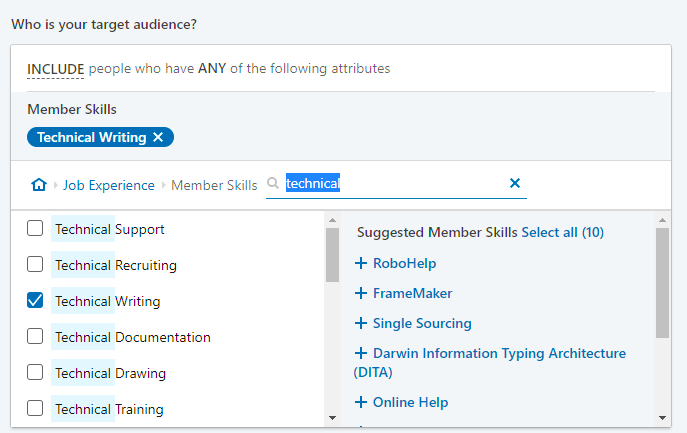
LinkedIn's targeted ads let you type in keywords and select audiences by category. So, if you're posting a job for a certain role, LinkedIn can help you find that audience.

Example of LinkedIn Ads settings

Source

You can also play around with ad formats on LinkedIn to find which one is most effective. To find out more about the ad types on LinkedIn —such as sponsored, message, text, and dynamic — check out our post about creating an awesome LinkedIn Ad campaign.

Pringles is just one company using market research and target audiences to make paid social media decisions that work extremely well. It's easy to think ad spend is just for the big brands, but making informed purchase decisions benefits every business.

The truth is, social media channels are making advertising functional for businesses of small size, as well. It's just about learning how to use them (and which ones are best for your audience) to benefit your brand and get the highest ROI.

http://bit.ly/2S2SYNr

Tuesday, February 4, 2020

Do You Really Need Sound in Your Instagram Stories? [New Research]

Since the dawn of Stories features across social media platforms, many brands have asked, "Should we make Stories with or without sound?"

While some people love to get the full experience of sight and sound while they watch Stories on various platforms, others watch this type of content when they're on-the-go.

Because many mobile users are often in public, standing near people, or even in at school or work when they watch Story content, they might choose to watch with the sound off.

Story platforms have even debated whether this element is or isn't a necessity. Recently, news coverage from MarketingLand noted that Snapchat encourages creators to include sound in their Stories, while Facebook says otherwise.

But, what about Instagram? Are people turning off their sound to watch Stories on this platform? Or is it still worth creating Stories that rely on audio elements?

This question is such a highly debated topic that I decided to ask consumers to weigh in.

To do this, I used Lucid software to ask over 350 people the question, "How often do you watch Instagram Stories with the sound on?"

When I received the results, I was actually pretty surprised by what the consumer group said.

After that Facebook, Instagram's owner, announced that 85% of its own platform's users watch videos without sound, you might think that many Instagram users also watch content -- like Stories -- without audio. But, then again, if you're a Snapchat user who's more accustomed to watching videos with the sound on, you might assume that everyone else has a similar preference.

But, when it came to the poll, the results were a fairly mixed bag.

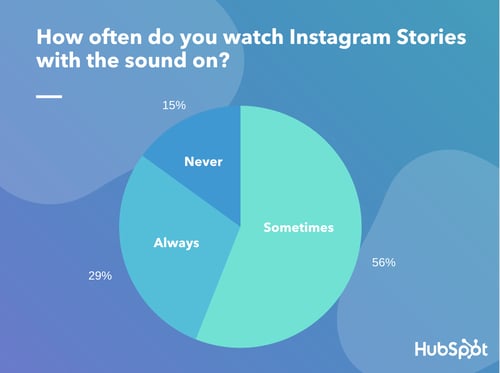
Of the respondents who watch Instagram Stories, 56% say they watch with the sound on "Sometimes," while 29% say, "Always." Only a small chunk of consumers say they never watch Stories with the sound on.

Lucid Survey: Do you watch Instagram Stories with the sound on or off?

Data Source: Lucid Software

So, what does a "Sometimes to Always" response mean for marketers?

Depending on what the Story content is, you don't have to worry too much about whether you need sound or not. If you need it to tell a better Story, you can still place have non-silent content. And, if your content is more photo, interactive sticker, or text-heavy, you don't need to purchase music or create sounds to make it engaging.

One thing to keep in mind is that if you have a Story that requires sound to understand, you might want to make it accessible to people who view it on silent.

For example, if you interview someone, you could include a "Sound On" disclaimer, or subtitles that appear at the bottom of the video, This way, viewers will either be able to read from the subtitles, or they can return to the Story when they're able to turn on their sound.

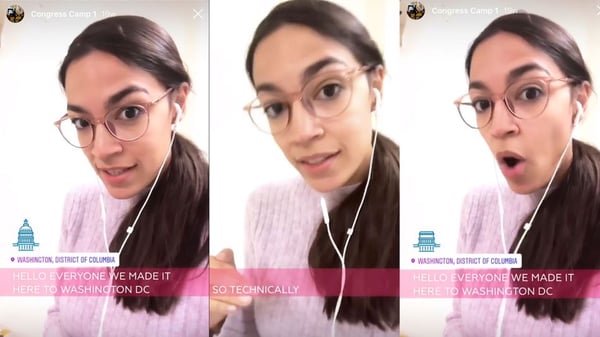
To give you a visual example, here's what an Instagram Story with subtitles might look like:

Instagram Story with closed captioning for those who can't watch with sound on

Source: Mashable

3 Instagram Stories that Work Without Sound

Ultimately, if you want to save money, time, and effort, you can drop sound altogether. However, when you do this, you'll want to make sure that your visual content is both enticing and informative so a user can understand and engage with a Story. Here are a few great examples of brands that do this well.

Starbucks

Starbucks uses Stories to share customer testimonies, new product launches, and other interactive content. These aspects of promotional content are not only interesting for viewers and prospective customers -- but additionally -- they don't require sound.

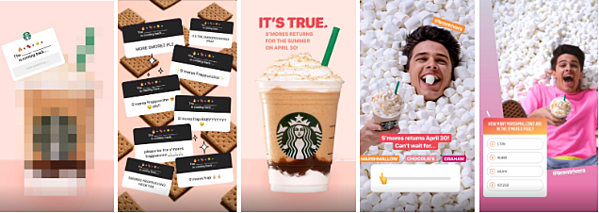
In one example, Starbucks asks viewers to guess which drink is coming back. In the Story's next page, the brand shares the best text-based answers and reveals the S'mores Frap and image. To add some extra interactivity, viewers can vote on what type of S'mores Frap they prefer and guess how many S'mores are shown in a video.

Starbucks Instagram Story without sound

Harvard Business Publishing

The Harvard Business Review often centers Stories around management, professionalism, and career-life tips. While HBR has published videos and content with sound on its Instagram Story, they often adapt long-form article content into abridged Stories.

In these adapted Stories, you'll often see a blurb of text, poll, or quiz on each page, rather than having to listen to a soundbite or video to understand the content.

To make their text-based Stories more interesting and engaging, HBR embraces Instagram's poll, quiz, and other interactive Story features. However, the publication also gets creative by adding its own spin on interactivity to a story.

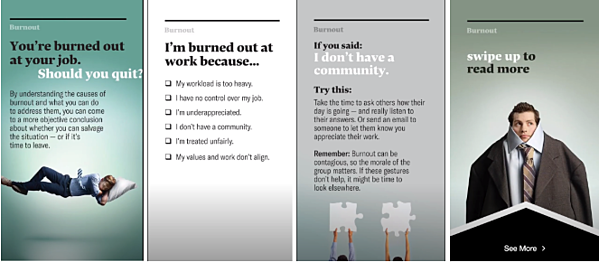
In the example below, the publication shows users a burn-out checklist which they can screenshot and check off. The story then gives you advice on what to do if you checked any of the boxes.

HBR soundless instagram story

HubSpot

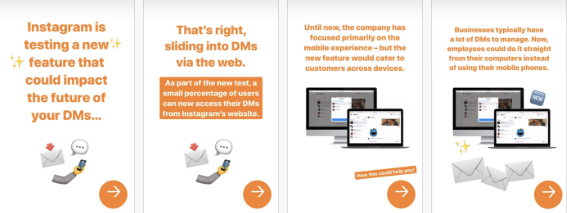
At HubSpot, our social media team will occasionally post Stories with sound, but usually, they leverage quizzes, polls, and short blurbs of text to tell a compelling story without sound. Here's a recent example where our Instagram Story highlights a new DM feature on the platform:

HubSpot Soundless Instagran Story

In the example above, our social team includes small blurbs of text to fully inform viewers about the topic we're discussing. To keep viewers entertained, our social team includes images and relevant GIFs in the Stories.

How to Create Engaging Silent Content

Ready to create your first fully-silent Instagram Story, or at least embrace silent content in your content strategy?

To get started, it can be helpful to familiarize yourself with all the silent, but still engaging, features you can use on Instagram Stories. Then, if you're interested in branching out with silent content on other platforms, check out this great guide to creating silent video.

Need more examples of soundless content? Click here for a rundown of silent video examples.

http://bit.ly/2RZmRhA

Why Accessible Marketing is the Future, According to an Inclusive Design Expert

One in four people live with a disability in the United States.

That means, if your marketing content excludes people living with a disability, you could be losing out on the potential of converting 61 million people into customers.

I had the opportunity to sit down with Christina Mallon, the Global Head of Inclusive Design and Accessibility at Wunderman Thompson (the largest ad agency in the world), to learn how brands are creating more inclusive products and campaigns to reach an underserved audience.

Christina has worked with major brands, including Microsoft and Tommy Hilfiger, to help them develop accessible products and content for their marketing campaigns. She's worked on digital marketing campaigns for Tommy Adaptive, and helped build the first-ever Alexa skill for people with disabilities. Her work has received national attention and has been featured on PBS, Fast Company, Forbes, Yahoo!, and more.

Needless to say, I was very lucky to sit down with Christina to learn how marketers should think about accessibility when it comes to building web experiences and content.

Here, we'll explore Christina's definition for accessibility, examples of non-accessible marketing, and how you can create more inclusive and accessible marketing content for 2020 and beyond.

How do you define accessibility?

Christina shared that the World Health Organization defines a disability as a function of the mismatch between a person's abilities and the demands of the environment. "The best example I have of this can be found at airports," she shared.

As you're de-boarding a plane and heading to baggage claim, many times the baggage claim is in a different wing of the airport. These airports offer both stairs and escalators to help people get to their luggage.

"But why are the only options for getting to the baggage claim stairs and escalators? " she asked.

In describing her example, Christina said "stairs and escalators are two identical solutions to the same problem." People in wheelchairs are required to take a different route to baggage claim because they are unable to take the stairs or escalator solution that was designed.

"This everyday occurrence is a design problem," Christina said.

And as marketers and designers who build digital products and content, we have an opportunity to design something that is accessible for all.

Ultimately, accessibility is an attribute, and inclusive design is a method.

Marketers can make their content accessible by using inclusive design practices. We'll dive into those, but first — let's take a look at pieces of content that currently aren't accessible.

Examples of Content That Aren't Accessible

To better understand what inclusive design looks like, Christina shared some examples of accessibility fails, or brands that weren't meeting the expectation of someone with a disability.

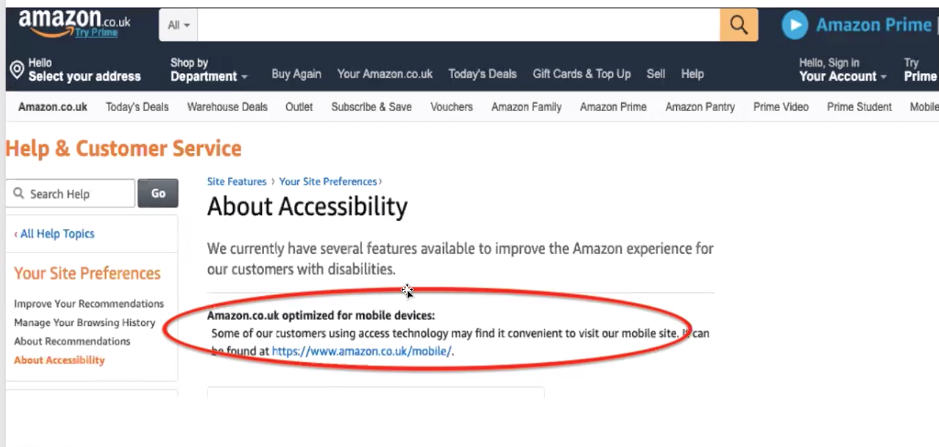
1. Amazon: A desktop site that does not support people who need to purchase through voice.

Christina first mentioned Amazon, telling me: "When I was in the UK for business I went on my computer and tried to make a purchase on Amazon. The issue I ran into was that I was unable to use my accessibility voice device on their desktop site." Noticeably frustrated, she said, "they asked me to leave the desktop site and open amazon on my phone because the phone had built-in accessibility features."

"They don't care about me. They just want me to use the mobile device instead of making their web experience accessible." Because of this, Christina makes a majority of her purchases on Jet.com. She told me that physical stores are difficult for someone with mobility challenges and Amazon does not meet her expectations. So, her brand loyalty and purchases go elsewhere.

This is a reminder for product and marketing teams to ensure their desktop and mobile experiences are accessible for all.

2. LEGO: A promotional video for the blind that includes no audio.

Another example of content that is not accessible came from LEGO. The beloved bricks launched a new line of Braille Bricks to help blind students learn how to spell.

This new product is incredible and even got picked up by CBS Morning News and other publications. However, one publication covered the product launch with this video:

"Now" Christina said, "This is a product for blind people and a marketer created a beautiful promotional video. The video has great shots of the product being used by students. It has nice copy animations that explain the use of the product. And an upbeat song to help tell the product story."

"However, there is one issue."

I could tell it was a big issue.

"There is no verbal audio," Christina shared.

Someone who is blind would not be able to consume this promotional video and understand the product that was built for them.

While the video may meet the creative standards of the brand and the requirements for social media videos, it isn't created with the target audience in-mind.

This is an oversight by the creator, and a reminder for brands to always be mindful of the consumer.

After discussing the video, Christina told me to "make sure that your customer experience is inclusive from end-to-end, including the product and the promotion."

Tips and Tools for Creating More Accessible Content

Once I had a better understanding of accessibility and examples of what to avoid, I asked Christina how marketers can create accessible content going forward — I asked her, "Is there a checklist, or a list of standards for marketers to reference?"

Immediately, Christina replied, "Inclusive design is more than a checklist."

Instead of going through a checklist of how to make content accessible, Christina shared three principles of inclusive design that can be used by marketers when creating web experiences and content.

"When creating a piece of content or designing a web experience, be mindful of these primary principles."

1. Recognize Exclusion

Be aware that there are consumers who are vision, hearing, and mobility impaired. Build a piece of content and share your work with them prior to launch. Receive feedback upfront from those audience segments before releasing your campaign to the public.

"I try to have someone who is vision, hearing, and cognitive impaired look at every piece of content before presenting my work to a client," she shared. "I have been able to find people with disabilities, online, who are interested in working with us."

If marketers don't have an opportunity to work alongside people with a disability, they can always test their work against four main questions:

  • Dexterity Experience: what kind of movement must a user perform to interact with my site or content?
  • Vision Experience: What shapes, colors, text, and graphics must a user understand to consume my content?
  • Hearing Experience: What sound does my content produce that are required for a user to consume my content?
  • Thinking Experience: How much time must a user spend with my content to truly interpret and understand it?

Once a marketer runs their content through these questions, they will have a better understanding of what improvements can be made to simplify the work and make it more accessible.

2. Solve for One, Extend to Many

As marketers, we have the ability to solve customer problems through design and content. By creating content for people with disabilities in mind, our content will be accessible to everyone.

Christina told me, "design for disability, and your work will work for everyone." It's critical that accessibility is a part of your design and creation process upfront — and not an afterthought.

Image Source

To best articulate her point, Christina shared some consumer products that were designed for people with disabilities but have become a part of mainstream culture:

  • Touchscreens: Originally designed for people with mobility issues and sold to Apple to be used across all mobile devices globally.
  • Electric Toothbrush: Originally designed for people with limited motor skills to improve dental health. Now used by millions for superior cleaning.
  • Closed Captioning: Originally created for people with a hearing impairment. Now used for people learning a new language or consuming content without audio.

These product designs for people with disabilities have made their way into daily life for all, demonstrating that by creating for people with disabilities, marketing content has the ability to be adopted by a larger audience.

Tools to Get Started

Creating accessible content and web experiences is an ongoing process. Marketing teams may not have the resources to go back and update all pieces of content that have been created.

However, moving forward, by being mindful of accessibility, marketers can ensure that their content is being built for the largest addressable audience.

I asked Christina for recommended tools that could help marketers get started with creating accessible content. She suggested the following six:

  • WebAIM Color Contrast Checker: A contrast color checker that gives you results in real time for regular and large text.
  • Inclusive Components: A pattern library with a focus on inclusive design. Each post explores a common interface component and comes up with a better, more robust and accessible version of it.
  • Color Oracle: A free color blindness simulator for Windows, Mac, and Linux. It shows you in real time what people with common color vision impairments see.
  • Vox Product Accessibility Guidelines: A comprehensive checklist for designers, engineers, and project managers.
  • AXE Google Chrome Extension: Test any site for accessibility violations using the Chrome inspector.
  • Contrast: A macOS app for quick access to WCAG color contrast ratios.

Whether you're building a new website, producing a product video, or creating a new report marketers need to keep accessibility in mind. Creating content and products that can be accessed by everyone will help you reach new audiences and reach your goals.

Ultimately, using inclusive design can help you reach more potential customers and grow your business — plus, it demonstrates your brands commitment to serving the needs of as many people as possible.

http://bit.ly/2uYCiNP

How to Measure the Success of Your LinkedIn Company Page: 5 Performance Metrics

Wondering if your LinkedIn company page is delivering the results you hoped for? Do you know where to find the best data to evaluate your efforts? In this article, you’ll learn how to measure five key performance metrics for your LinkedIn company page. How to Analyze Your LinkedIn Company Page Performance LinkedIn is an essential […]

The post How to Measure the Success of Your LinkedIn Company Page: 5 Performance Metrics appeared first on Social Media Marketing | Social Media Examiner.

February 04, 2020 at 12:00PM http://bit.ly/3897yYY
read more...
from Social Media Marketing | Social Media Examiner http://bit.ly/2vOJQDj
via IFTTT