Tuesday, February 4, 2020

13 Critical SEO Tips That Helped HubSpot Become an Organic Powerhouse

Throughout all of 2017, HubSpot experienced something that had never happened before -- our blog’s monthly traffic flattened. Even worse, it started to decline. So after months of stressing over the mysterious cause of our blog’s traffic plateau, we decided to sit down, chug a bunch of coffee, and find the culprit.

What we discovered is that our editorial strategy of brainstorming topics and relying on our intuition to determine our audience’s content preferences didn’t suffice anymore.

Coupled with almost every social media platforms’ unwillingness to direct users off their website and the ever-growing mountain of emails piling up in people’s inboxes, we decided to pivot and focus our energies on the channel that has consistently generated the majority of our blog’s traffic for its entire existence -- organic search.

Today, years after we adjusted our organic strategy, we’ve exceeded the majority of our monthly traffic goals and even broke some monthly traffic records. Needless to say, we’re thrilled (and relieved) that our organic strategy fueled our traffic boost and shattered the great traffic plateau of 2017 -- and we’d love to share the essential SEO tips that helped us devise this strategy.

1. Optimize your content for search intent.

Even though an algorithm dictates the rankings of Google’s search engine results pages, Google designed its algorithm to reward the web publishers that craft the best content on the internet, not the web publishers that are the best at gaming its algorithm.

In fact, part of Google’s search algorithm ranks your content based off engagement metrics, like total traffic, organic traffic, direct traffic through Chrome, time on site, bounce rate, click-through-rate, brand mentions on authoritative sites, and return visits.

So, to boost your website’s engagement and, in turn, your domain authority, -- you must attract and engage a loyal audience by creating high-quality content that answers the questions users are searching for. Only then should you start optimizing it for search engines.

To understand search intent, we analyze a keyword’s search engine results page and determine the problems users are trying to solve when searching for this query.

After that, we figure out how to effectively solve these problems by mining information from trusted sources, examining our own research, and asking HubSpot employees who experience similar problems the steps they take to solve them.

The final and most important step of our content creation process is crafting the most engaging content possible. To do this, we tell stories and relate to our audience’s problems in our introductions, write clear, concise, and compelling copy, highlight interesting findings, data, and quotes in our body text, and include vivid images and videos to break up the monotony. At the end of each blog post, we keep the momentum going and remind our audience of the thoughts and emotions they just experienced, which leaves them yearning for more content.

2. Target a variety of high and low volume keywords.

With an organic search strategy, it's important to target a variety of high and low volume keywords.

With high volume keywords, it's typically harder to rank on the first page of search engines due to the competition. However, with low volume keywords, it'll be easier. You should include both in your strategy to grow your online presence.

The low volume keywords are the low-hanging fruit...literally. These can give you a boost in organic traffic. Those high volume keywords are a long play.

At HubSpot, the SEO team does in-depth keyword research for our three onsite blog properties (Marketing, Sales, and Service). The team looks for search volume -- some as high as 120,000 or higher and some as low as 50.

Then, they take into account gaps in our existing topic clusters and emerging topics we haven't yet thoroughly constructed content clusters around.

According to Aja Frost, a senior SEO strategist at HubSpot, it's important to get creative with the high volume keywords you're targeting.

For example, when Aja was the editor on HubSpot's Sales blog, she assigned topics that may have strayed from our usual topics, but boasted significant search volume.

All posts answered our audience's questions, aligned with our values, and were well-researched and comprehensive.

3. Leverage the pillar-cluster model.

Since people heavily rely on Google to provide accurate and relevant answers for most of their questions today, the search engine needs to understand the intent and context behind every search.

To do this, Google has evolved to recognize topical connections across users’ queries, look back at similar queries that users have searched for in the past, and surface the content that best answers them. As a result, Google will deliver content that they deem the most authoritative on the topic.

To help Google recognize our content as a trusted authority on marketing, sales, and customer service topics, we decided to implement the pillar-cluster model on our blog. By creating a single pillar page that provides a high-level overview of a topic and hyperlinks to cluster pages that delve into the topic’s subtopics, we could signal to Google that our pillar page is an authority on the topic.

Hyperlinking all of the cluster pages to the pillar page also spreads domain authority across the cluster, so our cluster pages get an organic boost if our pillar page ranks higher, and our cluster pages can even help our pillar page rank higher if they start ranking for the specific keyword they’re targeting.

Another benefit the pillar-cluster model supplies is cleaning up our site infrastructure and providing a better user experience for our website visitors.

Before we implemented the pillar-cluster model, we spent most of our time writing blog posts designed to rank for specific, long-tail keywords. This resulted in thousands of unorganized blog posts, and some were so similar that they competed with each other on the same search engine results pages.

Now, not only is it easier for Google to crawl our blog, identify semantic relationships between our posts, and boost our search engine visibility, it’s also easier for our audience to search for the content topics they’re looking for, find related content, and spend more time reading our blog posts.

To learn how to implement the pillar-cluster model on your own blog, take a look at the steps we took to do it.

4. Create a link-building strategy

Earning high-quality inbound links from websites and pages with high authority is crucial for boosting your domain authority. But, unfortunately, "If you write it, they will link to it,” is not a viable SEO tactic.

The main method we use to earn high-quality links is by networking with other websites that have a higher domain or page authority to link to our top content. We also make sure our content is relevant to the referring website’s content.

Another way you can earn quality backlinks is by using Backlinko’s skyscraper method. The skyscraper method is an SEO strategy where you find content that ranks well for keywords you want to rank for and then create content that’s better than the top ranking posts. Then, you use SEO tools to find all the sites that have linked to your competitor’s content and ask the most relevant sites to replace your competitor’s link with a link to your improved content.

In 2016, Backlinko asked 160 websites to link to their post about Google’s 200 Ranking Factors and they earned 17 inbound links. You might be thinking that 17 backlinks isn't that much, but a lot of those referring websites had high domain authority scores, so the post’s organic traffic increased by 110% in only two weeks.

5. Implement a historical optimization strategy

In 2015, Pam Vaughn, the current Principal Marketing Manager of HubSpot’s Web Strategy Team and former Editor of HubSpot’s Marketing Blog, made a revolutionary discovery about HubSpot’s organic monthly blog traffic -- the overwhelming majority of it came from posts published prior to that month. In fact, 76% of our monthly blog views came from these old posts.

Today, Pam’s groundbreaking revelation rings louder than ever -- 89% of our monthly blog views currently come from posts that were published at least six months prior, and we’ve developed an entire strategy dedicated to refreshing and republishing these historical pieces of content.

We call these types of blog posts “updates”, and they comprise 35-40% of our editorial calendar. And by refreshing them with new information and SEO optimization and then effectively republishing them as new blog posts, we can build upon their existing organic value that they’ve accumulated through backlinks and user engagement and double or even triple their traffic. This process also helps us optimize our blog for efficiency, decreasing the amount of new content we have to create while increasing our organic traffic and conversions.

Historical optimization isn’t for everyone, though. It’s a strategy catered for a blog that generates a significant amount of organic traffic, has a considerable amount of blog subscribers and social media followers who can supply a surge of traffic, shares, and backlinks to your updates, and owns a substantial repository of old posts that are worth refreshing and republishing.

However, if you have all three of these things, we definitely recommend implementing a historical optimization strategy. To learn about the specific types of historical content you should update and the exact process of updating them, check out this blog post written by Pam Vaughn herself.

6. Compress your images

When you think about optimizing your content for search engines, compressing your images’ file size doesn’t seem like it should be a top priority. But, according to Braden Becker, HubSpot’s Historical Optimization Lead, your images’ file size directly affects your website’s page load speed, which is one of the ten most important Google ranking factors.

“The bigger an image’s file size, the longer it takes your web browser to load that image, which increases your website’s loading time as a whole. And the longer your website’s loading time, the more likely Google will penalize you,” he says.

Compression blends similarly colored pixels into single pixels to reduce the image’s resolution, and in turn, file size. But since the human eye is more sensitive to light and dark detail than color detail, we’re not able to detect the color differences between an uncompressed and compressed image, so the perceived quality stays the same.

An uncompressed image’s file size could be four times bigger than the compressed image. Yet, the compressed image still has the same perceived quality as the uncompressed image, and it’ll load much faster.

To diminish our images’ file size as much as possible, boost your website's page speed, and avoid risking a penalty from Google, we use Squoosh to compress individual images and TinyPNG to compress batches of images.

7. Aim for the featured snippets on SERPs.

Featured snippets are what search engines use to display an answer to a query directly on the search engine result page so a user doesn't need to actually visit another page to get the answer to their question.

As you can imagine, this has impacted organic search results. That's why it's important to try and rank in as many featured snippets as possible.

To do so, you should write specific posts that answer questions users might have. The semantic relevance to the keyword a user searches for is the most important element in obtaining a featured snippet.

Additionally, your blog post should be organized and formatted in a way that lets Google know you've answered a question. For instance, this could mean using specific coding so your featured snippet stands out on the page.

This is the strategy we've used at HubSpot.

According to Karla Cook, the senior manager of HubSpot's blog team, "targeting featured snippets with consistently formatted sections has removed some (but definitely not all) of the guesswork when it comes to ranking for featured snippets. Matthew Howells-Barby, HubSpot’s Director of Acquisition, has stressed that clean and consistent code is a significant factor in winning snippets."

8. Develop page authority.

One factor that search engines use to determine its rankings is page authority.

This means that if you've been blogging about a topic for a long time and have cultivated a reputation as a go-to expert in an industry, your web page might rank higher than a page published by a new site.

That's why it's important to build your brand and authority in your niche. Consider blogging regularly, posting on social media, and guest posting for other sites. Being active in your industry helps build your reputation.

Additionally, you should write about tangential topics your customers are interested in. This shows search engines that you write about your industry in-depth.

All of these things will give your website authority and indicate to search engines to pay more attention to your domain as you continue adding topics that you cover in-depth.

9. Add alt text to every image.

When search engines crawl your site, they can't see images. For a search engine, your images are only text. They see the name of the file and the alt-text that you've added as a sort of caption to the picture.

This alt-text is one of the only ways to tell search engines what an image is about, which is vital if you hope to rank in image-based results. Additionally, alt-text is helpful for readers who can't see your images.

Alt-text should be descriptive, contextually relevant to the page content, and short.

Ultimately, alt-text isn't only helpful for your SEO, but also makes your site more accessible.

10. Maximize your CTAs.

Optimizing your page to rank in search engines is only helpful if that page is then optimized to convert.

You should plan for conversions by creating content offers for top of the funnel, middle of the funnel, and bottom of the funnel readers.

Then, you can match those content offers with blog posts that are well-aligned.

Each page is a conversion opportunity, so each page should include a CTA that matches a searchers intent.

11. Have killer on-page SEO.

On-page SEO is the process of optimizing a page on your site with front and back-end components that can help you rank higher in search engines.

These components include:

  • High-quality page content
  • Page titles
  • Headers
  • Meta descriptions
  • Image alt-text
  • Structured markup
  • Page URLs
  • Internal linking
  • Site speed

For today, let's focus on the copy oriented elements such as high-quality content, page titles, headers, meta descriptions, and image alt-text.

To rank in search engines, it's imperative that the copy is optimized. That means it should include your target keyword, be contextually relevant, and answer questions your user might have.

Ultimately, the goal is to indicate to search engines that you've answered questions a user might have about a query.

12. Conduct a technical SEO audit.

One of the main components of SEO is the technical set-up of your site. When a search engine finds your page and goes to crawl it, it has to understand what it's about so it can add your page to its index. If search engines don't understand your page, they won't display it on the results page.

However, search engines don't look at web pages the way we do. They look for things like page speed, duplicate content, and URL structure.

To avoid technical issues, we recommend conducting a technical audit of your web pages.

The most important elements to look for are:

  • Website navigation and links
  • Simple URL structure
  • Page speed
  • Dead or broken links
  • Sitemap
  • Duplicate content

You can learn more about these factors in our ultimate SEO guide here.

13. Measure your success.

The world of SEO is constantly evolving. That's why, to truly succeed, you have to measure your success.

You should measure things like:

  • Organic traffic growth
  • Keyword rankings
  • Conversions from organic traffic
  • Average time on page
  • Bounce rate
  • Link growth

SEO is always adapting, and you should too.

Even though we uncovered 13 tactics that helped us devise an SEO strategy that shattered a year-long traffic plateau and broke monthly traffic records, it’s entirely possible that they could become obsolete one day.

The moral of our blog's story isn't to glom onto these SEO tactics for the rest of your content marketing career. It's to keep adapting and never settle for the status-quo, no matter how well you’re performing. Because one day, your once thriving work might stagnate and even sputter. And the only way to recover is to take a leap of faith and overhaul your entire strategy.

Editor's note: This post was originally published in March 2019 and has been updated for comprehensiveness.

http://bit.ly/2U1Amjo

How to Use Pinterest for Blogging

Almost every time I read a blog post on a website, I see a button somewhere on the page, giving me the choice to pin the post.

This got me thinking, "Why exactly is Pinterest so closely tied to blogging?"

It could be because Pinterest is an outlet for education. Users create boards to save things like blogs, inspirational quotes, home decor ideas, and future purchases. So it makes sense that helpful blog posts are a great choice for pinning.

Let's say you run a blog. Your next question is probably, "Well, how do you use Pinterest for blogging?"

In order to tap into the website that is key to driving 89% of users' purchase decisions, most of your resources are already made for you: your blog. We'll get into why, but there's one thing you should do the minute you decide to create an account.

First thing's first, make sure you have a Pinterest Business account. By signing up for a free Business account, you get access to Pinterest Analytics, which gives detailed insights about the behavior of your pins.

Additionally, Pinterest Business gives you the option to apply for Rich Pins, an upgrade from a regular, or standard, pin. There are five types of rich pins — movie, app, recipe, place, product, and article — the latter being the most effective one for blogging. Article Rich Pins provide tools to add a larger logo image and headline to promote your post with, as well as a link to your website.

When you use Pinterest for blogging, you can promote posts, product offers, earn traffic to your blog, and engage with followers. Let's dive into how to do all that, next.

When thinking about how to leverage Pinterest for your blog, think about how you would want users to find your account, and what you think they would like to see. Pinterest should be a compliment to your blog, and reflect what your brand is. 

1. Create and name a board after your blog.

Keeping consistent with how you name boards helps SEO, organization, and readers. This is because readers and search engines will have an easier time finding your blog on Pinterest if it has a similar name — for instance, on HubSpot's Pinterest, you'll see a board titled "Marketing blog posts (must-reads!)" which you can find easily by searching "HubSpot Marketing Blog Pinterest" on Google. You could use this blog board to highlight posts that don't fit into other categories, as well as making "Roundup" pins of a week's worth of posts.

When you pin to this board, make sure to group posts that are in similar wheelhouses to keep the organization in check. For instance, if a reader wants to find posts about product lifecycles, they should be able to easily find that in the "Sales" section of your board, or something similar.

Example of a good Pinterest board.

Pins should have 1-2 sentences about your post in the description, like a quote from the blog that really stands out, a featured image, and a link back to your website (Pinterest Business does this for you).

2. Structure a winning pin.

If you are wondering how exactly a winning pin should look, we've got you covered.
According to Pinterest, a pin that earns high engagement is: optimized, branded, written effectively, and structured correctly. Let's dive into that a little deeper.

  • Optimized— Descriptions come into play here. Describe your blog post or use a quote in a helpful way, that tells pinners what they will gain from their pin.
  • Branded — Include your logo and make sure the featured photo has to do with your product or service. That way, pinners will know what they're looking at before opening the pin.
  • Written effectively — Don't forget to include a call-to-action to pull browsers in. Something as simple as "Click this link to see more!" does the trick. Also, make sure you're using sensory-related words to pull the pinner in and connect with their emotions.
  • Structured correctly — Make sure you're aware of Pinterest's aspect ratios for photos and are taking advantage of the linkable options on standard pins to increase your traffic.

Let's look at a winning pin in action:

Example of an optimized pin for Pinterest.

This pin's description helpfully gives a snapshot of the blog post in two sentences, telling readers why they would want to read it. Not only that, but it uses keywords in its description, giving Google the details it needs to rank on pages. Finally, the sensory-related word "Learn" captivates browsers and is also a CTA.

3. Check SEO from your end.

Make sure your Pinterest account can be found by search engines so you have a better chance of showing up within the first pages of search results.

First, ensure "public search" is enabled. This can be found in the search privacy settings of your account. Next, be sure to stay consistent with titles — of your pins, boards, and blog posts. Keeping things consistent makes your Pinterest more comprehensible to Google.

Next, try to use as many relevant keywords as possible when naming your boards. If you are optimizing your blog for SEO, you can take a lot of the same information from your blog for this.

Finally, provide alt text for featured images in your pins. Alt text tells search engines what your image is, and describing it using keywords boosts the visibility of your pin. An example of a good alt text caption would be "Woman at work reading about product lifecycles."

4. Create related boards.

We've talked a little about board creation, but in this section, we'll focus on it a little more. When you create different boards, you can categorize them by blog post categories. You can also make different boards that relate to your audience's interest.

When you conducted market research, what did you find out about the interests of your audience? Similarly, think about what your buyer persona would be interested in seeing and make boards accordingly.

To illustrate, if you run a health and fitness blog, you can create boards that have to do with different exercise styles, like cardio, that mirrors the "Cardio" category on your blog. But you can also have an "Accessories" board, with pins of your favorite tools to workout, or a healthy eating board, similar to this health and fitness account, Blogilates.

Example of Pinterest board names and categories

Source

If you're running out of inspiration for content you can post to Pinterest, consider referring back to your blog posts and pulling interesting quotes. Then, create a graphic with that quote to diversify your board in a way that matches your brand. This method evokes the emotions of pinners, pulling them in.

5. Create a staff board.

Because Pinterest is a great opportunity for emotional connections, you might consider creating a staff board to show the faces behind your brand. As a consumer, when I feel like I personally know the business, I'm more likely to follow them.

To create a staff pin, you can have the featured image be a headshot of the employee. It can be fun, spirited, branded, professional — whatever fits the tone of your Pinterest. Just make sure it matches the aesthetic of your brand.

As for the descriptions, you might post a short bio that's engaging, as well as the employees' favorite or newest post. This method brings more traffic to your blog posts.

6. Make your blog Pinnable.

If you're using Pinterest, you have to make your blog pinnable. You may have seen them on different blogs already; they're buttons with Pinterest's logo that allows users to pin a blog post from that website.

This is important because website viewers can explore your blog, find posts they want to read later, and save them to their Pinterest account for easy accessibility. This gives you more traffic on more fronts: your blog and Pinterest.

Example of "Pin it" button

Source

To make your blog pinnable, go to the Widget Builder section from the left sidebar of Pinterest Business. Next, choose which button you want to include on your site, type in your URL, past the image file, and include it in your website's code.

7. Be sure to engage with followers.

To keep your Pinterest lively and welcoming, interact with followers to earn more and make your Pinterest more targeted towards your audience.

You can do this by following new followers back, and doing a little market research by looking through their pins and boards. This information will assist in making targeted content later.

Additionally, repin posts that have to do with your blog. If you see that one of your followers has an awesome pin that would fit in one of your categorized posts, engage with it! Like and comment, as well as repin.

Think of repinning something as retweeting something, or reposting in general. Pinners can save a pin to their page or to one of their boards.

Lastly, be sure to follow influencers and industry leaders, as well. Doing this shows your knowledge, interest, and support of the industry, making your Pinterest look credible. Repinning influencers' posts enables you to begin building a community around your industry.

8. Include captivating images.

In this post we've covered images slightly already,, but we're going to expand on them here. Images are a huge part of Pinterest, so make sure your images are captivating. You want to make sure all of your images are optimized.

Images should entice the reader to open the pin. This can be a stunning landscape image or an informational graphic.

Example of a pin

When choosing photos, they should be in the correct aspect ratio. For Pinterest, that's 2:3 or 4:5. If you're manually cropping, that's also known as having a width of 650 and a height of 975.

Remember, images are the main part of a pin, so they have to fit Pinterest as much as possible to catch the reader's eye.

9. Post on schedule.

When you post on Pinterest, make sure you keep to a schedule. It doesn't have to be as consistent as other social channels (Pew Research found that over half of Pinterest's users visit the site less than once a week), but it still does need to be repetitive.

Additionally, this HubSpot post suggests Pinterest posts gain the most traction between 8 p.m. and 11 p.m. EST.

Because you don't have to be as frequent with pinning, you have more time to make sure the pins you do post are of the highest quality possible. Your Pinterest account should be one that focuses on quality over quantity, and frequency goals shouldn't stress you out.

How will you use Pinterest for your blog? Is it going to be your resource for showing off new blog posts, or your bridge between ecommerce and blogging? Whichever path you choose, Pinterest is an undeniably powerful distribution channel for your content, and one you shouldn't ignore.

http://bit.ly/2RZz0mF

Monday, February 3, 2020

The Ultimate Guide to Product Marketing in 2020

During the 1950s, Volkswagen sold a bus. Although now considered a classic vehicle, the bus remains an icon for the car company decades later.

The cool part? Volkswagen announced their new VW Bus — it’s electric and features sleek, modern styling. Volkswagen’s marketing for the vehicle is eye-catching, unique, and fun, and it complements the original “hippie” vibe the company was once known for.

volkswagen bus example of product marketing

Source

Volkswagen also released a TV commercial for the bus that’s clever, minimalist, and on-brand. It introduces the new vehicle with the song The Sound of Silence playing in the background (hint: electric cars are silent) and ends with a short message on the screen for viewers to read: “Introducing a new era of electric driving.”

This sentiment touches on the fact Volkswagen is contributing to society’s interest in electric, eco-friendly vehicles. It also relates to this being a new era for the bus.

So, who works on this type of marketing? Who helps create content that excites consumers about new and updated products, like the Volkswagen bus? Who encourages consumers to buy? Product marketers.

What makes product marketing unique? How is it different from conventional marketing? Let's unpack the differences.

Product Marketing vs. Conventional Marketing

Product marketing is strategic whereas conventional marketing is all-encompassing.

Product marketing is considered a component of conventional marketing. In fact, if you look at the seven Ps of marketing, you’ll see product marketing is one of the most important aspects of a business’s marketing efforts.

Product marketing is focused on driving demand for and adoption of a product among existing customers. It’s focused on the steps people take to purchase your product so product marketers can build campaigns to support this work.

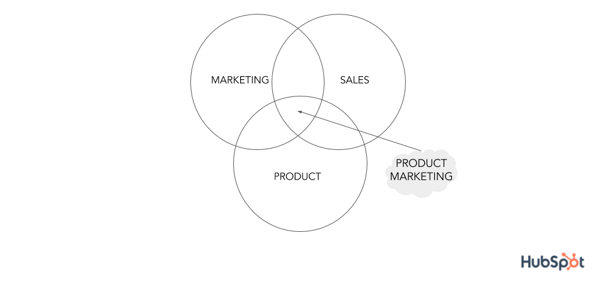
Product marketing is about understanding a specific product’s audience on a deep level and developing that product’s positioning and messaging to appeal to that audience. It covers the launch and execution side of a product in addition to the marketing strategy for the product — which is why the work of a product marketer lies at the center of a business’s marketing, sales, and product teams.

venn diagram with marketing sales and product for product marketing

Conventional marketing is focused on broader topics under the umbrella of marketing such as lead generation, SEO, and anything related to acquiring and converting new leads and customers. It’s about promoting the company and brand as a whole, including the products that are sold. These marketers make sure there’s a consistent, on-brand message behind all of the company’s content.

Why is product marketing important?

Product marketing is a critical part of any business’s marketing strategy. Without it, your product won’t achieve its maximum potential among your target audience. Let’s look at what product marketing does so you get a better idea of that I mean by this.

  • Understand your customers better.
  • Target your buyer personas effectively.
  • Learn about your competitors (products and marketing tactics).
  • Ensure the marketing, product, and sales teams are all on the same page.
  • Position the product appropriately in the market.
  • Boost revenue and improve sales.

There are also questions you, as a product marketer, will have to ask yourself and reflect on in regards to your product. Asking yourself these questions will help you ensure your product is a success among customers.

  • Is this product suitable for today’s market?
  • Is this product appropriate for our customers today?
  • How is this product unique from similar products of our competitor’s?
  • Is there a way to further differentiate this product from those of our competitor’s?
  • Are there any products we’ve sold in the past that we wouldn’t market or sell ever again now that we look back? Is so, why not?

As you can see, product marketing requires you to look at your products from a strategic perspective to ensure they’re successful among customers in your current market.

Now, let’s take a look at the specific responsibilities you have as a product marketer (or product marketing manager).

Your responsibilities as a product marketer may vary slightly based on industry, company, products, and company size and resources. If you’re working for a startup, you may be a product marketer who also helps create the content the broader marketing team produces due to limited resources and budget. As the business grows, you may move onto a team whose sole job is product marketing.

Let’s take a look at six common product marketing responsibilities.

1. Identify the buyer personas and target audience for your product.

You must identify the buyer personas and audience for your product so you can target customers in a way that’s convincing and makes them want to make a purchase. This will allow you to tailor your product and its features to solve for the challenges your audience is facing.

Use templates to create buyer personas for your business.

2. Successfully create, manage and carry out your product marketing strategy.

A product marketing strategy (which we’ll review shortly) allows you to create, build, and execute content and campaigns — this supports the steps that will lead your buyer personas and customers to make a purchase.

3. Work with and enable sales to attract the right customers for your new product.

As a product marketer, you have to maintain a direct relationship with sales. You’ll work with sales to identify and attract the right customers for the product at hand and provide sales enablement materials to reps to ensure they understand the product inside and out, along with all of its features.

This way, you and your teams are on the same page in terms of what’s being shared with customers, allowing you to provide a consistent, on-brand experience for anyone who comes in contact with the product.

4. Determine your product’s positioning in the market.

One of the most important parts of your job is determining the product’s positioning in the market. Think about this process in terms of storytelling — your positioning requires you to create and tell the story of your product.

As a product marketer, you’ll work with the broader marketing team and the product team to tell this story by answering critical questions like:

  • Why was this product made?
  • Who is this product made for?
  • What challenges does this product resolve?
  • What makes this product unique?

5. Ensure your product meets the needs of your target audience.

You must also make sure your product meets the needs of your customers and target audience. Through the research conducted to determine your buyer persona’s and target audience, you should have uncovered the pain points and challenges you’re working to solve with your product.

If your product doesn’t meet the needs of your customers, they’ll have no reason to make the purchase or choose your product over your competitor’s.

6. Keep your product relevant over time.

Your product needs to stay relevant over time. As needs, expectations, and challenges change and evolve, it’s your job to make sure your product marketing strategy, and the products themselves, remain relevant among customers.

This means you may have to manage slight changes in your product marketing strategy (which we’ll discuss next), or updates and modifications to the product itself (you’ll likely work with the product team, who actually creates the product, to do this).

Now, let’s take a look at five steps that can help you optimize your product marketing strategy.

1. Define your product’s target audience and buyer personas.

As mentioned, one of the main roles you have as a product marketer is to define a specific target audience and create buyer personas for the specific product being sold (different products will likely have different target audiences). This the first step to marketing your product.

By understanding your customers and their needs, challenges, and pain points, you’ll be able to ensure all aspects of your product marketing strategy (as in, the rest of the steps we’ll define below) are tailored to that target customer and persona. This way, the product and the marketing content that’s created for the product will resonate with your audience.

2. Determine the positioning and messaging to set your product apart.

After performing your customer research and learning about your audience, you’ll have identified their needs, challenges, and pain points. From here, you can think about how to highlight the ways your product resolves those challenges for your customers.

However, that doesn't necessarily mean you’ve differentiated yourself from your competitors. After all, they are your competitors because they solve the needs of your customers in a similar way to your company.

The key to setting your product apart is positioning (which we touched on earlier) and messaging. Positioning and messaging answers key questions your customers might have about your product and what makes it unique and then turns those answers into the main points behind your product’s marketing strategy.

It’s your job as the product marketer to ensure your customers and audience know the answers to these questions and don't have to dig around for (or make assumptions about) them.

Examples of questions you’ll need to answer to develop your product’s positioning and messaging include:

  • What specifically makes our product unique?
  • Why is our product better than our competitors’?
  • Why are our product’s features ideal for our target audience?
  • What will our customers get out of our product that they cannot get from our competitors’ products?
  • Why should our customers trust and invest in us and our product?

Once you’ve answered these questions, you can compile these responses into one, impactful, and shareable statement that captures your positioning and messaging as a whole. To do this, follow these steps:

  • Turn the answers to the positioning and messaging questions into an elevator pitch.
  • Use action words to excite your customers.
  • Ensure the tone of your statement captures the tone of your brand.
  • Focus on the benefit of your product as a whole (not just one specific feature).

And if you need more guidance, check out the HubSpot Marketing Hub product page. The main positioning and messaging statement reads as follows: “All-in-One Inbound Marketing Software: Everything you need to launch effective marketing campaigns that make people interested in your business and happy to be your customer.”

Tip: As product marketers, you should ensure the sales, product, and (the broader) marketing teams are also aware of your positioning and messaging around the product so they too can communicate the same information to prospects and current customers.

This allows you to ensure the entire company is consistent in the content and information they share about your product. Additionally, you can provide this information to your support team if you think it’s necessary, as they may be fielding support calls and working with your customers who’ve already invested in the product.

3. Set goals for your product.

Next, you’ll want to set goals for your product. These will vary based on your specific product, the type of company you work for, your overall marketing goals, and more — your goals will be specific to your business and situation. However, let’s review some common goals product marketers aim to achieve:

  • Increase revenue
  • Engage with customers
  • Improve market share
  • Gain customers from competitors
  • Boost brand recognition

Tip: Feel free to combine several of these goals or just choose one to focus on — every company and product will have different goals. The key is making sure you view and set these targets in the SMART goal format, meaning they’re specific, measurable, attainable, realistic, and time-bound.

Use a free template to help you create and achieve your SMART goals.

4. Price your product.

As a product marketer, you’ll also have to contribute to the discussion of the price of your product. Depending on the company you work for, you might work with other teams on this part of the strategy, or it might be a job just for you and your fellow product marketers. Either way, you can consider competitive vs. value-based pricing.

Competitive vs. Value-Based Product Pricing

Competitive pricing means you’re basing your product’s price off of the similar products your competitors sell. It’s ideal for companies who have created a product similar to one that several other companies sell.

If you believe your unique features warrant a significantly higher price than those of your competitors’, you might choose to price your product above the other similar products on the market. A good way to evaluate the fairness of the pricing of all of your competitors is by studying financial reports and industry trends.

Value-based pricing allows you to maximize your profit, although it’s a bit more time-consuming to establish in comparison to competitive pricing. It’s ideal for companies selling a product with very few competitors on the market or one with exceptionally new and unique features.

Value-based pricing quantifies your item’s value in a way your customer can relate to their profitability. It allows you to base your product’s price on its value for your customer rather than whatever the market, industry trends, and your competitors say.

5. Launch your product.

Now it’s time for the most important part of your role as a product marketer — not to mention, the most exciting: the launch of the product you’ve been marketing.

There are two main parts to the launch to focus on as a product marketer: the internal launch (what goes on within your company upon product launch) and external launch (what goes on outside of your company, with customers and audience members, upon product launch).

Internal Aspects of a Product Launch

As previously stated, your job as a product marketer entails making sure the entire organization is on the same page about your product. This way, your customers only receive consistent and accurate details about the product.

The marketing, product, and sales teams at your company should be aware of the following information:

  • The product’s benefits
  • Any available product demo information
  • Sales training opportunities on your product and details about how it’s used
  • What the positioning and messaging looks like
  • Who your buyer personas and ideal customers are
  • What the goals for your product include
  • What your product’s features are
  • The pricing of your product
  • How your product is being launched to customers (which we’ll discuss momentarily)

Now, you might be wondering how to provide this information to marketing, product, and sales. Which channels are ideal for sharing these details with your fellow employees?

Here are a few examples of ways to do this:

External Aspects of a Product Launch

Externally, there are many ways to market your product launch so your current base of customers, prospects, and target audience learn about whatever it is you’re selling.

First, determine where you’re going to focus your product marketing efforts. Here are some examples of channels and places to do this (you might choose several of these or just one to focus on depending on your needs, goals, and resources).

  • Social media
  • In-store
  • Product launch event
  • Blog
  • Website landing page
  • Exclusive product preview (prior to the official launch)
  • Promotional event/ campaign (in-person and/ or online)

On whatever channel you choose to focus your product launch marketing efforts, you should include relevant product information (focused on your positioning and messaging) so prospects and customers can learn all about your product and why they need it. This includes your product’s features, what makes it unique, pricing, demos for customers, training for customers, and any other materials you’ve created and want to share.

Congrats! You’ve just worked through the steps to marketing a product. Remember, this process is one that should be thought about and updated as your products change and evolve so they remain relevant among your customers. (This shouldn’t be an issue as long as you have a member of your team focused on product marketing, considering it’s one of their main responsibilities.)

Let's review four real-life examples of stellar product marketing.

1. Apple

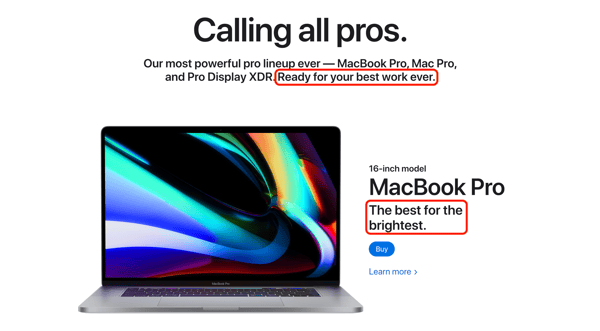
Apple is a household name for leading technology products and software. Not only are its products gorgeously well-designed; they're also super useful. But Apple's product marketing doesn't focus on the many product features — they market the user benefits.

product marketing example apple product benefitsSource

Apple doesn't simply list the impressive features of their products; it uses those features to tell consumers who they could be and how they could work if they purchased those products. They tell a narrative using their products and encourage people to buy in the process.

2. Billie

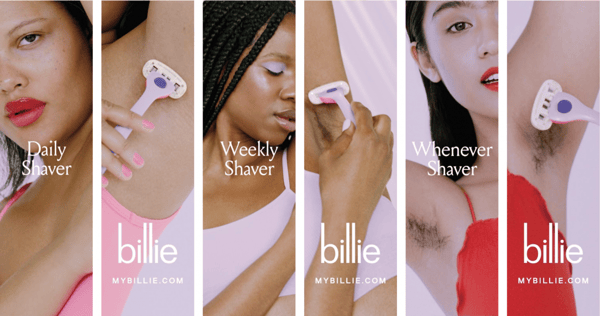
Billie is a women's razor brand. In a highly competitive market, Billie has helped its products stand out. How? It established a sharp competitive edge (no pun intended) by doing what no razor brand had done before — show body hair in its advertising.

product marketing example billie body hair campaignSource

Not only did this advertising approach get Billie's audience talking about the brand, but they also appreciated the brand's accurate portrayal of women's bodies and body hair. These differentiators were more than enough to set Billie apart from other razor brands and products.

3. Coca-Cola

Did you know that over 95% of people around the world recognize Coca-Cola and its red and white branding? This comes as no surprise when you notice that most people order a "Coke" when purchasing a soft drink or cola. In fact, the brand recognition is so strong that Coca-Cola's competitor Pepsi used the narrative in its Super Bowl advertising.

Through highly targeted positioning, repetitive advertising, and consistent branding, Coca-Cola has become a truly global household name and product.

4. MailChimp

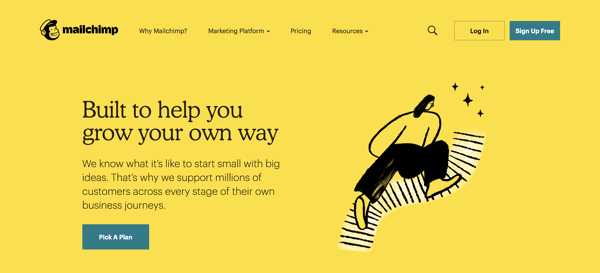
There are dozens of email marketing tools on the market, but MailChimp hasn't been fazed by competition. In fact, its risen above their competition by positioning itself as more than an email marketing tool: it's an all-in-one marketing platform that helps businesses grow.

product marketing example mailchimpSource

Like Apple, MailChimp primarily highlights its benefits for the end user, not just its product features. A recent rebranding and site redesign further drives this narrative home.

Start Marketing Your Products

Product marketing is the process through which a company brings a product to market. Being a product marketer (or product marketing manager) means you’re at the center of your company’s marketing, sales, and product teams.

You’re an integral part to the success of your product, as you create and manage your product’s specific marketing strategy, but you also serve as a liaison between all three of these departments, ensuring everyone is on the same page with your product, it’s features, capabilities, and more. So, start developing your latest product’s marketing strategy to ensure it’s a success among your target audience and customers.

This post was originally published in February 2020 and has been updated for comprehensiveness.

http://bit.ly/2Xw3tfp

52 Gen Z Stats Marketers Need to Know in 2020

When some business experts, bloggers, and journalists write about Gen Z entering adulthood, it sounds like they're talking about an incoming natural disaster.

Headlines like, "Gen Z is Coming, Are You Ready," or "Prepare You Marketing to Survive the Gen Z Invasion" are circulating around the internet, but do marketers really need to make extreme preparations and start drastically changing their strategies to woo this age group?

The truth is -- kind of.

By now, you probably know that Gen Z is the most hyper-connected generation. This means that by the time they all reach purchasing age, digital, online, and mobile-first marketing will be vital to your strategy. However, Gen Z still has some striking similarities to the generations that came before it.

As a marketer, and the millennial older sister of a Gen Z sibling, I see both similarities and differences between my sister and me daily. While we were raised in pretty different time periods and can't possibly be considered "the same," we still have a lot in common.

For example, we both love social media, care about our finances, and have very high standards of the products we buy. However, the ways we use social media, handle our finances, and purchase products are still slightly different.

If you're interested in testing out new marketing strategies that target young adults, you'll likely want to learn as much as you can about Generation Z, and what makes them different from past generations -- as they'll soon reach full purchasing power.

Even if you've successfully marketed to younger millennials in the past, you'll still want to prepare yourself for Gen Z by learning more about the nuances that make them unique. Through this research, you'll also be able to identify successful millennial marketing strategies that could still work on Gen Z. This will help you better scale your strategies to fit Gen Z, rather than completely reshaping your tactics in costly ways.

To help you build a buyer persona for potential Gen Z customers, I've compiled a list of stats that highlight Gen Z's unique qualities, behaviors, and motivations.

52 Gen Z Stats to Know in 2020

General Stats

  • In 2019, Gen Z outnumbered millennials, making up 32% of the world's 7.7 billion-person population. (Bloomberg)
  • Gen Z members that still live with their parents receive an average allowance of $16.90 per week. (LinkedIn)
  • The generation has an estimated purchasing power of 44 billion annually. (LinkedIn)
  • 48% of Gen Z identifies as racially or ethnically diverse. (Pew Research Center)
  • As of 2020, Gen Z makes up more than 40% of U.S. consumers. (Fast Company)

Digital Habits


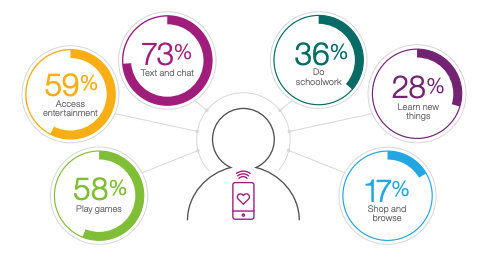
How gen z uses internet connected devices

Source: Institute of Business Management

  • Gen Z spends an average of 11 hours on their mobile devices per week. (Criteo)
  • Gen Z streams video for roughly 23 hours each week. (Criteo)
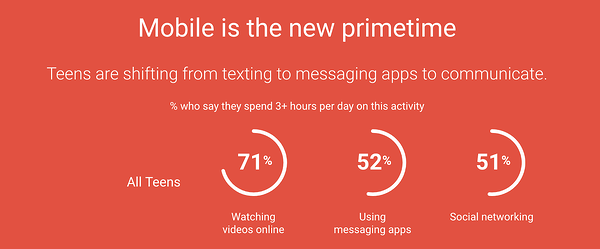
  • Roughly 71% of Gen Z teens use mobile devices to watch videos, while 51% use mobile for social media surfing. (Think with Google)
mobile is the new primetime for Gen Z

Source: Think with Google

  • Over 32% of Gen Z transactions take place on a mobile device. (Criteo)
  • More than 71% of Gen Z subscribes to Netflix. (Defy Media Study published by Variety)
  • Only 45% of Gen Z watches cable. (Vision Critical)
  • 60% of Gen Z will not use an app or website that loads too slowly. (Institute of Business Management)
  • Gen Z is gaining interest in interactive and "Choose your own adventure" content, with 55% saying they'd like to be able to choose the plotline of the movie or TV show they're streaming. (Cognizant)
  • 60% of Gen Z says they're likely to use VR as it becomes more abundant in the future. (Cognizant)
  • When VR is more common, 52% of the generation expects to use it for online entertainment such as videos or gaming. (Cognizant)

Social Media

  • 56% of teens use social media apps to express themselves creatively. (Snapchat)
  • 55% of Gen Z says they can be more creative on social apps and the internet than offline. (Snapchat)
  • Gen Z logs on to social media for roughly two hours and 55 minutes each day. This is almost an hour longer than the average millennial. (World Economic Forum)
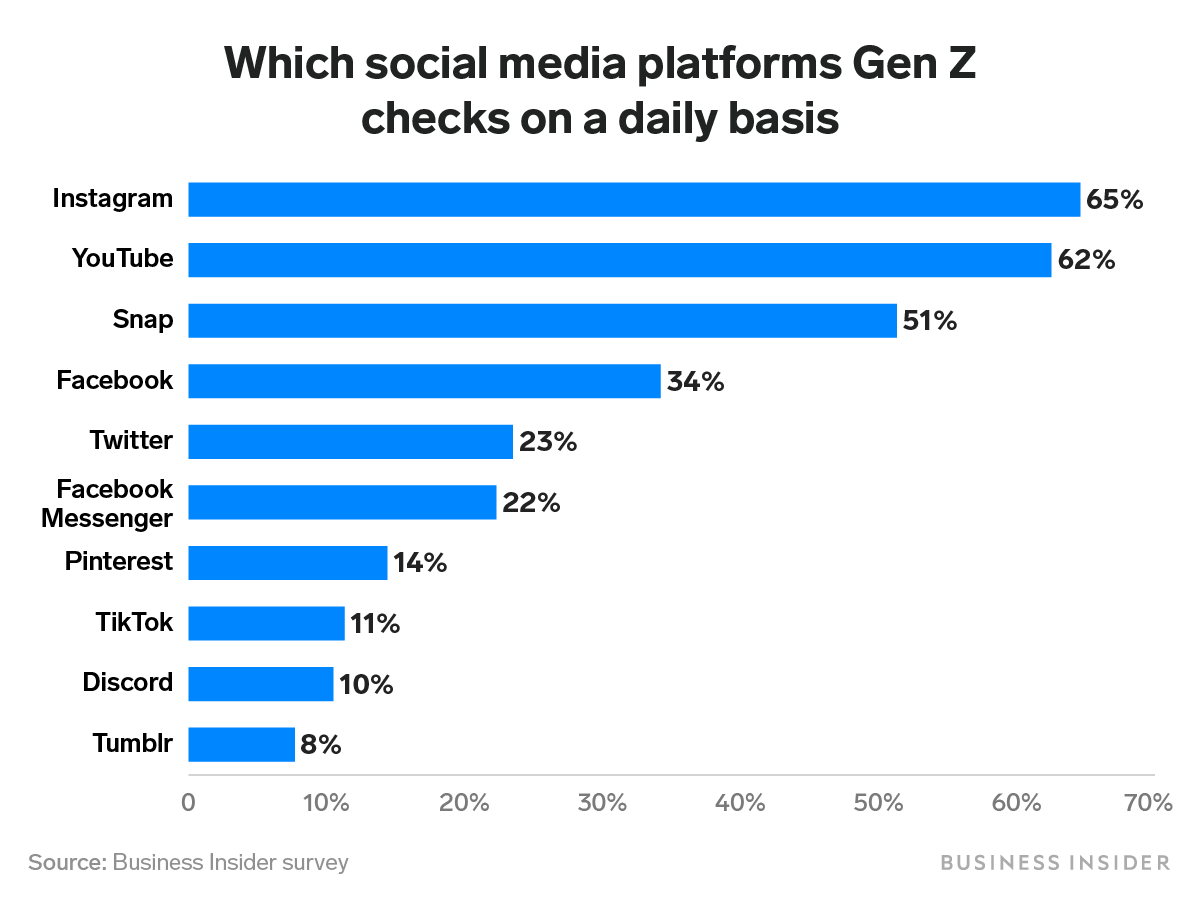
  • 62% of Gen Z checks Instagram, while 60% visit YouTube, daily. (Business Insider)
  • Snapchat is also popular among Gen Z, as 90% of 13-24-year-olds in the U.S. have used the app. (Snapchat)
  • Although 81% of teens say social media helps them feel more connected to their friends, 45% still say they feel overwhelmed by "drama" associated with it. (Pew Research Center)
  • 43% of teens feel pressure to only post content that makes them "look good" to their friends. (Pew Research Center)
  • 88% of Gen Z prefers omnichannel branded experiences, while 54% say social media influences them most. (CMO Council)
  • 41% of Gen Z men use Twitch, a video platform primarily used to stream video games. (Morning Consult)
  • More than 76% of Gen Z says they follow an influencer on social media. (Morning Consult)
  • One in four Gen Z women says they learn about new products from social media influencers. (Morning Consult)


Gen Z's most popular social media platforms

Source: Business Insider

Behaviors and Preferences

  • On average, Gen Z will pay attention to content for a span of eight seconds -- four less than millennials. (VisionCritical)
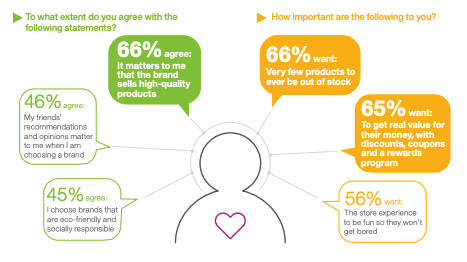
  • When shopping online or in stores, 65% of Gen Z prefers to see as few items as possible out of stock. (Institute of Business Management)
  • 66% say that the high quality of a product matters most to them when making a purchase. (Institute of Business Management)
  • Roughly 65% of the generation sees value in coupons, discounts, and rewards programs. (Institute of Business Management)
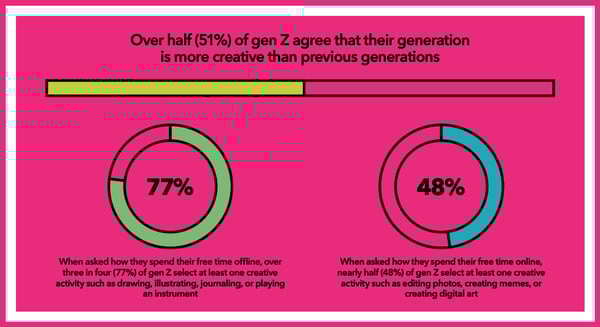
  • 51% of Gen Z agrees that they are more creative than previous generations. (Snapchat)

Gen Z thinks they're more creative than other generations

Source: Snapchat

  • 77% of Gen Z reports doing creative activities, such as painting when offline. Meanwhile, 48% say they regularly do creative activities, like meme creation, when online. (Snapchat)
  • Despite their connection to social media, 51% of Gen Z prefers to communicate with coworkers, friends, and family face-to-face rather than through messaging. (2019 Yellow Recruiting Study)
content preferences of gen z online

Source: The Institute of Business Management

Motivations

When Gen Z starts job searching

Source: 2019 Yellow Recruiting Study

Political and Societal Views

While political or societal views don't directly impact purchases, knowing how a generation views certain topics could help you improve your level of inclusive marketing, identify opportunities for campaign topics, or develop products that relate to a pain point or cause that an age group cares about. Here are a few interesting stats to note:

  • 70% of Gen Z says that financial responsibilities should be shared equally in two-parent households. (Pew Research Center)
  • While 76% of Gen Z women say that more females presidential candidates are a "good thing," only 54% of Gen Z men agree. (Pew Research Center)
  • When a form requires a person to select a gender, 59% of Gen Z thinks that the form should include an "Other" option. (Pew Research Center)
  • Half of Gen Z says society isn't accepting enough to people who don't identify as men or women. (Pew Research Center)
  • Despite Gen Z's connection to technology and social media, more people in the age group report feeling lonely than previous generations (Cigna U.S. Loneliness Index)

Preparing for Gen Z

While you don't have to change your whole digital strategy just yet, you'll definitely want to experiment with new ways to up your game and reach younger generations on online or mobile platforms. If you market to young adults specifically, you should be sure to take note of key Gen Z behaviors in order to cater your campaigns to them in the future. Here are a few pointers to get you started:

  • Audit your digital strategy, and see if you're missing out on any Gen Z-friendly platforms.
  • Embrace video marketing, especially for mobile devices.
  • Make sure your campaigns effectively show how your product provides value.
  • Consider offering discounts, rewards, freemiums, and sales to instantly gratify customers that might be hesitant to pay for your product.
  • Keep track of emerging media strategies and tools incase they become accessible to your marketing team later on.

Aside from learning more about your customer, and developing a buyer persona, you should also note the key differences that Gen Z does have from other generations and avoid lumping this generation in the same demographic as millennials.

To learn more about what makes Gen Z so different from its previous generation, check out this comparison on millennials versus Gen Z.

http://bit.ly/2SeK8e7

Can't Afford a Super Bowl Ad? Here's What to Do Instead

This year, a 30-second Super Bowl ad slot cost roughly $5.6 million.

While $5.6 million seems like a lot of money for just a slot, think about how much advertisers are spending on the additional costs of producing these commercials, often known for having A-list talent, crazy special effects, or even award-winning directors.

The cost of Super Bowl advertising is so pricey that even many big brands who can afford it have chosen to spend their money elsewhere.

Take Skittles for example. In 2018, Skittles decided they didn't want to shell out millions of dollars on a Super Bowl ad. Instead, they used the money to create a full-length Broadway musical.

What could the Skittles musical possibly have been about? Well, it was described as a musical commercial that discussed the insincere and high-priced world of advertising.

The musical was never aired on TV or streaming services, but here's a look at the musical's main ballad, "Advertising Ruins Everything:"

https://www.youtube.com/watch?v=FNR1crnyRFk

While what Skittles did was both creative and clever, it was still pretty expensive. And, as a small business marketer, you likely can't afford a Super Bowl ad or a Broadway musical alternative just yet. But, having a small budget doesn't mean you can't create a high-quality campaign or advertisement like the pros.

Below, I'll list four common advertising strategies that brands use during the Super Bowl, or other major events, then walk you through how you can take advantage of each on a much smaller scale while still effectively gaining brand awareness.

4 Small Business Alternatives to Super Bowl Advertising

1. Buy video ad space on social platforms.

As a small business marketer, you don't need to pay for a high-priced televised ad slot to get seen by the right audiences.

With the growth of online platforms and social media networks, like YouTube, Facebook, and Twitter, we've also seen the growth in opportunities for in-stream advertising. If you're less familiar with this form of advertising, it allows you to submit a video-based ad to a service like YouTube or Facebook. Then, the ad will usually be seen as pre-roll or mid-roll within longer videos.

Investing in online on in-stream video ads might also be a better bet than investing in traditional television commercials. Aside from the Super Bowl and other major televised events, people are tuning in less and less to live television. Meanwhile, consumers are streaming video, surfing the internet, and logging into social media channels more than ever before.

Additionally, while Super Bowl or TV ads usually have one up-front cost, online ad placements have more flexible costs that can be higher or lower depending on how long they are, how long you'd like to circulate the ads, and the size or scope of your target audience. To put it plainly, while brands pay millions for just 30-seconds during the Super Bowl, ad platforms like Facebook or YouTube allow you to spend less while targeting audiences that are most likely to engage with your content.

Another perk? While televised commercials require a consumer to remember and look up your brand later, online ads often allow audiences to click on them directly when they're interested in your product or offer. This automatically adds a greater chance of ROI and decreases friction between the brand and the customer.

If you decide to take advantage of online video ads, you'll want to drill down on your buyer persona before putting money behind an ad platform. Ask yourself questions like, "Which social media platforms do they use?", or "What's their gender and age range?" The answers to these questions will help you determine which social media platforms you should run ads on and which audience targets you should set for your ads.

After defining your audience, you'll also want to create attention-grabbing content targeted specifically for your target buyers.

On online platforms, you'll often be able to purchase an ad slot between six seconds to one minute long. However, because the internet is so fast-paced, your audience's attention span could be much less than your allotted time. For example, on average, Gen Z and millennials will only pay attention to online content for eight to 12 seconds.

If you purchase a more budget-friendly skippable ad placement, drawing attention will be an even more crucial strategy as uninterested viewers will press the "Skip Ad" button to watch the video they've searched as soon as they're able to.

Here's a great example of a pre-roll ad from the job search site Reed.co.uk. The ad immediately draws attention with a video of meowing kittens. Then it embraces its pre-roll placement by calling out YouTube viewers for watching videos because they're "distracted from their job." At the end, Reed, the site's founder, tells the viewer to click on the video, which will send them to the job site:

As you create an ad, take a note from Reed.co.uk by ensuring that it draws attention immediately.

Don't have a box of kittens like the ad above? Consider using other techniques to draw attention, such as presenting a relatable pain point, offering a value proposition, or placing viewers into an action-filled scene when the video starts playing.

2. Dive deeper into a narrative.

Aside from traditional commercials that establish a basic pain point and offer a simple product-based solution, Super Bowl ads are also known to have a unique storyline or feel like miniature movies.

Here's one historic Super Bowl example that sits in the Clio Hall of Fame. During its 1984 ad spot, Apple announced the Macintosh with a commercial themed around the George Orwell novel, "1984."

The novel, written in 1948, told the story of a dystopian society where all people followed one leader, dressed the same and conformed to the same ideologies.

The Apple commercial stays in line with the George Orwell classic as it begins with thousands of men walking in a lined formation as they enter an auditorium where an all-powerful leader preaches about their society on a giant screen. The ad's narrative gets interesting when a woman in colorful clothing suddenly runs into the room and hurls a hammer into the superior leader's screen, figuratively destroying the bland conformist society.

At the end of the commercial, a narrator announces, "On January 20th, 1984, Apple will introduce the Macintosh. And you'll see why 1984 won't be like 1984."

Why was the Apple ad so fascinating and iconic? At the time, Apple was considered a young disruptive underdog company while the PC world was monopolized by IBM -- a much more traditional big corporation. This commercial is a deep metaphor for how Apple's brand, innovative products, and mission would free computer users from the monopolies of past tech giants.

Yes, Apple did have more resources than the average startup when producing this ad. In fact, it was directed by Ridley Scott -- known for his work on award-winning films like Alien and The Martian.

But, on a smaller scale, all it takes to create an attention-grabbing narrative ad is one or two creative team members and affordable video equipment.

Additionally, commercials that tell a great story don't necessarily have to discuss a deep or intense topic, like Apple's. Alternatively, they can also be quick and funny anecdotes.

This smaller-scale example from Bernie & Phyl's Furniture simply tells the story of a bulldog getting behind at his office job. The storyline encourages people to spend more money on crucial things, like job candidates, while still saving money on furniture at the store chain:

https://www.youtube.com/watch?v=dBMjOh7XObQ

Interested in crafting a compelling advertisement script? Check out this template. If you have a great idea but aren't sure where to start production-wise, read this step-by-step guide.

3. Leverage major events or holidays.

Whenever there's a major event, like the Super Bowl, big brands jump to create campaigns that leverage trends related to it. This is because people who are interested in the event might also enjoy the content or ads that discuss it.

Although big brands air commercials during major events, you can instead create campaigns that make pop culture or event references. These could include blog posts about how an event relates to your industry, a social media post that leverages topical hashtags, or a marketing video about how your customers might be celebrating an event.

Here's an example where the energy drink brand G-Fuel asks Twitter users to reply to their tweet with who they think will win the 2020 "#SuperBowl." In the tweet, they include an image of two G-Fuel drinks in front of a football field:

G-Fuel Super Bowl Tweet

This is smart because those who are interested in the Super Bowl might click the #SuperBowl hashtag or search the topic and find this post. Although it doesn't directly advertise the drink and doesn't have an endorsement from the NFL, the post still leverages the trend and enables Super Bowl fans to learn more about the sporty energy drink.

However, while leveraging a holiday and social media trends might seem like low-hanging fruit, you should keep in mind that each event has certain legalities around it.

For example, the NFL has trademarked the term Super Bowl and does not allow brands to say the event name in content with commercial intent. So, if G-Fuel were to promote its drinks as "official Super Bowl beverages," it would infringe upon this trademark. However, by showing a picture of their product in front of a football field and simply asking fans about their thoughts on the actual game, they aren't saying that their product is in any way endorsed by the NFL.

To avoid any further blurred lines when referencing the Super Bowl in a paid ad or commercial, brands usually call it, "the big game" or "the football game," instead.

4. Lean into co-marketing.

Sometimes, even for big brands, it's more budget-friendly and engaging to create a co-marketed Super Bowl ad. With this strategy, two or more brands put money, time, effort, or resources into creating a joint piece of content that cleverly highlights all brands involved.

Here's a great example of a 2015 ad where Newcastle pooled its money with 37 other brands to buy a Super Bowl ad slot that mentions all the companies at some point. The ad was appropriately titled, "Band of Brands:"

The example above is one of the most insane examples of co-marketing, but this is a strategy that is incredibly scaleable to small businesses and has been used as a tactic for ages.

Below is an example of how Louis Vuitton and BMW joined forces as luxury travel and transportation product providers by launching a series of ads that show their sleek, black products together. The campaign was titled, "The Art of Travel."

The co-branding example above is effective because it features two companies that complement each other rather than competing against each other. Their audiences, which are made up of upper-class professionals, also mesh well together and will engage similarly with this type of promotion.

5. Consider influencer marketing.

Aside from high-budget productions and interesting storylines, Super Bowl commercials are also known for their star-studded casts. Remember this Amazon Echo commercial where Alexa is voiced by a handful of popular celebrities?

Although you probably can't hire stars like Cardi B, you might be able to budget content from a micro-influencer who's heavily followed or considered credible in your industry.

When you sponsor an influencer that really understands their audience and your industry, they'll create and publish content that intrigues their audience while also highlighting your product.

Influencer marketing is similar to co-branding. But, instead of increasing the chances of two branded audiences learning about both companies featured in one piece of content, influencer marketing enables the influencer's audience to learn about your product while your audience can learn more about the influencer.

An influencer marketing strategy can also be especially effective on social media channels like Facebook, Instagram, YouTube, or TikTok.

In this example, the smartphone game "Run Around" sponsored a TikTok user who's gained more than 15,000 followers simply by recording herself playing mobile games.

In the effective TikTok example above, the brand identified that gaming-oriented audiences were on TikTok and sponsored an influencer who's audience anticipates her mobile gaming reviews and demonstrations.

Creating a (Somewhat) Super Bowl-Quality Ad

As you work towards creating a quality ad on a budget, keep these scaleable big brand tips in mind:

  • Tell a great story. Pull your viewers in, allow them to relate to your brand, and hook them by presenting how your product can help them.
  • Embrace current events: Craft campaigns that touch on highly-discussed on trendy events, such as the Super Bowl, award shows, or holidays -- especially if they relate strongly to your brand.
  • Leverage brands and influencers: Partnering with brands and influencers can allow your product or company to get attention from similar audiences that you haven't already reached. To get started, research and build relationships with brands and influencers that your audiences or industries look to for credible tips.

Want to see more effective big brand campaign strategies that you can learn from? Check out this post where we reveal our favorite campaigns of 2019.

http://bit.ly/3b73wCr

How to Use Instagram Customer Reviews for Maximum Impact

Are you taking full advantage of glowing reviews from your best customers? Looking for actionable ways to increase your social proof on Instagram? In this article, you’ll learn how to leverage customer testimonials in your Instagram feed, in Stories, and on IGTV. Why Promote Customer Reviews and Testimonials on Instagram? With more than 1 billion […]

The post How to Use Instagram Customer Reviews for Maximum Impact appeared first on Social Media Marketing | Social Media Examiner.

February 03, 2020 at 12:00PM http://bit.ly/3b3bv3s
read more...
from Social Media Marketing | Social Media Examiner http://bit.ly/2tntIrp
via IFTTT

Saturday, February 1, 2020

Facebook and Google Make Retargeting Harder: How to Prepare

Welcome to this week’s edition of the Social Media Marketing Talk Show, a news show for marketers who want to stay on the leading edge of social media. On this week’s Social Media Marketing Talk Show, we explore how to prepare for Google’s plans to block third-party cookies and the expansion of Facebook’s Clear History […]

The post Facebook and Google Make Retargeting Harder: How to Prepare appeared first on Social Media Marketing | Social Media Examiner.

February 01, 2020 at 12:00PM http://bit.ly/2sCHeHt
read more...
from Social Media Marketing | Social Media Examiner http://bit.ly/31q6wFP
via IFTTT