Wednesday, July 3, 2019

24 Useful Tools and Apps for Marketers

Wondering how to get more marketing tasks done in a day? Looking for some fun tools to try? In this article, you’ll find 24 mobile apps and desktop tools from the Social Media Marketing podcast’s Discovery of the Week. #1: Stories Creator Stories Creator helps you create batches of images for Facebook or Instagram Stories. […]

The post 24 Useful Tools and Apps for Marketers appeared first on Social Media Marketing | Social Media Examiner.

July 03, 2019 at 12:00PM http://bit.ly/323TGwR
read more...
from Social Media Marketing | Social Media Examiner http://bit.ly/2NubJcl
via IFTTT

Tuesday, July 2, 2019

13 Blogging Mistakes Most Beginner Bloggers Make

Sometimes, when I tell people that I blog for a living, they roll their eyes. "That's so easy," they say. "You get a paycheck for sitting on the internet all day and writing. A monkey could do your job!"

That's when I roll my eyes. See, people are quick to deem blogging as a no-brainer job. But when they actually sit down to write their first couple of posts, it hits them: This is way harder than I thought. Like any person starting a new job, they mess things up.

That's okay -- it happens to pretty much every new blogger. Luckily, it's pretty easy to avoid these roadblocks if you know they're coming.

So for all of you beginner bloggers out there who are looking to get up-to-speed quickly, keep on reading. Below are 12 common mistakes most beginners make and some tips on how to avoid them.

What is a blog?

Simply put, a blog is a tool that can help develop an online presence, attract leads, and engage with an audience. It's often a series of editorial content centered around a central topic that demonstrates industry expertise -- for instance, a catering company might write blog posts like "The 11 Best Appetizers to Serve to a Crowd" or "Stress-Free Dinner Parties: Recipes that are Prepared Ahead of Time".

Blogs can help drive traffic to your website, convert that traffic into leads, establish authority in your industry, and ultimately grow your business. In fact, organizations are 13x more likely to see positive ROI by prioritizing blogging. 

Most of a blog's traffic is driven organically -- in other words, consumers will search for something on a search engine and click on your blog if it matches their intended topic. However, there are a lot of organizations competing for your audience's attention, so it's important to avoid common blog mistakes to stand out.  

1. Create blog posts that serve your larger company goals.

Mistake: You think of ideas that only interest you.

As much as you might read and re-read your blog posts after you publish them, you're not the only reader, or the intended reader.

When you start blogging, ideas will come to you at random times -- in the shower, on a run, while on the phone with your mom. While the ideas may come at random moments, the ideas themselves should never be random. Just because it's a good idea in general -- or something that interests you personally -- doesn't mean it's a good idea for your company.

Solution: Align your blog posts with company growth goals.

The reason you're blogging is to solve problems for your audience and, ultimately, to grow your business. So, all of your blog post ideas should help serve those growth goals. They should have natural tie-ins to issues in your industry and address specific questions and concerns your prospects have.

Need help figuring out what those goals are and how to address them? Chat with your manager about the larger company goals, and then schedule a meeting with someone on the sales team to hear what questions they get asked most often. After both meetings, you should know which goals you need to achieve and have some ideas on how to achieve them.

2. Write like you talk.

Mistake: Your writing is too stiff.

Writing a blog post is much different than writing a term paper. But when bloggers first start out, they usually only have experience with the latter. The problem? The style of writing from a term paper is not the style of writing people enjoy reading.

Let's be honest: Most of the people who see your post aren't going to read the whole thing. If you want to keep them interested, you have to compel them to keep reading by writing in a style that's effortless to read.

Solution: Try to write blogs that feel personable. 

It's okay to be more conversational in your writing -- in fact, we encourage it. The more approachable your writing is, the more people will enjoy reading it. People want to feel like they're doing business with real people, not robots.

So loosen up your writing. Throw in contractions. Get rid of the jargon. Make a pun or two. That's how real people talk -- and that's what real people like to read.

3. Show your personality; don't tell it.

Mistake: You think people care about you as a writer.

It sounds harsh, but it's the truth: When people first start out blogging, they think that their audience will be inherently interested in their stories and their interests ... but that's not the case. It's no knock against them as a person -- it's just that when you're new, no one is interested in you and your experiences. People care way more about what you can teach them.

Solution: Infuse your personality without eclipsing the topic.

Even though people don't really care that it's you that's writing the post, you can infuse parts of your personality in your writing to make them feel more comfortable with you. How you do that is entirely up to you. Some people like to crack jokes, some like to make pop culture references, and others have a way with vivid descriptions.

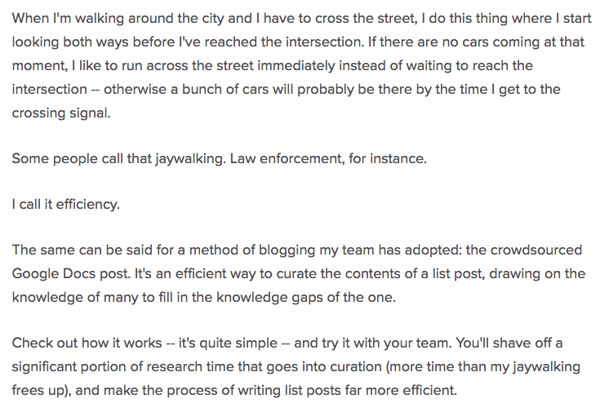
HubSpot's Director of Content Corey Wainwright is particularly good at this. Here's an example from the introduction of one of her posts:

show-personality-in-blog-post.png

To infuse personality into your own writing, try looking for ways to relate to your readers on the topic you're writing about -- then write in the first person as if you're hanging out with them and chatting about it. Make your tone personal, approachable, and engaging, just like you would in a face-to-face conversation.

4. Make your point again and again.

Mistake: You digress.

Although you are encouraged to let your own personality shine through in your writing, don't abuse the privilege. It's one thing to be yourself in the topic you're covering, but it's another thing to bring up too many personal experiences that bury the point you're trying to make.

Don't digress into these personal anecdotes and analogies too much -- your readers aren't sitting in front of you, which means you can't guarantee that you have their undivided attention. They can (and will) bounce from your article if they lose patience. 

Solution: Repeatedly assert your argument. 

To prevent your writing from losing its audience, restate your point in every section of the article. The best blog posts commit to an overarching message and then deliver it gradually, expressing it multiple times in small ways from beginning to end.

If you're writing about how much water a potted plant needs, for example, don't spend three paragraphs telling a story of how you came home to a dead fern after returning from a two-week vacation. This story offers real evidence of your point, but what is your point? Certain plants can't go without water for more than 14 days. That's one possible point, and it should be stated upfront.

5. Start with a very specific working title.

Mistake: Your topics are too broad.

When people start blogging, they generally want to write on really big topics like:

  • "How to Do Social Media Marketing"
  • "Business Best Practices"
  • "How to Make Money on the Internet"

Topics like these are far too broad. Because there are so many details and nuances in these topics, it's really hard to do a good job answering them. Plus, more specific topics tend to attract smaller, more targeted audiences, which tend to be higher quality and more likely to convert into leads and customers.

So, to get the most short-term and long-term benefits of blogging, you'll need to get way more specific.

Solution: Begin with a clear, concise idea.

Nailing really specific blog topics is crucial to knocking your first few posts out of the park. Let us help you brainstorm with our Blog Ideas Generator. This tool allows you to enter basic terms you know you want to cover, and then produces five sample blog titles that work for business blogs.

Keep in mind that a working title isn't final -- it's just a concrete angle you can use to keep your writing on track. Once you nail this stage of the ideation process, it's much easier to write your blog posts.

6. Use a specific post type, create an outline, and use headers.

Mistake: Your writing is a brain dump.

Sometimes when I get a great idea I'm excited about, it's really tempting to just sit down and let it flow out of me. But what I get is usually a sub-par blog post.

Why? The stream-of-consciousness style of writing isn't really a good style for blog posts. Most people are going to scan your blog posts, not read them, so it needs to be organized really well for that to happen.

Solution: Structure your blog with a template, outline, and section headers.

The first thing you should do is choose what type of blog post you're going to write. Is it a how-to post? A list-based post? A curated collection post? A SlideShare presentation? For help on this, download our free templates for creating five different types of blog posts. Once you have a template down, it'll be easier to write your outline.

Writing an outline makes a big difference. If you put in the time up front to organize your thoughts and create a logical flow in your post, the rest becomes easy -- you're basically just filling in the blanks.

To write a blog post outline, first come up with a list of the top takeaways you want your readers to get from your post. Then, break up those takeaways into larger section headers. When you put in a section header every few paragraphs, your blog post becomes easier and more enjoyable to read. (And plus, header text with keywords is good for SEO.) When you finally get to writing, all you'll have to do is fill in those sections.

7. Use data and research to back up the claims you make in your posts.

Mistake: You don't use data as evidence.

Let's say I'm writing a blog post about why businesses should consider using Instagram for marketing. When I'm making that argument, which is more convincing?

  1. "It seems like more people are using Instagram nowadays."
  2. "Instagram’s user base is growing far faster than social network usage in general in the U.S. Instagram will grow 15.1% this year, compared to just 3.1% growth for the social network sector as a whole."

The second, of course. Arguments and claims are much more compelling when rooted in data and research. As marketers, we don’t just have to convince people to be on our side about an issue -- we need to convince them to take action. Data-driven content catches people's attention in a way that fluffy arguments do not.

Solution: Use data to support your arguments. 

In any good story, you’ll offer a main argument, establish proof, and then end with a takeaway for the audience. You can use data in blog posts to introduce your main argument and show why it's relevant to your readers, or as proof of it throughout the body of the post.

Some great places to find compelling data include:

8. When drawing from others' ideas, cite them.

Mistake: Your content borders on plagiarism.

Plagiarism didn't work in school, and it certainly doesn't work on your company's blog. But for some reason, many beginner bloggers think they can get away with the old copy-and-paste technique.

You can't. Editors and readers can usually tell when something's been copied from somewhere else. Your voice suddenly doesn't sound like you, or maybe there are a few words in there that are incorrectly used. It just sounds ... off.

Plus, if you get caught stealing other people's content, you could get your site penalized by Google -- which could be a big blow to your company blog's organic growth.

Solution: Give credit where credit is due. 

Instead, take a few minutes to understand how to cite other people's content in your blog posts. It's not super complicated, but it's an essential thing to learn when you're first starting out.

9. Take 30 minutes to edit your post.

Mistake: You think you're done once the writing's done.

Most people make the mistake of not editing their writing. It sounded so fluid in their head when they were writing that it must be great to read ... right?

Nope -- it still needs editing. And maybe a lot of it.

Solution: You'll never regret time spent proofreading. 

Everyone needs to edit their writing -- even the most experienced writers. Most times, our first drafts aren't all that great. So take the time you need to shape up your post. Fix typos, run-on sentences, and accidental its/it's mistakes. Make sure your story flows just as well as it did in your outline.

To help you remember all the little things to check before publishing, check out our checklist for editing and proofreading a blog post.

10. At a certain point, just publish it.

Mistake: You try to make every post perfect.

I hate to break it to you, but your blog post is never going to be perfect. Ever.

There will always be more things you can do to make your posts better. More images. Better phrasing. Wittier jokes. The best writers I know, know when to stop obsessing and just hit "publish."

Solution: Better to publish and update than postpone for perfection. 

There's a point at which there are diminishing returns for getting closer to "perfect" -- and you're really never going to reach "perfect" anyway. So while you don't want to publish a post filled with factual inaccuracies and grammatical errors, it's not the end of the world if a typo slips through. It most likely won't affect how many views and leads it brings in.

Plus, if you (or your readers) find the mistake, all of you have to do is update the post. No biggie. So give yourself a break once and a while -- perfect is the enemy of done.

11. Blog consistently with the help of an editorial calendar.

Mistake: You don't blog consistently.

By now, you've probably heard that the more often you blog, the more traffic you'll get to your website -- and the more subscribers and leads you'll generate from your posts. But as important as volume is, it's actually more important that you're blogging consistently when you're just getting started. If you publish five posts in one week and then only one or two in the next few weeks, it'll be hard to form a consistent habit. And inconsistency could really confuse your subscribers.

Instead, it's the companies that make a commitment to regularly publishing quality content to their blogs that tend to reap the biggest rewards in terms of website traffic and leads -- and those results continue to pay out over time.

To help establish consistency, you'll need a more concrete planning strategy.

Solution: Schedule and publish blogs consistently. 

Use it to get into the habit of planning your blog post topics ahead of time, publishing consistently, and even scheduling posts in advance if you're finding yourself having a particularly productive week.

Here at HubSpot, we typically use good ol' Google Calendar as our blog editorial calendar, which you can learn how to set up step-by-step here. Or, you can click here to download our free editorial calendar templates for Excel, Google Sheets, and Google Calendar, along with instructions on how to set them up.

12. Focus on the long-term benefits of organic traffic.

Mistake: You concentrate your analytics on immediate traffic.

Both beginner bloggers and advanced bloggers are guilty of this blogging mistake. If you concentrate your analysis on immediate traffic (traffic from email subscribers, RSS feeds, and social shares), then it's going to be hard to prove the enduring value of your blog. After all, the half-life for those sources is very brief -- usually a day or two.

When marketers who are just starting their business blogs see that their blog posts aren't generating any new traffic after a few days, many of them get frustrated. They think their blog is failing, and they end up abandoning it prematurely.

Solution: The ROI of your blog is the aggregation of organic traffic over time.

Instead of focusing on the sudden decay of short-term traffic, focus instead on the cumulative potential of organic traffic. Over time, given enough time, the traffic from day three and beyond of a single blog post will eclipse that big spike on days one and two thanks to being found on search engine results pages through organic search. You just have to give it a while.

To help drive this long-term traffic, make sure you're writing blog posts that have durable relevance on a consistent basis. These posts are called "evergreen" blog posts: They're relevant year after year with little or no upkeep, valuable, and high quality.

Over time, as you write more evergreen content and build search authority, those posts will end up being responsible for a large percentage of your blog traffic. It all starts with a slight shift in perspective from daily traffic to cumulative traffic so you can reframe the way you view your blog and its ROI entirely.

13. Add a subscription CTA to your blog and set up an email newsletter.

Mistake: You aren't growing subscribers.

Once you start blogging, it's easy to forget that blogging isn't just about getting new visitors to your blog. One of the biggest benefits of blogging is that it helps you steadily grow an email list of subscribers you can share your new content with. Each time you publish a new blog post, your subscribers will give you that initial surge of traffic -- which, in turn, will propel those posts' long-term success.

The key to getting significant business results (traffic, leads, and eventually customers) all starts with growing subscribers.

Solution: How to set up a subscription CTA and email newsletter:

First, use your email marketing tool to set up a welcome email for new subscribers, as well as a regular email that pulls in your most recent blog posts. (HubSpot customers: You can use HubSpot's email tool to easily set up these regular email sends, as well as set up a welcome email for new subscribers.)

Next, add subscription CTAs to your blog (and elsewhere, like the footer of your website) to make it easy for people to opt in. These CTAs should be simple, one-field email opt-in forms near the top of your blog, above the fold. As for where to put these CTAs, we typically place our blog CTAs at the bottom of our blog posts or add a slide-in, which you can learn how to do using a free tool called Leadin here.

You can also create a dedicated landing page for subscribers that you can direct people to via other channels such as social media, other pages on your website, PPC, or email. (For a list of more simple ways to attract subscribers, read this blog post; for more advanced ideas, read this one.)

Don't worry if you read through this list and are now thinking to yourself, Well this is awkward ... I've made literally every single one of these mistakes. Remember: I used the word "common" to describe these mistakes for a reason. The more you blog, the better you'll get at it -- and you'll reap the benefits in terms of traffic and leads in the process.

We hope you'll use this list of mistakes as fuel for the fire to step up your blogging game. After all, the benefits of keeping up a healthy business blog will be well worth the time and effort.

http://bit.ly/2gIGypi

9 Ways to Increase Your Messenger Bot Engagement

Do you want more people to interact with your Facebook Messenger bot? Wondering how and where to promote your chatbot? In this article, you’ll discover how to encourage people to engage with your Messenger bot on Facebook. #1: Incentivize Messenger Bot Subscribers With Exclusive Access Messenger bots aren’t the most conspicuous mainstream marketing channels, so […]

The post 9 Ways to Increase Your Messenger Bot Engagement appeared first on Social Media Marketing | Social Media Examiner.

July 02, 2019 at 12:00PM http://bit.ly/32f2lwu
read more...
from Social Media Marketing | Social Media Examiner http://bit.ly/2NGSvjR
via IFTTT

Monday, July 1, 2019

26 Ideas for Your 2019 Small Business Marketing Strategy

Whether you're in the process of launching a new business or already have one, having a strong online presence for your brand is extremely important.

In fact, 97% of people learn about local businesses online more than anywhere else.

Small business owners looking for a way to track ROI and brand awareness need digital marketing. Not only is digital marketing a must-have for promoting your products or services, but optimizing your online assets is also critical to your business' overall success.

For local businesses, it's equally as important to have essential and updated information readily available for potential clients.

If you're a small business owner with little experience in online marketing, this might all sound like a foreign language to you. Have no fear -- we'll go through what all these words mean, and why you should care about them!

In this post, we'll help you build and optimize your marketing strategy using inbound marketing, setting you up to attract new clients and ultimately grow your business. Organic traffic (someone finding you on their own through internet search) is the most cost-efficient way to acquire new business.

We are going to answer the following questions and provide marketing tips about promoting your small business:

  • How can I make a website? How can I make a website without a developer?
  • Why isn't my website appearing in Google?
  • Why is my competitor above me in Google?
  • What is blogging?
  • Why does blogging matter?
  • Why do I need social media accounts?
  • How do I get more traffic to my website?

The Core Elements of Small Business Marketing

If you haven't officially started your business, check out this comprehensive guide for how to start a business. It outlines everything you need to become an officially established small business, including tax and licensing information, and all the other resources you'll need to get up and running.

If you've already officially launched your small business, check out these free apps for startups and understand the most important things you'll need to begin leveraging inbound marketing and acquiring new customers from organic search:

Website

Having a professional-looking website is one of the most important assets you will create for your small business. This is where you will show who you are, what you offer, where you are, and how a potential customer can get in touch with you.

Blog

To start a blog, you can use an inexpensive or free website tool to make a free site and use one of their templates. Even if you only publish once a week, it will improve your website's visibility online and help educate your potential customers on why they should trust your company. If you're planning to write your posts yourself, check out this beginner's guide to writing.

Once you start writing, you can add a call-to-action on your posts for visitors to subscribe to your blog and receive emails This is a great way to start collecting leads and offering potential customers a way to get information if they aren't ready to buy anything from you yet.

Email Tools

Email marketing is a critical part of your marketing toolkit. In fact, 73 percent of millennials prefer communications from businesses to come via email.

This strategy is an easy, free, and scalable way to communicate with both new and existing customers.

Once you have an email marketing tool in place (many are inexpensive or even free), experiment with emailing out newsletters (with your sleek new blog posts), and other promotions to your database. We know small business owners don't have tons of free time to devote to digital marketing, so consider using marketing automation to make this process even easier for yourself.

To get started planning your email marketing strategy, check out this guide and template from HubSpot.

Conversion Tools

We've been talking a lot about the assets you need to grow your business, but haven't really covered how these will help drive revenue yet. One simple way to start generating leads or customers from your website is to implement a conversion tool.

A simple, free option is HubSpot Marketing Free. By using this tool to add a pop-up widget to your website, you can start collecting email addresses of potential customers. From there, you can send out promotions and offers and convert them into paying customers. You can also implement any of these 24 conversion tools to help you optimize your website and use it to drive leads.

Social Media Accounts

Social media might seem like it's just a fun platform for people to socialize and connect, but it's actually a powerful business tool. Social media can help you increase traffic, improve your search engine rankings, and engage with potential customers.

Determine your brand's identity.

Having a consistent brand identity to promote your business will make you look more professional and help you attract new customers. According to a study from Facebook, 77% of people are loyal to brands.

Jeff Bezos, founder of Amazon, has described a company's branding as "what other people say about you when you're not in the room." In other words, your brand is the feelings and emotions people have when hearing your company name. It's is a combination of your brand name, logo, aesthetic, and the design of all your assets.

Identify your buyer persona.

When you imagine a customer searching for your product or service, what are they like? What are their pain points? What is their job? Creating a buyer persona that tells a story of your ideal customer can help you make a website that's optimized for them.

By learning more about your target customer through creating a buyer persona, you can better figure out what types of things they may be searching for so you can include those terms on your website.

Design a logo and other assets.

To start getting the creative juices flowing, consider your color scheme and peruse palettes with Adobe Color or Coolors. You can create your own or look through pre-made or customized color palettes.

To create a logo, I'd recommend checking out Upwork and Freelancer, or reaching out to a marketing agency. There are free and less expensive options for designing your own logo online, although using a freelancer or agency can give you a higher quality product and connect you with a designer who can change and update your brand assets as your company grows.

Build your website with a CMS template.

If you're a fairly tech-savvy small business owner, you'll probably want to build your own website. If you choose to do this, you can use a CMS (content management system) to do so.

Most CMSs offer pre-made templates for your site that you can get for free or purchase, then customize to your brand (we'll get to branding later). There are a handful of inexpensive and even free options for various skill levels -- from beginner all the way to advanced.

Once you've created your website, most CMS platforms offer plugins to help you optimize your content for search (look for SEO plugins). This will help you rank better in Google -- which we'll discuss more in depth in a bit.

Track your site with analytics tools.

If you've never made a website before and aren't entirely comfortable with the technical elements, there are a variety of free tools and services to help you get started. When you create your website, make sure you implement Google Analytics or HubSpot Marketing Free (both of which are free products) so you can easily track who's looking at your site.

Consult agencies or freelancers for web design help.

If you aren't on the technical side and want a website built for your small business, you can use a freelancer or a marketing agency that specializes in web design. This is a great option for businesses that already have a website but need it to be updated and revamped for SEO (search engine optimization) to help improve your Google ranking.

To find a freelancer or marketing consultant in your area, you can use Upwork (filtering by design/creative) or Freelancer. To find a marketing agency, try looking through HubSpot's Agency Partner directory. All HubSpot Partners are SEO experts and will help you rank in search engines and be found online.

Boost your Google ranking with SEO.

If you already have a business, have you ever searched for yourself or your product/service online? If so, did you think, "Why isn't my website showing up on Google?" If so, you probably thought, "How do I rank on Google?" or "How can I improve my Google ranking?"

There are a lot of factors that play into why a certain site or page appears in the top spots on the Google (or other search engine) search engine results page (SERP). Backlinko reports some of Google's top factors, which include having relevant keywords (and their placement on your site), the length of your content, having high-quality content, how fast your page loads, how often you post content, and more.

When it all boils down, Google essentially tries to find the best piece of content to present to the person searching. For example, if I'm searching for the best salon in Newport, Rhode Island, it wouldn't be helpful for me to find a web page of a salon that has closed down and is located in Newport, Kentucky. It would, however, be helpful for me to find a salon in my area with great Yelp reviews, an easy-to-navigate website, and contact information readily available. Google always wants to surface the most relevant, highest-quality piece of content.

To rank higher on Google, you can leverage the power of SEO, or search engine optimization. To start learning everything there is to know about this powerhouse marketing tactic, check out The Ultimate Guide to SEO in 2017.

HubSpot explains SEO as "techniques that help your website rank higher in organic search results, making your website more visible to people who are looking for your brand, product, or service via search engines like Google, Bing, and Yahoo." In other words, it's the basic concept of structuring your website and blog posts to be in the best shape for appearing first on search engines.

SEO strategy usually consists of a few things. These include buyer persona research, keyword research, and on-page SEO research. These three areas can help you learn how your target market is searching online, and position your business to get discovered by the right people.

Research keywords opportunities.

Keyword research is an extension of buyer persona research. You can use the personas you've created to search for the best keywords for your brand, then use a tool like KW Finder to find related keywords for your target audience.

Then, you can do some on-page SEO research and optimization. This is where you put those keywords in the correct places on your website -- like in the meta-description, page titles, and H1 tags.

Optimize you website for mobile devices.

Most Google searches are done on mobile devices, so it's important to have a site that looks clean and easy to navigate when someone enters it on their smartphone. A mobile site can also be beneficial for SEO, with search engines like Google announcing that they will reward you with a higher ranking if you have a mobile site.

You don't have to be a tech expert to build a site that looks good on mobile. In fact, most CMS platforms like HubSpot already offer mobile-optimized templates.

Write optimized blog posts.

Content and blogging are extremely important when it comes to your search engine ranking. The more often your desired keywords appear in your high-quality and helpful content, the more likely you are to appear in search results. A great way to become an authority on your topic, product, or service is to blog. For HubSpot, most of our traffic comes from our blog and content marketing campaigns.

Make sure you're writing with SEO in mind -- use this SEO checklist for bloggers, or a WordPress plugin like Yoast.

Experiment with photo and video content.

According to HubSpot Research, more than 50% of consumers want to see videos from brands. Additionally, most social media apps, like Facebook and Instagram are embracing more visual layouts. To keep up with these trends, it's a good idea to make a few marketing videos. If you use these tips, producing a few can be quite inexpensive.

Hire a freelancer to help you scale your content.

If you need some help creating regular blogs or promotional content, consider hiring a freelancer over investing in a full-timer. Try Upwork for a freelance blogger, videographer, or photographer. You could also consider hiring a marketing agency for a larger project.

Launch business pages on Facebook and Yelp.

If your business is focused on a local area, the most important accounts for you are Facebook, Yelp, and Google's business feature. Having high Yelp reviews improves your authority online and helps your search ranking. You can claim your business on Yelp for free, customize your profile and add pictures, and start asking for reviews.

The same thing goes for registering your Google business page. You can register your business with Google (for free) and add pictures. (If you've ever searched for your business in Google Maps and been disappointed not to see it, it's because you haven't claimed it yet!)

On Facebook, you can create a Facebook business page so that people can find your location and hours.

For any business, having up-to-date social media accounts will help you be found and engage with prospects. Create a Twitter account for your business, Facebook page for business, learn how to use Instagram for business, create a Pinterest page for your business (if relevant), and use them as a way to discover new clients. You can also try your hand at using Snapchat for business if you've already mastered the basics.

Build out your social media strategy.

While Facebook and Yelp will be great tools for local searches and reviews, platforms like Instagram, Pinterest, and Twitter will offer you even more opportunities to share your posts, content, and promotions.

If your customers can purchase your products or services online, these platforms will also give them another way to find you.

Be sure not to spread yourself too thin by joining too many platforms at once. To make strategizing easier, here's a guide to the five types of social media platforms and the pros and cons of each.

Use social media for customer service.

Once you're on your chosen platforms, be sure to answer customer or follower questions when they ask them through post comments or direct messages. This will make your company look responsive and credible. Here are some great examples of how brands have used Twitter for customer service.

If you have the means, consider hiring a social media manager with community management experience. On top of posting content on a regular schedule, community managers are charged with responding to questions or concerns of followers. Interested? We just published a guide on what it takes to be a great social media community manager.

Build interesting landing pages.

A landing page offers your potential customers a free resource in exchange for filling out a short form of contact information. When they receive the resource, they might be even more pleased by your company and more interested in buying the full product.

Because landing pages raise your chances of customer conversion, you want yours to look enticing. To get started, read this landing page guide to learn more about what makes this strategy successful. Then check out these free and professionally designed templates.

Plan an email marketing strategy.

Once you start creating regular content and building out landing pages, you'll want to share them with the prospects who seem most interested in learning more about your product. For this reason, we suggest building an email marketing strategy.

While you want to be careful not to bombard those who sign up for your email list with too many emails, you want to send just enough to keep your prospects informed and engaged. Here's how our metrics improved when we streamlined our email marketing strategy.

If you've never sent regular newsletters before, you can use HubSpot or a number of other affordable tools to create and send an email with a professionally designed template. Many email tools also offer basic analytics that allow you to track open and click rates.

Offer coupons in newsletters or on landing pages.

Placing a coupon in your marketing emails can engage and delight your audience. After buying a product or service at a discounted rate, they also might be more willing to pay for it in full price. If you have a subscription service, it can also be helpful to offer prospects a code for a free trial so they can test it out.

Share your distribution channels on your website.

Once you have a few social media accounts and can allow people to sign up for your newsletter, highlight this on your website so your visitors can follow you. One way companies do this is to display all of their linked social icons and a newsletter sign-up call to action on all pages of your website. A good place to include these are on the top right corner or on the footer of each page. This way they are visible, but aren't distracting from any content.

Offer a free webinar.

A webinar allows potential customers to sign up for a short online course hosted by you. These courses are usually between 30 minutes to an hour and allow you to give tips and answer questions related to a topic your brand is familiar with. While this strategy can help you boost your credibility in your field, they can also offer you potential leads and sales opportunities.

Consider PPC Advertising.

If you're working hard on SEO, but are still looking for an extra boost, consider PPC -- or pay-per click -- advertising. With this search engine marketing technique, you use Google AdWords or Bing Ads to show up higher. and as an advertised listing, in search results. Before you dive in to PPC, you'll want to make sure your landing page is as optimized as possible. If you are paying by the click and those who click on the page don't convert, you will lost advertising dollars.

To help you get started, read this ultimate guide. Then, use this PPC planning template to plan an optimized campaign. You can also use a few handy tools and software to edit, track, and report on your campaigns.

Advertise on social media.

Most of the major social media platforms offer affordable advertising options that can help you target your posts to a specific audience. While many small businesses have been advertising on Facebook, Twitter, and LinkedIn for years, Instagram now allows brands to advertise through its Shoppable tool.

Experiment with influencer marketing.

Is there someone in your area with a high social-media following who's considered an expert in a field your company exists in? If you're able to reach out to them, see if they'd be willing to share an experience they've had with your product or service social media. This will alert their follower base of your product. These followers may also trust your product more because an expert is endorsing it.

If you can't find an influencer to volunteer, you can also consider paying one or two on a freelance basis. To learn more about this strategy, check out our Ultimate Guide to Influencer Marketing.

Try co-marketing.

Is there a local business in your area that isn't a direct competitor but offers a product or service to a similar target audience? Consider working with them on a cobranded campaign where you promote each other on social media, via email, or in your blog. While you'll give your partnering company added promotion, it will also allow their fanbase to learn more about you.

Draw up a go-to-market strategy.

Once you've activated all the tools you need to promote your product or service, you'll need to create a promotional plan that aligns with the customer journey. Consider which content will attract, engage, and delight your prospects and how you will convert them into a customer.

To help you plan out this process, use this template.

Encourage happy customers to share their experiences.

When a happy customer talks about how great your company is on social media or a review site, your product or service looks like a good investment. Even on social media, word of mouth is still a huge factor in someone's purchasing decision. If a prospect sees a friend raving about you on Facebook, or photo post of a meal from your restaurant on Instagram, they might be more likely to go.

If customers are telling you they love your product, encourage them to share about the experience on Yelp, Google, or social. If you have a physical business, you might also want to place signs up with your account handles so customers know who to tag if they post a picture of your product.

Try out marketing experiments.

If there's a new social platform you're interested in, or a new marketing trend, don't be afraid to experiment. If an experiment goes well, you could be considered ahead of the game.

When you experiment a new marketing strategy, be sure to have a solid hypothesis or question in mind. Also prepare for what your next steps will be if you get good or bad results. Here's a quick guide to leading a successful marketing experiment.

Small Businesses Need a Strong Digital Presence to be Found

Well, there you have it. You probably have a long road ahead to build your online presence, but any steps you can make will have a huge impact on your business. Some things like blogging definitely take a few months to start kicking in and sending you traffic, but social media accounts and posts can have immediate effects.

http://bit.ly/2lSd61S
Your Cheat Sheet for Posting GIFs on Instagram

GIFs are fun, digestible, and, most importantly, relatable -- which is why everybody loves them and shares them on social media so much.

Additionally, since Instagram is the top social media platform for visual content, your followers expect your brand to post more compelling content than just the photos of your company’s complimentary lunch each week.

Your audience want to feel something when they scroll through Instagram, and GIFs can forge that emotional connection with them.

Below, we’ll show you how to post a GIF on Instagram -- with a series of GIFs -- and share some of the social network’s best GIF apps.

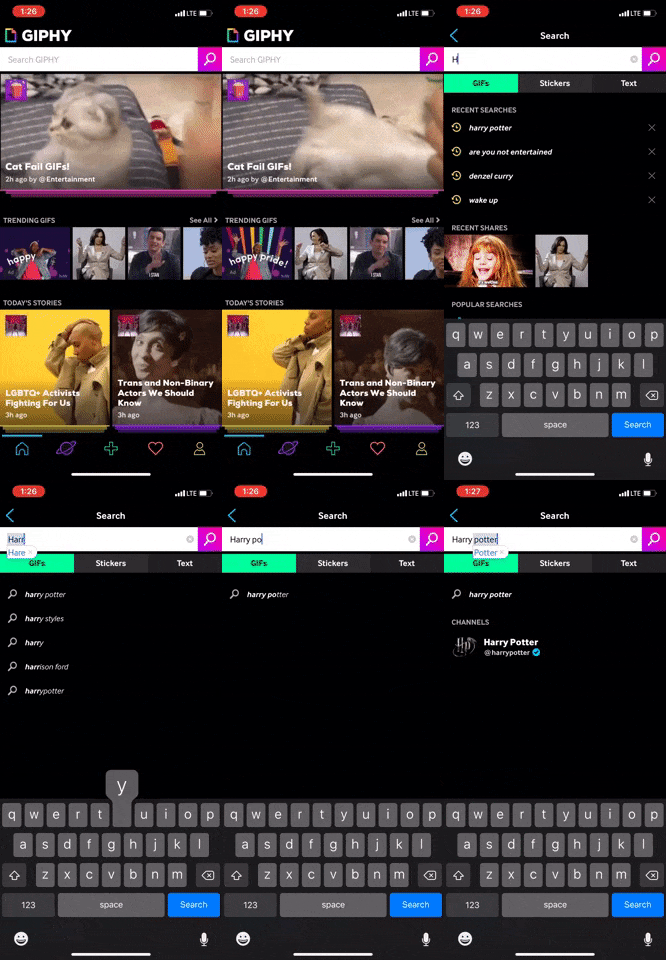
Here’s a series of GIFs that will show you exactly how to post a GIF on Instagram:

1. Download and open GIPHY.

You can find GIPHY in the Apple and Google Play app stores.

instagram-gifs-step1

2. Search for a GIF and tap the one you like.

instagram-gif-searching

3. Press the "share" button in between the heart and the three dots (it looks like a paper airplane).

It will drop down to a screen with all the platforms you can share the GIF on.

instagram-gif-share-1

4. Press the Instagram share button.

This is where GIPHY will give you one or two notifications asking if it can access your photos and open Instagram -- hit "OK" or "Allow".

instagram-gif-step4-1

5. Choose to post the GIF to your story or feed.

instagram-gif-story-feed-1

6. Add a filter, a caption, and share!

instagram-gifs-step5

The 6 Best Instagram GIF Apps

1. GIPHY

GIPHY has the world’s largest library of animated GIFs and stickers.

Free on IOS and Android

4.7/5.0 Rating

2. Giphy Cam

On Giphy Cam, you can record your own GIFs and add filters or special FX to them.

Free on IOS and Android

4.8/5.0 Rating

3. ImgPlay

ImgPlay lets you turn your own videos, live photos, photos, and burst photos into GIFs or videos. You can also add captions and filters to your GIF, edit its frame sector and order, and control its frame speed and direction.

Free on IOS and Android

4.7/5.0 Rating

4. GIF Maker

With GIF Maker, you can convert your photos or videos into GIFs, Boomerangs, and memes.

Free on IOS and Android

4.6/5.0 Rating

5. Momento

Momento lets you use your live photos and videos to create GIFs and stop motion videos. You can also add augmented reality, filters, music, stickers, effects, text, and zoom to them.

Free on IOS and Android

4.6/5.0 Rating

6. Gifnote

Apple featured Gifnote on their “New Apps We Love List” last year. And it was included for good reason. The app has a licensed music library full of modern and classic hits that you can add to their collection of GIFs or your own created GIF. But if you don’t feel like making your own GIF-music combination, you can just select and send one of their trending Gifnotes to your friends.

Free on IOS

4.8/5.0 Rating

http://bit.ly/2wbdrTQ

Community Managers: What They Do & How to Be a Great One

Twitter, with its 126 million daily active users, is a platform with a ton of potential for companies to increase awareness and build their brand personality. In recent years, big names like Netflix, Wendy's, and Taco Bell have become Twitter famous for their witty commentary and personable interactions with their followers.

Twitter isn't the only platform that rewards audience engagement, either. In fact, 83% of consumers on Facebook prefer brand personality. But how can companies build their reputation as original, relatable, and dependable while still maintaining their unique voice?

Social media has transformed the relationship between individuals and organizations -- which is why the community management role is now so vital. Simply put, a community manager needs to negotiate the connection between a company and its audience.

If you ask Krystal Wu, HubSpot's Social Media Community Manager, the most critical part of the community manager role, she'll say it's simply "having one." And, according to Sprout Social, 21% of consumers are more likely to buy from brands that are accessible via social media -- which means it's a critical component of your marketing strategy.. The community manager position builds brand personality and consumer trust, which can ultimately lead to increased awareness and company performance.

But what exactly is a community manager, anyway? Here, we're going to explore what a community manager is, and -- if you're applying or starting out in the role -- how to be a great one.

How to Become a Community Manager

Community managers come from a variety of backgrounds -- anything from recruiting to journalism to engineering -- because being successful in the role relies more on a set of skills than a degree.

First, it's important for community managers to be knowledgeable about and across the business. Community managers should be able to rely on their experience with their organization to confidently address their audience or tap into internal resources to appropriately handle any issues that may arise. Beyond a working understanding of the business, managers need to build productive, professional relationships both internally and externally in order to be a more authentic and reliable brand ambassador.

In order to advocate for and preserve an organization's brand, community managers must have incredibly strong soft skills. Above all, empathy, good listening skills, and adaptability are crucial to promoting favorable impressions of an organization.

Beyond interpersonal skills, the best community managers are actively researching trends and hot topics -- by engaging with the latest industry developments, community managers are better able to connect with relevant audiences and provide them with the most updated resources and best practices.

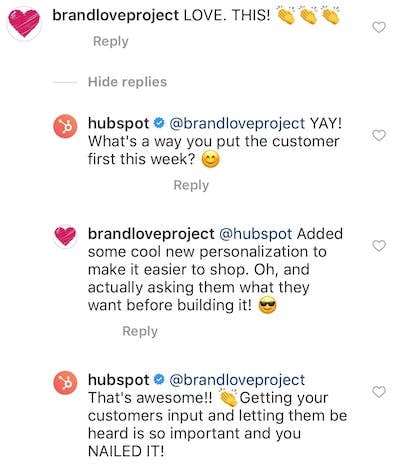
community-managment-hubspot

Image courtesy of HubSpot

Krystal Wu emphasized adaptability as an important characteristic for success in the role -- since the position is still developing and community managers are often carving out their own job descriptions, being flexible in order to adjust to new trends and expectations will serve you in the long run. You could add her heart quote here?

Ultimately, great community managers understand that theirs is a customer service-based role, and therefore actively listen to customers, address concerns, demonstrate an authentic social presence, and maintain productive partnerships with consumers. (Be a good human being for your audience on behalf of your brand)

What Does a Community Manager Do?

Community managers are responsible for building and maintaining a brand's community -- both online and offline --and public perception. The job requires engaging audiences on a variety of outlets including online forums, social media platforms, Slack, in-person groups, and more to reach all audiences where they are.Since different digital spaces have unique cultures and best practices, community managers must be the consistent tone and voice of the brand.

As Krystal Wu points out, “when I speak, I am on the line for HubSpot. I'm not Krystal, I'm HubSpot.”

As a community manager, all your messaging, content, and crisis management across networks should be prompt, consistent with your brand, and empathetic to create a loyal and delighted community.

PR is another basic tenet of managing and extending a brand's audience as community managers are engaging with all kinds of press -- both positive and negative -- generated about their companies. How managers navigate legal issues or negative press can separate the good community managers from the great ones. Missteps in this role can do real damage to a brand, so connecting with your organization's legal, PR, or related teams can help mitigate problems and make sure that responses are coming out appropriately.

Additionally, great community managers are constantly thinking about how they might experiment. For instance, Krystal Wu has learned that a tactic or test won't run the first time, but you shouldn't be discouraged -- progress takes time. Community managers should think in the long term -- the more you invest in an improved strategy, new direction, or the position itself, the more you'll get out of it.

Plus, an easily forgotten resource is an external network of other community managers! Finding others in similar positions can be very helpful in crowdsourcing informed solutions or leaning on experienced others who've handled similar situations in the past.

When I asked Krystal if there were any challenges she faced that she hadn't expected, she said she hadn't anticipated the "emotional rollercoaster I deal with everyday." The experience of engaging with a digital community can be volatile -- one day might be full of positive and rewarding discussions, while the next might be hounded by complaints and disgruntled users. It's important that community managers maintain and control emotions in order to handle the various issues that arise.

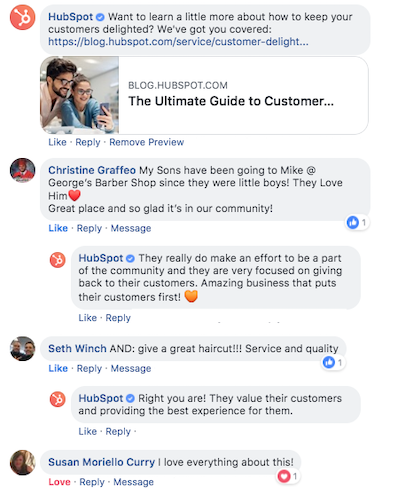
community-managment-facebookImage courtesy of HubSpot

Building on the usefulness of a PR skill set, community managers must be vigilant of their organization's brand presence and assess the potential consequences of their corporate communications. Brand presence includes consistency of voice across platforms to keep the company on track in terms of target audience awareness and engagement. Consumers should be able to recognize brand voice across pillars -- whether they're seeing a post on Instagram or question on Quora.

Beyond direct interaction between the brand and its audience, community managers also record and report the engagement they see on at least a monthly basis. Other teams that create content operate mostly on the backend, so it's the community manager who sees the response from consumers. They can help track whether followers are confused, or what kinds of changes they are seeing within digital communities. Krystal Wu says that she has developed an intuition about the psychology of HubSpot's audience, and can therefore evolve and tweak her outreach strategy in order to most effectively engage with target audiences.

community-managment-hubspot-instagramImage courtesy of HubSpot

Furthermore, community managers keep in mind their ideal audience, shaping content and communications to target the right audience rather than simply building a larger one.

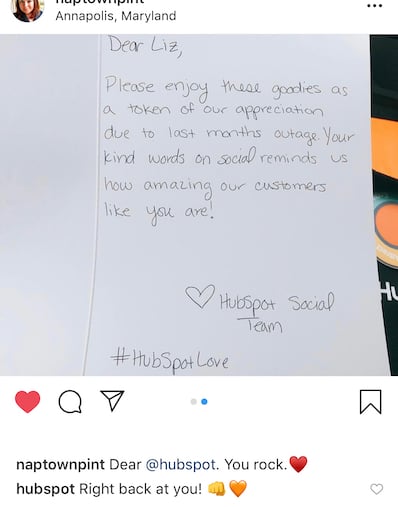
Lastly, great community managers delight their community! Krystal Wu makes sure to give positive encouragement to her audience through gift cards, little presents, or what she calls "delight boxes", which is a bunch of fun HubSpot swag items. Even when things go wrong, great community managers address problems, resolve them, and send gifts to those involved.

By building positive relationships with the members of your community -- whether they have a positive impression of your brand or a negative one -- you're building a reputable and trustworthy brand perception.

http://bit.ly/2KX6lwj

5 Overlooked Facebook Audiences to Improve Your Ad Results

Are you looking for new audiences to target with your Facebook ad campaigns? Wondering how to best reach new prospects with your ads? In this article, you’ll learn how to create five valuable Facebook audiences in Ads Manager. Why Target Multiple Facebook Audiences? The effectiveness your Facebook ad campaigns are depends on which audience you’re […]

The post 5 Overlooked Facebook Audiences to Improve Your Ad Results appeared first on Social Media Marketing | Social Media Examiner.

July 01, 2019 at 12:00PM http://bit.ly/2XjXWcI
read more...
from Social Media Marketing | Social Media Examiner http://bit.ly/2JgVqdu
via IFTTT