Thursday, June 6, 2019

How to Generate Quality Leads From Your PPC Campaigns

You've poured thousands of dollars into your Pay-Per-Click (PPC) search campaigns and have managed to generate a substantial number of leads. You're rocking your conversion rates and your cost per lead is great.

What's the problem?

It's only when you start analyzing your results and dig a little deeper that you realize an overwhelming majority of these leads are in essence “junk leads.” Very few are turning into opportunities, let alone customers. The bottom line is, you're just not seeing a healthy ROI.

Free Guide, Template & Planner: How to Use Google Ads for Business

In this post, we provide 10 proven strategies that you can use to generate better quality, bottom of the funnel leads from your B2B PPC campaigns. Let's dive in.

PPC Lead Generation

1. Set up proper URL tracking.

To accurately measure the effectiveness of your campaigns, you need to make sure that you are able to track other important elements besides conversions. This data will allow you to determine which campaign and site a lead came from, the keyword they searched for, the device they were on, and so on.

One of the best ways to accomplish this is to use UTM Parameters and ValueTrack Parameters. These tags are data that you append to the end of your landing page URLs, and you've probably seen them when you clicked a link or ad. They look something like this

http://bit.ly/1U7DPnb

As a best practice, you should use the naming convention specified below and use at least these 6 parameters in your URLs:
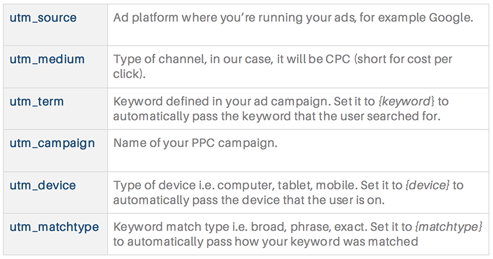
UTM naming conventions and parameters for URLs

In Google Ads, the most efficient way to set up tracking parameters is in the “Campaign URL options (advanced)” section under campaign settings. Here, you can enter your parameters after “{lpurl}?” as shown below. The {lpurl} portion will be automatically replaced with the landing page URL that you have set up for each ad within your campaign.
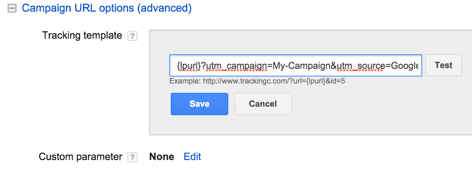
utm_tracking and advanced campaign URL options

2. Determine where your opportunities are coming from.

Once you have your tracking parameters, you need to capture them on your landing pages and store them -- along with with other lead details -- into the contacts database of your marketing platform. This is usually done by creating hidden fields in your landing page form. You'll need one field for each UTM parameter that you have passed to your landing page:
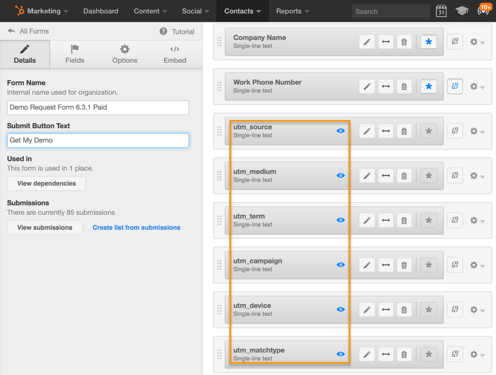
HubSpot lead generation form setup area

You might first need to create custom fields or properties in your contacts database before you map them to the new hidden fields in your form.

Next, you need to make sure that your contacts or leads data is synced with your CRM and that you're able to view all opportunity data for your leads.

At a minimum, you should be able to view lead status or stage -- whether they are a sales qualified lead, marketing qualified lead, opportunity, or customer -- and the opportunity size or deal amount. If you have lead scoring data associated with each contact, this will be extremely beneficial as well.

Once you have all of the available data, you should create reports to isolate and segment it.

The most important data you want to extract are:

  • The number of opportunities, opportunity amount, and customers won for each source, campaign, keyword, and device.
  • The name, email, company, lead status/stage, lead score, opportunity amount, source, campaign, keyword and device for each lead.

You'll then be able to determine which opportunities are being generated from a particular search engine, campaign, device and keyword.

When you combine this with the spend data from your ad platform, you'll be able to get your true ROI.
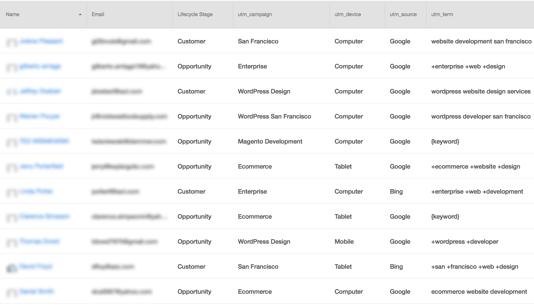
Opportunities-and-Customers-Screenshot.png

Next, isolate poor quality leads. If you use lead scoring, look at the leads with the lowest scores. Otherwise, look for leads that have provided invalid or junk data in the name, email and company fields. Then check to see what campaigns, devices or keywords these leads have in common.

3. Segment your campaigns into many groups.

Many companies make the mistake of setting up campaigns or ad groups for each product or service they have. They don't dig deeper into the many different ways in which their target audience is searching for the solutions they offer.

You can address this by carefully planning your campaigns in order to segment your offer into as many groups as possible. You can segment by each main feature, benefit, sub category, target industry, or geographic location relevant to your product or service.

For example, let's say you provide web design and development services. You can segment your campaigns as follows:

  • Sub-category: Ecommerce website design, custom website design, responsive web design, etc.
  • Feature: WordPress web design, Magento Development, PHP development
  • Benefit: high end web design, agile web development, enterprise web development
  • Target industry: real estate website design, restaurant web design, healthcare website design
  • Geographic location: San Francisco web design, California web design, New York web design

Once you identify the segments you want to go after, you can set up each campaign with the necessary assets:

  • Keywords: All keywords related to the associated segment
  • Ads: Ad copy customized to that segment
  • Landing Pages: Customized landing page that has content only about that segment

Setting up campaigns in this way allows you to focus your efforts, and will result in better quality leads and increased conversion rates.

4. Target relevant keywords.

Keywords are at the heart of every paid search campaign, and you need to go wide and deep to identify the best ones for your business.

The first step is identifying the most focused and relevant keywords. Segment your campaigns as described in the previous section and then search for keyword ideas within each segment. There are a lot of excellent keyword research tools that you can use to find the best keywords.

To attract the best quality leads at the bottom of the funnel, you have to target keywords with searcher intent in mind. For example, when someone searches for “WordPress website design services” you know that they're looking for a company that provides WordPress services.

However, when someone just types in “WordPress website design,” you can't be certain about their intent.

They could be looking for services or they could just be looking for a how-to design guide. Location-based searches also convey searcher intent adequately. For example, “San Francisco web design” indicates that the searcher is looking for a web design company in San Francisco.

Based on the volume of searches, you can also decide to further segment your campaigns to get even more focused. The more tailored your campaigns are—including keywords, ads and landing pages—the better your leads will be.

For example, you could create a new campaign that combines two of the segments we just discussed titled “San Francisco WordPress website design.” Some of the keywords in this campaign could be:
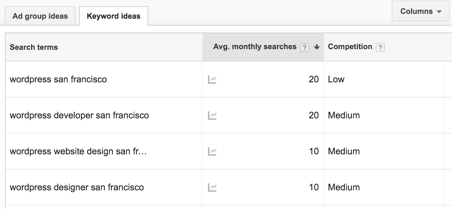
A list of WordPress keywords that notes competition.

Another way to get more focused with the keywords you're targeting is to find long-tail keywords -- those that consist of four or more words. Searchers who type in these longer search terms have typically done their research and honed in on exactly what they are looking for, making them quality prospects.

A good tool to find long-tail keywords is Übersuggest, but you can also source them directly from Google. After conducting a search, simply scroll down to the bottom of the page and look in the section “Searches related to…”

A search for “ecommerce design services,” for example, shows the following suggestions:
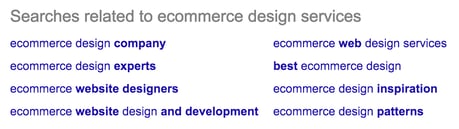
Google search suggestions with bolded keywords

5. Filter out irrelevant keywords.

Targeting the kinds of keywords we discussed in the previous section, will go a long way in attracting high quality leads to your ads, but there are also steps you can take to proactively ward off less desirable clicks.

Look over your Search Terms Report to determine whether you are getting any irrelevant clicks to your ads. If you find any such clicks (or impressions), add those keywords to your negative keywords list -- this tells Google or Bing not to show your ads for any of these keywords.

Going back to our earlier example of web design services, some negative keywords you would likely want to add are: cheap, free, themes, school, jobs etc. This will make sure you don't waste your money on clicks from users searching for keywords like “San Francisco web design jobs” or “WordPress website design theme.”

If you followed our guidelines for tracking and opportunity attribution described in sections one and two, you'll now have the ability to determine which keywords are leading to poor quality leads and which keywords are producing opportunities.

If you find that certain keywords are predominantly producing poor leads, you can add them to your negative keywords list to stop receiving traffic from these types of searches.

On the other hand, you'll now have a list of keywords that have produced opportunities (and customers) for your business.
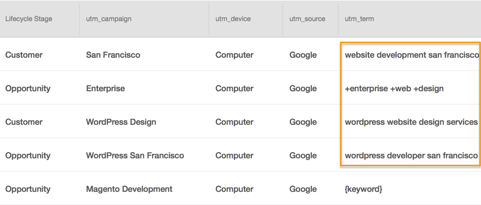
Keyword_opportunities_highlighted

You can double down on these keywords in three ways:

  • Increase their bids so your ads rank at the top of search results.
  • Segment these keywords into a new group or campaign so you can have more customized ads and landing pages for them.
  • Find other related keywords you may have missed the first time.

If you need help determining strong keywords and negative keywords, it can be helpful to use a template or build a keyword plan for your campaigns. Here's a guide that walks through how to use our free PPC campaign management template.

6. Use ad copy to pre-qualify visitors.

Writing ad copy that focuses solely on increasing click-through rates is a mistake. You should write ads that pre-qualify visitors, so that the traffic you do get will be a lot more relevant and targeted to your business. Some of the best ways of doing this, are by adding the following elements to your ad copy.

Business size

If you target businesses of a certain size, reflect that in your ad copy. For example, if you want to target larger businesses, you can add “enterprise” to your ads and create copy such as, “enterprise class WordPress design.”

Industry

If you work with specific verticals, you can make that clear in your ads. For example, your ad could read: “WordPress design for healthcare.” This usually works best with segmented campaigns and keywords (see tips three and four).

Pricing

Many companies are uncomfortable adding pricing to their ad copy, but this is a good way to weed out prospects who may not have the budget for your solution. You can do this by adding text such as, “Starting at $499/month,” or “Packages starting at $10,000.”

Target Persona

Including your target persona in your ad copy is another excellent way of pre-qualifying your ad traffic and even personalizing your ads. You can do this with text such as “For small business owners” or “For discriminating marketing executives.”

It's also important to consistently A/B test your ads to optimize their performance. As a general guideline, you should always have two ads running for each ad group in your campaigns.

You can then decide which ad is performing better by looking at the number of conversions and opportunities generated from each, in addition to the click-through rates.

7. Develop tailored landing pages for your ad groups.

Once a visitor gets to one of your landing pages you've already paid for the click. This means that measures such as adding extra form fields or validating for a business email address in an effort to reduce the number of poor-quality leads, are misguided. Instead, you should focus on maximizing the conversion rates of your landing pages by optimizing the elements below.

Tailor your landing pages to the needs, wants, and challenges of your ad groups with particular focus on the content you have above the fold.

It's ideal to create unique landing pages for each ad group. But, sometimes this isn't feasible -- especially if you're working with dozens of different ad groups.

Should this be the case, you can use dynamic headlines and subheadings on your pages. This will let you alter the content of your landing pages by passing in headlines and sub headings as parameters of your landing page URL.

It's also important to follow key landing page best practices to nurture those who click into converting. These include no navigation, a content or coupon offer in exchange for information, and imagery or visuals that add more information about whatever is being offered on the page. Still not sure where to start? Use these great design examples for inspiration.

Determine which offers drive the most results.

Test multiple offers to see which get the most traction. Make sure you look beyond conversions to see which offers are producing the most opportunities. Some offers to test include: free trials, demo scheduling, free evaluations, consultation requests, proposal requests, and free assessments.

Test, test, test.

A/B test your landing pages to determine which variants are driving the most conversions, opportunities, customers, and ROI:
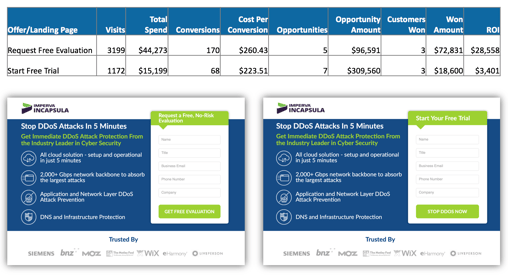
A panel showing an ad's live A/B testing

Always A/B test a single element at a time to isolate the effect of that element on performance. Also, test only two variants of the page at a time.

The most important elements you should run tests on are above the fold. These include:

  • Headline: Test different versions of your main selling point, benefit, or offer.
  • Call-to-Action (CTA): Try out different CTA copy, colors, sizes, and placements.
  • Hero Shot or Background: Test different images or videos for your hero shot or background.
  • Form: Test different lengths and placements for your lead generation form. You might display your form in the hero area, at the­­ bottom of your page, or as a popup.

8. Use your competitors for keyword inspiration.

If your competitors are getting precious real estate on search engine result pages, look into their strategy. Try using similar keywords and calls to action without blatantly copying them.

While knowing what your competitors are up to can be beneficial for your strategy, you should be sure to avoid using their branded keywords in your ads. This might make you look less credible, and Google may penalize you. Learn more about that here.

9. Make adjustments based on mobile performance.

If you implemented device tracking as described in tips one and two, you'll be able to determine which devices (computer, tablet, or smartphone) are driving opportunities. If you find that mobile leads are not converting into opportunities, you can stop running your campaigns on mobile devices or reduce bids so that computers and tablets receive the bulk of your traffic.

10. Create an ad schedule.

Even if you are running your ads 24/7, you should set up an ad schedule for your campaigns. You can add days of the week or break your schedule down further by adding hourly segments for each day. Once you schedule your ads, you'll be able to track performance for each day or hourly segment that you define:
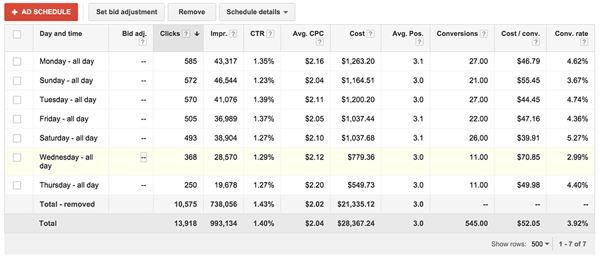
ad_schedule

By combining opportunity data and your ad schedule, you can determine which days or hours produce the most opportunities. From there, you can adjust your bids for each segment or stop running your campaign for those segments.

You should typically look at this data over a longer period of time -- at least one quarter. If you find that you're not generating any opportunities on weeknights or weekends, you could stop running most of your campaigns during those times and move your budget over to regular business hours.

PPC campaigns are an effective way to attract B2B leads. However, many companies struggle at generating opportunities and driving a positive ROI from their campaigns. The 10 strategies above will help you create targeted campaigns optimized for high quality lead conversions. They might help to boost your bottom line.
New Call-to-action http://bit.ly/2wDmgGJ

12 Gantt Chart Examples You'll Want to Copy

Gantt charts. Love ‘em, hate ‘em, or can’t live without ‘em, they’re a reality of a marketer’s life. But how do you make yours stand out from the rest?

I’ve gathered some of the best examples around, along with some free templates to get you started. Dive in below and find your favorite. But first ...

What is a Gantt Chart?

Gantt charts provide a way to track and manage project timelines, progress, and deliverables. Vertical lines or bars are used to visualize each task, and each Gantt chart includes resources, milestones, tasks, and dependencies.

  • Resources: Project managers must have insight into what resources are needed for tasks outlined in a Gantt chart, in order for each to be completed on time.
  • Milestones: Along your timeline, there will likely be milestones, both small and large, that must be hit in order to keep your project on track. A milestone for a blog launch might be, “Blog post draft due on 5/30.”
  • Tasks: There are specific things that need to be completed along the way of your project. In our blog post example, a task might be, “Edit blog post.”
  • Dependencies: Tasks on your Gantt chart will be related to each other, for example, the editor won’t be able to complete her task of editing the blog post until the writer has met their milestone and submitted their draft on 5/30. These are dependencies and should be noted in your chart.

The main goal of a Gantt chart is to track the timeline and completion of a project. It’s especially helpful for project managers who need to keep team momentum going on campaigns with many moving parts, like product launches or marketing events.

You can create Gantt charts in Excel, PowerPoint, Google Sheets, and more, and this tracking method can be used in a variety of industries, from marketing to construction, and even design.

So, what does that look like? Let’s dive in with some beautiful Gantt chart examples, below. Prepare to geek out.

Gantt Chart Examples

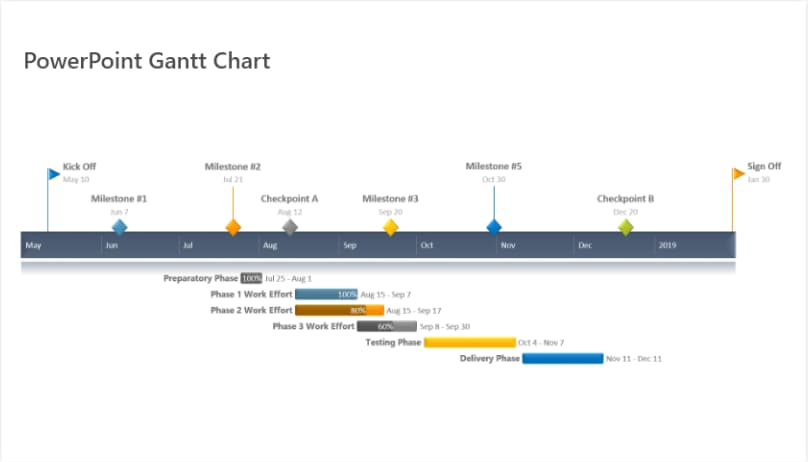
1. Gantt Chart in PowerPoint

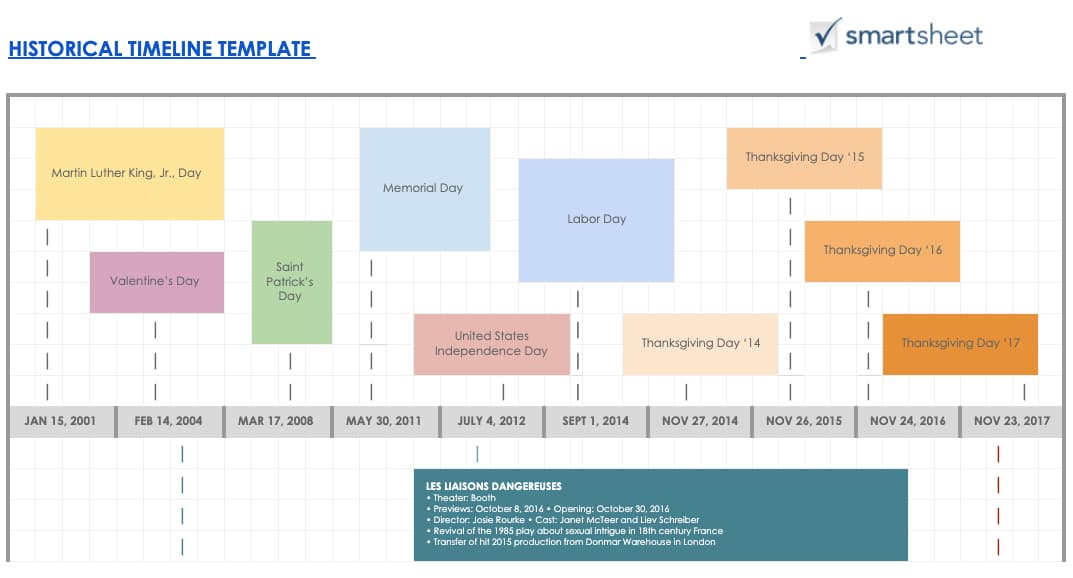
Want to include a Gantt chart in your next PowerPoint Presentation? Use this PowerPoint example as your guide. PowerPoint doesn’t have a built-in Gantt feature, but you can build and edit a chart inside of the platform using their “Stacked Bar” feature.

powerpoint-gantt-chart-exampleImage source: Office Timeline

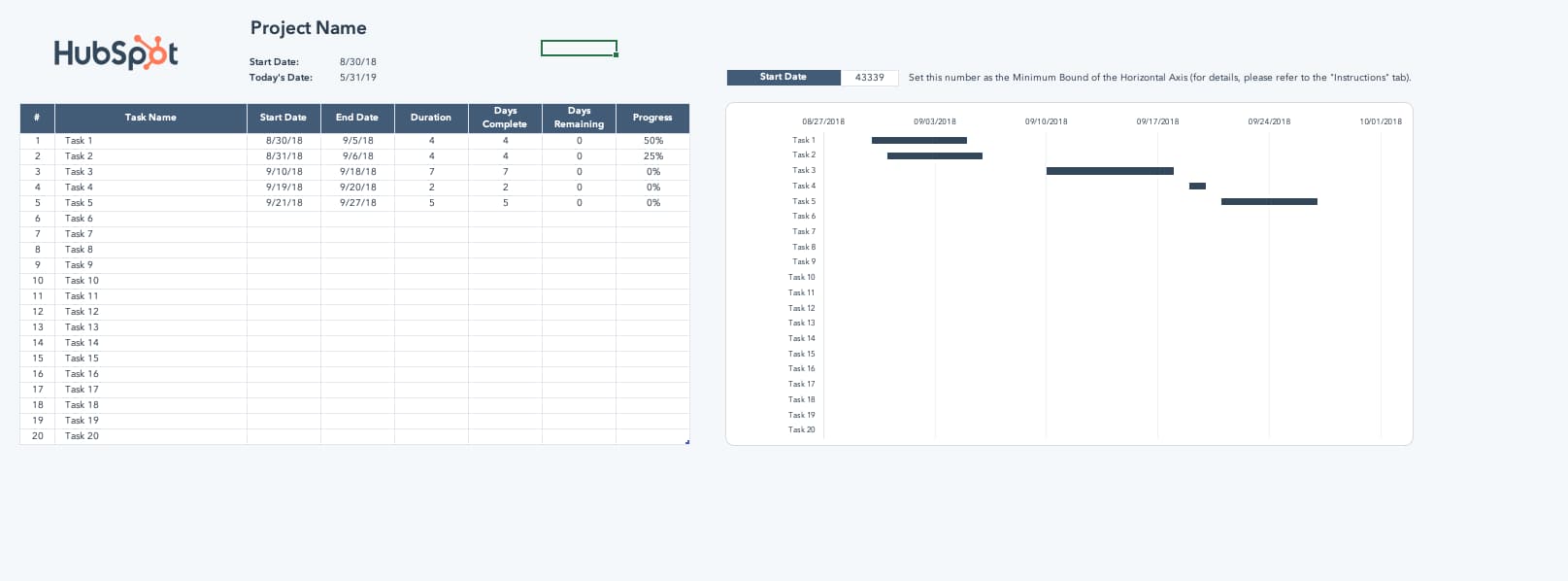
2. Gantt Chart in Excel

Creating Gantt charts in Excel is a common practice and one you’ll likely come across in your work. Excel doesn’t have a predefined Gantt chart, but the “Stacked Bar” feature is your friend, once more, allowing you to show project progression. Here’s an example of an Excel Gantt chart. Download it free, here. excel-gantt-chart-template

Image source: HubSpot

And here’s a helpful “how-to” video for the excel-challenged among us <raises hand>.


Image source: Smartsheet

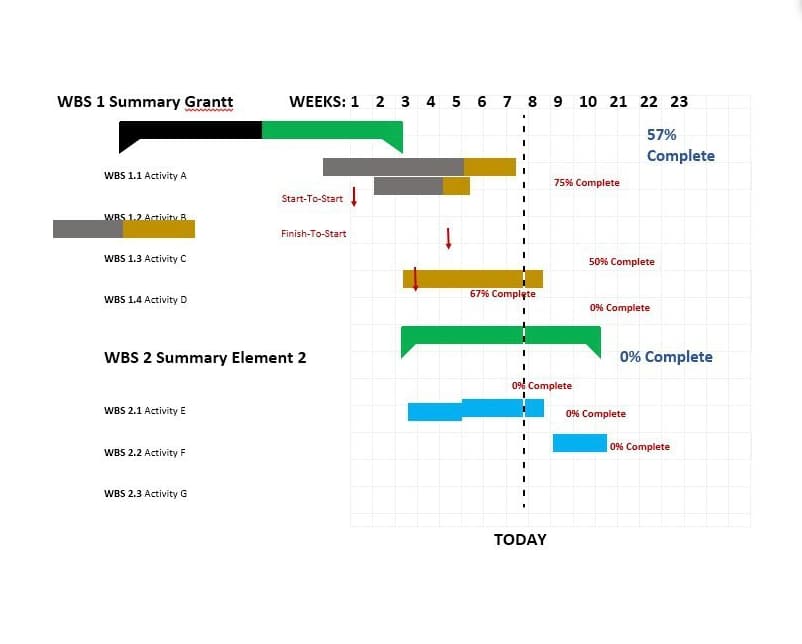
3. Gantt Chart in Word

What’s that? You’re not familiar with Microsoft’s “Stacked Bar” feature yet? Well, if you’re getting friendly with Gantt charts, you’ll be using this go-to feature quite a bit.

If you’re creating a Gantt chart in Microsoft Word, you’ll stack bars once more. But if you’ll be updating and tweaking your Gantt chart regularly, Excel or PowerPoint may give you better flexibility. ms-word-gantt-chart-example

Image source: Template Lab

4. Gantt Chart in Google Sheets

If Google Sheets is where you spend most of your time, this is the Gantt chart for you. G-Sheets makes it easy to build customizable Gantt charts you can edit as needed -- all using a few simple formulas.

google-sheet-gantt-chart-exampleImage source: Lifewire

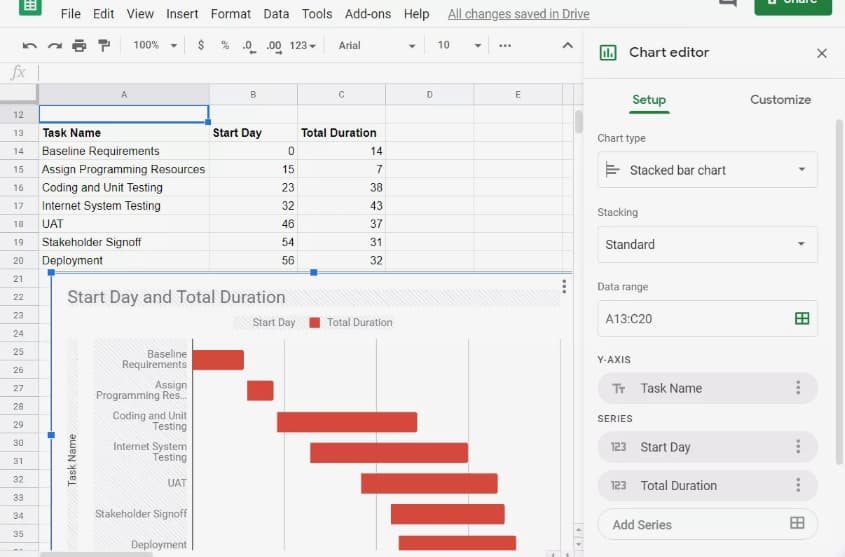
5. Gantt Chart in Google Docs

Want a Gantt Chart you can share and collaborate on with colleagues? Consider creating your chart in a Google Document. Save it to your Google Drive and share as normal. Google offers “Stacked chart” options in their “Chart Editor,” so getting started is a breeze.

google-doc-gantt-chart-exampleImage source: Smartsheet

6. Gantt Chart for Editorial Calendar

Take your editorial calendar up a notch with a Gantt chart. Include publication dates as your milestones, add subgroups for each phase of content creation, and add tasks to your chart.

editorial-calendar-gantt-chart-exampleImage source: TeamGantt

7. Gantt Chart for Project Management

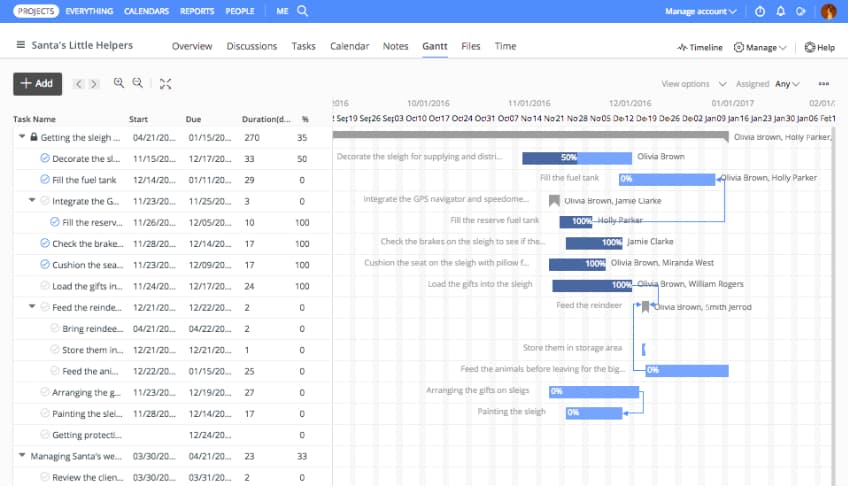
Project management is one of the most common verticals relying on Gantt charts. These charts help project managers identify the tasks involved in each project, create a timeline for each task, and assign dates, tools, and progress updates for each of the tasks within the project.
gantt-chart-for-project-management-exampleImage source: ProofHub

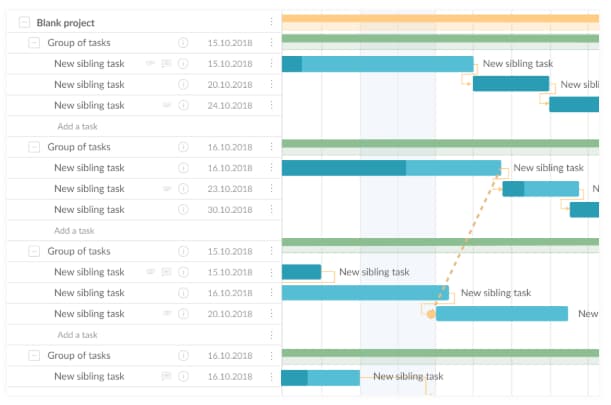
8. Gantt Chart for Marketing Campaign

There are many tools available that help marketers create Gantt charts especially for marketing campaigns. This example, from GanttPro offers ready-made campaign templates with predefined tasks, subtasks, and milestones. gantt-chart-for-marketing-campaignsImage source: GanttPro

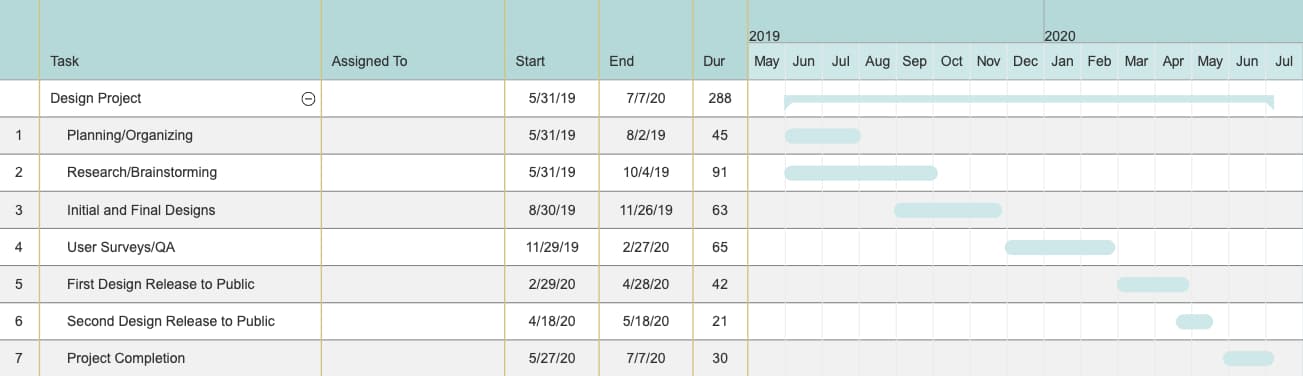
9. Gantt Chart for Design Projects

Designers, you can use Gantt charts, too. Plan design launches, track brainstorming, and share draft progress with a carefully organized chart, like the example below. gantt-chart-example-for-designers

Image source: SmartDraw

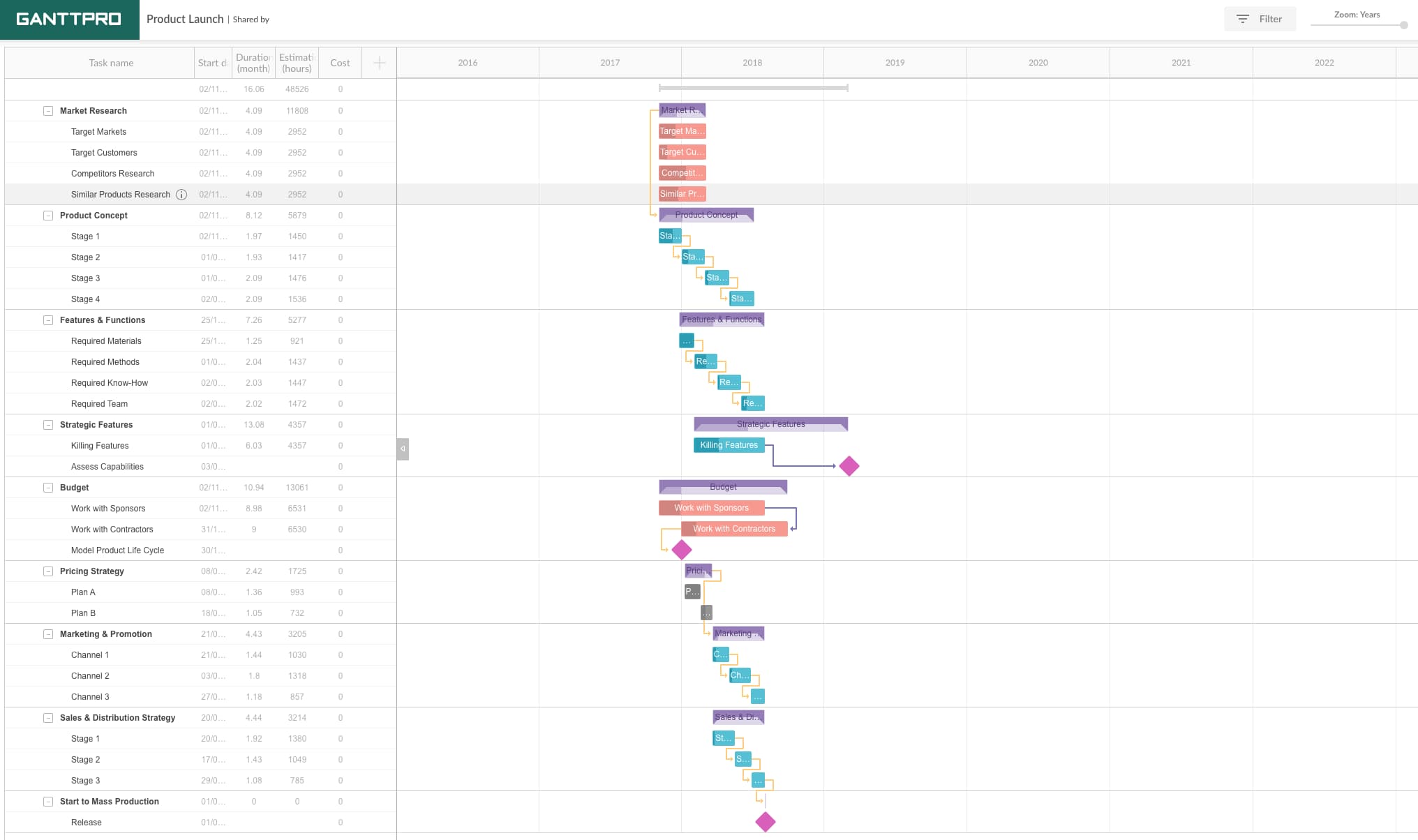
10. Gantt Chart for Product Launch

Product launches have many moving parts. Keep track of research, budgets, team roles, and even risk assessment in a customizable Gantt chart like this one. You can even set dependencies and assign tasks to certain people.

product-launch-gantt-chart-exampleImage source: GanttPro

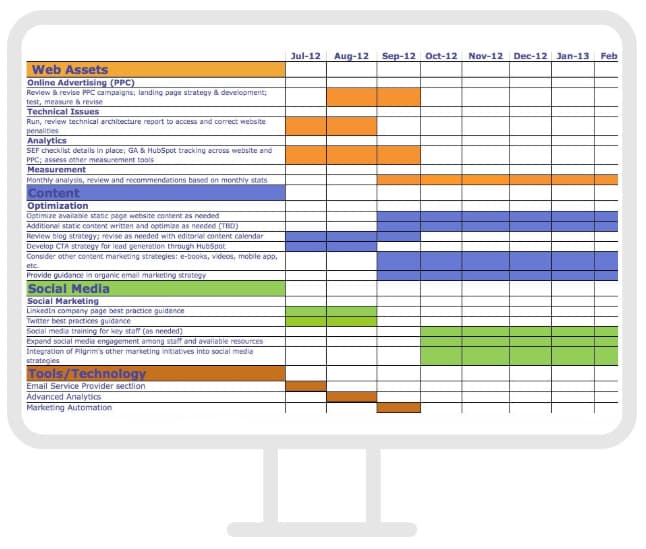
11. Gantt Chart for Social Media Campaign

When you’re mapping a social media marketing campaign using a Gantt chart, make sure to include the tools you’ll need, the content you’ll be sharing, and the assets used on each channel. We loved this example, from Fabrik. social-media-campaign-gantt-chart-example

Image source: Fabrik

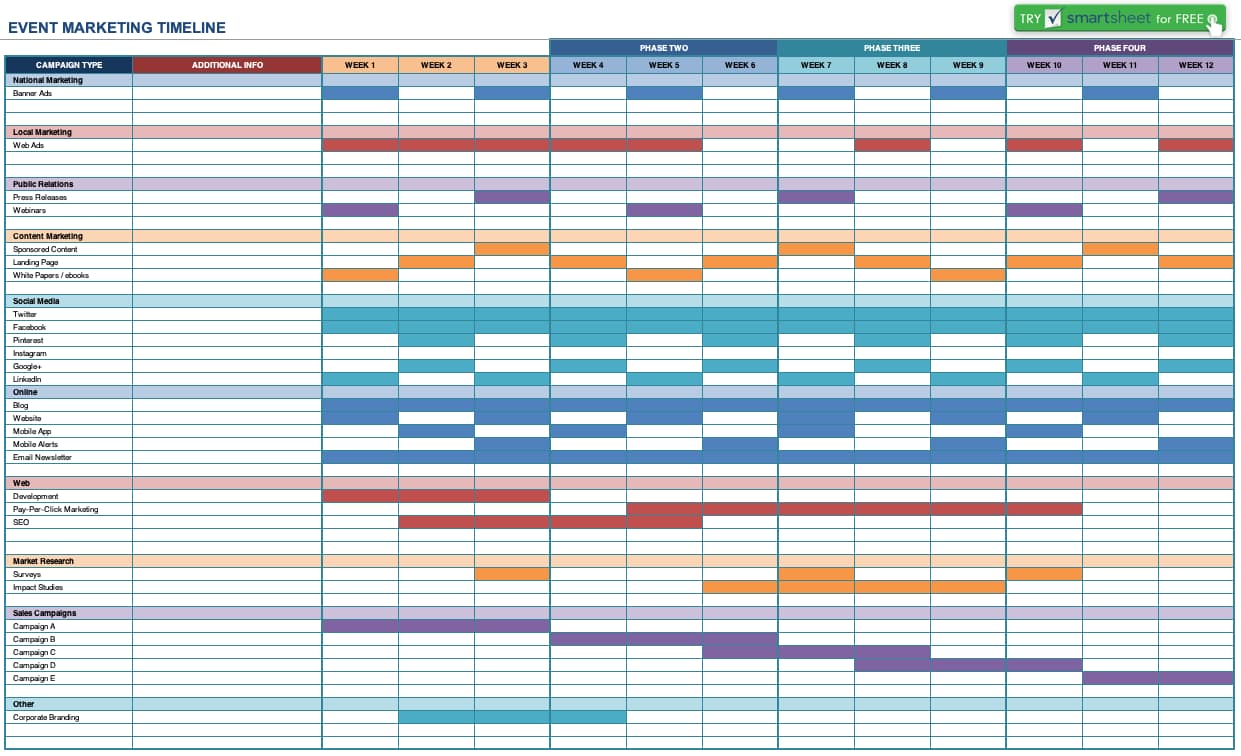
12. Gantt Chart for Event Marketing

From outreach prior to the event to “Thank you” emails once it’s over, planning an event requires high levels of organization. Use a Gantt chart like this one to keep track of your strategy, team progress, and key actions before, during, and after your event.
event-marketing-gantt-chart-example

Image source: Smartsheet

Are Gantt charts only the beginning for you? Check out our guide packed full of the best marketing tools for every business and budget -- customized for this year.

New Call-to-action

http://bit.ly/2XrBudv
8 Social Media Tools You Need to Use in 2019

You already know how important social media is to increase brand awareness, generate more leads, and ultimately score more conversions. The world is on social media -- 45 percent of it, at least -- so if you want your product, service, and mission to reach the maximum amount of people, your business needs to be on social media, too.

Social media, however, can be extremely time-consuming. Additionally, it spans so many diverse tasks, ranging from number-based activities like tracking analytics, to creative jobs such as designing graphics.

It can be difficult to find the skills and manpower needed to execute a good social media strategy -- which is why you need social media tools to help you out.

Here, we'll cover the top eight social media tools you should be using in 2019 to help you save time, while getting more conversions than ever.

Download Now: Free Social Media Calendar

What Makes A Good Social Media Tool?

Although the term "social media tool" is very general and can apply to a wide range of services, there are a few key features each social media tool should have.

1. Saves You Time

The goal of a social media tool is to save you time while getting similar -- or better -- results than you could without it. Look for social media tools that automate a process, but make sure the process still happens correctly, since some shortcuts might be too fast and therefore won't focus on quality.

2. Increases Brand Awareness

One of the biggest benefits of social media is its ability to increase your brand awareness, which is why each social media tool you select should perform its services with brand awareness in mind. Maybe your tool of choice is an editing platform such as Lightroom, which can help you create images to match the rest of your feed. Or, maybe it's an Instagram scheduler so you can preview your profile before you post images. Whatever the case may be, social media tools should focus largely on brand awareness.

3. Easy to Use

Social media tools are only a time-saver if they're easy and intuitive to learn how to use. Each tool you select should be super user-friendly so that your accounting team could edit photos if they needed too, and your creative, right-brained writers could still use the analytics function to track daily social metrics.

Many social media tools provide tutorials on their websites. Others, such as Kicksta, have top-notch customer service so you can get immediate expert advice if you need help getting off the ground.

4. Affordable

Social media tools should be affordable (and most of them are). Many high-quality social media tools are even free, such as the Unfold app, which is perfect for creating Instagram stories. With social media tools, there's no need for you to go back and forth with the accounting department trying to get your budget approved. Most social media tools are already budget-friendly so all you need to do is sign up.

5. Focuses on Organization

One of the ways social media tools save you time is by keeping you organized, so make sure the social media tools you decide to use are efficient and tidy.

For example, HubSpot's social inbox tool helps you prioritize your social media interactions, and graphic design website Canva saves your designs so you can go back and edit them later.

1. HubSpot's Social Inbox Tool

Price: Starts at $800/month, included in the Marketing Hub Professional tier

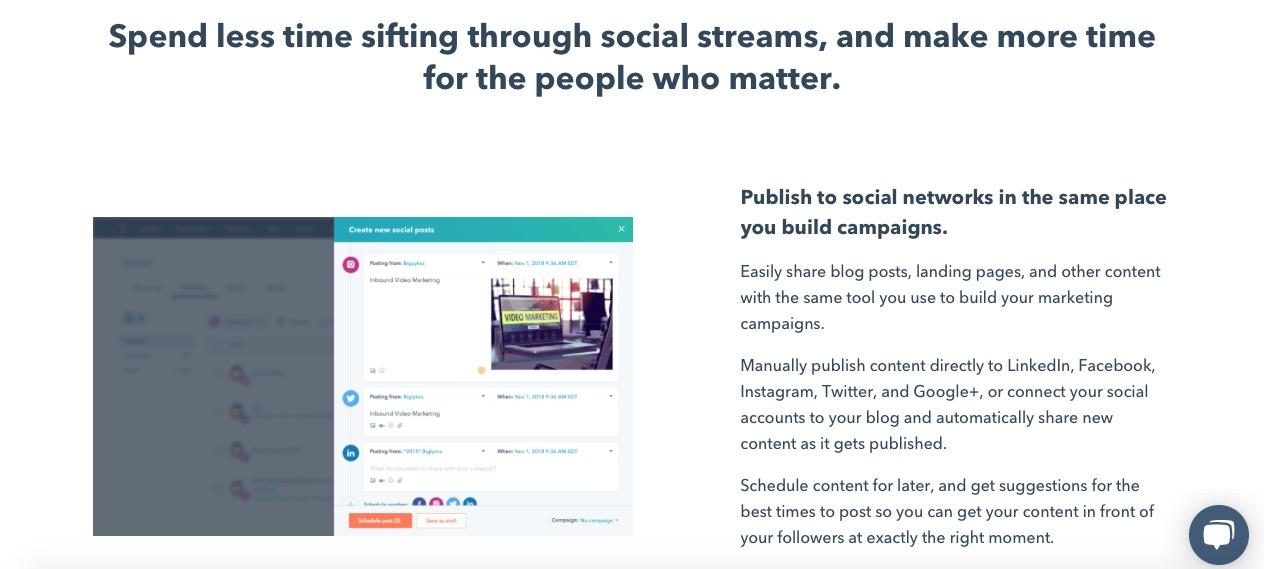
HubSpot's social inbox tool saves you valuable time while still optimizing your social efforts. Schedule your posts, integrate your social networks with your blog, and monitor messages and mentions so you can nurture new leads.

HubSpot also integrates all of your marketing with your CRM, so it's easy to figure out how many leads and customers you're receiving directly from social media. "HubSpot Marketing Hub… puts the potential of corporate marketing within everyone's reach," one customer says.


2. Kicksta

Price: Starts at $49/month for individual creatives

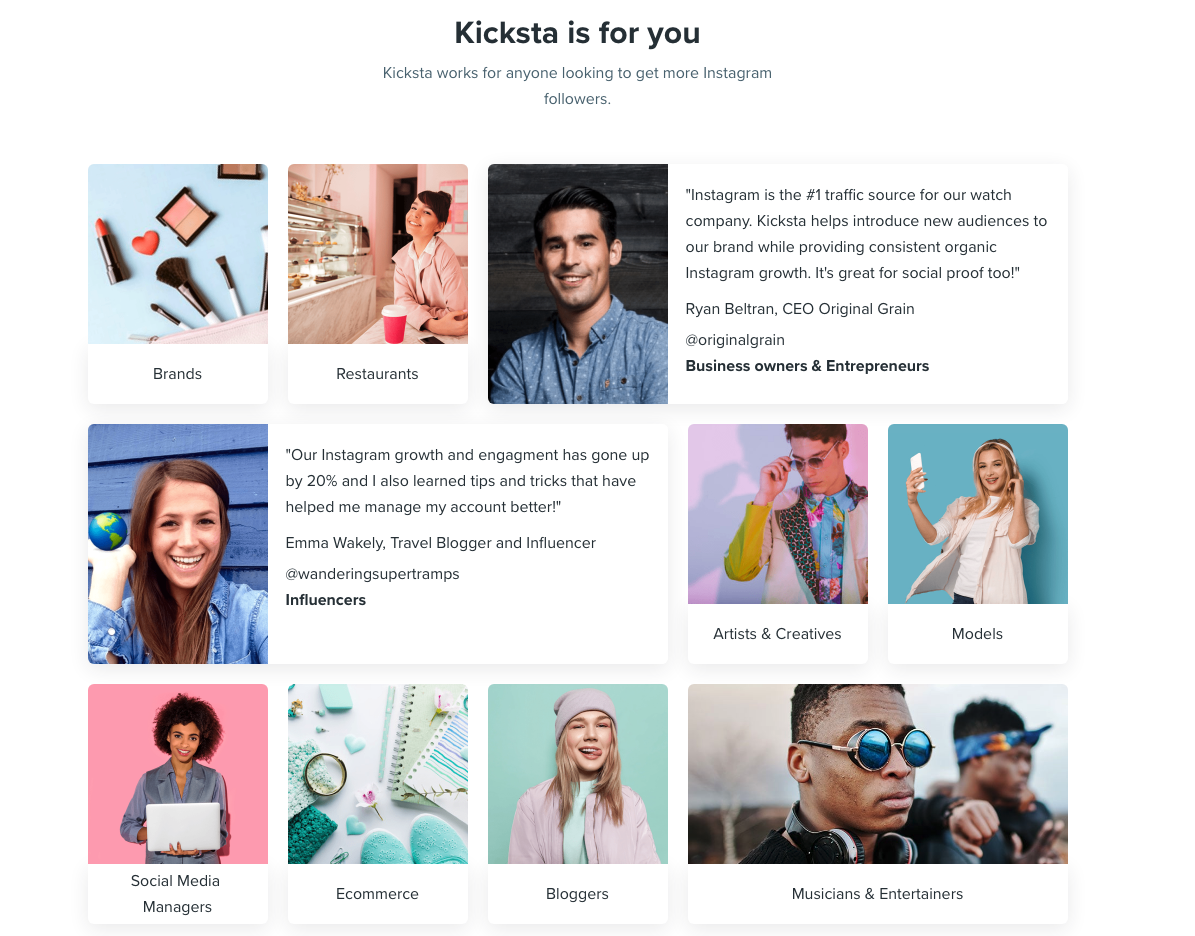
Kicksta is an Instagram growth service that helps you get more organic followers on your Instagram business account. Using your company account, the growth service "likes" around 30,000 photos a month on carefully-targeted accounts. Those users -- real people, not spam bots or fake accounts -- will begin to follow your account, increasing your brand awareness.

Kicksta is a good fit for any industry and provides a friendly, responsive, and helpful customer success team. "Kicksta helps introduce new audiences to our brand while providing consistent organic Instagram growth," says Ryan Beltran, CEO of watch company Original Grain. "It’s great for social proof too!"

Image courtesy of kicksta.co

3. Later

Price: Starts at $9/month for solopreneurs

Social media marketing platform Later lets you plan and schedule your Instagram, Twitter, Facebook, and Pinterest posts. The drag-and-drop calendar makes it easy for you to map out your upcoming posts and see at a glance how your feed will look.

You can also track your analytics, which will help you figure out the best time of day to post, and the best hashtags to use. Additionally, the Linkin.Bio feature for Instagram helps your posts become instantly shoppable.

"I love that you can either use it via the website or app on-the-go," one user remarks. "It is one of those apps that I could not live without … Later is [a] super easy tool to set up."

Image courtesy of later.com

4. Lightroom

Price: Starts at $9.99/month

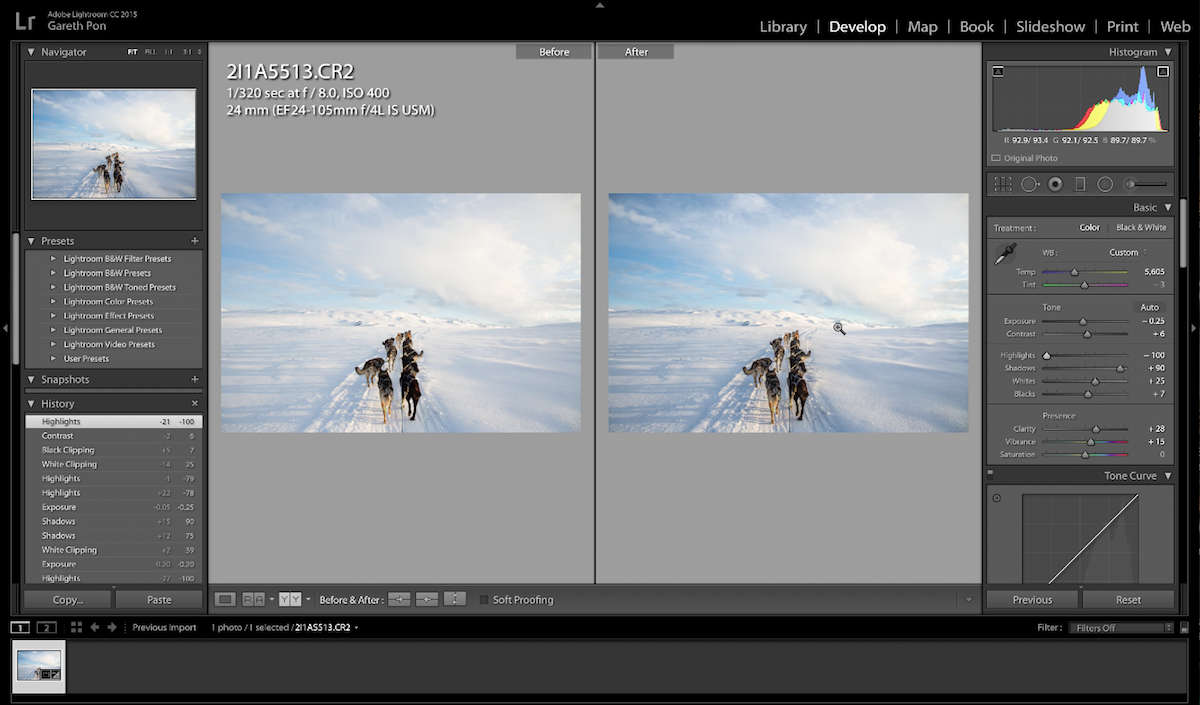
Adobe's Lightroom product is a tool that lets you organize and edit photos. Since social media is all about visuals, it's critical your business's social media accounts showcase vibrant, on-brand photos.

Sliders, filters, and many other features make Lightroom a user-friendly tool to create beautiful photos even if you don't have much editing experience. Lightroom is available for both mobile and desktop, and best of all, changes made on one device immediately apply to all devices.

Image courtesy of adobe.com

5. Canva

Price: Free or $12.95 per team member per month

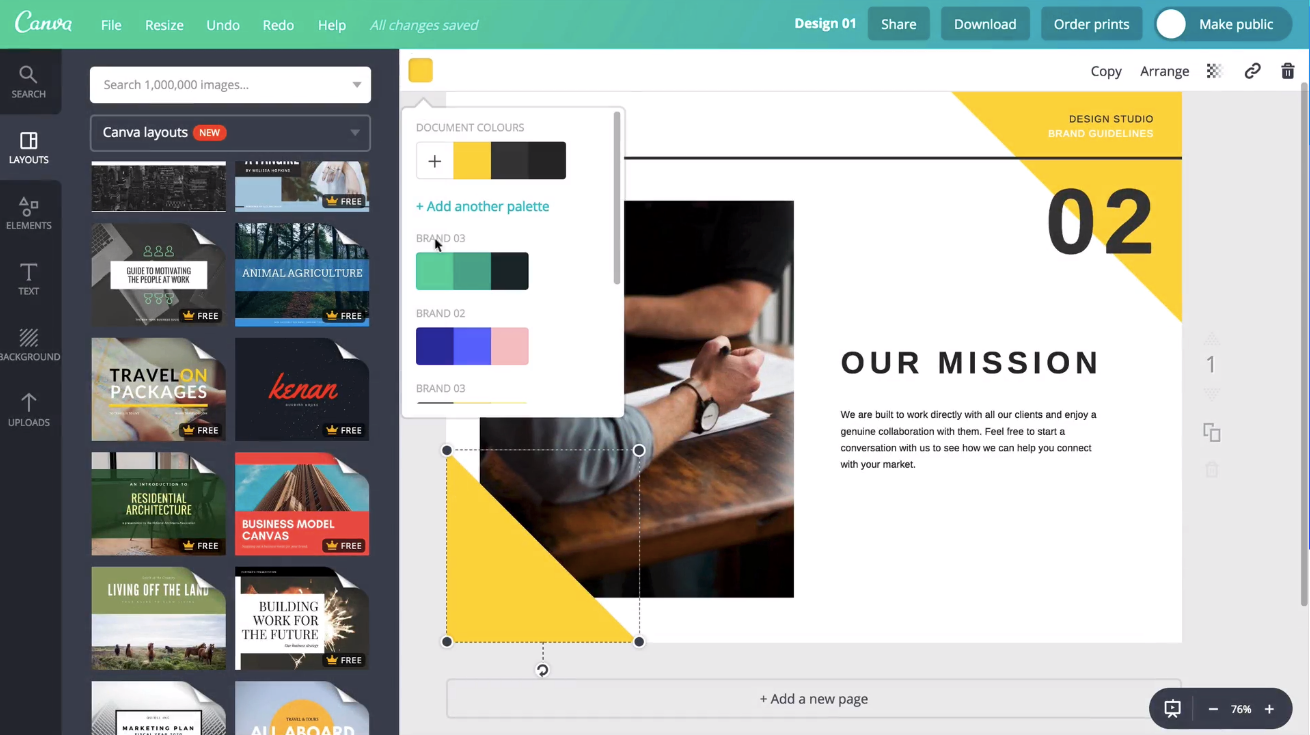
Canva is an easy-to-use graphic design website where you can create custom, on-brand graphics for your company's social media accounts. The website has dozens of templates -- everything from Facebook banners to Instagram stories to Twitter posts -- so if starting from scratch to create social graphics seems intimidating, use a template instead.

One user said, "Canva has been a lifesaver to me and my business. No more hours sitting in front of the computer coming up with graphics for social media post[s] or Pinterest post[s]."

Image courtesy of canva.com

6. Unfold

Price: Free

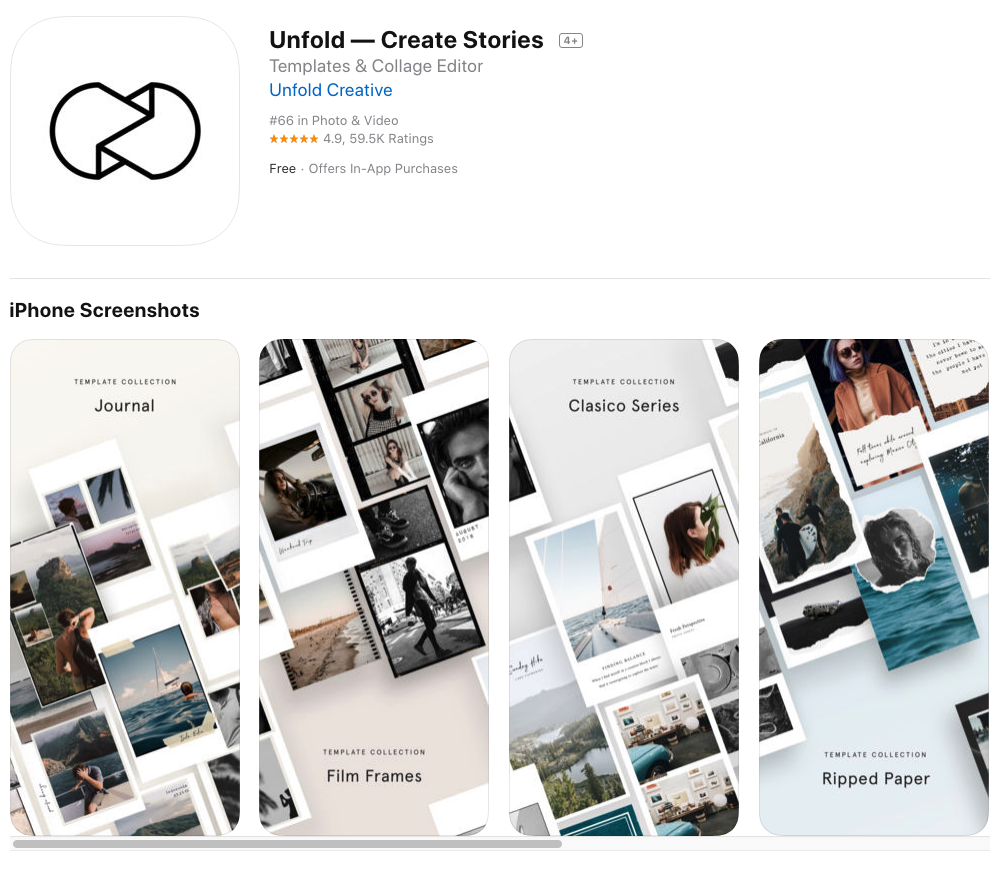
Described as "a toolkit for storytellers", Unfold is an iOS and Android app that helps you create beautiful templates for Instagram stories. Bringing your creative visions to life is the driving idea behind Unfold. It's an ideal app for lifestyle brands who want to create stylish collages to keep their social media accounts on-brand and receive the maximum amount of engagement from followers.

Image courtesy of Apple iTunes.

7. HypeAuditor

Price: Starts at $30/credit (one credit equals one Instagram report for one year)

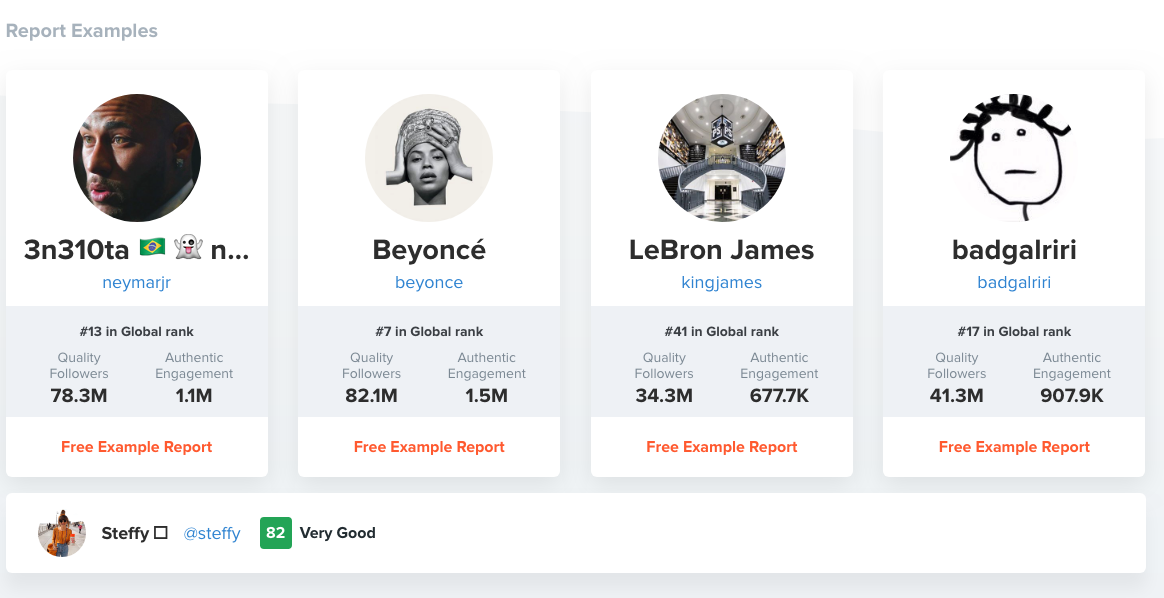
You'll never earn money from fake followers -- they just make your engagement look bad (think millions of followers, but only a few hundred likes per photo) and ruin your reputation. That's why HypeAuditor weeds out fake followers on your Instagram account to help you determine your organic reach.

Additionally, HypeAuditor analyzes your audience to figure out where they live, their age and gender, and which of your followers are ghosts.

Image courtesy of hypeauditor.com

8. Retouchup

Price: Starts at $0.25 per image

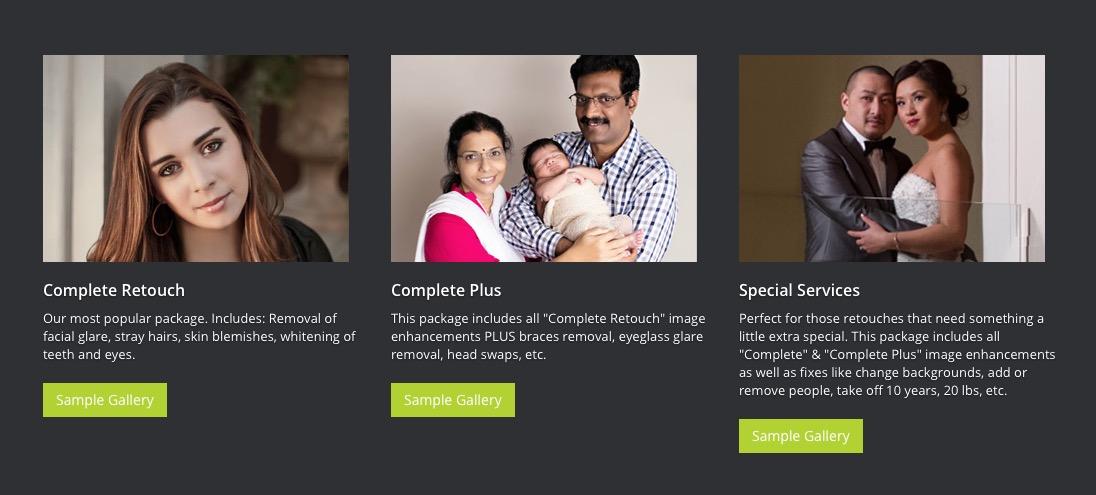
The website Retouchup provides an easy way to edit photos for social media, from basic color correction to more advanced Photoshop-like features such as adding or removing people from a photo. With Retouchup, you don't do the work yourself -- instead, just submit a photo and the website's experts will edit the photo for you within 24 hours.

"You're making me look like an awesome photographer!" one user gushed. Retouchup can save you time during the editing stage, and make your images appear higher-quality and more compelling.

Image courtesy of retouchup.com

There are numerous choices out there for high-quality social media tools. Ultimately, it's your job to decide which tool is the best fit for your needs, your budget, and your marketing goals.

Need a painless way to track your social interactions? Try HubSpot's social inbox tool today.

social media content calendar

http://bit.ly/2wDJlcj

Wednesday, June 5, 2019

The Ecommerce Marketer's Guide to PPC Advertising

If you're a PPC veteran, it's tempting to devote all your time to the bigger picture and finding creative new ways to drive cheap, conversion-friendly clicks.

This is especially true for ecommerce businesses, which are playing in an incredibly complex and competitive space, particularly when using PPC.

Even small businesses are getting on the pay-per-click bandwagon. According to a 2018 study, 45% of businesses under 50 employees invest in PPC. That number jumps to 74% when it comes to small businesses with 50 employees or more.

Because of the complexity and constant competition, it's quite common to overlook some of your low-hanging fruit.

Why is PPC so important to ecommerce businesses?

Unsurprisingly, online product searches -- especially on Google -- are booming. More and more ecommerce businesses are taking notice and buying into PPC. In Q4 of 2018, spend on Google Shopping ads rose by 43%.

Although Amazon is still the first stop for many customers' product searches, Google isn't far behind. According to Wordstream, the average customer buys a product within 20 days of searching it on Google and with 26 days of searching it on Amazon. They also report that 35% of users purchase a product within 5 days of the Google search.

Below is a list of five tips that ecommerce marketers can use to gain an edge on competition without overspending.

Ecommerce PPC

1. Balance out broad and ultra-specific keywords.

Imagine you sell tires and rims for a living. You just opened a location on the same street as a number of different auto dealerships. (I know, you're an ecommerce marketer, but stay with me here).

You see customers walking in every day that are still in research mode and have no idea what brand they want or which size tire they even need.

You find that many of those walking into your store tend to talk with your employees for advice and end up leaving with you in mind, but clearly look elsewhere for better prices now that they're more informed.

Now let's say you came across a number of customers who knew exactly which tires they needed down to the specific model number.

These customers who are much further down the sales cycle are much more likely to purchase from you if they walk in your store first.

There is a very similar scenario being played out in the ecommerce space for those bidding on competitive terms. In this industry, for example, those might be, "cheap tires" or "tire deals online."

Users may click on 4 to 5 different ads, use your site to do some research, and then purchase from whoever has the lowest price.

While you may never escape the vicious cycle of paying for expensive clicks on the more general and competitive keywords, you can begin to balance it out by targeting the specific end of the spectrum. To do this, you might try keywords like model numbers, part names, or UPC codes.

You'll rarely see the same volume of users typing in queries with this level of granularity. But there are plenty of potential customers out there who know exactly what they want and just need to figure out the easiest way to get it.

Not only are the clicks significantly cheaper due to the low competition on model number keywords, but the conversion rates are much higher. This will help bring your overall CPA down.

Additionally, when someone clicks on your model number ad, you can send them directly to a product page which gives them everything they were looking for in one place.

2. Identify and expand on long-tail keywords.

There might also be customers who know a lot about what they're looking for, but aren't quite typing in a UPC code just yet. They likely be typing in long-tail keywords like, "red capri pants in petite," or "Red Sox bleacher seats."

In the Google Ads interface, take a peek in your Search Query Report. (If you're having trouble finding it, look within a campaign under "Keyword Details.") This report will show the exact searched keywords and phrases that triggered your ads.

Sort by the keywords that have resulted in conversions and try to identify long-tail keywords which may contain a few specific product details.

For example, imagine you're bidding on the term "new rims" but learn that someone purchased a product on your site after searching the brand, size, and color of rims they wanted. Here, you could add that long-tail keyword to the appropriate ad group and bid on it aggressively since you know it converts well.

Think of your broad keywords as casting a wide net. They will catch a great deal of fish. But, in order to find gems, you'll need to analyze data to see which keywords actually converted, and identify long-tail keywords that you're missing.

3. Bid on keywords similar to your competitors'.

Now that you've covered those users searching for specific products, why leave out those searching to buy specifically from your competition? Plenty of searches come from those who've heard about a specific brand to buy from -- but they're not convinced yet. These searchers might be open to other options with better offers.

In the physical shopping world, someone might walk into a competitor's store next door to yours if they have signs boasting better prices and bigger selections. This is why it can be helpful to create campaigns targeted to competitor keywords with simple ads making customers aware that you're also an alternative, affordable option.

4. Don't use a competitor's branded keywords.

While targeted a competitor's ad keywords, you should avoid targeting branded keywords. A few things might happen if you do this:

  • You'll be paying for less qualified traffic.
  • When your competitor notices, they may drive up your costs dramatically by bidding just a little bit more themselves (because they have a higher quality score).
  • Your competitors could complain to Google and you'll get a slap on the wrist (or worse).
  • You'll look like a poor sport, or even a bit of a jerk.

None of those are too appealing. Instead of directly targeting branded keywords, take cues from your competitors' PPC ads to help inform your own strategy.

For example, if a competitor is bidding on keywords that are important for your business, you might consider getting a paid presence for those terms, too.

Or, on the flip side, a couple competitors are winning organically for keywords that are important to you, but it's going to take you months to edge them out. In the interim, using PPC to win some traffic for those terms is a great stopgap.

5. Include transparent pricing in your ads.

With the limited amount of characters we can use in text ads and the rising cost per click, it's become increasingly important to qualify your traffic before your ad is actually clicked on.

Even when you target certain keywords, there's only so much you can infer from a person who types in general terms. You can't ask them how serious of a buyer they are, whether they're still in research mode, or what their level of intent is.

However, you can screen out less qualified people by simply putting pricing information in your ads. If you let someone who is only willing to spend $40 on a product know beforehand that all your products are $75 and above, chances are they won't click on your ad.

This saves your ad spend for those qualified leads who saw your prices, know what to expect, might not be scared away by price, and are much more likely to convert into a sale.

When it comes to optimizing PPC, this advice is just the tip of the iceberg. If you need further help planning out your next campaign, use this guided template to drill even further down on keywords, landing pages, and AdGroups.

free Google AdWords template

http://bit.ly/2Wj8O5k

Bing PPC Ads: How They Work (and Compare to Google Ads)

If Googling has ever let you down, you may have come across another search engine called Bing. This search engine is powered by Microsoft and strives to outdo Google at every turn. Bing wants to revolutionize digital search and rival the industry's long-standing powerhouse.

It's an ambitious goal, but one place where Bing differentiates itself is through its Pay Per Click ads or PPC. According to our guide. Pay Per Click ads are, "a form of search engine marketing (SEM) where the advertiser pays for clicks on an ad." The advertiser has to pay the publisher whenever a visitor interacts with the ad. In exchange, the ad is added to the search engine's database, which displays the ad whenever the content matches a visitor's searched keyword.

While Google Ads offers a popular PPC feature, Bing's has unique advantages that distinguish itself from the search engine giant. And, if you're the owner of a small- to medium-sized business, you may be more interested in Bing's PPC benefits than Google's.

In this post, let's break down how Bing PPC ads work, as well as how they compare to Google Ads.

Free Guide, Template & Planner: How to Use Google Ads for Business

Bing PPC

Bing PPC ads operate on Microsoft's three popular search engines: Bing, Yahoo, and AOL. When you use Bing campaigns, your content is shared across all of these platforms at once. With over five billion monthly searches being made on the Microsoft network, this makes Bing PPC a notable marketing tool for paid ad campaigns.

In terms of functionality, Bing PPC ads work similarly to Google ads. You bid on keywords based on their traffic volume, then your ad is displayed when that keyword is searched, and finally, you pay Bing whenever a visitor clicks on your ad. Like Google, your ad's copy can have up to 80 characters and Bing even has support tools that can help your team build a cost-effective keyword list, so you never waste money on ads that aren't being displayed.

With Bing, you can also set up targeting filters that determine where and when an ad will be published. For example, if you want your ad to only appear on mobile devices, you can select the mobile traffic option. Or, if you want the ad to appear solely on Yahoo, you could filter it from Bing and AOL. This gives your team more flexibility and optimizes the effectiveness of your PPC campaign.

Bing PPC ads present a timely opportunity for marketing teams. It's less competitive than Google AdWords, and its users shop online 36% more than any other search engine. While Google AdWords is still a very powerful tool, there are some advantages of Bing that makes it attractive for small- to medium-sized businesses. So, now that we're familiar with how Bing PPC ads work, let's discuss some of the key differences between Bing PPC and Google AdWords.

Bing PPC vs. Google Ads

Key Product Features

While both Bing PPC and Google AdWords allow you to filter your ad's targeting, Bing's software has a unique innovation that sets it apart from Google. With Bing, you can set age filters for your search ads, so only visitors of a certain age group will see them. Or, you can set up a location filter so visitors in a certain part of the world see your content. This way, you'll ensure qualified leads are being exposed to your marketing campaigns.

Another key feature that Bing has an advantage in is its social extensions. Social extensions are a line of copy on your ad that tells the visitor how many social media followers your business has. On Bing, this feature shows your social following for Facebook, Twitter, and Instagram. Google AdWords, however, can only show you the number of Google+ followers.

Platform Reach

According to Microsoft, Bing represents more than 34% of the world's desktop search engine marketplace. That means about one in every three people will use Bing over another search engine. And, more importantly, Bing's PPC ads can reach 60 million users that Google AdWords cannot.

In terms of the largest audience, Google is the outright favorite. But, that doesn't mean Bing isn't worth your investment. Bing has over 137 million users who search roughly six billion times each month. These people tend to be older than Google's users, and have an income of more than $100K. So, even though Google has a larger audience, Bing works with users who have substantial buying power.

Visitor Engagement

When tested by Blue Corona, Bing PPC experienced a 34% higher click-through rate than Google ads. Additionally, new research found that financial and shopping services have experienced the most success with Bing PPC. This is mostly attributed to MSN's and Yahoo's popular financial reporting, which yields more keywords related to online shopping and business reports.

Bing users tend to be more engaged with sites after ad clicks as well. In one industry, Bing ads had a 56% higher conversion rate than Google AdWords. That's because Bing users typically have more interest in e-commerce and are willing to spend money online.

Ad Display and Positioning

Since there are fewer users on Bing, its ads tend to display higher on search results than Google AdWords. In fact, Bing ads appear 35% higher in search results than Google ads. Bing copies Google's keyword auction technique, which favors its users because they don't have to outbid Google's massive user base. With Bing's less-competitive market, you won't have to bid as much on keywords to maintain your spot on the search results page.

Cost Per Click

With fewer competitors bidding on keywords, you can expect to spend less on your Bing ads. In fact, one business spent 35% less on Bing ads than it did on Google AdWords.

In terms of cost-per-click (CPC), ReportGarden found that the average CPC for Bing was $7.99 whereas Google's was $20.08. Since there's less overall traffic occurring on Bing, CPC is typically less expensive. This presents an opportunity to obtain a strong ROI if you can capitalize on the right keyword at the right time.

Business Value

If you're choosing between Google AdWords and Bing PPC, both tools can be valuable assets to your marketing team. With Google, you have access to a massive audience with users from many demographics, and you can trust that your content will be displayed on the world's preferred search engine. However, this space is highly competitive, and you'll need to monitor your campaign diligently if you want to see a positive return on your investment. Your marketing team will need plenty of means and experience to make Google AdWords a reliable source of lead generation.

Bing PPC presents a lower-risk option for paid ad campaigns. You still have access to a large audience, but keyword bidding isn't as competitive as Google. The tradeoff here is that Bing traffic is significantly lower than Google's. So, while your ads may be positioned higher and cost less, they may not be seen by as many people. That limitation may be discouraging to larger companies that have bigger marketing budgets.

For more information about PPC ads, read these PPC campaign tips.

New Call-to-action

http://bit.ly/2HWhVVJ

How to Improve Your Writing Skills and Escape Content Mediocrity (Infographic)

Delivering high-quality content is an undeniably critical component of any successful marketing strategy. Content creation can help your business rank highly in search engines for keywords related to your core products or services, increase your brand awareness, and allow you to engage more genuinely with an audience.

In fact, marketers who prioritize blogging efforts are 13x more likely to see positive ROI.

But 'delivering high-quality content' is much easier said than done, particularly when you're on a tight deadline to turnaround blog posts or other written content for your business. And when you're stressed, you might notice the quality of your writing starts to diminish.

You'll never see the kinds of results you want to see -- like an increase in brand awareness or a page one slot on Google -- if your writing isn't top-notch.

But how can you become a better writer -- and, better yet, how can you become one quickly?

Fortunately, Henneke Duistermaat, founder of Enchanting Marketing, created this hand-drawn infographic to display 29 tips she believes will help you cultivate more deliberate, powerful content -- and, best of all, avoid mediocrity. Take a look to learn how you can improve your writing skills today.

Download Now: 6 Free Blog Post Templates

29 ways to improve your writing skills infographic


29 Ways to Improve Your Writing Skills and Escape Content Mediocrity, courtesy of Henneke at Enchanting Marketing.
New Call-to-action

http://bit.ly/2Iisz85

How to Get Started With Facebook Business Manager

Do you have more than one person handling your Facebook marketing? Wondering how to share access securely to your Facebook pages and ad accounts? In this article, you’ll discover how to give people access to your Facebook business assets in Facebook Business Manager. Create a Facebook Business Manager Facebook Business Manager is a powerful tool […]

The post How to Get Started With Facebook Business Manager appeared first on Social Media Marketing | Social Media Examiner.

June 05, 2019 at 12:00PM http://bit.ly/2Z6Cnsy
read more...
from Social Media Marketing | Social Media Examiner http://bit.ly/2ETkTrY
via IFTTT