Thursday, March 5, 2020

The 8-Step Process HubSpot Uses to Optimize Google Advertising Costs

With over 3.5 billion search queries on Google everyday, paid Google search — paying Google to advertise your content on SERPs for relevant keywords — is one of the most popular and effective types of online advertising.

However, there’s enormous demand for the top ad rankings for a lot of keywords, and your competitors are duking it out to win the top keywords in your industry. So are you supposed to compete?

Over the past four years, HubSpot has spent millions of dollars and ran over 1,200 controlled experiments on acquiring free CRM users through Google advertisements, learning a ton of new insights and processes along the way. Additionally, HubSpot has launched a free ads tool to help get Google Ads strategies right.

We want to share our learnings with fellow marketers to help everyone save their time, budget, and frustrations.

Read on to learn the eight-step process we use to optimize Google Advertising costs. And if you’re new to Google ads, check out the basics of Google Adwords in the section below. If you already know the fundamentals, feel free to skip it.

Google Ads (Formerly Google AdWords), Explained

This section is for those who need a basic crash course in the subject, as well as those who want to refresh their knowledge on Google Ads. Refer back to this section as a quick reference point.

First, you might be wondering how much all of this is going to cost you. Let's talk about that now.

What do these acronyms mean? Let's break it down:

  • CPC — Cost per click (CPC), is the price you pay for each click on a PPC marketing campaign. For instance, if someone clicks on your ad from the Google results page, you would pay a set price for that click. If you pay $100 for your ad and it's clicked on 100 times, then your CPC is $1.
  • PPC — Pay-per-click (PPC), is a strategy where marketers pay for their ads to appear in search results for certain keywords or phrases. (Learn more here).

In short, PPC and CPC differ because PPC is a marketing strategy, while CPC is a metric you can use to measure the effectiveness of your overall PPC strategy. As a metaphor, PPC is to blogging what CPC is to views.

On average, the CPC average for Google Display Networks is $1 or less. This means, for less than a dollar, your ad can be displayed on one of the 2 million websites Google has in its network. (Don't worry, Google helps find the right audience).

The CPC for Google Search Network is up to $2 per month. The price is higher because Google Search Network is in reference to the ads displayed at the top of SERPs, and there's more competition for those spots.

What is your competition spending on ads? Well, Google ad spend in the realm of SMBs is between $9,000 to $10,000 per month. As stated above, you can set your budget for campaigns on Google, but keep in mind that this is the median.

Now that you know the cost, let's get into some key terms and phrases to know before optimizing ad spend. 

Keywords

From a fifty-thousand foot view, you win ad impressions on Google by bidding on keywords. In other words, you’re asking Google to show your ad to a user when they type a specific search query into their search engine. These search queries are keywords.

For example, if you’re advertising a free CRM, you might want your ad to show up on Google when users type “free crm” into the search engine. Every other brand who wants to win those impressions will set their bids, and based on that and various other factors, Google may choose to display your ad to its users.

Ad Groups

An ad group organizes keywords into different groups. For example, if a advertiser had a “Competitors” campaign, it'd most likely be in a “Marketing Competitors” ad group and a “Sales Competitors” ad group. Within each of these ad groups, the advertiser then might bid on keywords that consists of competitors’ brand names plus each product we both sell.

Quality Score

Aggressively bidding on keywords is not enough to win impressions. You could bid $10 per click while your competitor bids $5 per click, and you could still lose that auction if they have a high enough quality score.

Quality score is a metric that measures how positive and relevant of an experience you are creating for the searcher. A lot of signals are taken into account, two of which are landing page experience and click-through rate.

Google’s top priority is providing their users with a great user experience, so they’d rather give an impression away for free than make $100 per click if the loss in revenue means they can provide a better user experience to their users.

So, organizations can’t acquire the top ranking for any keyword they want just because they have the biggest ad budgets. Their content also has to be relevant.

Match Types

Google Ads offers four match types: broad match, modified broad match, phrase match, and exact match. Recall that match types define categories a search query can fall in.

Here’s a rundown of each:

Broad Match: With broad match, the user just needs to type in one of the words within your keyword or a variant of it, and your ad could show up on their results page. For example, if you bid on “free crm software”, your ad could only show up for “crm software” and “adobe software.”

Be careful with broad match, though. Bidding on these type of keywords is the easiest way to burn through a ton of cash without producing substantial results.

Modified Broad Match (MBM): MBM allows you to lock in specific keywords within a phrase. For example, bidding on “free +crm +software” will display your ad on a Google search for “no cost crm software” and “easy crm software”, but not on “adobe software”.

Phrase Match: With phrase match, your ad will appear when Google users search for the phrase that you're bidding on, as well as instances where your phrase is before, after, or in between other keywords in the search query. For example, if you bid on “free crm software”, your ad will show up on Google for “free crm software for small business”, but not for “free software crm.”

Exact Match: Exact match is exactly what it sounds like. If you bid on “free crm software”, your ad will only show up if users search for “free crm software” on Google, in addition to other close variants.

Now that we know the basics of Google Adwords, let’s get back on track.

The 8-Step Process HubSpot Uses to Optimize Google Advertising Costs

1. Pick your keywords.

When you first launch your Adwords campaign, start small. Come up with a list of 5-10 keywords and start bidding using modified broad match. For example, if you’re working on a campaign for a free CRM, the keywords “Free CRM”, “CRM Software”, “CRM Reviews”, “CRM Comparison”, and “Best CRM” would be good to start with. Modified broad match will be more expensive than exact match, but it gives Google greater flexibility to display your ads on more search queries than exact match will.

In addition to building a “unbranded” keyword list, like the one above, you’ll also want to build a “branded” keyword list (i.e. "HubSpot CRM"). You should do this for two reasons:

  • More clicks: You’re probably thinking, “HubSpot already has the #1 spot on Google for the keyword ‘HubSpot CRM.’ Why would they pay for it?” What you’re thinking is true, but studies show if you also win the top ad spot on the SERP where you’ve already won the top organic ranking, you'll receive significantly more clicks. And given the amount of ads Google displays above the fold these days, I have no doubt in my mind this is accurate.
  • Competitor blocking: If we don’t bid on and win “HubSpot CRM”, one of our competitors will. Even if we bid aggressively, our competitors can still sneak a win, like the example below.

2. Set up your campaigns.

There isn’t a cookie cutter approach to campaign structure, but I’m a strong proponent of a 1:1:1 campaign to ad group to keywords setup. In other words, I like to put one keyword in each ad group and one ad group in each campaign. Setting up your campaign like this can clutter your account from an organization standpoint, but here are two reasons why it’s worth it:

  • When you use Adwords, you usually set daily budgets at the campaign level, so this type of campaign set up allows for more flexible spending. This is important because your keywords’ ROI can get maxed out. Adwords is an auction, so if you want to win more impressions, you have to bid more. Eventually, the CPC required to win more impressions won’t be worth it anymore, so you’ll want to allocate your budget elsewhere. You can do this precisely if you categorize each keyword into its own campaign.
  • Since Google sets your quality score at the keyword level, you’ll want to set up an ad group for each individual keyword, which are sometimes referred to as swim lanes. By setting up swim lanes for each keyword instead of putting them all in the same ad group, you’ll avoid the unfortunate situation of a few underperforming keywords dragging down the quality score of the entire ad group. If each keyword has its own ad group or swim lane, you can just pause the underperforming keywords’ campaign and no harm will be done anywhere else.

3. Craft your ad copy.

One of the most effective levers you can pull to boost your quality score is Click-through-Rate (CTR). And one of the most effective levers you can pull to boost your CTR is crafting compelling ad copy.

One of the most important principles of Google Ads copy is that you need to signal to Google and their users that your ad is relevant to their search. For example, if you’re bidding on the keyword “CRM Software”, design a completely different ad and landing page than if you’re bidding on the keyword “CRM Reviews”.

4. Set up ad extensions.

There are a lot of useful Google ad extensions, but if there’s one you should always launch with, it’s sitelinks. Sitelinks are the 4-6 links under most Google ads. They take up a significant amount of real estate, boost your CTR, and, best of all, you don’t have to pay any extra money when people click on them.

5. Setup “negative” keywords.

Negative keywords inform Google that you don’t want to bid on a keyword if the user enters a specific word alongside your keyword. There are a lot of different use cases for setting up negative keywords, but here are three big ones to look out for:

  • Irrelevance: I helped market a pre-workout at my last company called “volcaNO”. Needless to say, I didn’t want our ads to show up on Google for the keyword “volcano lava”, so I tagged “lava” as a negative keyword.
  • Competing with yourself: Remember, Adwords is an auction. So if you have one campaign bidding on “CRM Software” on MBM and another bidding on “Free CRM Software” on exact match, you’ll be competing with yourself if a user searches for “free crm software”. Tag “free” as a negative keyword in the “CRM Software” campaign to avoid cannibalizing your own clicks.
  • Low quality: To understand who your business’ ideal buyer is, talk to sales about the type of people who aren’t good fits for your products or services and try to filter them out.

6. Find your top performing keywords.

After you run your campaigns for a while, it’s time to optimize them. The most important Adwords tab in regards to optimizing your campaigns is the “search term report”. The search term report lists out the exact search queries that you’ve paid for for a given keyword. Remember, if you bid MBM on “free crm”, you’re going to show up on Google for the keywords “free crm for SaaS companies”, “best free crm”, “free crm to replace excel”, and potentially thousands of others. The search term report will help you filter out your top performing keywords.

If you notice a specific search query performing particularly well, tag it as negative keyword so you don’t bid it against your other keywords, and then break that keyword out into its own campaign. This is the time to double down. You’ll give that keyword its own budget, it’s own ads, it’s own display URL, and if you have the bandwidth, even it’s own landing page.

7. Look for negatives on demo data.

Most people know about negative keywords, but they often overlook negatives on demo data. For example, maybe you notice men under 25 or woman over 60 aren’t converting (all of this data is available in Adwords). You can exclude these segments by adding negatives or bid modifiers to them, which we’ll explain below.

8. Setup bid modifiers.

A bid modifier lets you adjust your bids for specific criteria without having to change the targeting of your campaign or ad group. For example, if you see mobile converting 50% worse than desktop, you can add a -50% bid modifier on mobile clicks. That’ll lower your ad’s bid on mobile impressions, lead to less placements of your ad on mobile, and optimize your budget. Other cool bid modifiers include:

  • Age & gender
  • Locations
  • Hours of the day
  • Days of the week
  • If someone has visited a page on your site in the last X days
  • If someone is on a lead list

The only silver bullet to Google Adwords is testing and learning.

While the process above is what has worked best for HubSpot’s paid acquisition team, the only way to know what works best for your business is to test and learn. So feel free to implement our strategy as a starting point, but we highly recommend you monitor your data closely and develop a process that's more tailored to your own business.

http://bit.ly/2STv74N

The Who, What, Why, & How of Digital Marketing

With how accessible the internet is today, would you believe me if I told you the number of people who go online every day is still increasing?

It is. In fact, "constant" internet usage among adults increased by 5% in just the last three years, according to Pew Research. And although we say it a lot, the way people shop and buy really has changed along with it -- meaning offline marketing isn't as effective as it used to be.

Marketing has always been about connecting with your audience in the right place and at the right time. Today, that means you need to meet them where they are already spending time: on the internet.

Enter digital marketing -- in other words, any form of marketing that exists online.

At HubSpot, we talk a lot about inbound marketing as a really effective way to attract, engage, and delight customers online. But we still get a lot of questions from people all around the world about digital marketing. So, we decided to answer them. Click the links below to jump to each question, or keep reading to see how digital marketing is carries out today.

So, how do you define digital marketing today?

A seasoned inbound marketer might say inbound marketing and digital marketing are virtually the same thing, but there are some minor differences. And conversations with marketers and business owners in the U.S., U.K., Asia, Australia, and New Zealand, I've learned a lot about how those small differences are being observed across the world.

At this stage, digital marketing is vital for your business and brand awareness. It seems like every other brand has a website. And if they don't, they at least have a social media presence or digital ad strategy. Digital content and marketing is so common that consumers now expect and rely on it as a way to learn about brands. 

Long story short, to be competitive as a business owner, you'll need to embrace some aspects of digital marketing.

Because digital marketing has so many options and strategies associated with it, you can get creative and experiment with a variety of marketing tactics on a budget. With digital marketing, you can also use tools like analytics dashboards to monitor the success and ROI of your campaigns more than you could with a traditional promotional content -- such as a billboard or print ad.

How does a business define digital marketing?

Digital marketing is defined by the use of numerous digital tactics and channels to connect with customers where they spend much of their time: online. From the website itself to a business's online branding assets -- digital advertising, email marketing, online brochures, and beyond -- there's a spectrum of tactics that fall under the umbrella of "digital marketing."

The best digital marketers have a clear picture of how each digital marketing campaign supports their overarching goals. And depending on the goals of their marketing strategy, marketers can support a larger campaign through the free and paid channels at their disposal.

A content marketer, for example, can create a series of blog posts that serve to generate leads from a new ebook the business recently created. The company's social media marketer might then help promote these blog posts through paid and organic posts on the business's social media accounts. Perhaps the email marketer creates an email campaign to send those who download the ebook more information on the company. We'll talk more about these specific digital marketers in a minute.

Here's a quick rundown of some of the most common digital marketing tactics and the channels involved in each one.

Search Engine Optimization (SEO)

This is the process of optimizing your website to "rank" higher in search engine results pages, thereby increasing the amount of organic (or free) traffic your website receives. The channels that benefit from SEO include websites, blogs, and infographics.

There are a number of ways to approach SEO in order to generate qualified traffic to your website. These include:

  • On page SEO: This type of SEO focuses on all of the content that exists "on the page" when looking at a website. By researching keywords for their search volume and intent (or meaning), you can answer questions for readers and rank higher on the search engine results pages (SERPs) those questions produce.
  • Off page SEO: This type of SEO focuses on all of the activity that takes place "off the page" when looking to optimize your website. "What activity not on my own website could affect my ranking?" You might ask. The answer is inbound links, also known as backlinks. The number of publishers that link to you, and the relative "authority" of those publishers, affect how highly you rank for the keywords you care about. By networking with other publishers, writing guest posts on these websites (and linking back to your website), and generating external attention, you can earn the backlinks you need to move your website up on all the right SERPs.
  • Technical SEO: This type of SEO focuses on the backend of your website, and how your pages are coded. Image compression, structured data, and CSS file optimization are all forms of technical SEO that can increase your website's loading speed -- an important ranking factor in the eyes of search engines like Google.

Content Marketing

This term denotes the creation and promotion of content assets for the purpose of generating brand awareness, traffic growth, lead generation, and customers. The channels that can play a part in your content marketing strategy include:

  • Blog posts: Writing and publishing articles on a company blog helps you demonstrate your industry expertise and generates organic search traffic for your business. This ultimately gives you more opportunities to convert website visitors into leads for your sales team.
  • Ebooks and whitepapers: Ebooks, whitepapers, and similar long-form content helps further educate website visitors. It also allows you to exchange content for a reader's contact information, generating leads for your company and moving people through the buyer's journey.
  • Infographics: Sometimes, readers want you to show, not tell. Infographics are a form of visual content that helps website visitors visualize a concept you want to help them learn.

Want to learn and apply content marketing to your business? Check out HubSpot Academy's free content marketing training resource page.

Social Media Marketing

This practice promotes your brand and your content on social media channels to increase brand awareness, drive traffic, and generate leads for your business. The channels you can use in social media marketing include:

  • Facebook.
  • Twitter.
  • LinkedIn.
  • Instagram.
  • Snapchat.
  • Pinterest.

If you're new to social platforms, you can use tools like HubSpot to connect channels like LinkedIn and Facebook in one place. This way, you can easily schedule content for multiple channels at once, and monitor analytics from the platform as well.

On top of connecting social accounts for posting purposes, you can also integrate your social media inboxes into HubSpot, so you can get your direct messages in one place. 

Pay Per Click (PPC)

PPC is a method of driving traffic to your website by paying a publisher every time your ad is clicked. One of the most common types of PPC is Google Ads, which allows you to pay for top slots on Google's search engine results pages at a price "per click" of the links you place. Other channels where you can use PPC include:

  • Paid ads on Facebook: Here, users can pay to customize a video, image post, or slideshow, which Facebook will publish to the newsfeeds of people who match your business's audience.
  • Twitter Ads campaigns: Here, users can pay to place a series of posts or profile badges to the news feeds of a specific audience, all dedicated to accomplish a specific goal for your business. This goal can be website traffic, more Twitter followers, tweet engagement, or even app downloads.
  • Sponsored Messages on LinkedIn: Here, users can pay to send messages directly to specific LinkedIn users based on their industry and background.

Affiliate Marketing

This is a type of performance-based advertising where you receive commission for promoting someone else's products or services on your website. Affiliate marketing channels include:

Native Advertising

Native advertising refers to advertisements that are primarily content-led and featured on a platform alongside other, non-paid content. BuzzFeed-sponsored posts are a good example, but many people also consider social media advertising to be "native" -- Facebook advertising and Instagram advertising, for example.

Marketing Automation

Marketing automation refers to the software that serves to automate your basic marketing operations. Many marketing departments can automate repetitive tasks they would otherwise do manually, such as:

  • Email newsletters: Email automation doesn't just allow you to automatically send emails to your subscribers. It can also help you shrink and expand your contact list as needed so your newsletters are only going to the people who want to see them in their inboxes.
  • Social media post scheduling: If you want to grow your organization's presence on a social network, you need to post frequently. This makes manual posting a bit of an unruly process. Social media scheduling tools push your content to your social media channels for you, so you can spend more time focusing on content strategy.
  • Lead-nurturing workflows: Generating leads, and converting those leads into customers, can be a long process. You can automate that process by sending leads specific emails and content once they fit certain criteria, such as when they download and open an ebook.
  • Campaign tracking and reporting: Marketing campaigns can include a ton of different people, emails, content, webpages, phone calls, and more. Marketing automation can help you sort everything you work on by the campaign it's serving, and then track the performance of that campaign based on the progress all of these components make over time.

Email Marketing

Companies use email marketing as a way of communicating with their audiences. Email is often used to promote content, discounts and events, as well as to direct people toward the business's website. The types of emails you might send in an email marketing campaign include:

  • Blog subscription newsletters.
  • Follow-up emails to website visitors who downloaded something.
  • Customer welcome emails.
  • Holiday promotions to loyalty program members.
  • Tips or similar series emails for customer nurturing.

Online PR

Online PR is the practice of securing earned online coverage with digital publications, blogs, and other content-based websites. It's much like traditional PR, but in the online space. The channels you can use to maximize your PR efforts include:

  • Reporter outreach via social media: Talking to journalists on Twitter, for example, is a great way to develop a relationship with the press that produces earned media opportunities for your company.
  • Engaging online reviews of your company: When someone reviews your company online, whether that review is good or bad, your instinct might be not to touch it. On the contrary, engaging company reviews helps you humanize your brand and deliver powerful messaging that protects your reputation.
  • Engaging comments on your personal website or blog: Similar to the way you'd respond to reviews of your company, responding to the people who are reading your content is the best way to generate productive conversation around your industry.

Inbound Marketing

Inbound marketing refers to a marketing methodology wherein you attract, engage, and delight customers at every stage of the buyer's journey. You can use every digital marketing tactic listed above, throughout an inbound marketing strategy, to create a customer experience that works with the customer, not against them. Here are some classic examples of inbound marketing versus traditional marketing: 

  • Blogging vs. pop-up ads
  • Video marketing vs. commercial advertising
  • Email contact lists vs. email spam

Sponsored Content

With sponsored content, you as a brand pay another company or entity to create and promote content that discusses your brand or service in some way.

One popular type of sponsored content is influencer marketing. With this type of sponsored content, a brand sponsors an influencer in its industry to publish posts or videos related to the company on social media.

Another type of sponsored content could be a blog post or article that is written to highlight a topic, service, or brand.

To learn more about sponsored content, check out this blog post.

What does a digital marketer do?

Digital marketers are in charge of driving brand awareness and lead generation through all the digital channels -- both free and paid -- that are at a company's disposal. These channels include social media, the company's own website, search engine rankings, email, display advertising, and the company's blog.

The digital marketer usually focuses on a different key performance indicator (KPI) for each channel so they can properly measure the company's performance across each one. A digital marketer who's in charge of SEO, for example, measures their website's "organic traffic" -- of that traffic coming from website visitors who found a page of the business's website via a Google search.

Digital marketing is carried out across many marketing roles today. In small companies, one generalist might own many of the digital marketing tactics described above at the same time. In larger companies, these tactics have multiple specialists that each focus on just one or two of the brand's digital channels.

Here are some examples of these specialists:

SEO Manager

Main KPIs: Organic traffic

In short, SEO managers get the business to rank on Google. Using a variety of approaches to search engine optimization, this person might work directly with content creators to ensure the content they produce performs well on Google -- even if the company also posts this content on social media.

Content Marketing Specialist

Main KPIs: Time on page, overall blog traffic, YouTube channel subscribers

Content marketing specialists are the digital content creators. They frequently keep track of the company's blogging calendar, and come up with a content strategy that includes video as well. These professionals often work with people in other departments to ensure the products and campaigns the business launches are supported with promotional content on each digital channel.

Social Media Manager

Main KPIs: Follows, Impressions, Shares

The role of a social media manager is easy to infer from the title, but which social networks they manage for the company depends on the industry. Above all, social media managers establish a posting schedule for the company's written and visual content. This employee might also work with the content marketing specialist to develop a strategy for which content to post on which social network.

(Note: Per the KPIs above, "impressions" refers to the number of times a business's posts appear on the newsfeed of a user.)

Marketing Automation Coordinator

Main KPIs: Email open rate, campaign click-through rate, lead-generation (conversion) rate

The marketing automation coordinator helps choose and manage the software that allows the whole marketing team to understand their customers' behavior and measure the growth of their business. Because many of the marketing operations described above might be executed separately from one another, it's important for there to be someone who can group these digital activities into individual campaigns and track each campaign's performance.

Inbound Marketing vs. Digital Marketing: Which Is It?

On the surface, the two seem similar: Both occur primarily online, and both focus on creating digital content for people to consume. So what's the difference?

The term "digital marketing" doesn't differentiate between push and pull marketing tactics (or what we might now refer to as ‘inbound' and ‘outbound' methods). Both can still fall under the umbrella of digital marketing.

Digital outbound tactics aim to put a marketing message directly in front of as many people as possible in the online space -- regardless of whether it's relevant or welcomed. For example, the garish banner ads you see at the top of many websites try to push a product or promotion onto people who aren't necessarily ready to receive it.

On the other hand, marketers who employ digital inbound tactics use online content to attract their target customers onto their websites by providing assets that are helpful to them. One of the simplest yet most powerful inbound digital marketing assets is a blog, which allows your website to capitalize on the terms which your ideal customers are searching for.

Ultimately, inbound marketing is a methodology that uses digital marketing assets to attract, engage, and delight customers online. Digital marketing, on the other hand, is simply an umbrella term to describe online marketing tactics of any kind, regardless of whether they're considered inbound or outbound.

Does digital marketing work for all businesses?

Digital marketing can work for any business in any industry. Regardless of what your company sells, digital marketing still involves building out buyer personas to identify your audience's needs, and creating valuable online content. However, that's not to say all businesses should implement a digital marketing strategy in the same way.

B2B Digital Marketing

If your company is business-to-business (B2B), your digital marketing efforts are likely to be centered around online lead generation, with the end goal being for someone to speak to a salesperson. For that reason, the role of your marketing strategy is to attract and convert the highest quality leads for your salespeople via your website and supporting digital channels.

Beyond your website, you'll probably choose to focus your efforts on business-focused channels like LinkedIn where your demographic is spending their time online.

B2C Digital Marketing

If your company is business-to-consumer (B2C), depending on the price point of your products, it's likely that the goal of your digital marketing efforts is to attract people to your website and have them become customers without ever needing to speak to a salesperson.

For that reason, you're probably less likely to focus on ‘leads' in their traditional sense, and more likely to focus on building an accelerated buyer's journey, from the moment someone lands on your website, to the moment that they make a purchase. This will often mean your product features in your content higher up in the marketing funnel than it might for a B2B business, and you might need to use stronger calls-to-action (CTAs).

For B2C companies, channels like Instagram and Pinterest can often be more valuable than business-focused platforms LinkedIn.

What is the role of digital marketing to a company?

Unlike most offline marketing efforts, digital marketing allows marketers to see accurate results in real time. If you've ever put an advert in a newspaper, you'll know how difficult it is to estimate how many people actually flipped to that page and paid attention to your ad. There's no surefire way to know if that ad was responsible for any sales at all.

On the other hand, with digital marketing, you can measure the ROI of pretty much any aspect of your marketing efforts.

Here are some examples:

Website Traffic

With digital marketing, you can see the exact number of people who have viewed your website's homepage in real time by using digital analytics software, available in marketing platforms like HubSpot.

You can also see how many pages they visited, what device they were using, and where they came from, amongst other digital analytics data.

This intelligence helps you to prioritize which marketing channels to spend more or less time on, based on the number of people those channels are driving to your website. For example, if only 10% of your traffic is coming from organic search, you know that you probably need to spend some time on SEO to increase that percentage.

With offline marketing, it's very difficult to tell how people are interacting with your brand before they have an interaction with a salesperson or make a purchase. With digital marketing, you can identify trends and patterns in people's behavior before they've reached the final stage in their buyer's journey, meaning you can make more informed decisions about how to attract them to your website right at the top of the marketing funnel.

Content Performance and Lead Generation

Imagine you've created a product brochure and posted it through people's letterboxes -- that brochure is a form of content, albeit offline. The problem is that you have no idea how many people opened your brochure or how many people threw it straight into the trash.

Now imagine you had that brochure on your website instead. You can measure exactly how many people viewed the page where it's hosted, and you can collect the contact details of those who download it by using forms. Not only can you measure how many people are engaging with your content, but you're also generating qualified leads when people download it.

Attribution Modeling

An effective digital marketing strategy combined with the right tools and technologies allows you to trace all of your sales back to a customer's first digital touchpoint with your business.

We call this attribution modeling, and it allows you to identify trends in the way people research and buy your product, helping you to make more informed decisions about what parts of your marketing strategy deserve more attention, and what parts of your sales cycle need refining.

Connecting the dots between marketing and sales is hugely important -- according to Aberdeen Group, companies with strong sales and marketing alignment achieve a 20% annual growth rate, compared to a 4% decline in revenue for companies with poor alignment. If you can improve your customer's' journey through the buying cycle by using digital technologies, then it's likely to reflect positively on your business's bottom line.

What types of digital content should I create?

The kind of content you create depends on your audience's needs at different stages in the buyer's journey. You should start by creating buyer personas (use these free templates, or try makemypersona.com) to identify what your audience's goals and challenges are in relation to your business. On a basic level, your online content should aim to help them meet these goals, and overcome their challenges.

Then, you'll need to think about when they're most likely to be ready to consume this content in relation to what stage they're at in their buyer's journey. We call this content mapping.

With content mapping, the goal is to target content according to:

  1. The characteristics of the person who will be consuming it (that's where buyer personas come in).
  2. How close that person is to making a purchase (i.e., their lifecycle stage).

In terms of the format of your content, there are a lot of different things to try. Here are some options we'd recommend using at each stage of the buyer's journey:

Awareness Stage

  • Blog posts. Great for increasing your organic traffic when paired with a strong SEO and keyword strategy.
  • Infographics. Very shareable, meaning they increase your chances of being found via social media when others share your content. (Check out these free infographic templates to get you started.)
  • Short videos. Again, these are very shareable and can help your brand get found by new audiences by hosting them on platforms like YouTube.

Consideration Stage

  • Ebooks. Great for lead generation as they're generally more comprehensive than a blog post or infographic, meaning someone is more likely to exchange their contact information to receive it.
  • Research reports. Again, this is a high value content piece which is great for lead generation. Research reports and new data for your industry can also work for the awareness stage though, as they're often picked-up by the media or industry press.
  • Webinars. As they're a more detailed, interactive form of video content, webinars are an effective consideration stage content format as they offer more comprehensive content than a blog post or short video.

Decision Stage

  • Case studies. Having detailed case studies on your website can be an effective form of content for those who are ready to make a purchasing decision, as it helps you positively influence their decision.
  • Testimonials. If case studies aren't a good fit for your business, having short testimonials around your website is a good alternative. For B2C brands, think of testimonials a little more loosely. If you're a clothing brand, these might take the form of photos of how other people styled a shirt or dress, pulled from a branded hashtag where people can contribute.

How long will it take to see results from my content?

With digital marketing, it can often feel like you're able to see results much faster than you might with offline marketing due to the fact it's easier to measure ROI. However, it ultimately depends on the scale and effectiveness of your digital marketing strategy.

If you spend time building comprehensive buyer personas to identify the needs of your audience, and you focus on creating quality online content to attract and convert them, then you're likely to see strong results within the first six months.

If paid advertising is part of your digital strategy, then the results come even quicker -- but it's recommended to focus on building your organic (or ‘free') reach using content, SEO, and social media for long-term, sustainable success.

Do I need a big budget for digital marketing?

As with anything, it really depends on what elements of digital marketing you're looking to add to your strategy.

If you're focusing on inbound techniques like SEO, social media, and content creation for a preexisting website, the good news is you don't need very much budget at all. With inbound marketing, the main focus is on creating high quality content that your audience will want to consume, which unless you're planning to outsource the work, the only investment you'll need is your time.

You can get started by hosting a website and creating content using HubSpot's CMS. For those on a tight budget, you can get started using WordPress hosted on WP Engine and using a simple them from StudioPress.

With outbound techniques like online advertising and purchasing email lists, there is undoubtedly some expense. What it costs comes down to what kind of visibility you want to receive as a result of the advertising.

For example, to implement PPC using Google AdWords, you'll bid against other companies in your industry to appear at the top of Google's search results for keywords associated with your business. Depending on the competitiveness of the keyword, this can be reasonably affordable, or extremely expensive, which is why it's a good idea to focus building your organic reach, too.

How does mobile marketing fit into my digital marketing strategy?

Another key component of digital marketing is mobile marketing. In fact, smartphone usage as a whole accounts for 69% of time spent consuming digital media in the U.S., while desktop-based digital media consumption makes up less than half -- and the U.S. still isn't mobile's biggest fan compared to other countries.

This means it's essential to optimize your digital ads, web pages, social media images, and other digital assets for mobile devices. If your company has a mobile app that enables users to engage with your brand or shop your products, your app falls under the digital marketing umbrella, too.

Those engaging with your company online via mobile devices need to have the same positive experience as they would on desktop. This means implementing a mobile-friendly or responsive website design to make browsing user-friendly for those on mobile devices. It might also mean reducing the length of your lead generation forms to create a hassle-free experience for people downloading your content on-the-go. As for your social media images, it's important to always have a mobile user in mind when creating them as image dimensions are smaller on mobile devices, meaning text can be cut-off.

There are lots of ways you can optimize your digital marketing assets for mobile users, and when implementing any digital marketing strategy, it's hugely important to consider how the experience will translate on mobile devices. By ensuring this is always front-of-mind, you'll be creating digital experiences that work for your audience, and consequently achieve the results you're hoping for.

I'm ready to try digital marketing. Now what?

If you're already doing digital marketing, it's likely that you're at least reaching some segments of your audience online. No doubt you can think of some areas of your strategy that could use a little improvement, though.

That's why we created Why Digital Marketing? The Essential Guide to Marketing Your Brand Online -- a step-by-step guide to help you build a digital marketing strategy that's truly effective, whether you're a complete beginner or have a little more experience. You can download it for free here.

Editor's Note: This blog post was originally published in September 2019, but was updated for comprehensiveness in February 2020.

http://bit.ly/2Kmsp2l

HubSpot’s Marketing Team Worked Remotely for One Week. Here’s What We Learned.

Think about the last time you were on a conference call with someone in a different location. Did you run into any communication challenges -- technical, or otherwise? Did you find yourself trying to speak up but failing to get a word in? If there were multiple people on that call, did you find that everyone was able to participate?

Remote meetings are becoming increasingly commonplace. Not everyone you work with is able to sit down in the same room with you. For many of us, most of our meetings now include remote employees or team members from across the globe.

That's the trend we started to see at HubSpot. As we expand globally, more and more of our meetings and teams are spread out across our different offices. That doesn't just mean waking up early or staying up late to have a call with colleagues in Sydney. It means learning to work with our colleagues in a completely different (and potentially challenging) way. 

After talking to other companies with growing numbers of remote employees (including Zapier CEO Wade Foster), our marketing team decided to do "Remote Week." 

We had 3 goals for Remote Week:

  • To work more effectively as a highly distributed team, and help pave the way for more effective collaboration across geographies for HubSpot as a whole.
  • To cultivate empathy for full-time remote workers.
  • To improve our communication with remote workers, and be at our best when working remotely.

And we had a couple of rules:

  1. Everyone on the team must be remote for the week. They could work from anywhere they wanted, but they could not be in a HubSpot office.
  2. Everyone must have an internet connection and be able to join meetings with video.
  3. No one should postpone or reschedule any meetings. They should try all different types of meetings while remote: 1:1s, team meetings, cross-functional meetings, etc.

After a week, we gathered feedback from everyone who participated, and discovered some common trends that will help us more effectively manage our remote employees moving forward.

Lessons From Remote Week

1. For larger meetings, you need a facilitator.

For meetings on the larger side, it can be a real challenge to ensure everyone's voice gets heard. Everyone is talking, side conversations happen between people in different locations, and before you know it the meeting is over and you didn't get the chance to weigh in on the discussion. 

This is where the team facilitator comes in. The job of the facilitator is twofold: 1) Make sure everyone gets a chance to talk. 2) Recognize when side conversations happen so you can make sure these are shared with the full group.

To make sure everyone gets a chance to talk, it's important to notice when someone is trying to get a word in and keeps getting overlooked. A good way to spot this is to have the facilitator keep a lookout for "the goldfish face": the face someone makes when they keep opening and closing their mouth before they get the chance to actually say anything. By having a facilitator picking up on this and prompting participants to speak in turn, the issue can be eliminated.

Another issue with large remote meetings is side conversations that happen with people in the same location. For example, my team is spread out across Cambridge and Dublin. There are often side conversations that go on between the teams in Cambridge and Dublin by muting the call to say something to their colleague sitting next to them.

One effective way that we learned to solve this is making everyone go in a different room (even if they are in the same location) to give everyone a fair chance to speak and to make sure these side conversations derail the main discussion.

2. Take advantage of spontaneous discussions.

When you are physically in the same location as your colleagues, you have the opportunity for spontaneous conversations throughout the day. Whether it's a morning recap of the latest Game of Thrones episode, or a quick chat to hash out the details of a problem that couldn't be solved over email, these unplanned face-to-face meetings bring us closer to our colleagues and help us discover new perspectives. 

During our remote week, we knew we needed a way to recreate the beauty of these spontaneous conversations. In practice, it takes a bit of effort. It means you have to be open to a quick, unplanned video call or an instant messenger chat to answer a question or clarify the details of an email.

"When working remotely I used Slack in a different way than I have before. When I'm in the office, I use the messaging software to get the info that I need to know to help me do my job. When I worked remotely for a week I used it to build rapport, check-in casually with people about how their week was going and connect with my co-workers in a very informal way," says Andrea Attard, Senior Team Manager of Partner Acquisition Marketing.
 
"What I learned was Slack is just as good as in-person desk chat. At times even better because in person you can't use funny GIFs," Attard adds.

We also are big proponents of recording a quick video over Loom to communicate something when your team isn't all available for a live call. In fact, I've woken up to many Loom recordings from my team in Dublin to explain a detailed analysis or the latest experiment they wanted to run.

Having regular, open communication like this is key to avoiding any miscommunications and making sure your team still feels like a unit even if they do not see each other face to face.

3. Find your ideal routine, and stick to it.

In the morning I wake up, shower, get dressed, walk my dog, and catch the bus. I get to work, make my tea, do some morning reading, respond to emails, and start my day. I have my morning routine, and I have another routine at the end of the day to wrap up.

We are creatures of habit -- having a clear routine gives us structure and enables us to be productive. And that's doubly true for remote workers. 

At the beginning of Remote Week a lot of us found that our routine was just off. We woke up and were unsure what to do next. Do we start responding to emails? Do we work on that next experiment? Do we make breakfast? Workout? What do we do first? At the end of the day, we had the same conundrum. When do we stop working? Should we have dinner, and then go back to work?

During the week-long experiment, my colleague Henni Roini, a HubSpot marketing manager, focused on structuring her work in order to prevent running into the questions above.

"Creating structure is critical when working remotely," Roini says. "I tend to block times in my calendar for work, lunch and personal activities, and then actually sticking to them to the best of my ability. Without structure, you end up losing your work-life balance."

Even when you work remotely and don't have to get into the office by a certain time, it's still important to have a routine. Though it took us all a couple of days to figure out how to structure our time during Remote Week, we eventually all figured out our own individual rhythms to ensure we were getting our work done without burning out.

4. Remain visible within your team even if you aren't actually visible.

If you are one of the only remote workers on your team, it can be easy to get heads down on your work and lose out on the regular communication that goes on with the rest of the team. Something that our team became very aware of during Remote Week was finding a way to remain available and visible to our colleagues even when we weren't directly in touch.

There are a couple of key you can stay on your team's radar, even when you're not in sight. One of them is through participation in team meetings. When you're remote, it's extremely important to speak up and share your thoughts during big discussions. 

Another way to remain visible is to participate in group discussions over chat. At HubSpot we use Slack for our communications, and have cross-team channels devoted to everything from work-related projects to out-of-office interests, like yoga and dogs. It's easy to not participate in those discussions, but it's way more rewarding and valuable to share your ideas, the latest interesting article you read, or even what you did that weekend.

Even if you can't be physically visible in the office, it's important to stay visible within the organization. 

5. Ensure that you have a working internet connection.

I saved the best, and arguably most important, for last. Ensuring you have the proper technology to do your job and stay in touch with colleagues is absolutely essential. It can be frustrating for everyone involved if all of a sudden your computer freezes, or your internet crashes and your call is disconnected. And you know that always happens when its least convenient. 

Before you plan to work remotely (even if it's just for a day), test out the locations you plan to call in from. If you are working from home, make sure that you have a strong WiFi connection. Test it out with a friend or colleague ahead of time to make sure you'll be able to get your job done effectively and stay in touch with the necessary people.

If you think you might want to journey to an alternative location during your remote work week, test that out as well. I encourage my team to test out new coffee shops they want to work from during lower-stakes meetings -- like 1:1s with their manager -- instead of waiting until a larger team meeting. This reduces the danger of your technical difficulties impacting more people.

As you're getting your remote setup ready, figure out if you need other tech besides WiFi. Having a second monitor at home for example can help increase your efficiency. Having a standing desk is another way to make sure you get to move around during the day.

5. Ensure you're working in a productive workspace.

While many might think that it's relaxing or easier to work from home, many of our in-office teammates discovered how hard it can be to work remotely without distractions.

For this reason, many of our teammates suggest putting together a productive remote work space if you plan to make working from home a regular habit.

"Be deliberate about the work you need to do and what's the most conducive setup for it," says Connor Cirillo, a senior conversational marketing manager.

"On days where you're doing solo projects, heading to a cafe and popping on headphones might work well. But when you have five hours of back-to-back calls, being in public may not be an option," Cirillo adds. "If you're working remote, give your calendar a read-through before each day gets going. Bucket the work you need to do and then ask yourself the best place to be to do it."

While people who work remote full-time might already have a dedicated work area or office in a quiet space of their home, some of our in-office team members have realized how hard it can be to find the perfect spot for work.

"When I occasionally working remotely when my role began at HubSpot, I had to try a few different setups before I found one that worked for me," says Pam Bump, the HubSpot Blog's Audience Growth Manager. "One area of my apartment had a low internet signal, the couch was too close to a window that looked out to a noisy street, and working in my kitchen just reminded me of all the chores I needed to do."

"Ultimately, I placed a desk in my quiet bedroom," Bump says. "Then, after hearing that some of my full-time in-office colleagues ran into this exact problem during their remote work week, I was so happy that I was able to facilitate a workspace before the experiment began."

6. If you're a manager, plan inclusive team activities.

One thing some of us found when working remotely was that you can feel quite isolated, lonely, or out of the loop really quickly. As a team member, or team manager, it can be helpful to come up with activities or icebreakers that help your team bond virtually while still including everyone. 

"We often remind managers that it truly is the little things that can make a difference in allowing a remote employee to feel included," says Siobhán McGinty, a Principle Marketing Manager.
 
"That feeling of inclusion can make such a difference to employee retention, happiness, and performance — so the little things actually matter quite a lot," McGinty adds. "During remote week, we heard lots of examples of how managers and teams go above and beyond in ensuring the that their remote counterparts are included in the day-to-day."
 
Here are some examples that McGinty shares: 
  • Sending e-birthday cards with messages from everyone on the team included on them. 
  • If there’s a team meeting where everyone is going to be eating food that’s been ordered to the office, encourage remote employees to order. Then, expense the food delivery if you can. Similarly, you can also offer to expense food if your remote employees have to attend a meeting that's late in their time-zone but during office-hours in your own. 
  • Organizing a virtual or physical gift exchange that's planned ahead so remote employees can send items through the mail.
  • Sending flowers to employees who are sick or going through a tough time, while encouraging them to silence work notifications to focus on themselves. This is because mentally stepping away from work can be especially challenging when you already work remote.
  • Celebrating life events — including baby showers, birthdays, and wedding announcements -- in conference rooms that remote teammates can call into.

Lastly, if you're a manager, McGinty says you should, "ensure that you’re inclusive when it comes to in-office initiatives."

"For example, we celebrated HEART week recently at HubSpot and rolled out a number of exciting events that our remote workforce could dial into. We also sent them a HEART pack with some little gifts," McGinty explains.

Taking Remote Week Back to the Office

Remote Week was a fantastic experience for the team. It gave us a unique opportunity to put ourselves in our teammates' shoes and truly understand the pros and cons of remote work.

Since this experience, we've learned to be more collaborative with our remote counterparts, make sure everyone has a voice in team meetings, and be more flexible when hoping on a quick video chat with a remote colleague. The next time you interact with a remote colleague, remember these lessons to ensure you build a productive and collaborative environment for your team and co-workers, no matter where they work.


http://bit.ly/2xmzIh0

A Comprehensive Guide to Local SEO in 2020

Local search is powerful for small businesses: four out of five consumers use search to find local information, which means if your business isn't optimized for local search, you could be missing out on 80% of your potential customers. In short, local SEO is critical if you want your business to stay relevant.

To help you optimize your business for local SEO, we've created a comprehensive guide, which will cover local SEO tips and tools.

By the end of the guide, you'll have a firm understanding on how to optimize your business to reach potential consumers who use local search to choose which products or services they're going to buy.

1. Optimize for Google My Business.

Google My Business has become the creme de la creme of local search -- since Google understandably feels most comfortable sharing content it can support and verify, Google My Business is their tool to help your business meet Google's needs. If Google can verify your business as authentic, the search engine could potentially reward your business with a coveted sidebar space in Google local search.

To ensure you're optimized for Google My Business, you'll want to create and verify a Google My Business page, use Google Posts within your account, encourage your customers to share reviews online, and respond authentically to reviews, specifying location. For example, “We appreciate your feedback on [product/service] in [city, state]. We value your input and look forward to working with you again. Thank you from the [full company name] team.”

To learn more about using Google My Business, check out our full post here.

2. Improve your internal linking structure.

Although external links pointing to your site are ideal (which I'll discuss soon), adjusting your internal linking structure will also boost your SEO rankings.

Why does internal linking matter? It does the following:

  • Supports website navigation
  • Assists with information architecture and website hierarchy
  • Distributes page authority and ranking power among pages

If you want to improve your internal linking structure but aren't sure where to start, check out Kissmetrics' The Seven Commandments of Internal Linking for Top-Notch SEO.

3. Optimize URL, title tags, headers, meta description, and content.

When it comes to content, every new blog post is a new indexed page for your site, a new page on which to target a geographic search phrase, and a new opportunity to get found in the search engine results pages (SERPs).

Every time you write a piece of content, you need to optimize the content for search engines by using high-volume keywords in the URL, title, header, meta description, and body. If you're having trouble coming up with geo-targeted content, consider highlighting customer success stories and case studies.

4. Add location pages to your website.

If you have more than one brick and mortar location, create location pages. Location pages provide readers with your name, address, phone number, store hours, unique store descriptions, parking/transit information, promotions, and testimonials from happy customers.

It's also important you avoid duplicating content across multiple location pages. For single location businesses, create a locally descriptive About Us page. You'll get big time bonus points if you add a Google Map to your website on your respective location page(s).

5. Create local content.

Google continues to get smarter, which means content creators are now able to truly write for users, not search engines. But while writing about general topics will attract a wide crowd, sometimes it's more important to hone your focus and write about local or industry news to attract a local audience.

Be the local authority for your industry by promoting local industry gatherings, news, employees, and other educational content on your blog. Think of top-of-the-funnel content that goes beyond what your business sells.

For example, if you're a local security company and you're trying to attract businesses that are new to the area, create a helpful resource to get these businesses well-acquainted with your city. A map of local service providers or a calendar of city-wide events could both provide value for your persona and contain highly relevant on-page local signals.

6. Ensure your website is mobile-friendly.

Local search and mobile search go hand in hand (nine out of ten smartphone users conduct local searches on their devices!).

Some of the most common ways people will use your site in a mobile environment is to look up reviews, find directions to your location, and search for contact information.

Make it easy for your prospects and customers by making your site mobile-friendly.

7. Ensure your name, address, and phone number are consistent online.

You've got to make it easy for people and search engines to find you. To do this, set up your NAP, which stands for name, address, and phone number (with area code). This should be included as crawlable HTML text on your site.

Avoid the common mistake of only including the NAP within an image -- images can't be crawled from search engines like HTML text. The most common location for the NAP is in the footer or header of the site.

8. Optimize online directories and citations.

For United States companies, these four map data aggregators provide a large amount of the map data for Apple, Yelp, Bing, Google, Trip Advisor, and more.

Consistency is key: verify that your citations are consistent and complete across these four data aggregators.

Discrepancies like misspellings, abbreviations, lack of suite number or wrong phone number can be problematic.

If Google can't determine which information about your business is correct, it may not show your business at all in search results.

Additionally, be sure to remove any duplicate listings you find. Bonus points for emphasizing a Chambers of Commerce membership in your community, which will garner you an external inbound link.

9. Get inbound links with relevance and authority.

Inbound links are incredibly powerful opportunities to boost your local SEO -- every inbound link tells Google you're a legitimate company, and inbound links can also raise your domain authority. Here are a few ways to get inbound links:

  • Sponsorships or Partnerships
  • Guest Blog Posting
  • Scholarships

Start with your own personal network, which may include the Chamber of Commerce, business improvement districts, licensing bureaus, trade associations, resellers, vendors, and/or manufacturers and other affiliates.

Consider sponsoring a webinar or meet-up, hosting a community event, promoting something local you love, and building relationships with prominent people and influencers. Additionally, learn to feel comfortable reaching out to partners to see if they can feature you on their partner directory.

Also, being a guest blogger can help attract links. Talk to and about (positively, of course!) other people in your industry, and act as a resource provider for the community. If you're an active participant in community conversations, the buzz around you grows in the form of inbound links, social media growth, and media coverage.

Given that .edu links are the bee's knees for domain authority, why not earn some links by featuring a scholarship in your geographic region? It should be relevant to your industry, send the right signals to your domain (given the backlinks from schools) … and make you feel good, too! Moz built up a solid guide on the steps to success for effective scholarship outreach.

10. Engage on social media and add posts to Google My Business.

Google considers content shared on social media more important now than ever before.

Now that you've carved out a beautiful Google My Business page, share the page on social media, further aligning social and search.

Local SEO Tools

Now that we've covered how to optimize your business for local SEO, let's explore some useful tools you can leverage to improve your ranking in the areas where it matters most.

1. Whitespark Local Citation Finder

Price: Starter, free; Small Business, $17/month; Specialist, $24/month; Agency, $32/month; Enterprise, $80/month

A local citation is any online mention of the name, address, and phone number for a local business.

Citations matter because they help surface local businesses in online search, and when local businesses actively manage their citations to ensure data accuracy, it promotes trust of these online listings.

Whitespark knows this realm well -- really well. Whitespark offers local listing management, recommends where to list your business, examines your competition, and robustly builds and monitors your citation growth for better local search rankings.

2. Screaming Frog

Price: Starter, free; Unlimited, $200/year

This desktop program crawls websites' links, images, CSS, script and apps from an SEO perspective. Curious if you have any 404's? Wondering about missing meta descriptions or H1's? Screaming Frog will analyze up to 500 URLs for free and offers an unlimited paid version for $200/year.

3. Moz Local

Price: Basic, $129/year; Plus, $199/year; Complete, $299/year

Less expensive than most of its counterparts, Moz Local will ensure your business listing has been verified on Google and Facebook, and distribute your listing across the search ecosystem.

Additionally, Moz Local will collaborate with data aggregators to help push listings, ensuring your business gains visibility.

4. Ahrefs

Price: Lite, $99/month; Standard, $179/month; Advanced, $399/month; Agency, $999/month

Ahrefs helps with backlink checking, which is important as these links (which are directed toward your website) serve as an indicator of website authority.

Ahrefs also offers competitor analysis, keyword research, and insight into the anchor text other websites use when backlinking to your site.

5. Buzzstream

Price: Starter, $24/month; Group, $99/month; Professional, $299/month; Custom, $999/month

BuzzStream facilitates earning local backlinks, which helps you identify and build relationships with local influencers by researching influencers, tracking conversations, and providing reporting insights into your outreach campaigns, team performance, and link placements.

6. BrightLocal

Price: Single Business, $29/month; Multi-business, $49/month; SEO Pro, $79/month; Enterprise, contact for pricing

BrightLocal is a comprehensive SEO tool suite specifically built for local business marketing needs.

The tool can help you generate and monitor reviews on local sites, understand your local search performance, and analyze nearby competitors.

BrightLocal also offers client access and white-labeled reporting -- making it a solid fit for agencies and brands alike.

Local SEO is an important part of any SEO strategy for local businesses. If you have a storefront or service area, local SEO will help your audience find you when they search online.

Editor's note: This post was originally published in April 2018 and has been updated for comprehensiveness.

http://bit.ly/2I3C3G2

Your Bookmarkable Guide to Social Media Image Sizes in 2020 [Infographic]

Whether you're choosing a cover photo, an image to share, or any other social media image, it's important to get the dimensions right.

However, sometimes even that isn't enough.

On some platforms, your cover photo may be partially obstructed by your profile picture. On others you might find yourself with different size options for different user devices.

As such, ensuring you have prepared all the correct social media image dimensions you will need can be a challenge. Take Facebook as a prime example — image size requirements can depend on the type of device it will be used on, and where it will be shared.

To help you navigate this complex terrain, we have created this easy-to-use infographic. It provides all the latest social media size requirements listed at each of the main social platforms.

Use this infographic to help you get ahead and start preparing the images you need per platform in 2020.

Social-Media-Image-Sizes-2020

http://bit.ly/2gVdUEq

5 Ways 5G Will Impact Marketers

By the end of 2019, the four biggest U.S. cellular carriers rolled out 5G across the country.

With the rollout of this new high-speed network comes a number of news articles, commercials, and promotional content explaining how 5G will dramatically change the world.

Despite all the 5G hype, you might still be asking yourself, "What the heck is 5G and how will it impact my business?"

What makes 5G so revolutionary? While wireless networks of the past could only really power mobile devices up to the size of a tablet, 5G will be strong enough and fast enough to smoothly power computers, televisions, and even smart devices. This networking power has led tech bloggers to suggest that 5G will compete with -- or potentially limit the need for -- the Wi-Fi we currently use today.

At this point, you might still be asking, "If 5G is wireless internet and Wi-Fi is wireless internet, what's the difference?"

The Difference Between 5G and Wi-Fi

Wireless internet, Wi-Fi is unlicensed internet while 5G is a licensed cellular network. While you pay internet providers like Comcast to amplify your home's Wi-Fi signal so that it's useable, you'll pay cellular providers -- such as AT&T -- for 5G, which relies on signals from cell towers.

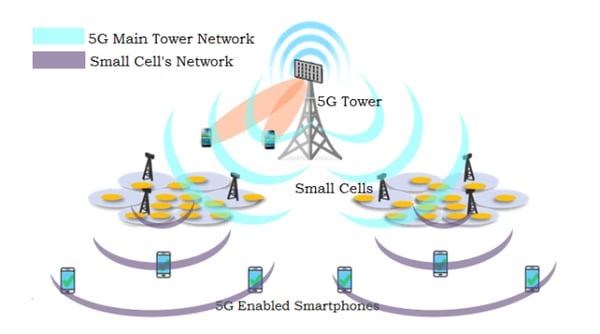
When it comes to infrastructure, 5G signals will come from one main 5G tower in a centralized location, such as the middle of a city. Then, that signal will be amplified by smaller cell towers around it -- often referred to as "small cells." This will cover a large distance of mobile devices with high-speed 5G networks. The 5G networks, run on the small cellular towers, will be licensed to specific cellular companies, such as Verizon and AT&T.

Here's a great graphic that shows how 5G is sourced from cell towers:

A graph showing how 5G works with cell towers

Source

Meanwhile, Wi-Fi comes from radio waves sent from an internet provider's giant, central computer. The waves and frequencies of the waves are sent to your home or a Wi-Fi-connected place via an ethernet cable. These frequencies are decoded and recognized by your modem. Then, a router, which is like an antenna, amplifies the signal so you can use multiple devices to connect to Wi-Fi wirelessly in your location.

As you might notice, Wi-Fi and 5G will be purchased and used fairly similarly. The only incredibly obvious difference will be the speed of 5G compared to Wi-Fi and the fact that Wi-Fi connects you to browsers and apps via the internet, while 5G connects you with a cellular network.

While the two technologies are pretty similar, tech experts still say we'll need them both for the time being.

For example, while 5G is just getting started, Wi-Fi is already nearly everywhere. While you might still need to use Wi-Fi if your home isn't in the path of a 5G cell tower, you also might need to use 5G if your Wi-Fi connection is poor. Ultimately, experts are suggesting that these two technologies will work together to provide seamless experiences for those surfing and streaming throughout the web.

We're already living in a hyper-connected world. And, while 5G won't change everything dramatically, or all at once, it will amplify many of our current digital strategies while allowing us to explore more technological opportunities -- especially in the realm of AR, VR, AI, and smart devices.

If you're a small business marketer, the truth is that your day-to-day marketing processes probably won't change completely. But, you'll likely notice subtle changes and new technologies creeping in on the horizon.

While some of these changes might not impact the way you work until later on, 5G's pure speed might streamline or quicken your online marketing tasks in the near future.

Overall, the addition of 5G and even improved Wi-Fi networks will be a great thing for businesses that have an online or digital presence -- or marketers run many of their daily processes online.

To help you prepare for the new era of wireless networks, I'll note five ways that 5G could impact you and other marketers in the near future.

How 5G Will Impact Marketers

1. Your online presence will be even more vital.

If you think people can't get more connected to the web, think again. With higher loading speeds and better connectivity, people will likely consume even more online content on their computers, phones, and smart devices.

If you're behind on online marketing, it will be absolutely vital to start developing an online presence as people spend more and more time logged on to the internet and less time consuming traditional content, like cable TV, newspapers, and magazines.

So, how do you expand that web presence? Be sure to create or optimize your profiles on the major social media networks, including Facebook, Twitter, LinkedIn, and Instagram. If you haven't already, you should also launch a website, start a company blog, or consider creating marketing videos aimed at brand awareness.

Want to learn more about building a web presence? Check out this detailed guide.

2. You could see digital ads on more screens, surfaces, and alternative realities.

Today, we see digital ads on our phones, websites, and occasionally on screens at malls, shopping centers, or airports. With 5G and evolving Wi-Fi technologies, wireless internet will be faster and more abundant around the country -- even in the more rural locations. This means that digital ads could appear in more areas with a web connection. Furthermore, the visuals and media in each ad could be more advanced due to high network speeds.

Aside from being able to place high-quality advertisements on screens in more locations, marketing experts suggest that some brands might even experiment with alternative reality ads where people wearing special AR glasses or using AR cameras can see an ad pop up in whichever location they're in.

To help you visualize what this could look like, here's an AR strategy Burger King used to advertise its product in locations where its competitors had ads. When logging into Burger King's app, you could scan a McDonald's ad in front of you, set it on fire on your screen, and then see an ad with a Burger King coupon pop up.

Aside from AR, some also suggest that faster internet speeds could also open the door for functional holographic ads.

At the moment, holograms are actually being experimented on by larger brands. However, the technology is still very nascent and somewhat buggy -- which is why you probably haven't seen a hologram in real life just yet.

Here's an example of today's hologram technology:

3. Advertising will become more interactive.

Aside from a greater abundance of digital ads, marketing content could also get more interesting with the high-speed capabilities of 5G.

While ads that allowed viewers to interact with the content once seemed impossible with buffer time and other technological limitations, 5G could make this strategy more accessible to marketers.

To give you an idea of what interactive ads could look like, the video below shows examples of playable ads. These are ads for video games that allow you to play the actual game in the advertisement before downloading it:

4. AR/VR will get even more realistic.

For years, marketers at big brands have been experimenting with AR and VR. For example, some have created AR-based Snapchat or Instagram filters, while others are sponsoring product placement in VR-based video games.

As internet speeds get much faster with the dawn of 5G, marketing technology experts are expecting VR and AR to feel even more seamless. You can expect to see big brands continue experimenting with filters and gaming, but you might also see companies invest in branded immersive experiences, like this one:

5. Marketing processes -- like data collection -- will be improved.

Ever wanted to learn more about your customer or audience but didn't have time to track down tons of data or load multiple analytics reports? These problems could be in the past with future high-speed internet. As 5G becomes more robust, competing internet providers are also launching faster Wi-Fi. This means that regardless of how you connect to the internet in the near future, you'll likely run into less lag time and more capabilities.

As mentioned, one of the biggest tasks that 5G will positively impact is data gathering. While it once took marketers days or hours to do reporting or mine data that they could use to create personalized experiences, it might only take a few minutes or seconds. Along with being able to collect data faster, 5G will also allow marketers and cellular providers to collect more data than they could with Wi-Fi or earlier generations of cellular networks.

In a paper covering the impact of data and data collection with 5G, the IEEE wrote, "5G promises to enable intelligent network and application services with connectivity to remote sensors, massive amounts of IoT data and low latency data transmissions. Big Data analytics will no longer be an afterthought, and it will play a significant role in the evolution of 5G standards enabling the intelligence across network, applications, and business."

Aside from speeding up and improving vital but time-consuming data-related tasks, higher-speed networks will also result in less time or resources being needed for certain marketing projects or daily tasks. For example, 5G's speed could enable automation for more intricate tasks, or allow more seamless opportunities for in-office employees to talk to their remote colleagues virtually. These faster communication and automation capabilities could open up marketers to focus on more creative projects.

How to Keep Up in a 5G World

Even if your company doesn't feel quite ready to explore the possibilities of interactive advertising or AR/VR, you should still follow the world of marketing technology to keep up with what other big brands are doing. This will help you identify which opportunities might be more accessible to you in the future, or more scalable strategies where you can create similar strategies without high-priced technology.

Aside from keeping up with bigger brands, you should also be sure to build up your digital and online marketing tactics if you haven't already. If 5G, and the ongoing improvements of Wi-Fi, have taught us one thing, it's that there is a business case for being hyper-connected. If most of your consumers weren't already online frequently, they definitely will be in the coming years.

Make sure you're on the most popular social media channels for your industry. If you haven’t already, you should also consider creating digital content such as a website, marketing videos, and blog posts related to your brand.

If you've already got a killer online presence, consider experimenting with newer mobile platforms that could thrive in the world of 5G. For example, although you might not be able to afford to create an AR advertisement or experiential experience, you could look into creating content that utilizes AR or new-media filters on apps like Snapchat, TikTok, or Instagram.

Want to learn more about the technologies that could evolve with 5G? Check out this blog post on AR and this piece on artificial intelligence in marketing.

http://bit.ly/2wvFKjI

6 Brands That Used Social Media to Boost Their Subscriber List

More than likely, you've heard the debate on whether it's more worthwhile to invest in email marketing, or social media marketing, to turn leads into customers.

Of course, ultimately, the most effective approach to marketing would be to integrate both social media and email marketing, so you can make the most of your email subscribers as well as social media followers.

With intense competition in the digital marketplace, it isn't enough to follow the email marketing tips and simply include social media links in the emails — on the other hand, it also isn't enough to create a newsletter CTA in your Instagram profile.

To get the most out of social media and email marketing, you'll want to fully integrate the two. Of course, that's easier said than done. Here, we're going to explore six brands that correctly integrated social media and email marketing to increase conversions for both.

1. Typo

Typo, an Australian ecommerce company, sent this attention-grabbing email, which promoted their 40% off sitewide sale for Christmas. Additionally, if a user clicked on their Facebook link, they'd see the same promotion. Ultimately, the brand harnessed the power of repetition to bring higher conversions.

2. McDonald's

A dedicated email that asks subscribers to follow the brand on social media goes a long way for enhancing subscriber engagement and garnering more social media followers.

For instance, take a look at this email by McDonald's, which invites social media followers with a catchy headline: "Sometimes, it's good to be a follower."

Ultimately, the brand's headline captures the recipient's attention, and the playful humor might encourage subscribers to take a look at McDonald's social channels, as well — especially since the email promises "fresh insider info", with readily available links to their social sites.

3. Innocent Drinks

Innocent Drinks, a natural, healthy drink brand, sent out this fun email, which informs the subscriber about their social media channels. You only have to follow the signs in the email, and you will be redirected to the respective social media channel. If you make it easy for email subscribers to find and follow your social channels, you're more likely to increase your following.

Additionally, Innocent Drinks included their social links in their welcome email to new subscribers — a good call, since it comes across as helpful, not pushy.

4. Home Depot

During Holiday Season 2019, I received an email from Home Depot that promoted 25% off on select electrical tools. Sure, it employs some impressive email marketing techniques, but it also integrates social media marketing to create a ripple effect.

For instance, when you click on the link to their Facebook page, I saw the same offer appear:

The email ad, as well as the Facebook post, redirected the reader to a landing page that displayed the same products.


Now, isn’t that a perfectly synced omnichannel marketing strategy?

5. Skillshare

Skillshare, curated courses ranging in topic from animation to writing, launched their new visual identity in the beginning of 2020. They sent a visually attractive email to their customers and prospects to announce the change — here’s a glimpse of the email.

When the users clicked through to the Facebook page, they could read the same information along with a link that took them to the latest blog explaining their new visual identity.

Ultimately, it's important you deliver your message to whichever platform(s) your audience prefers — in this case, SkillShare ensures their message is well-received whether their recipients prefer reading about company changes via email, or through Facebook.

6. Blurb

I stumbled across a Facebook post by Blurb that was endorsing their first sale of the year along with the discount coupon code:

Additionally, to make sure I didn't miss out on the sale, they sent me an email that promoted the same offer — plus, their Twitter page promoted the discount, as well:

Ultimately, their efforts to broadcast the discount through email and social proved worthwhile — after seeing the discount for a third time, I purchased a book.

Best of all, their consistency across platforms demonstrated brand credibility, since it showed me they're committed to consistently updating their social channels with relevant offers. As a result, they didn't just get a sale — they also got a new social follower.

Ultimately, integrating social media and email boosts subscriber interaction and prompts them to take the next action. Have you used these digital marketing channels to their maximum potential by taking an omnichannel approach? If not, now is the right time.

http://bit.ly/2Trbqj6