Monday, May 7, 2018

10 of the Best Public Relations Examples to Inspire Your Next Campaign

Sometimes, a press release about your company’s new product launch, significant hire, or acquisition fails to pick up the coverage you were expecting. Journalists crave juicy stories and viral marketing campaigns, but standing out in a sea of conventional pitches is one of the biggest challenges for any public relations professional.

When you need a dose of inspiration, blogs like PR Examples are a great place to find the most compelling PR plays. To save you some time, we curated a list of the absolute best of the best to get the creativity flowing for your next campaign.

Read on to get inspired by some of the best minds in public relations.

The 12 Best Public Relations Examples to Inspire Your Next Campaign

1. Lyft & Netflix: Strange Mode 

With over 360,000 people who binge watched Stranger Things 2 within a day of its release, it’s clear the show successfully created unprecedented amounts of hype leading up to its premiere date. One of the stunts that built up this hype was Lyft and Netflix’s Strange Mode prank. By immersing Lyft customers in an environment that was as terrifyingly strange and eerily similar to Hawkins, Indiana, they made Stranger Things fans feel like they were actually in the Upside Down.

2. HostelWorld: Even Divas are Believers

Traveling the world can give you some of the best experiences of your life, but it can also thrust you into situations that you’ll want to scrub from your memory, like staying the night in a hostel. There are countless hostel horror stories online and hundreds of videos that mock their hospitality scattered throughout social media -- so needless to say, they don’t have the best reputation.

But HostelWorld, a hostel booking website, decided to team up with Mariah Carey to freshen up their image and showcase the pleasant reality of staying in a modern day hostel. Together, they blasted through affordable accommodation stereotypes by spotlighting the lesser known luxuries of hostels like having access to the same facilities as more expensive accommodations, but at a cheaper price, and being able to connect with other fellow travelers.

HostelWorld’s message is simple: if hostels are nice enough for divas like Mariah Carey, then they’re nice enough for everyone..

3. Lawyer.com: Choosing Lindsay Lohan to Be their Spokesperson

Picking Lindsay Lohan to be your company’s official spokesperson could spark a lot of backlash. But when you connect people with lawyers, the move can produce loads of smiles, publicity, and customers. Lawyer.com’s brilliant marketing play resonated with audiences because Lohan’s troubled past and her frequent brushes with the law makes people who might’ve gotten in a little trouble feel like they’re not alone. It also makes them feel better about themselves. If a high-status celebrity needed a lawyer -- multiple times -- then maybe it’s not so bad if you need one too -- right?

4. Logitech: BS Detection Spoof

Hours after April Fools Day, almost every marketing publication rounds up the best spoofs, pranks, and stunts that distracted everyone at work that day. One of the funniest spoofs that earned a spot in all the major roundups this year was Logitech’s fake Business Speak Detection product video. By giving their product a punny, yet subtly accurate name, the video pokes fun at most businesses’ obsession and overuse of buzzwords. But it also has the feel of a real product overview, which makes it even more hilarious.

5. Old Spice: Paper Blazer Ad

Photo Credit: PR Examples

When Fragrance brands advertise in magazines, they usually show off their aromas by drenching an ad with their latest cologne or perfume. But Old Spice realized people usually don’t enjoy unexpectedly pungent scents violating their nostrils when they’re flipping through their favorite magazine. So in typical Old Spice fashion, they gently ribbed other fragrance brands by inserting a paper blazer doused in their new cologne, Captain, in their print ad in GQ magazine. Then they wrote about how these paper blazers can help men attract attention not only with trendy style, but also with masculine smell. The only drawback of the blazer is that it'll turn into papier-mâché on you in the rain.

Humor and cleverness is one of the best ways to appeal to your audience and gain earned media attention, and it seems like Old Spice can leverage them both on any marketing channel.

Photo Credit: PR Examples

6. Star Wars: Passing the Box-Office Baton to The Avengers

Avengers: Infinity War just shattered Star Wars: The Force Awakens’ record for the biggest opening weekend ever by grossing over $250 million. LucasFilm, the studio that created and produced Star Wars, wasn’t bitter though. Instead, they were proud of their friends over at Marvel Studios, and sent them a heartwarming congratulatory tweet. By applauding them for their incredible accomplishment, and not sulking about their broken record, Star Wars earned the respect of movie lovers everywhere -- not to mention some media coverage for the gesture.

7. Johnnie Walker: Jane Walker


 Photo Credit: PR Examples

To promote gender equality and honor the many achievements of women throughout history, Johnnie Walker launched a female version of its whisky on International Women’s Day called Jane Walker. The limited-edition bottle featured a woman on their iconic logo, instead of a man, which connected the brand to individuals who also support their commitment to social progress.

In March 2018, Johnnie Walker released 250,000 bottles of Jane Walker, and for every bottle sold, they donated $1 to organizations that empower women. This tangible impact helped their campaign gain even more support and publicity.

8. AirBnB & BBC Earth: Night at Blue Planet II

Blue Planet II is considered the greatest nature series of all time, with its first episode attracting over 14 million viewers and earning the title of Britain’s highest rated TV show in 2017. Watching the show can almost place you into the habitat they’re filming, but BBC Earth wanted to take things to the next level for their biggest fans: they offered them a chance to experience what it’s like to be a researcher and filmmaker for Blue Planet II.

To do so, they teamed up with AirBnB to run a contest for their members, and two lucky winners got to spend three days and two nights in the Bahamas on the research and exploration vessel used in the show’s filming. During their expedition, they lived with and discussed work with researchers and dove deep into the Atlantic Ocean in a submarine with filmmakers to observe some of nature’s most unique underwater wildlife. By offering a once in a lifetime opportunity, BBC Earth could get more people to watch their hit show, and AirBnB could build their brand affinity.

Photo Credit: PR Examples

9. SpaceX & Tesla: SpaceX Sends a Tesla into Outer Space

Everyone knows Elon Musk wants to send humans to Mars. So when SpaceX launched their newest rocket, Falcon Heavy, into space, it made some headlines. But when the Falcon Heavy suddenly shot a cherry-red Tesla Roadster blasting David Bowie’s 1971 hit “Life on Mars?” into orbit, it was being called the greatest automotive PR stunt in history.

The car will now float between Earth and Mars for millions of years, and serve as reminder for current and future generations to always reach for the stars. The success of both launches also improved SpaceX and Falcon Heavy’s reputation. Falcon Heavy is now the most powerful rocket on earth, so it’s realistic to say it can launch heavy satellites and future space stations into orbit, shuttle cargo to Mars, and even transport humans to the moon. And that’s exactly what Elon Musk needs the public to think if he wants to accomplish his ambitious goals.

10. BBC Scotland: Scotland From the Sky: Glen Coe

In 2017, Rough Guides, a renowned travel guidebook, named Scotland the most beautiful country in the world. And a big reason why it’s such a spectacle is because Glen Coe, a Scottish valley that cuts through the ruins of an ancient super-volcano, is one of the most striking landscapes in the world.

BBC Scotland’s immersive, 360 degree video of Glen Coe grips viewers because they’re able able to experience the landscape from an intimate point of view at every possible angle, which makes them feel like they’re actually there. Publicity of this video benefits both Scotland’s tourist industry and BBC Scotland because it compels people to travel to Scotland and consume more of BBC Scotland’s content.


http://bit.ly/2HXyVIy

2018 Social Media Marketing Industry Report

Do you wonder how fellow marketers are using social media? Wondering if you should focus more on ads or bots? In our tenth-annual social media study, more than 5,700 marketers reveal where they’ll focus their social media efforts. This industry report also shows you how marketers’ organic activities have changed and what their future plans [...]

This post 2018 Social Media Marketing Industry Report first appeared on Social Media Examiner.

May 07, 2018 at 12:00PM http://bit.ly/2jBxMvW
read more...
from http://bit.ly/2I14vFx
via IFTTT

13 Free Personality Tests You Can Take Online Today

Personality tests are a great way to explore different aspects of who you are, and uncover layers you perhaps hadn’t recognized about yourself before. Being truly self-aware is hard -- while they might not be always 100% accurate, personality tests work well as a starting point for self-discovery by providing results you might not have concluded on your own.

There are hundreds of personality tests out there -- some label you with a general personality type, while others delve into your best potential career paths. Some challenge you to look at ink blots, while others ask you detailed multiple choice questions.

While many of these tests are unreliable and don’t offer any real scientific validation, others can provide potentially astute, psychologically-based insight into your behaviors, ambitions, and temperament in times of conflict.

In fact, some online personality tests are thought-provoking indicators into why you make decisions, who you work well with, and how to modify your attitude towards people whose personalities clash with yours. In both your work and personal life, this information can be invaluable.

When you’ve got some downtime and want to explore aspects of who you are, or get some guidance on potential career paths, take a look at the best free online personality tests we’ve compiled. Whether you’re interested in general information about your personality, or emotional intelligence-related insight, you’re bound to learn something.

Free Myers-Brigg Personality Tests

Myers-Briggs is a widely respected and popular personality assessment tool -- first used in the 1940s, the test was developed by Katharine Cook Briggs and her daughter, Isabel Briggs Myers. Initially inspired by Jung’s personality theory, the Myers-Briggs test conveniently separates people into 16 categories of personalities, providing each person with a four-letter acronym.

The following four tests are broad-stroke indicators of who you are, using inspiration from Myers-Briggs. Among other things, the tests cover your communication styles, your strengths and weaknesses, your desires and ambitions, how you see the world, and how people perceive you.

If you’ve never taken a test based off Carl Gustav Jung’s psychological traits, or Myers-Briggs’ 16 categories of personalities, I’d suggest you take at least one of these. You’ll be surprised by the accuracy of some of the statements, and more importantly, you could gain insight into how your behavior is perceived by others, helping you improve both professional and personal relationships.

1. 16 Personalities

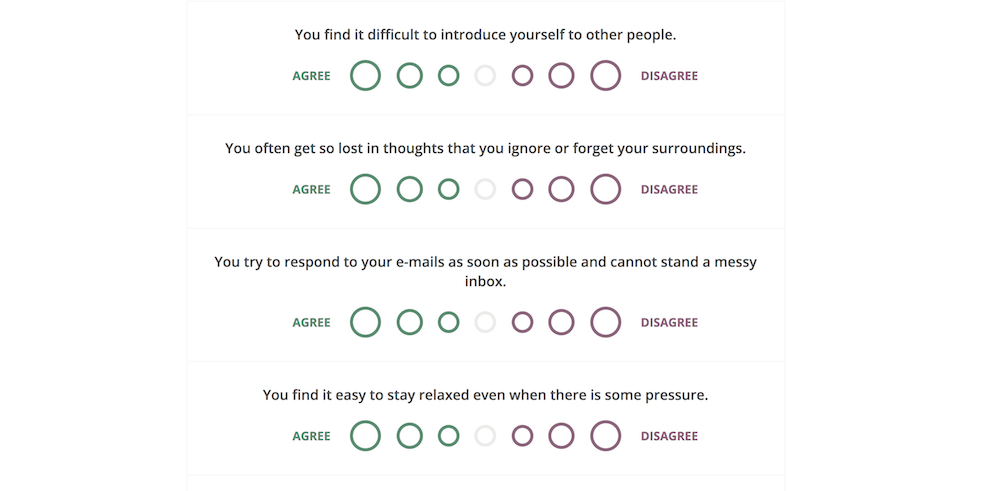
16 Personalities covers five broad personality aspects: mind, energy, nature, tactics and identity. The test is based on Carl Gustav Jung’s study of psychological traits (e.g. extroversion vs. introversion) and the Myers-Briggs test, two popular personality theories meant to determine an extensive overview of who you are. Among other things, the test will cover how you communicate and relate to others -- both professionally and personally -- what you value and strive for, and how you make decisions. 16 Personalities has been taken over 126 million times, and is available in 30 languages.

personality1

2. Personality Perfect

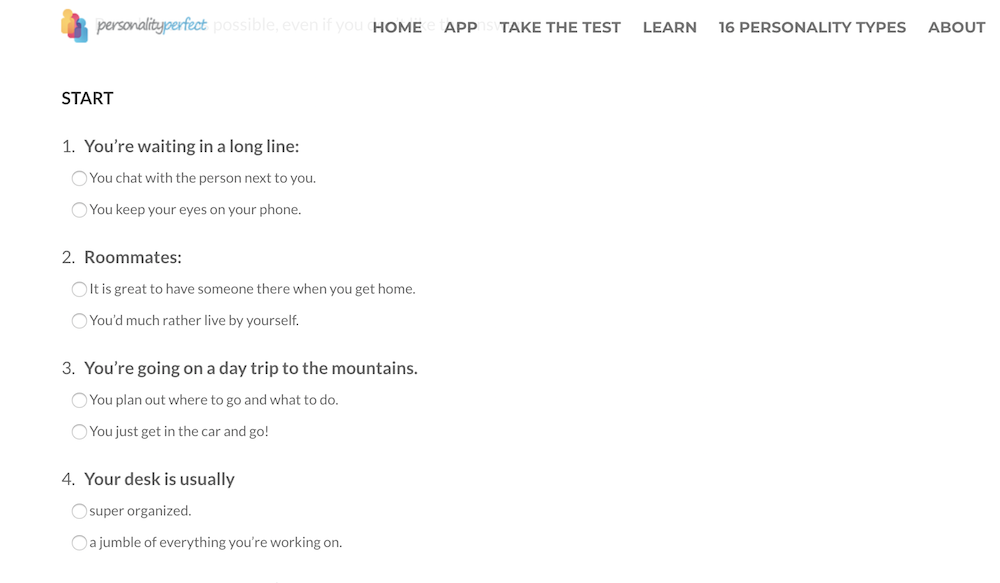
Similar to 16 Personalities, Personality Perfect is also based on Jung’s and Myers-Briggs’ personality theories, and uses four broad categories -- extraversion vs. introversion, sensing and intuition, thinking and feeling, and judging and perceiving -- to compile a four-letter abbreviation of your personality type (e.g. “INFP”). The test provides a broad overview of how you connect with others, how you behave, and, perhaps most surprising, how you’re likely seen by others.

 personality2

3. Human Metrics

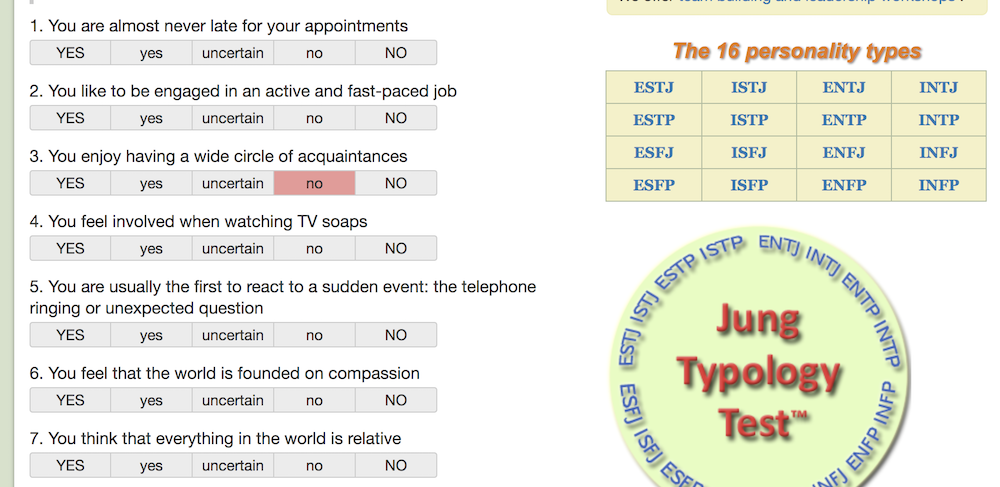
If you’ve ever wondered which famous personalities share your personality type, you’re in luck -- Human Metrics shows you that information, along with your four-letter personality type (again, based off Jung and Myers-Briggs theories). With this test, you’ll get information about which career paths are most suitable for your personality type. If you’re having trouble choosing a career path or doubting the one you’ve chosen, maybe this test can help you figure it out.

personality3 

4. TestColor

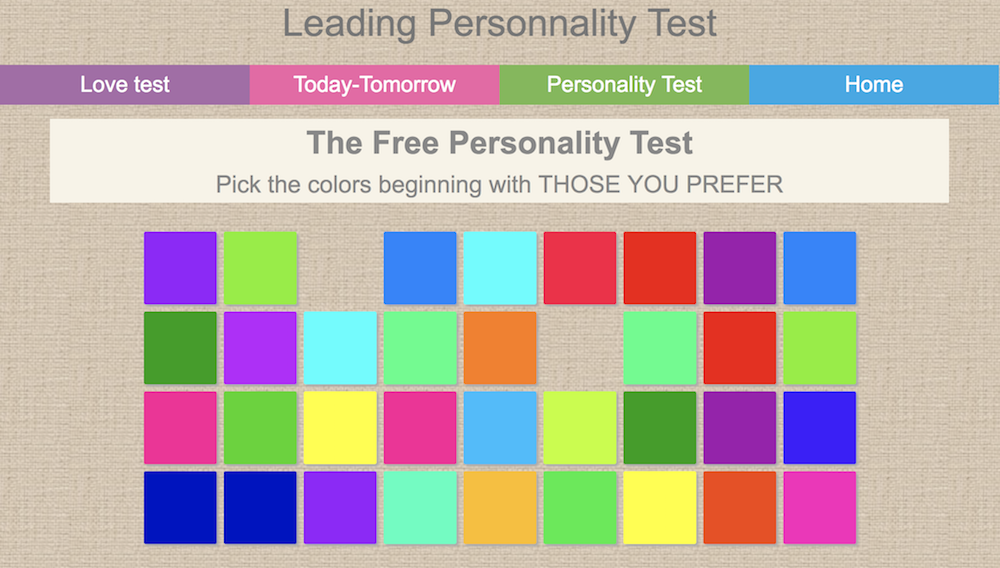
Test Color, a test validated by a team of clinical psychologists, psychoanalysts and mathematicians, asks you just two questions: “Click on the colors you like most,” and “Click on the colors you like least.” Test Color tells you about your emotional intelligence, your creativity and imagination, your social skills, and your work style, including organization and management styles. I found it to be surprisingly accurate: in two questions, it nailed how I communicate with others and how I act in group settings.

personality4

Free Disc Personality Tests

The DISC assessment determines where you lie on four DISC factors: dominance, influence, steadiness, and compliance. DISC is one of the most popular and authoritative career assessments out there, and many companies encourage their employees to take it.

Undoubtedly, personality affects our career ambitions, as well as how we perform in different workplace environments. If you’re particularly extraverted, maybe you’ve chosen a career path that enables you to work daily with large groups of people. If you have certain communication styles that rely on passivity and emotion, perhaps your boss’s direct statements sometimes offend you.

Arming yourself with a sense of self-awareness could help you find your optimal career path, foster better work relationships, and mitigate work conflict more effectively. Here are four career-focused tests to help you achieve higher work satisfaction.

1. 123 Test

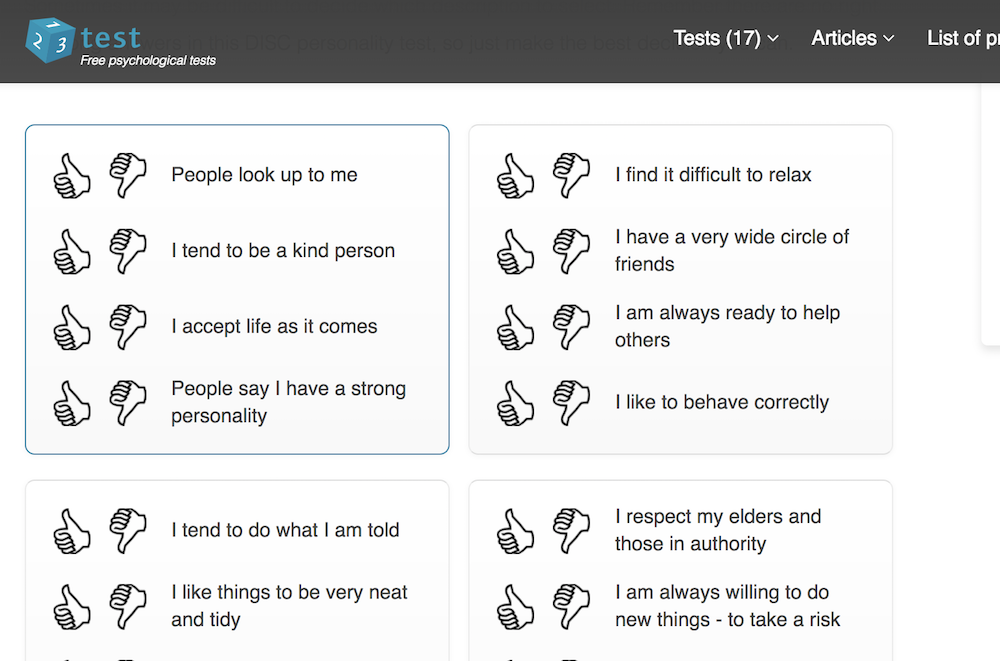
123 Test provides a free DISC assessment. The results, in both graph and text form, tell you how your personality fits into your work environment, who you work well with, who you might have conflict with, how you perceive other’s behaviors, and how other’s perceive yours. The test helps you understand how your own personality biases you towards certain colleagues (i.e. your personality might take another coworker’s comments offensively, while the coworker just believes in being direct), which could strengthen your work relationships.

 career1

2. TestQ.com

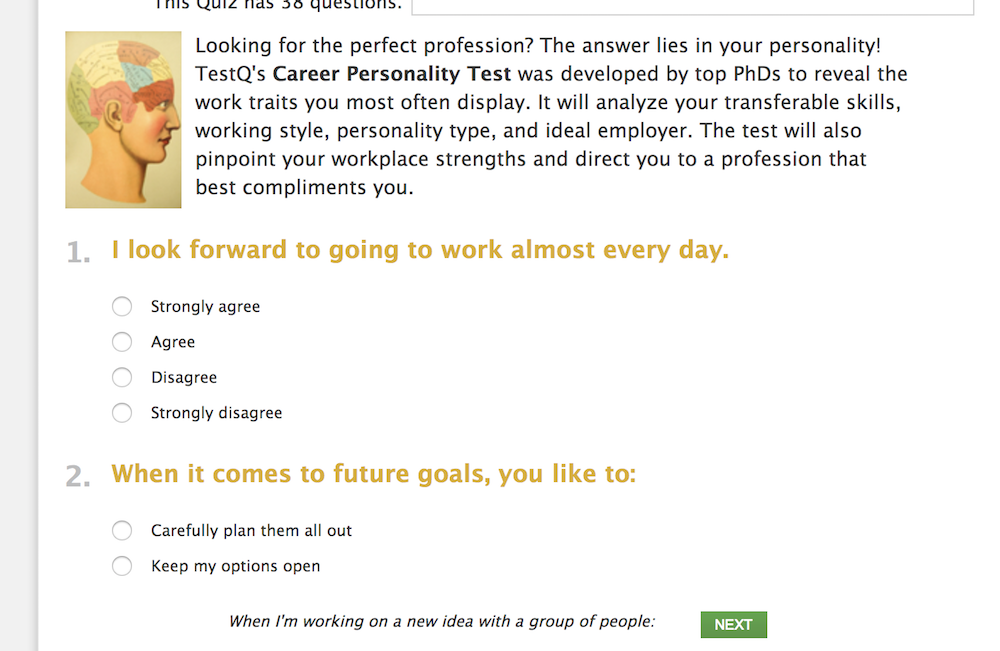
This tests asks 38 multiple-choice questions to analyze your skills, working style, and even your ideal employer. TestQ, developed by top PhDs, offers you insight into your strengths and weaknesses, and even suggests careers best suited for your personality. If you’re happy with your current career track, the test provides suggestions for specific skills you could learn to get ahead in your career.

career2

3. Interpersonal Skills assessment

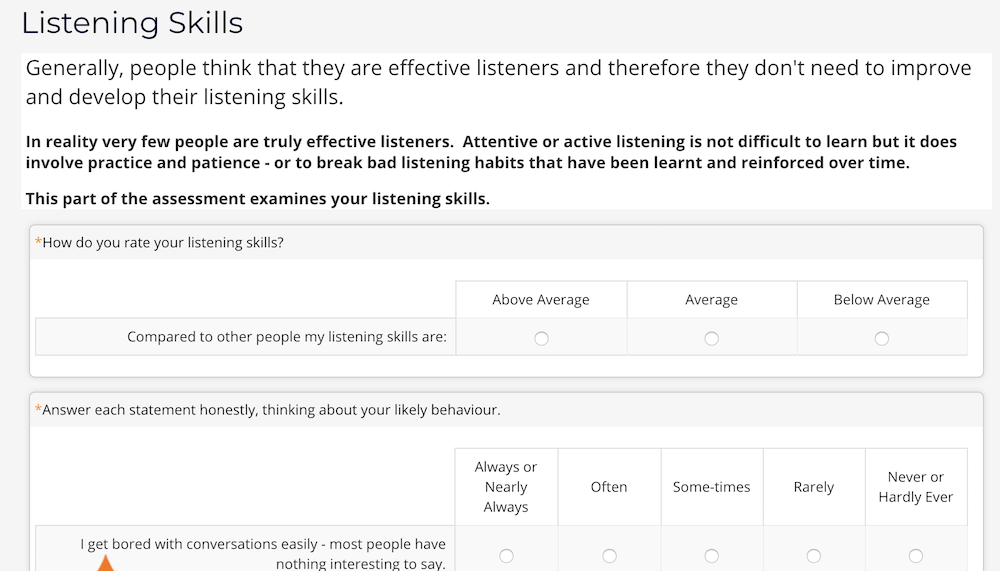
Having well-developed interpersonal skills is critical to forming deep and meaningful personal and professional relationships. Interpersonal Skills assesses your listening skills, verbal communication skills, ability to work in teams, and emotional intelligence. Better yet, the test identifies areas of weakness and provides tactical advice on how to improve those skills.

career3

4. Sokanu

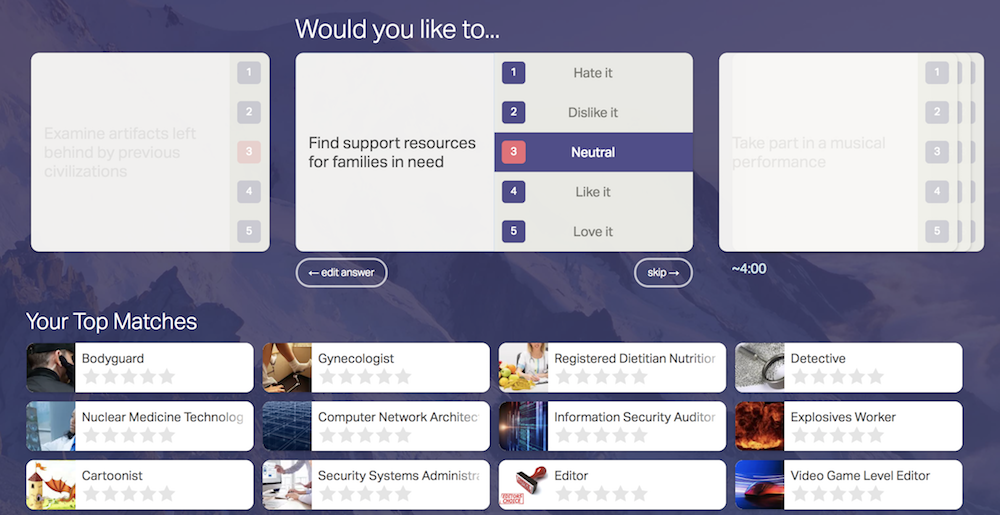
Major companies including General Assembly, NYU, and Redfin use Sokanu, a career assessment tool that tests you on your personality, background, interests, and goals to determine an ideal career path. After you take the test, it provides you multiple matches, which you can sort through to explore different careers and workplaces before choosing an ideal match.

career4

Free Emotional Intelligence Tests

Psychology Today defines emotional intelligence as, “the ability to identify and manage your own emotions and the emotions of others.” Arguably, having emotional intelligence is the most important factor in dealing with conflict and communicating with others.

It’s undeniable that emotional intelligence is important -- in fact, research has shown success is 80-90% attributable to emotional intelligence (EI), and only 10-20% to your IQ.

In the workplace, whether you’re around coworkers in the midst of a stressful project, or dealing with a tough performance review from your boss, it’s critical you know how to both identify and handle your own emotions; it’s equally important you know how to read other people’s emotions, and manage them appropriately.

So let’s dive in. Below are four emotional intelligence tests to help you recognize your level of emotional intelligence, and also how to improve it.

1. Berkeley Emotional Intelligence

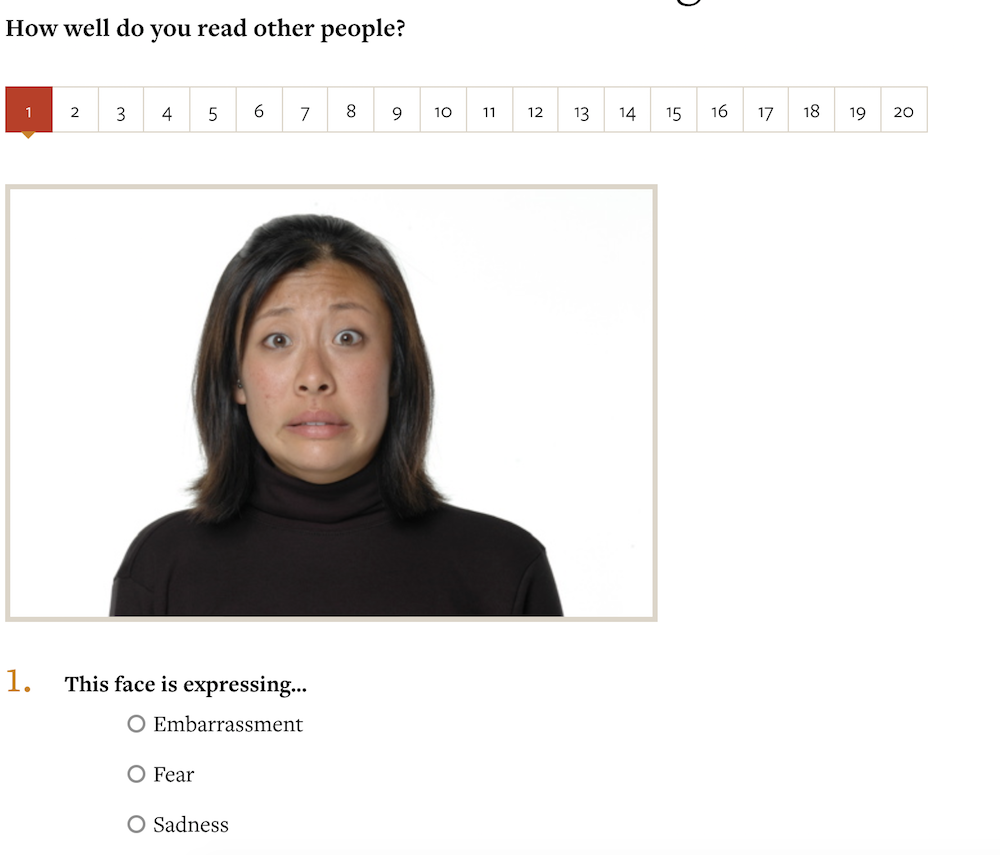
This test, designed by Berkeley, shows you 20 pictures and asks you to recognize the facial expression on each person’s face. It’s easy, quick, and fun, and an informative way to learn how well you read other people’s emotions -- which is a critical skill for assessing and mitigating conflict.

emotional1

2. VeryWellMind

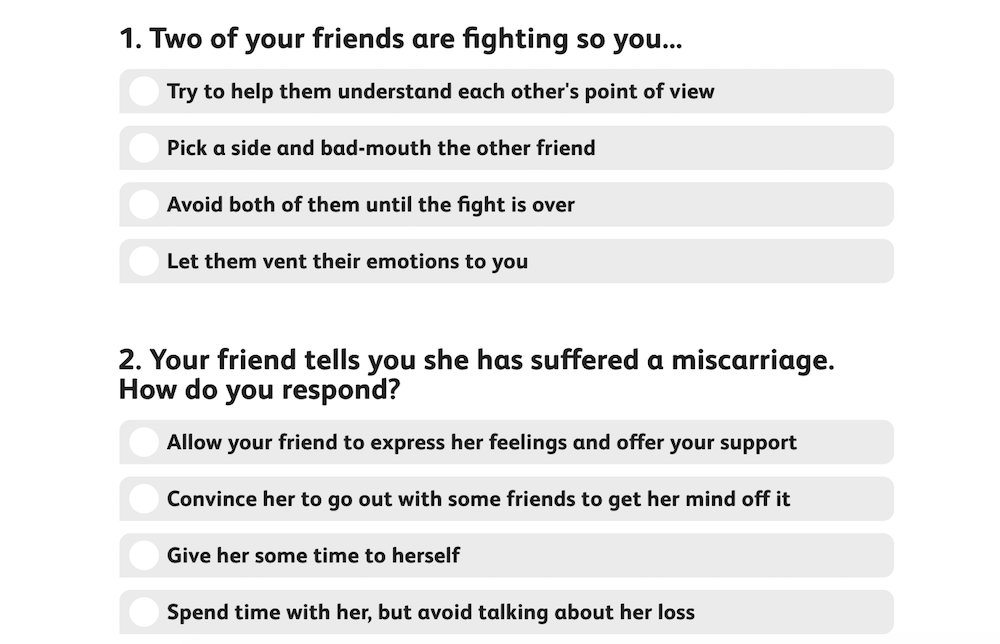
If you don’t have the time for anything more in-depth, this test only asks you 10 quick questions before delivering your results. It’s admittedly not medical or scientific by any means, but does offer other articles depending on your scor: if you score low, for example, VeryWellMind.com includes a link to another one of their articles, “Emotions and Types of Emotional Responses.”

emotional2

3. Empathy Quotient

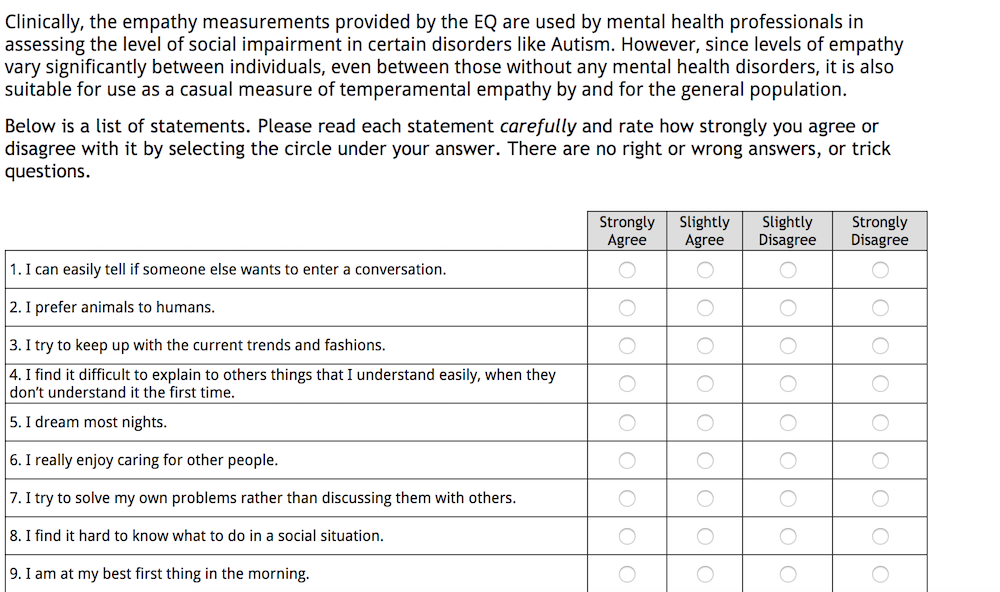
Unlike the tests above, this one is designed to clinically assess you -- the test was developed by Simon Baron-Cohen at the Autism Research Center at the University of Cambridge, and uses the same emotional measurements mental health professionals use to diagnose social impairment. It’s a 60-item questionnaire and is suitable to measure “temperamental empathy” in adults.

emotional3 

http://bit.ly/2I2gcf3

Saturday, May 5, 2018

Facebook F8 Announcements: What Marketers Need to Know

Welcome to this week’s edition of the Social Media Marketing Talk Show, a news show for marketers who want to stay on the leading edge of social media. On this week’s Social Media Marketing Talk Show, we explore Facebook F8 announcements, new Facebook Group features, Instagram video calling, Messenger updates, and other breaking social media [...]

This post Facebook F8 Announcements: What Marketers Need to Know first appeared on Social Media Examiner.

May 05, 2018 at 12:00PM http://bit.ly/2mAgcdm
read more...
from http://bit.ly/2KBXYmc
via IFTTT

Friday, May 4, 2018

Would You Pay for an Ad-Free Facebook Subscription? 64% of Consumers Say "No"

When Bloomberg reported that Facebook was conducting market research to gauge interest in an ad-free, paid subscription model -- we decided to do a bit of our own research.

Facebook -- to most consumers, at least -- has long-served as a free product. Advertisers, content creators, and publishers have enlisted the platform's various services for a fee, accounting for roughly 98% of its annual revenue in 2017.

But for those of us who use the network to consume content -- whether it's from friends and family, or publishers -- it's essentially been a monetarily "free" product. That is, until revelations of personal user data being improperly obtained and used by analytics firm Cambridge Analytica came to the surface in March. 

The company has faced a high degree of scrutiny and fallout since then -- even more than it experienced after it was revealed that the network was weaponized to spread divisive and false information by foreign actors seeking to influence the 2016 U.S. presidential election.

So maybe the network wasn't really "free," after all. Maybe, to certain parties and Facebook itself, what we shared and engaged with on the site had a dollar amount attached to it. That's been the case for a while in the vein of the company's ad revenue: marketers and advertisers can target promoted content to users based on the data Facebook has about them -- criteria like age, location, gender, interests -- without attaching personally identifiable information to it.

But is it worth paying to opt out of those ads?

Measuring Public Interest in an Ad-Free Facebook Subscription

How Many Would Pay?

According to Bloomberg's report, any plans for an ad-free subscription model at Facebook are currently speculative -- and may not come to fruition at all. And, writes reporter Sarah Frier, these plans are not new, though the recent fallout over data and how it's used to shape ads has re-ignited the internal conversation.

We surveyed a panel of 893 consumers -- almost evenly divided among the U.S., UK, and Canada -- to find out how many people would pay for a subscription to an ad-free version of Facebook.

The response indicated a fairly widespread disinterest in such a subscription, with an average 64% of participants saying that they would not pay for one.

US_Would you pay for a subscription to an ad-free version of Facebook

U.S. results -- 304 responses

UK_Would you pay for a subscription to an ad-free version of Facebook

UK results -- 302 responses

Canada_Would you pay for a subscription to an ad-free version of Facebook

Canada results -- 287 responses

What is interesting to note is that, within the U.S., 22% of consumers would be willing to pay for an ad-free Facebook subscription, versus just 17% and 16% in the UK and Canada, respectively.

That could be due to a lack of strict, formalized data privacy laws in the U.S., which could cause a greater perceived value of paid protections. The UK will be subject to the General Data Privacy Regulation (GDPR) when it comes into force on May 25th, and Canada 

But here's a crucial discrepancy: Even if users paid for an ad-free subscription service, it's not clear if the data used to personalize ads would still be collected and stored.

At F8 -- Facebook's annual developer conference, CEO Mark Zuckerberg did announce a "Clear History" feature to be rolled out in the next several months that would allow users to see which websites and apps send Facebook information on when they're used, and delete that information from their accounts.

And while the announcement indicated that users will also be able to turn off Facebook's access to and storage of that information in their accounts moving forward, it's not clear the nature of what data will be accessed and stored.

It's also important to note that even if users delete their Facebook accounts entirely, your online behavior can still be tracked via the Facebook Audience Network, which equips advertisers on the network with various tools and pieces of code to "extend their campaigns beyond Facebook."

Screen Shot 2018-05-04 at 3.56.28 PM

Source: Facebook

It was something that Representative Joe Kennedy asked during Zuckerberg's testimony before the U.S. House of Representatives last month -- in what The Atlantic called "the most important exchange" of the hearing -- when he called the Facebook CEO repeated claims of users having complete control over their data into question.

"One of the challenges with trust here is that there is an awful lot of information that’s generated that people don’t think that they’re generating and that advertisers are being able to target because Facebook collects it,” Kennedy said. "I don’t understand how users then own that data."

It's unclear, therefore, if a paid, ad-free subscription would resolve that.

How Much Would They Pay?

For those who are willing to pay, however, what cost are they willing to assign to an ad-free experience?

We posed that question to 907 consumers -- again, almost equally divided among the U.S., UK, and Canada -- and found that, once again, most people (an average of 71%) would not be willing to pay for an ad-free Facebook subscription.

But out of those, most -- an average of 15% -- would be willing to pay up to $10 a month (or £10 in the UK) for such a service.

US_How much would you be willing to pay for an ad-free Facebook subscription

U.S. results -- 299 responses

UK_How much would you be willing to pay for an ad-free Facebook subscription

UK results -- 312 responses

Canada_How much would you be willing to pay for an ad-free Facebook subscription

Canada results -- 296 responses

That aligns with the ad-free subscription models with many other players within the tech realm. Music streaming service Spotify offers an ad-free premium membership for $9.99 per month, while Pandora, one of its chief competitors, offers ad-free plans ranging between $4.99 and $9.99 per month. 

Hulu, a TV-streaming service, offers a limited commercial plan for $7.99 per month, and a commercial-free subscription for $11.99 per month. And Netflix, another TV- and movie-streaming service, offers subscriptions for up to $13.99 per month.

Where We Go From Here

Even if Facebook does introduce a paid subscription model, its executives have repeatedly emphasized that there will always be a free version of it. COO Sheryl Sandberg previously told Bloomberg as much, and Zuckerberg did the same in his Congressional testimony.

"I wouldn’t be surprised if some users would be interested in this experience -- it’s the same experience we have with Netflix, Spotify, Amazon, and other modern tech companies that offer ad-free options," says Henry Franco, HubSpot's social campaign strategy associate. "The question is how much of a value people put on their data. Would the average person be willing to pay $10 per month if it meant advertisers couldn’t use their data?"

If so, at that price point, Facebook could stand to earn a fair amount. With an estimated 214 million users in the U.S., for example, if 16% of them (34.24 million) are willing to pay $10 per month for an ad-free subscription, it adds up to $342.4 million in revenue each month, or $1.0272 billion per quarter.

However, that number still somewhat pales in comparison to the $11.795 billion in ad revenue that Facebook reported in its Q1 2018 earnings call.

And even with all these factors, the question of how user data would be leveraged, if at all, still lingers in Franco's mind.

"Would Facebook still collect data on these users even if they didn’t use it for advertising?" he asks. "Your data might be worth $100 each year to Facebook, but you have to wonder if the average user would be willing to pay $100/year for Facebook not to get it."

http://bit.ly/2KCzvxd

Variable Cost Explained in 200 Words (& How to Calculate It)

There’s a frustrating truth every business deals with early into its growth. To reveal that truth, I’ll start with a song title by hip-hop legend, The Notorious B.I.G.:

“Mo money, mo problems.”

The Notorious B.I.G. is literally saying “more money, more problems.” And although this hit song doesn’t dive into the intricacies of accounting, it does support a frustrating truth about business: the more revenue you generate from sales, the more you’ll have to spend to keep selling.

Let’s unpack why that’s the case with one of the most important and useful financial figures to a growing business today: variable cost.

Take control of your multifaceted budget with the help of these free templates. 

Variable costs vary because they can increase and decrease as you make more or less of your product. The more units you sell, the more money you’ll make, but some of this money will need to pay for the production of more units. So, you’ll need to produce more units to actually turn a profit.

And because each unit requires a certain amount of resources, a higher number of units will raise the variable costs needed to produce them.

A kitchenware maker might sell 10 knife sets for a total of $300, for example, but maybe $100 of this revenue goes into crafting the next 10 knife sets. If the business sells 20 knife sets for $600, it pays $200 of this revenue to make the next 20. The kitchenware maker’s net revenue only increased by $100, while its variable costs rose by $300.

Hence the words of rapping sensation The Notorious B.I.G., “mo money, mo problems.”

Variable costs aren’t a “problem,” though -- they’re more of a necessary evil. They play a role in several bookkeeping tasks, and both your total variable cost and average variable cost are separate calculations. With that in mind, here’s what you need to know about variable cost in fewer than 200 words:

Variable Cost Defined in 200 Words

Variable cost denotes the money your business specifically spends on the development of goods and services. Businesses can use variable costs to calculate more complex financial values, such as their contribution margin and break even point.

You can represent your variable cost two different ways: by total variable cost or by average variable cost.

Total Variable Cost

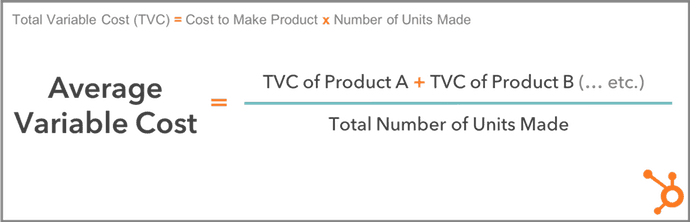
Your total variable cost is the sum of the variable cost of each individual product you’ve developed. Calculate total variable cost by multiplying the cost to make one unit of your product by the number of products you’ve developed.

For example, if it costs $60 to make one unit of your product, and you’ve made 20 units, your total variable cost is $60 x 20, or $1,200.

Average Variable Cost

Your average variable cost uses your total variable cost to determine how much, on average, it costs to produce one unit of your product. You can calculate it with the formula below (for reference, the equation to the top left of the box is your total variable cost).

Formula for average variable cost

Total Variable Cost vs. Average Variable Cost

If the average variable cost of one unit is found using your total variable cost, don’t you already know how much one unit of your product costs to develop? Can’t you work backwards, and simply divide your total variable cost by the number of units you have? Not necessarily.

While total variable cost shows you how much you’re paying to develop every unit of your product, you might also have to account for products that have different variable costs per unit. That’s where average variable cost comes in.

For example, if you have 10 units of Product A at a variable cost of $60/unit, and 15 units of Product B at a variable cost of $30/unit, you have two different variable costs -- $60 and $30. Your average variable cost crunches these two variable costs down to one manageable figure.

In the above example, you can find your average variable cost by adding the total variable cost of Product A ($60 x 10 units, or $600) and the total variable cost of Product B ($30 x 15 units, or $450), then dividing this sum by the total number of units produced (10 + 15, or 25).

Your average variable cost is ($600 + $450) ÷ 25, or $42 per unit.

Variable Cost Examples

So, what’s considered a variable cost to the business?

Depending on the goods or services you develop, you can classify many of your expenses as variable costs. In general, any recurring cost that doesn’t fluctuate as the business grows or shrinks is a fixed cost. A classic fixed cost is rent on office space: no matter what happens within the business, you still pay the same building rent. So, any cost that doesn't fall into this category is likely a variable cost.

To make it easier for you to identify which of your costs you should factor into your total variable cost calculation, we’ve put together a brief list of variable cost examples below.

  • Physical materials: this can include parts, cloth, and even food ingredients required to make your final product.
  • Production equipment: if you automate certain parts of your product’s development, you might need to invest in more automation equipment or software as your product line gets bigger.
  • Sales commissions: the more products your company sells, the more you might pay in commission to your salespeople as they win you customers.
  • Staff wages: The more products you create, the more employees you might need, and the bigger your payroll.
  • Credit card fees: businesses that receive credit card payments from their customers will incur higher transaction fees as they deliver more services.
  • Packaging and shipping costs: you might pay to package and ship your product by the unit, and therefore more or fewer shipped units will cause these costs to vary.

It can be daunting to calculate expenses that change as your company evolves. Sometimes, you just want to know exactly what you’re paying to run your business. Using the formulas above, however, you’ll be able to easily track your variable costs no matter what stage of life your business might be in.

 Business Plan Template

http://bit.ly/2FHkDdj

How to Convert a PDF to Excel: Free Tools & Instructions

A PDF, short for portable document format, is commonly used to view shared documents. The PDF format preserves a document’s formatting, which means you can look at the document on any device. But the key word here is “view” -- you can’t edit a PDF without using a specific PDF-editing tool, which is where things get tricky.

If you’ve got a ton of data already formatted in a PDF, you don’t want to waste time manually re-entering that data into an Excel sheet.

Luckily, you don’t need to: there are plenty of free tools you can use to convert a PDF to an Excel file. Since all of the tools function similarly, we’ll show you how to use one of the more popular options, and supply a list of alternatives you can try out.

How to Convert a PDF to Excel

PDFtoExcel.com is a fantastic free tool for a few reasons: it’s secure (your downloads are deleted soon after conversion, and your files are only accessible by software agents); it converts documents of all sizes; the data you import is extracted accurately into rows and columns for Excel; and you can use your .xlsx converted file for various Microsoft Excel versions (7, 10, 13), LibreCalc, OpenCalc, or other office suites compatible with MS Office.

Plus, you don’t need to create an account to use it, which makes the whole process simple and quick (I converted my PDF file to Excel in under three minutes).

Here’s how to use it:

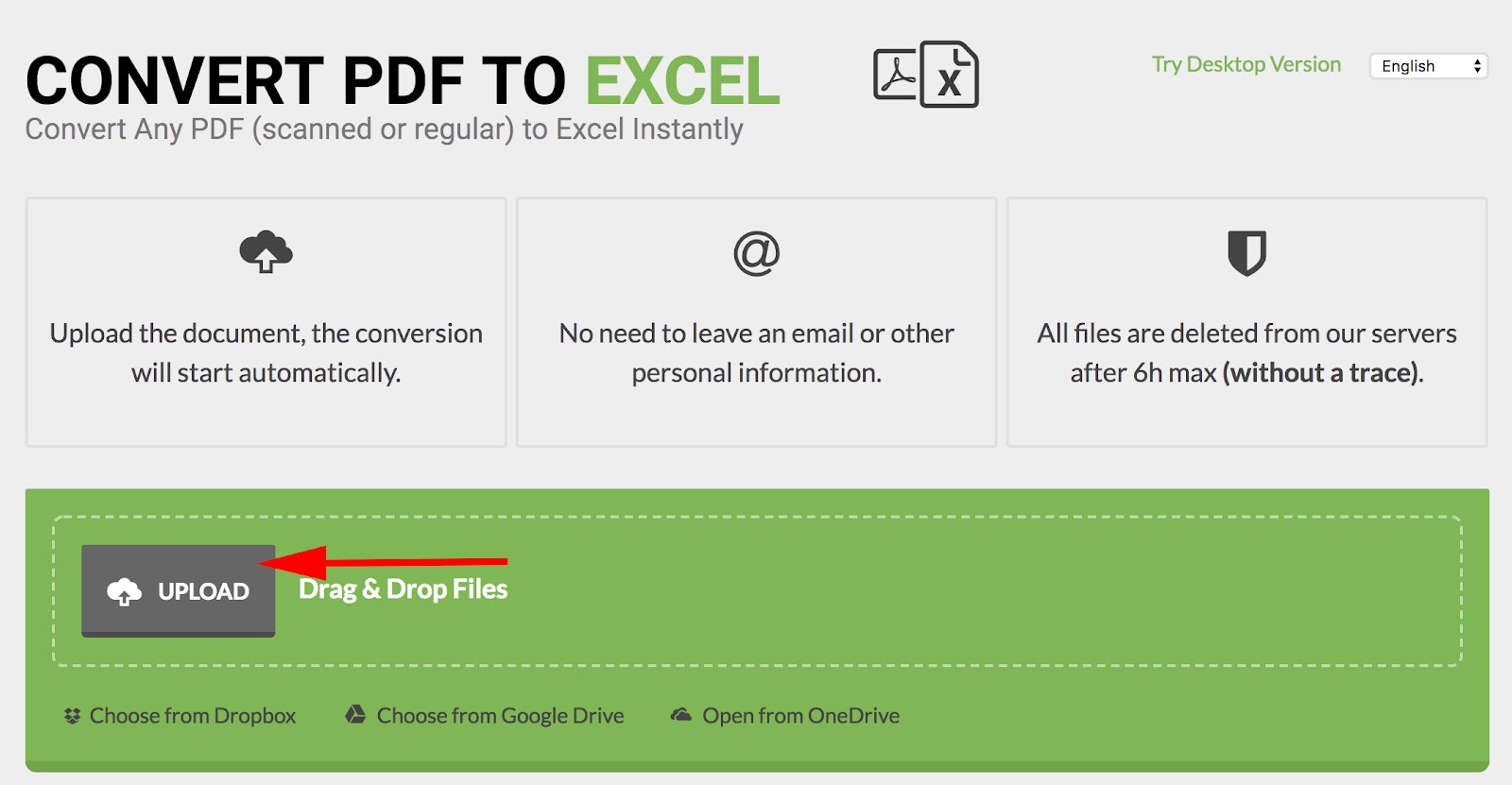
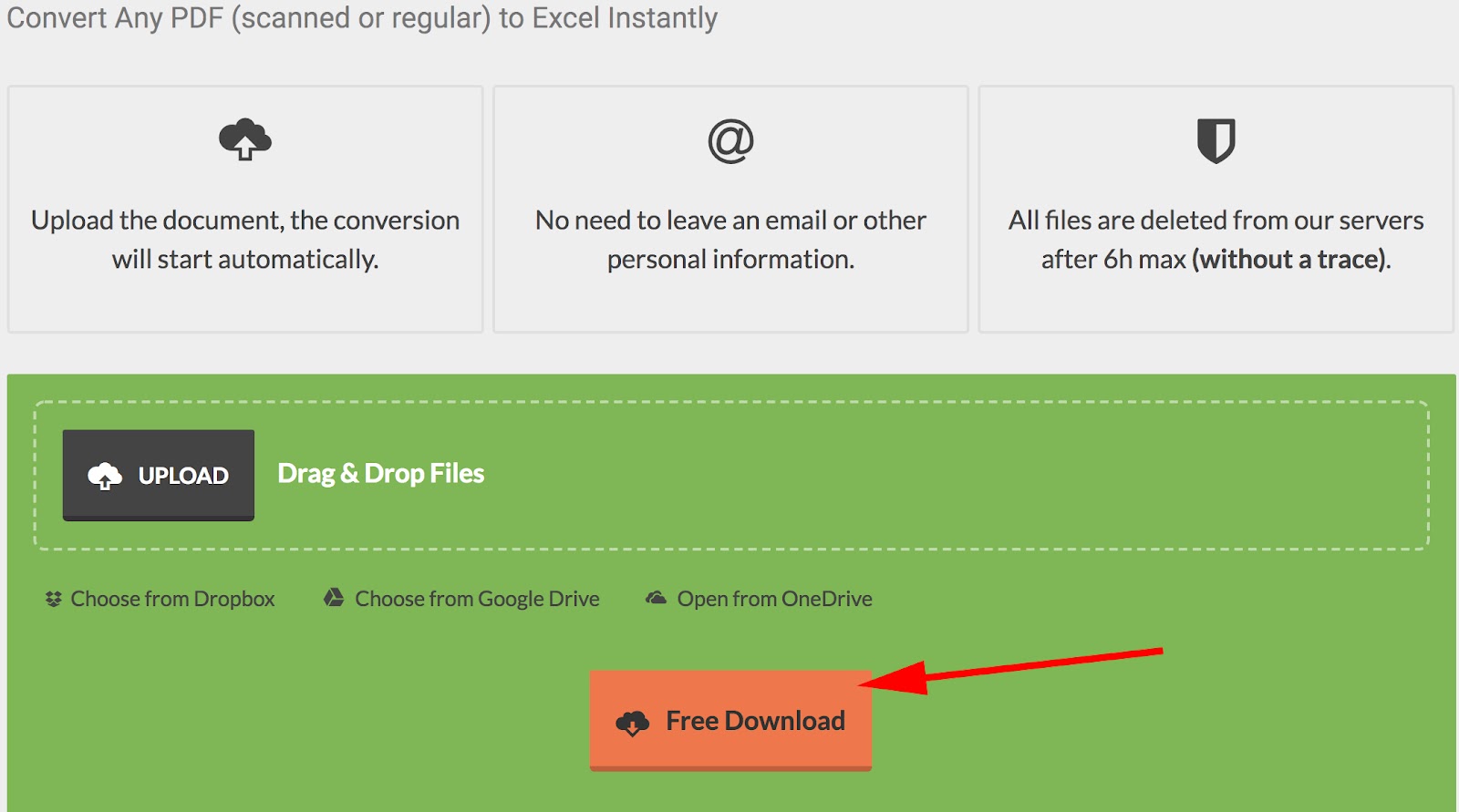
1. Go to PDFtoExcel.com, and click “Upload” (you can also drag and drop, or choose from Dropbox, Google Drive, or OneDrive)

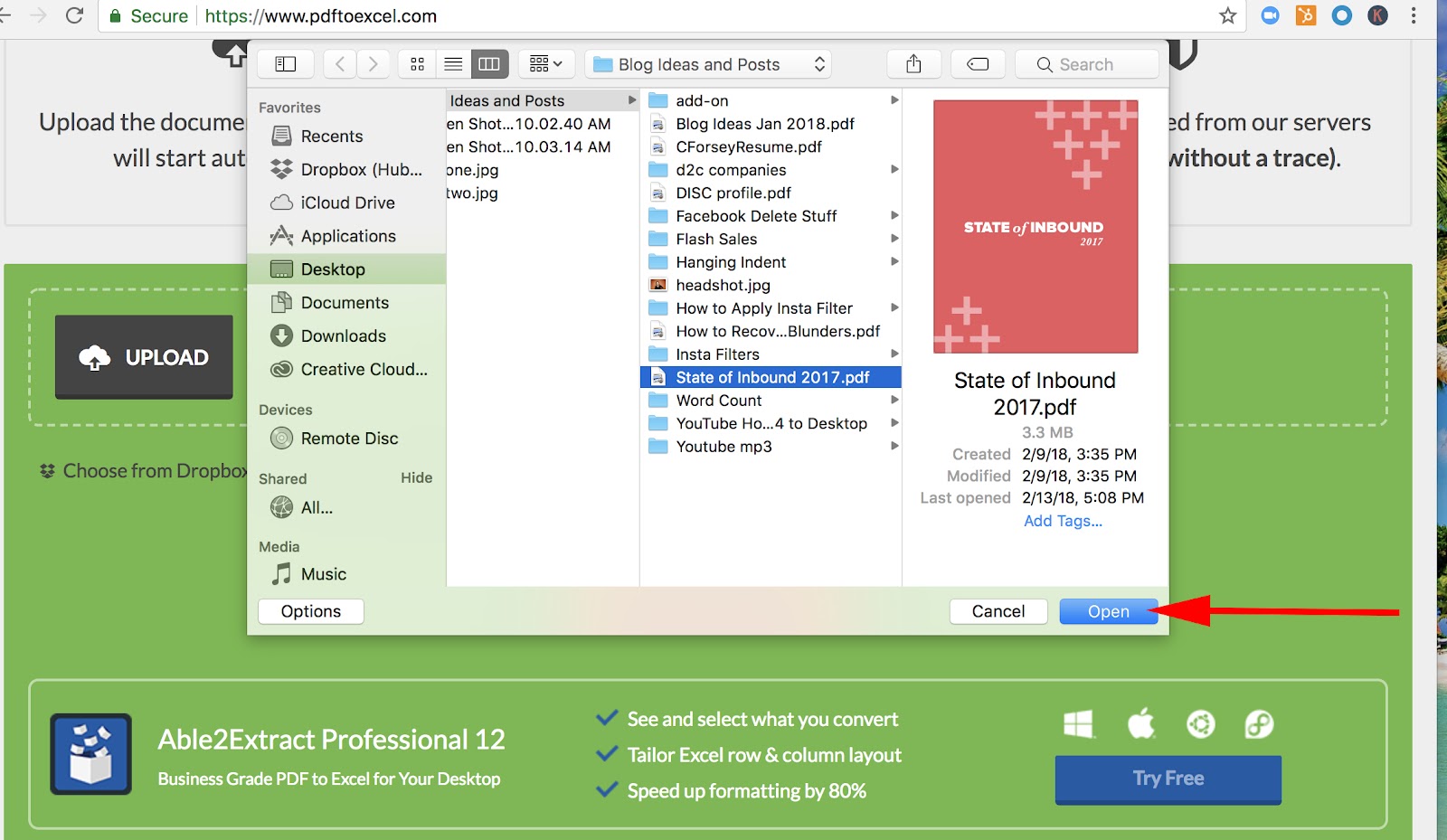
2. Choose the PDF file you want to upload, and click “Open”

3. Click the orange “Free Download” button

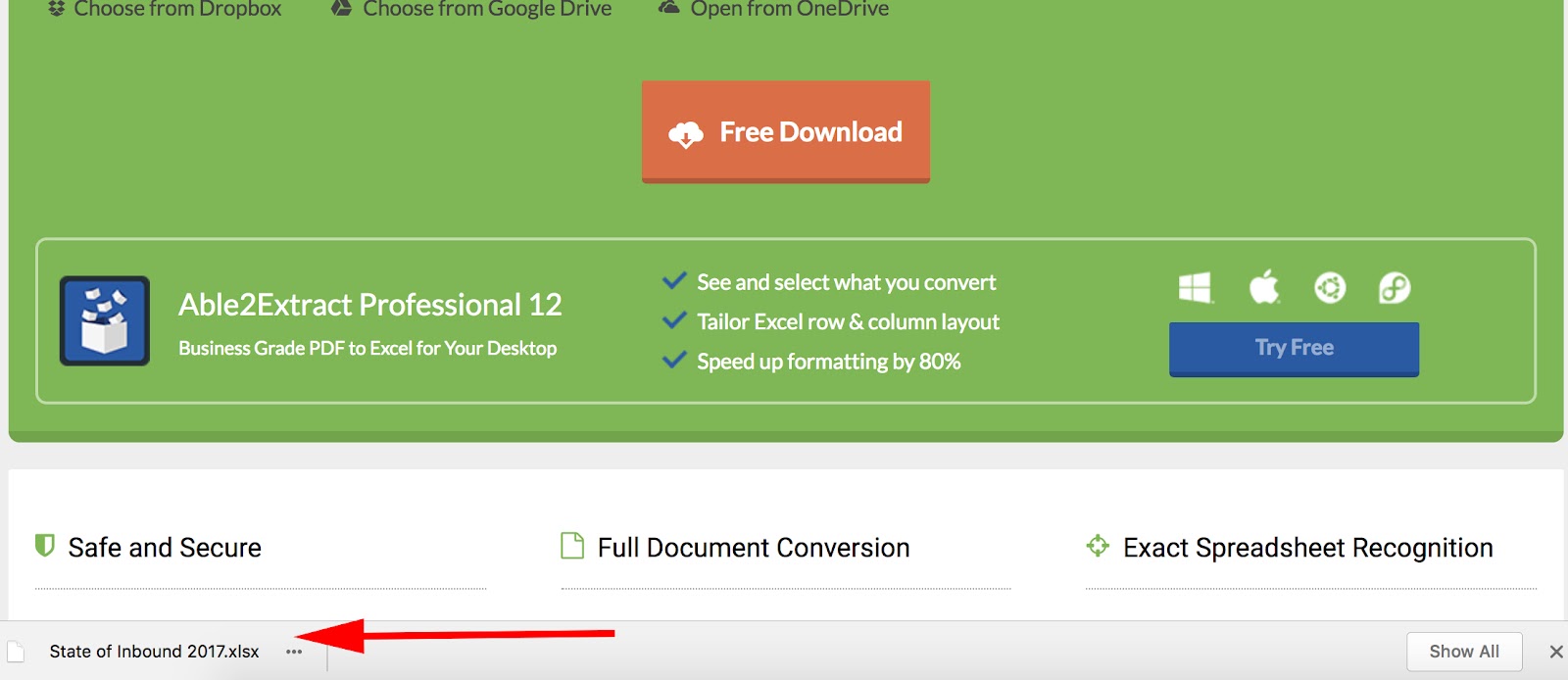
4. Now, the PDF is downloaded onto your computer in an .xlsx format, which means it’s ready to use in Microsoft Excel (versions 7, 10, 13) LibreCalc, OpenCalc, or other office suite compatible with MS Office

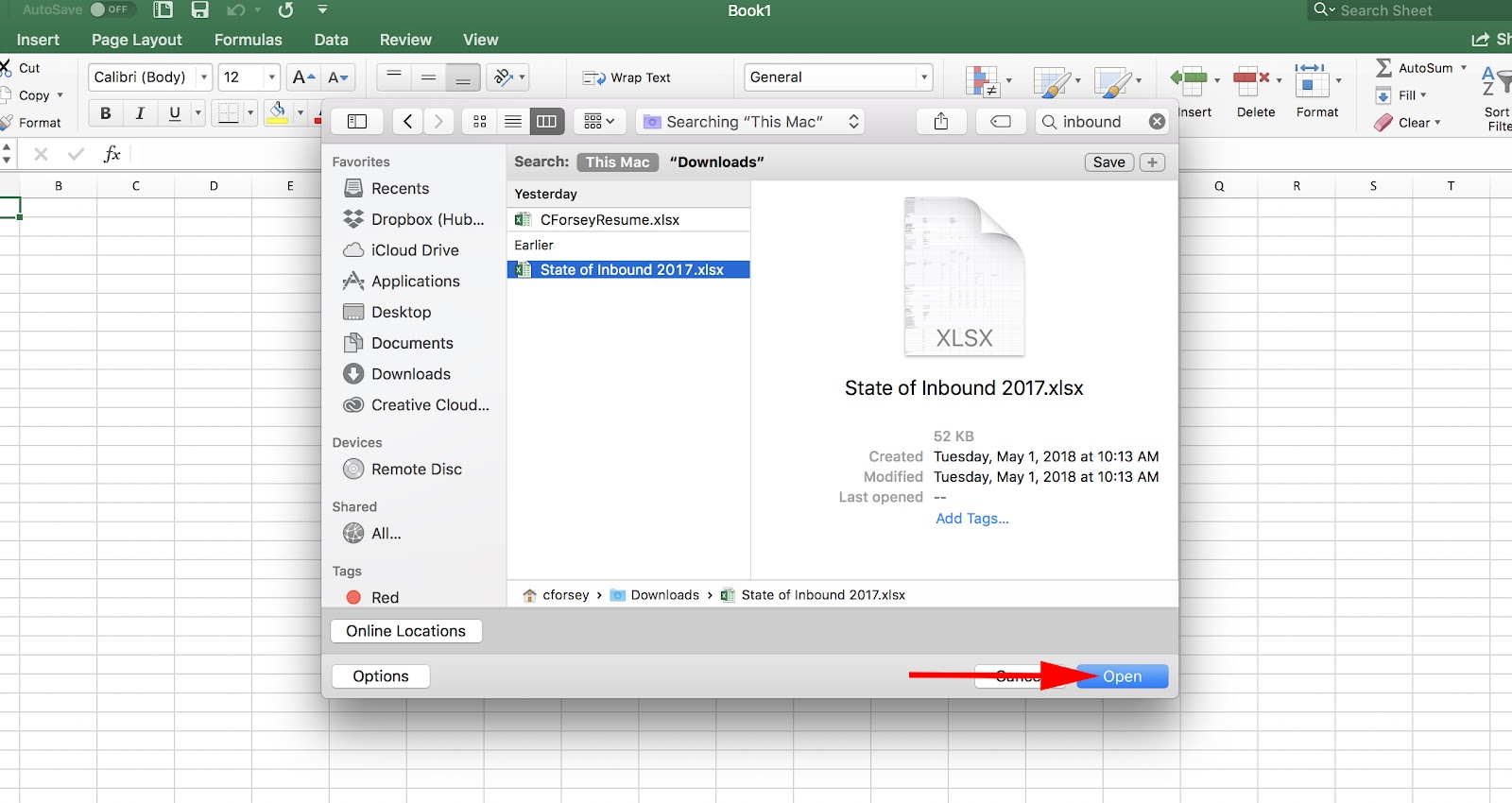
5. Open Excel, and go to “File” → “Open”. Find your .xlsx file, and click “Open”

6. There you go! Your PDF is now converted in Excel

The other conversion tools work similarly, but some offer unique benefits. Take a look at our list to decide for yourself if one of them suits your business’s needs more than the rest.

Other free tools to convert a PDF to Excel:

  • Tabula: Tabula extracts your PDF data into a format that Excel can read without difficulty, but doesn’t change your PDF into an Excel document itself
  • Tabello: Tabello is an easy-to-use Chrome extension that converts your PDF data to an Excel format right from your browser, but it’s only free for the first five conversions (after that, it’s five dollars per 20 conversions)
  • Free Online OCR: This tool uses character recognition to extract text from PDF’s and convert it into Word, Excel, or Text formats; allows conversions for different language PDF’s, including Chinese and Japanese
  • iSkysoft: This is a paid tool, but you can get a free trial; allows you to convert multiple PDF files into Excel, HTML, Word, or other similar formats

These tools enable you to avoid manually entering data into your Excel sheet (if it’s in PDF format, anyway). This frees up your time so you can spend it analyzing and reporting on that data, instead.

http://bit.ly/2HQSPsA