Tuesday, March 6, 2018

Can Artificial Intelligence Write Better Email Subject Lines Than Humans?

For certain types of email subject lines, the answer is ...

Probably.

That might be surprising to marketers.

For a long time, AI has been either an over-hyped set of technologies that didn’t deliver on their promises or it’s been a pie-in-the-sky idea that didn't translate into real-world applications.

My, how the times have changed.

AI is a term for a group of related, but distinct, technologies. "AI" includes things like machine learning, deep learning, and natural language processing -- to name a few.

Many AI technologies are still in their infancy. They look good on paper but haven't reached their potential.

But other AI technologies have advanced rapidly to become game-changers.

It’s this second group that is driving the very real AI explosion we’re seeing today.

Two technologies in particular have driven AI progress: natural language processing (NLP) and natural language generation (NLG).

NLP is when a machine "reads" text. It turns that text into code a machine system can then interpret. NLG is when a machine uses that code to then generate its own words. Both are AI technologies.

These technologies power Siri and Alexa, ushering in an exciting new age of voice search. In the process, how marketers get found is changing. (In fact, HubSpot is leading the charge for voice search friendly marketing.)

NLG and NLP also power highly accurate Google translations, where you can translate between almost any language. Google has even added this functionality to earbuds that translate speech in foreign languages.

And these technologies are found in AI-powered marketing tools like Acrolinx, which uses NLP to assess your content and recommend improvements.

One other major use case enabled by NLP and NLG is, you guessed it, writing email subject lines.

There are AI tools today that write email subject lines better than people.

Two players in this space are Persado and Phrasee.

Persado has $66 million in funding and offers AI email subject line writing, in addition to automatic social media and language generation for enterprise marketing.

Phrasee, on the other hand, uses AI to write and test email subject lines, email copy and generate email CTAs. You feed it email data and it analyzes the data to learn what works. It generates optimized subject lines that do better than 98% of human ones. And it uses what it learns from your emails to stay consistent with your brand.

In one case study, Phrasee helped Virgin Holidays increase their open rates by 2%. That may not sound like much, but it was worth millions in new revenue. The tool also streamlined a process that used to take weeks; today it takes seconds.

Both tools operate without much human involvement at all.

That's actually a good thing.

See, humans aren't that great at writing and split testing emails, social media, headlines, etc. We get too married to creative ideas. We fail to dispassionately pick the best subject lines based on the data. Heck, sometimes we just aren't great at writing or do split testing wrong.

In this case, AI is better equipped than us at this task. It excels at analyzing vast volumes of data and extracts insights from that data. Phrasee routinely uses 100,000+ emails as a dataset.

So, yeah, often AI can write email subject lines better than humans. And that's good news for marketers.

Why?

Because it makes your marketing better.

Marketers are drowning in data and don’t ever seem to have enough time or budget to maximize performance. Strategically applied AI can automate and augment processes in a significant way. They both improve performance and free you up to do other, higher-value tasks.

In a lot of cases, this is a win-win scenario. Marketers get better results and get to do more of what benefits their brand most. (Which also happens to be the most interesting stuff anyway.)

But this is why marketers need to start seriously experimenting with AI now. You need to begin to understand what tools are out there and what they can do for you.

Because certain marketing AI possibilities are very promising. But if your competitors start using this when you're not, you could be in deep trouble.

AI in marketing right now has a very "first-mover advantage" to it. Let's say I start using a tool like Phrasee to write my email subject lines. I improve performance almost immediately. I reinvest hours each week into building better campaigns in every area of our marketing. And I collect more and more data on what subject lines work best, improving performance even more.

It's a virtuous cycle. A flywheel that spins faster and faster the longer you stick with it.

In other words, the advantages of using AI the right way compound over time. It's hard to catch competitors with a sizable head start. Someday, that may change. But right now marketing AI is in its infancy. Brands using it possess an outsized advantage over those who don't.

No matter what type of marketing you do, one thing is clear: you need to start exploring AI's possibilities. We started the Marketing AI Institute to help. It’s a content hub that provides actionable information on AI for marketers. It features real-world use cases and expert advice from leading companies like HubSpot. We encourage to check it out today.

http://bit.ly/2H77WcP

3 Easy-to-Use Motion Graphics Tools for Marketers

Want to use more animated visuals in your marketing? Looking for affordable tools to create your own animated graphics? In this article, you’ll find three tools that create animated motion graphics for social media ads and posts. #1: Turn Images Into Animated GIFs With GIFMaker.me GIFMaker.me is an excellent free tool that lets you turn [...]

This post 3 Easy-to-Use Motion Graphics Tools for Marketers first appeared on .
- Your Guide to the Social Media Jungle

March 06, 2018 at 12:00PM http://bit.ly/2I6BB72
read more...
from http://bit.ly/2oSWRod
via IFTTT

Monday, March 5, 2018

The 5 Biggest Social Media Lessons HubSpot Learned in 2017

2017 was a year of experimentation.

We were committed to shifting our entire social media strategy to grow our viewership and audience, while continuing to engage with our audience where, when, and how they wanted.

To successfully do this, we spent the year experimenting with how to best deliver content on all platforms, particularly on Facebook.

We succeeded in some risks and failed in others. It was a hefty undertaking.

Here, we’ve compiled our five biggest social media lessons from 2017. We are hopeful that these lessons will prepare you to successfully shift your own social media strategy (without any of the setbacks).

1. The most important factor on Facebook is still your audience.

Facebook can be intimidating for social media teams, particularly those with smaller budgets. Fortunately, we found money isn’t the biggest factor when it comes to performing well (which is ideal, for both us and our audience).

The biggest factor is your audience, measured through views, view retention, and engagement.

Here’s the deal: Facebook is a discovery model platform. Its primary goal is to make the audience happy. So you’ll only get ROI if you create quality content for your audience.

For example, we put equal money behind a Walking Dead spoof video, and a Berlin city pride video. We had a firm understanding of both target audiences and posted at days and times best suited for them.

Our audience greatly preferred the Walking Dead video, which meant Facebook rewarded this video by expanding our reach and capturing more viewers.

Basically, we got more bang for our buck with this video because our audience liked it, not because we paid for it.

2. Live or die by the first three seconds.

You know how you only have seven seconds to make a good first impression?

It’s even shorter for video.

It’s imperative to engage your audience in the first three seconds of your video, or you’ll lose them. So we focused on telling our entire story in three seconds, and then retelling it with more detail throughout the rest of the video.

The better we became at optimizing the first three seconds, the more our average watch time increased.

3. People just want to be seen and included.

The more our videos dug into a specific, targeted audience, the better they performed. Here’s why: we believe if someone can affirm their identity through a piece of content (like an entrepreneur sees herself in a video about “top 5 traits for entrepreneurs”), then that video is more likely to be shared, commented on, and liked.

People are vocal in communities that strongly correlate to their identities and relate to their passions. Essentially, they want to feel included and seen on content that relates to them.

The “top 5 traits for entrepreneurs” video might alienate a broader audience (those who don’t identify with the qualifier “entrepreneur”), but it encourages an entrepreneur audience to be more vocal: to share their opinions, tag their friends, and share the video on their pages.

And, like we’ve said, audience engagement is key to success.

4. Topical is key.

When something really big, good or bad, is circulating the news outlets, you’ve probably noticed the consequences on your newsfeed: instead of puppy videos and a friend’s engagement pictures, you’ll primarily see content related to that event.

Both Facebook and Facebook viewers are interested in seeing content that is most relevant in that time and place.

It’s important to understand that news, seasons, cultural events, and holidays can have an impact on whether or not your video performs well. When evaluating your video’s performance, keep this in mind.

5. Native is better than non-native.

Although we had our hunches, we wanted to verify whether people actually prefer native content to non-native content.

For a long time, HubSpot’s Facebook page consisted primarily of non-native video content and link posts. We decided to compare one of these non-native video posts with a native video almost identical in content.

We had a clear winner: Facebook as a platform, and Facebook’s audience base, clearly favored native video content. The native video was viewed almost 160x more than the non-native link.

This supported our commitment to a major strategy shift, both in 2017 and in the future.

Big Takeaway for Your Business:

In 2017, we focused primarily on video as our content format, and primarily on Facebook as our platform. We made these decisions strategically: Facebook is where the majority of our audience lives, and videos are well-received by this audience.

For you to find the same level of success, you also need to dig deep to understand where your audience lives, and which content format your audience prefers. It might look different than ours, and it might require you to shift in a different direction than we did.

It might even take you a year’s-worth of trial and error (but hopefully, with these tips, a little less error).

Looking Forward to 2018

Now that we’ve succeeded in producing high-quality native content that engages and grows our audience, we want to do the same thing in 2018: only better, bigger, and more.

Here’s the real bottom line: don’t lose sight of what your numbers actually mean. Getting views, comments, and likes on Facebook isn’t about “winning” at Facebook, it’s about creating strong relationships between your audience and your brand.

And targeting ads, optimizing content, and finding the right community to engage with isn’t just about “spending your money wisely.” It’s also about finding the right leads, where and when they want to be found.

Dig into that, and strive for ceiling-breaking results in 2018.

Good luck!

http://bit.ly/2CZ2TIY

How to Bookmark a Tweet

Have you ever seen an article, thread, Tweet, or GIF on Twitter and thought, “I really want to save this for later?”

Until now, the only way to save a Tweet was to like it, copy the link somewhere, or screenshot it.

Now, there’s an easier way.

Twitter just announced a new Bookmarks feature that allows you to save Tweets on Twitter and return to them later.

The Bookmarks feature makes it easier to share Tweets privately. If you see a cool thread and want to share it with a friend but don’t want to tag her in the thread, you can bookmark it and Direct Message it to her (or text, or email).

The Bookmarks feature is rolling out on your Twitter for iOS, Android app, or mobile.twitter.com, but is not available for desktop.

The Bookmarks feature is incredibly simple to use. Here are the three steps you need to know to use Twitter’s Bookmarks feature.

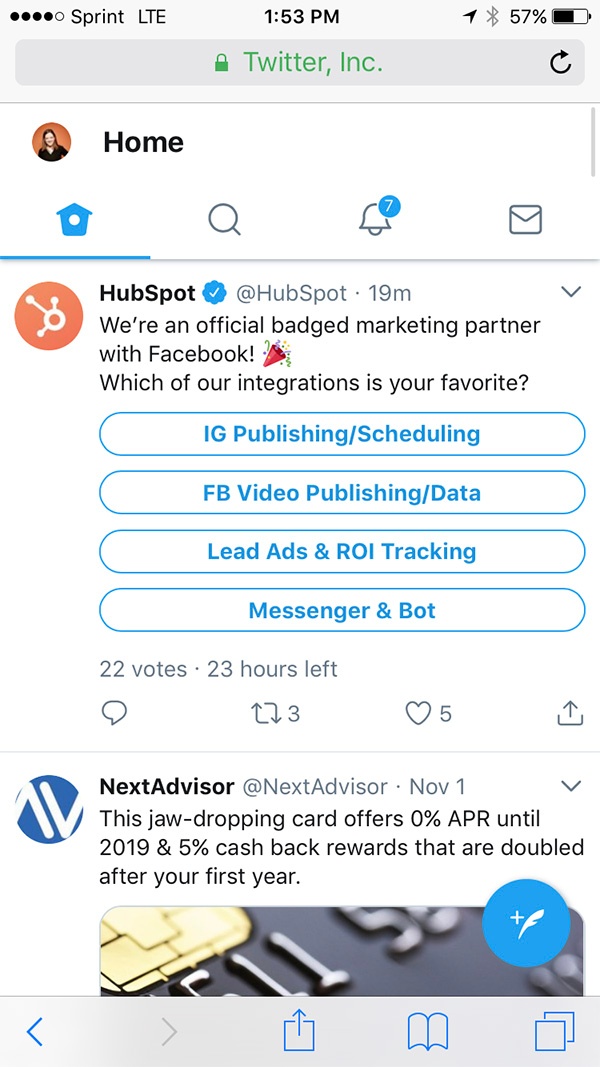
1. Find a Tweet you want to bookmark.

step1-2.jpg


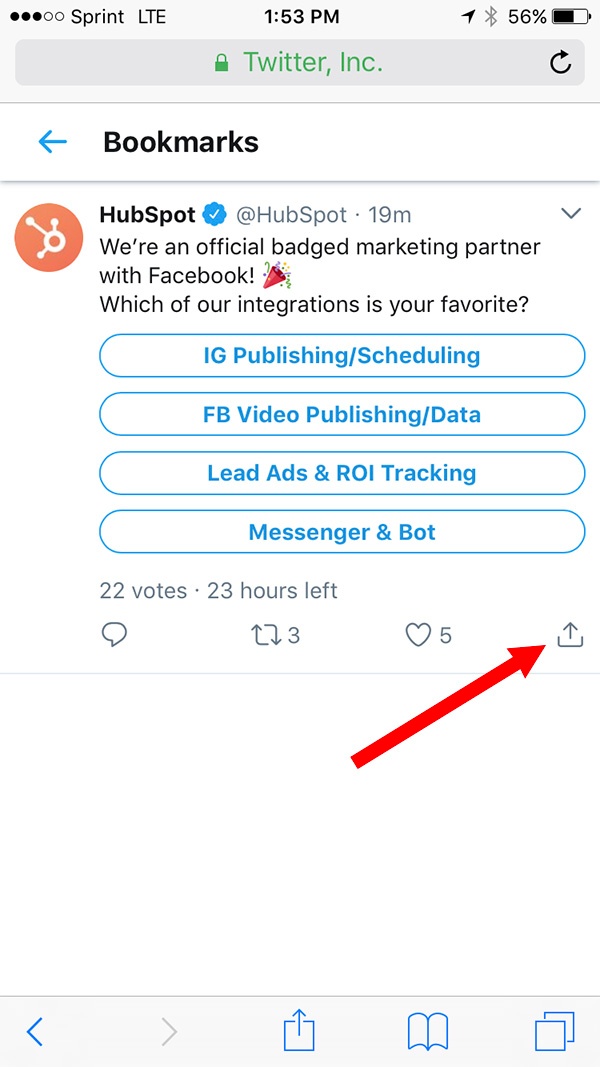
2. Click the share icon.

step2-2.jpg


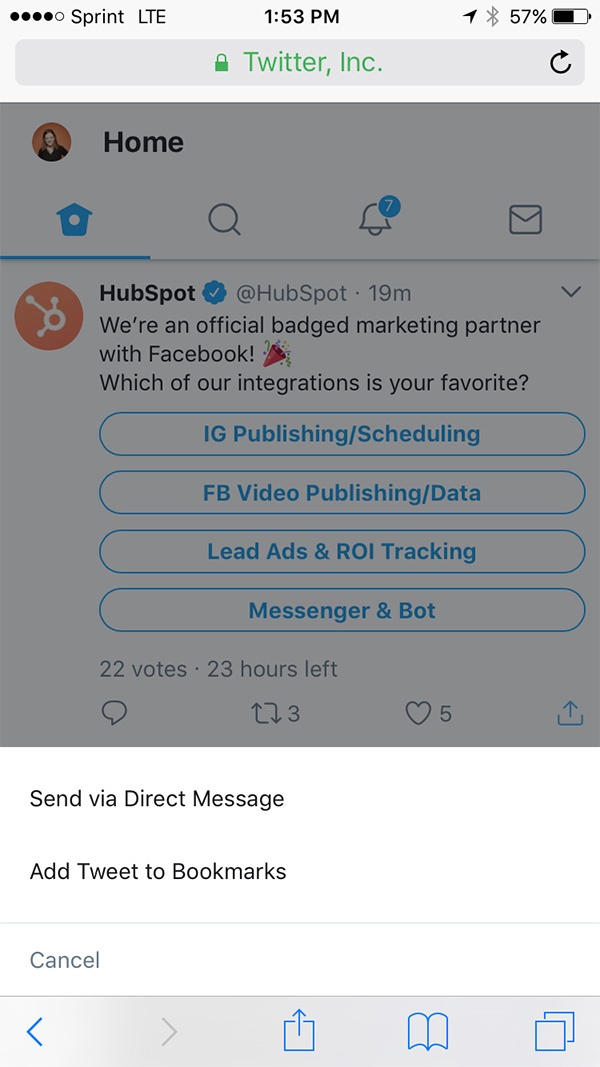
3. Select “Add Tweet to Bookmarks.”

step3-2.jpg


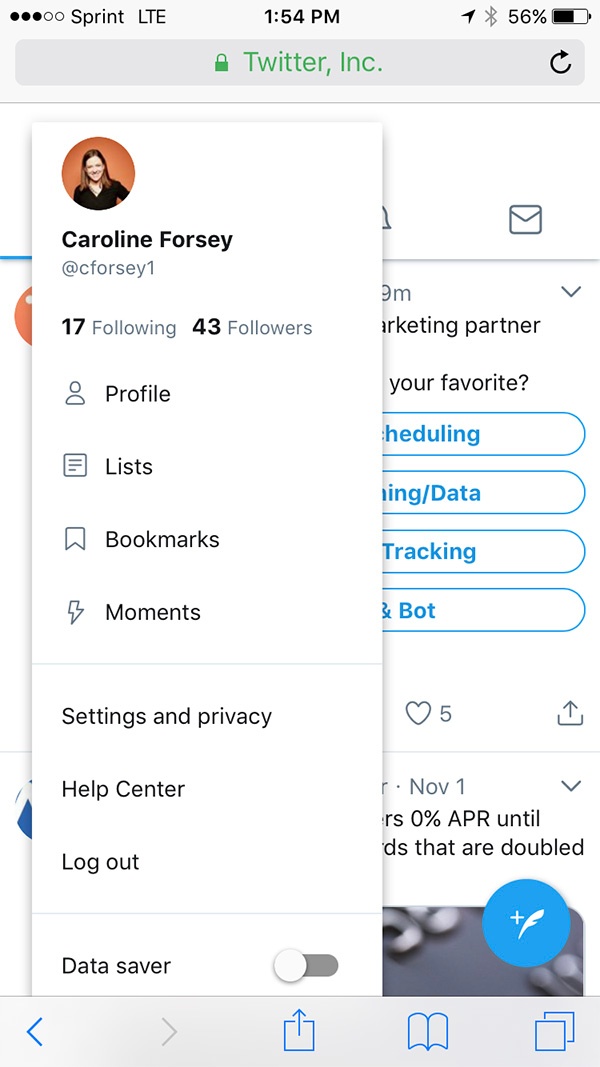
4. To see all your bookmarks, click your profile icon to access the menu and select “Bookmarks.”

step4-2.jpg

If you want to remove Tweets from your Bookmarks, just open your Bookmarks tab, click the share icon on the Tweet you want to remove, and select “remove Tweet from Bookmarks.”

And that’s it! You’re all set to try Bookmarks for yourself. Save your favorite threads, your favorite Tweets, and even your favorite HubSpot blog posts.

You know, just an idea.

http://bit.ly/2I0zamx

The Top Video Typography Trends of 2018 [Video]


This video was created by StudoBinder, and originally appeared in this article. 

http://bit.ly/2CYt5n3

How to Use Live Video in a Product Launch: 7 Ways

Do you use live video to sell products or services? Wondering how to grow an audience that will show up for your launch? In this article, you’ll discover seven live video tactics that will create a warm and engaged audience for your next launch. How Live Video Helps You Build Your Audience For these live [...]

This post How to Use Live Video in a Product Launch: 7 Ways first appeared on .
- Your Guide to the Social Media Jungle

March 05, 2018 at 12:00PM http://bit.ly/2H5xg2I
read more...
from http://bit.ly/2FqciP2
via IFTTT

Friday, March 2, 2018

If You Think Twitter Is Unhealthy, You Can Now Apply to Study It

In a series of tweets sent out yesterday, Twitter CEO Jack Dorsey announced that the social network would be enlisting the help of outside experts to measure its health.

Acknowledging that the network has been abused and leveraged to create divisiveness, Dorsey also spoke to Twitter's own mishandling of how it has been weaponized -- whether through harassment, or through bot accounts created for the sole purpose of tweeting our controversial content.

In response, Dorsey said, Twitter needs help -- and is inviting experts to apply for funding to study its health metrics and potential solutions to these issues.

The request for proposals (RFP) comes after more than a year of heightened scrutiny faced by Twitter -- as well as its other social media and online counterparts like Facebook and Google -- for the alleged weaponization of its network the influence the 2016 U.S. presidential election.

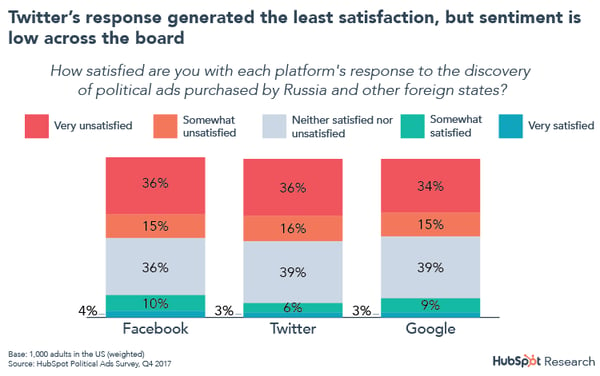
Since then, the platform has continued to not only face backlash, but also address and remedy the issue of harassment, spam, bot presence, and the spread of misinformation and divisive content in a way that many users find less than satisfactory -- which HubSpot's own research has also found.

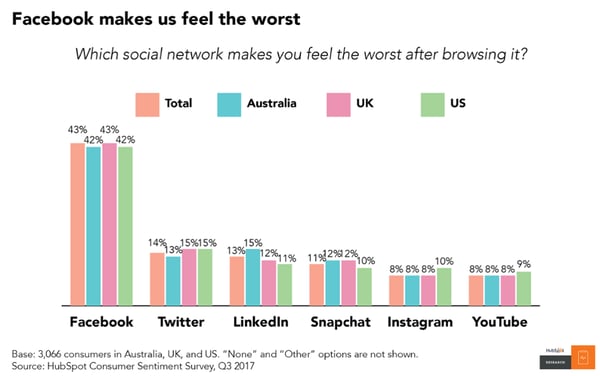
HubSpot's research has also found that, in recent months, some social networks have made users feel worse as a result of spending time on them. And while results indicate that Facebook overwhelmingly instills the most negative sentiment, Twitter is directly behind it.

Twitter is the first social network to actively request the public's help in identifying solutions to these ongoing issues.

And while Facebook has tested some methods of user feedback, like the ability to flag or downvote abusive content, no other networks have gone quite so far as to call for formal proposals.

The announcement coincided with the release of research from not-for-profit organization Cortico on the strongest indicators of healthy use and dialogue on social media:

  1. Shared Attention -- an indication that the conversational topics taking place on social media overlap.
  2. Shared Reality -- an indication that these conversations are grounded in the same facts (not to be confused with the same opinions).
  3. Variety -- an indication that while these opinions may contrast from each other, they are still grounded in the aforementioned shared reality.
  4. Receptivity -- an indication that we are "open, civil, and listening to different opinions".

The deadline to submit a proposal is April 13, 2018, which applicants can do here. Those selected to participate in the study will work alongside Twitter employees on the research, with access to public data and "meaningful funding" for the organization completing the work.

As always, we'll be monitoring the process as it unfolds.

http://bit.ly/2CUIFQt